
How Much Does 10DLC Cost? Full Pricing Breakdown for Business SMS

Many businesses in the U.S. use A2P messaging to send alerts, confirmations, and customer updates. But under current carrier rules, you must register your business under 10DLC (10-Digit Long Code) before sending these messages.
Unlike regular texting, 10DLC pricing isn’t as simple as paying per message. The total 10DLC cost includes the various one-time setup fees and recurring fees for setup, compliance, and message approval and transfer.
In this article, we’ll break down 10DLC pricing in 2026, including the different fees involved, what affects pricing, and tips to keep your costs low.
How Much Do Text Messages Cost Under 10DLC?
Businesses typically pay between $0.012 and $0.025 per SMS segment under A2P 10DLC. The total comes from two parts: the SMS provider’s per-message charge and mandatory carrier pass-through fees applied by US mobile networks.
1. Per-Message Charges
Your SMS service provider will often charge you for messages based on segments. One standard SMS segment contains up to 160 characters using GSM encoding. Messages that exceed this limit or include emojis are split into multiple segments and billed accordingly.
Also, outbound messages and inbound messages are charged differently. Outbound SMS typically costs more than inbound SMS, as they consume more carrier network resources.
Here are the provider-level per-message charges for inbound and outbound SMS:
Provider | Outbound SMS (per message/segment) | Inbound SMS (per message) |
| Calilio | $0.0034 | $0.0034 |
| Twilio | $0.0083 | $0.0083 |
| Telgorithm | $0.00500 | $0.0000 |
| Telnyx | $0.0040 | $0.0040 |
| Bandwidth | $0.0040 | $0.0040 |
| Vonage | $0.00809 | $0.00649 |
Note: SMS cost may vary by destination network and billing model. Always check the provider’s official pricing page to confirm current pricing.
2. Carrier Pass-Through Fees
In addition to your SMS provider charges, US mobile networks apply mandatory pass-through fees to every outbound SMS sent under 10DLC.
Each carrier has different rates, and they charge the fees directly to businesses. Carrier fees may be applied per message or per segment and remain in effect even if a message fails to deliver.
Here’s the mobile carrier pass-through fees applied to SMS traffic in the US:
Mobile Carrier | Outbound SMS (per message) | Inbound SMS (per message) |
| T-Mobile | $0.0045 | $0.0025 |
| Verizon Wireless | $0.0040 | $0.0000 |
| AT&T | $0.0030 | $0.0030 |
Power Your Business Sms Campaigns with a Local Us Number, A2P 10DLC Compliance, and Reduced Per-Message Costs
Additional Costs Associated with 10DLC SMS
In addition to per-message SMS charges, there are several other fees businesses should expect with 10DLC. You’ll need to pay 10DLC registration cost for brand verification, a campaign vetting fee for each use case, monthly campaign fees set by carriers, and the cost of the phone numbers themselves.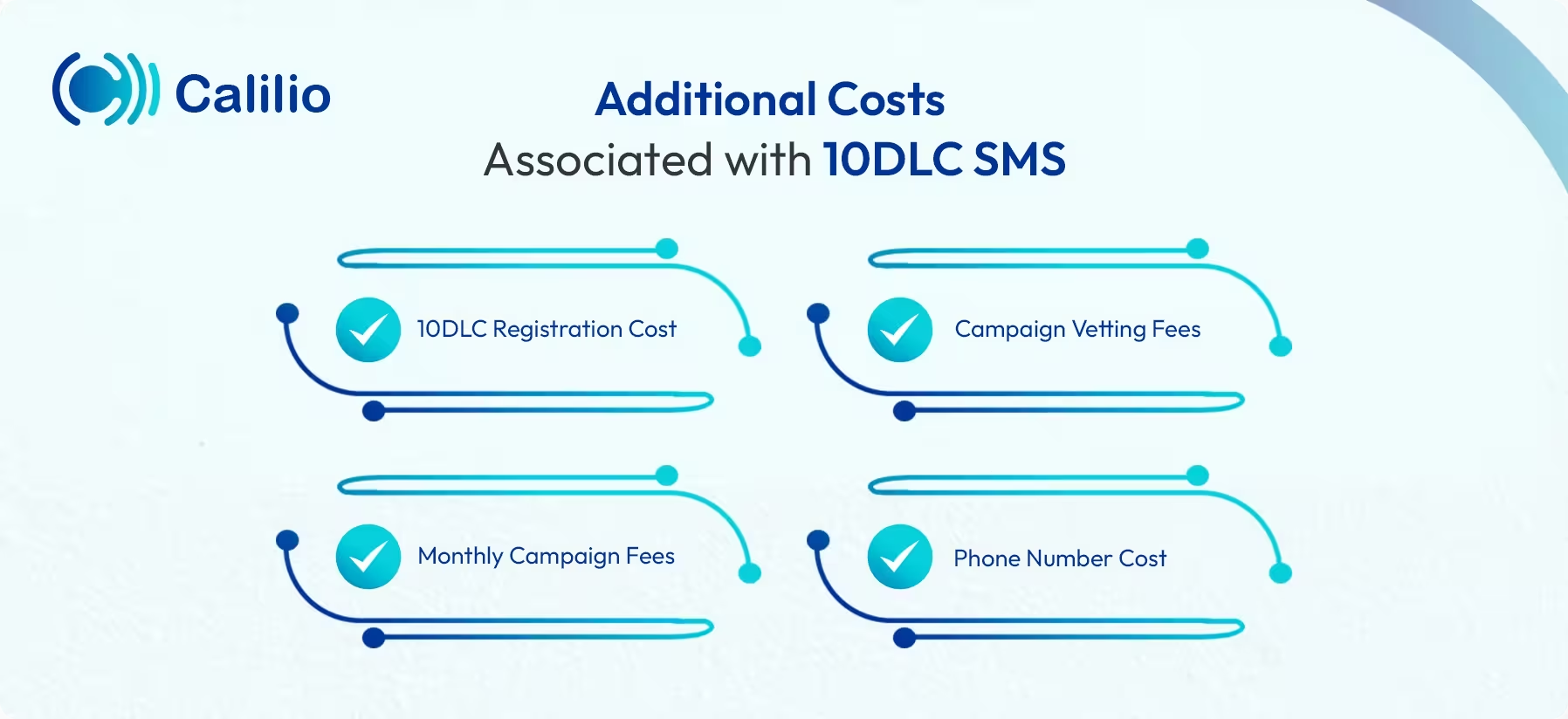
10DLC Registration Cost
Businesses must pay a one-time 10DLC registration fee of $4.50 for registering their brand. The process verifies a business’s identity with US carriers before it can send SMS. There is no recurring monthly fee for maintaining an active brand. However, if brand details change, such as a legal name update or new Tax ID, the business must re-verify and pay the fee again.
Campaign Vetting Fees
The campaign vetting fee is the fee your carrier charges to review and approve your messaging campaign before allowing you to send the messages. It reviews the purpose of the campaign, opt-in and opt-out methods, and message samples. Businesses pay a one-time campaign setup fee of $15.00 for each use case. If carriers reject a campaign and require resubmission, the same fee ($15) applies again.
Monthly Campaign Fees
Mobile carriers also apply monthly campaign fees to monitor and regulate 10DLC messaging traffic. Low-volume mixed campaigns, which typically involve sending a small number of messages across different purposes like basic alerts, reminders, or customer support, usually cost $1.50 per month.
For standard campaigns focused on specific use cases such as SMS marketing or two-factor authentication, the fee can cost upto $10.00 per month.
Most carriers also require a minimum commitment of three months for standard campaigns, which results in an upfront charge of $30.00 when the campaign first goes live.
Phone Number Cost
To send 10DLC messages, businesses must have local 10-digit phone numbers. You can use a phone number from a traditional carrier or a virtual phone number. Traditional carrier numbers often cost between $5 to $10 per month, depending on the provider and plan.
On the other hand, virtual numbers are usually more affordable. For example, Calilio offers a local number for just $2 per month, after subscription. Every subscription also includes one free U.S. phone number.
What Factors Affect 10DLC Pricing?
10DLC SMS pricing depends on the campaign type, trust score, message volume, and carrier fees. Costs also vary based on carrier surcharges, message type (SMS or MMS), message direction (inbound or outbound), the number of phone numbers used, and whether traffic is properly registered or not.
1. Campaign Type/Use Case
The type of campaign you run plays a big role in determining the monthly campaign fee. Marketing campaigns (like promotions or sales messages) usually come with higher monthly charges because carriers monitor them more closely to prevent spam. The transactional or informational campaigns (like appointment reminders or account updates) generally cost less since they’re seen as lower risk.
2. Vetting Status/Trust Score
After registration, carriers give you a trust score on a scale from 1 to 100 using a reputation algorithm. This score is based on your business information and messaging reputation.
A higher score (like 75–100) means you can send more messages per second and get faster delivery. If your score is low, your message volume will be limited.
To improve a low score, you might need to go through external vetting, which can come with extra one-time fees depending on your messaging provider.
3. Message Volume/Throughput
Message volume directly drives usage-based spend. As daily or monthly message volume increases, total SMS and carrier fees rise accordingly.
High-volume senders also face stricter compliance requirements, which can further add indirect costs through vetting and monitoring.
4. Carrier-Specific Surcharges
Each major US carrier applies its own pass-through fees per message or segment on top of 10DLC pricing. Differences in carrier fee structures mean your total cost can vary depending on which networks your messages are delivered to.
5. Message Type (SMS vs. MMS)
MMS messages cost more than standard SMS because they include media content. Carriers apply MMS surcharges of roughly $0.010 to $0.015 per message, which is about three times the cost of a standard text. Campaigns that rely on images or rich media face higher charges faster than text-only campaigns.
6. Message Direction (Inbound vs. Outbound)
Most fees apply to outbound messages—the texts you send to customers. However, in two-way campaigns, you also receive messages like replies, opt-ins, or confirmations.
Some carriers charge for these inbound messages, too. So, if your campaign has a lot of back-and-forth messaging, your overall costs may go up as engagement increases.
7. Number Pool/Campaign Size
Using multiple phone numbers or number pools increases recurring costs. Larger campaigns often require additional numbers to manage throughput and delivery, and some carriers apply extra fees for specialized number pool configurations.
8. Registration Status (Registered vs. Unregistered)
Registered traffic benefits from standard pricing and reliable delivery. Unregistered traffic faces higher surcharges of $0.01 to $0.012 per message, increased filtering, or complete blocking by carriers. Sending messages without proper registration raises both cost and delivery risk.
Is 10DLC SMS Worth the Cost?
Yes, 10DLC SMS is worth the cost for businesses that rely on SMS. It improves message deliverability, keeps messaging compliant with US carrier rules, supports faster and more reliable sending, and allows the same number to be used for SMS, MMS, and voice, making business communication easier to manage and scale.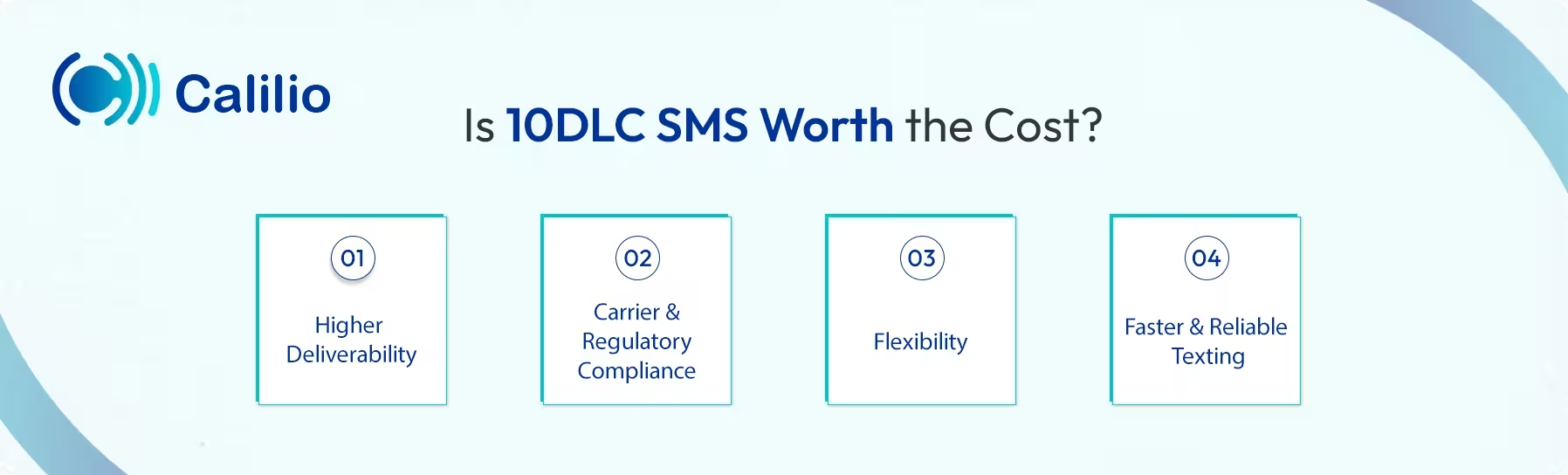
- Higher Deliverability: Registered 10DLC traffic passes through carrier networks with an approved sender identity and use case. Because carriers can verify who is sending the message and why, they apply standard delivery paths instead of aggressive filtering. This improves delivery consistency, especially for recurring business messages.
- Carrier and Regulatory Compliance: 10DLC provides a clear, carrier-approved framework for business messaging in the US. Businesses that follow these rules reduce the risk of penalties, sudden message blocking, or account suspension. Compliance also makes it easier to scale messaging programs without unexpected disruptions.
- Flexibility: Many providers allow businesses to use the same 10DLC number for SMS, MMS, and voice calls. This creates a consistent contact point for customers and simplifies communication management. Teams can handle calls and messages from one number instead of managing multiple channels separately.
- Faster and Reliable Texting: With proper registration and vetting, 10DLC allows higher sending speeds and more stable throughput. Carriers apply fewer restrictions to approved traffic, which helps messages deliver on time. This is especially important for time-sensitive messages such as appointment reminders, one-time passwords, delivery updates, and limited-time offers.
How to Reduce 10DLC Costs?
To reduce 10DLC SMS costs, register the correct campaign type and keep messages short to avoid extra segments. Limit MMS to high-value use cases and stay compliant with carrier rules to prevent penalties, higher surcharges, and message blocking
- Register the Correct Campaign Type: Make sure you choose the campaign that accurately matches how messages are actually sent. For example, labeling a transactional campaign as marketing can lead to higher monthly fees and stricter carrier review, which drives up your costs for no reason.
- Keep Messages Short and Text-only When Possible: Short SMS messages avoid extra segments and reduce cost. Limiting emojis and special characters helps prevent messages from splitting into multiple segments.
- Limit MMS to High-value Messages: MMS costs more than SMS. So, consider using it only when images or media clearly add value to the message.
- Stay Compliant with Carrier Rules: Follow the rules for opt-ins, message content, and sending practices set by network providers to prevent penalties or extra fee.
Conclusion
10DLC SMS pricing is built from multiple cost layers, not just the price of sending a text. Every business must pay the fee for brand registration, campaign approval, monthly carrier fees, and usage-based SMS charges. These registration and compliance fees are set by US mobile carriers; they often remain largely the same across providers.
The main cost difference comes from per-message pricing, which is set by the messaging service providers. If you’re looking to keep this cost down, consider Calilio’s business phone system. It offers low per-message SMS rates, starting at around $0.0034 per message. You’ll also get one U.S. local number free with every subscription for 10DLC use.
Summarize this blog with:
Frequently asked questions
Is 10DLC mandatory for business SMS in the US?
Yes, 10DLC registration is required for businesses sending Application-to-Person (A2P) SMS from local 10-digit phone numbers in the US. Messages sent without proper registration may be filtered, throttled, or blocked by mobile carriers.
Are 10DLC fees one-time or recurring?
What happens if a business sends SMS without 10DLC registration?

Still have questions?
Can’t find the answer you’re looking for? Please chat with our friendly team.
Stay in the loop
Get the latest call insights, trends, and updates delivered straight to your inbox.
By subscribing, you agree to receive updates from Calilio.
You can unsubscribe anytime.
Enter the World of AI Business Phone System with Calilio
Improve your business operation with Calilio's advanced virtual phone system. Join today for a better way to connect.