Agentic AI vs. Conversational AI: Key Differences & Use Cases

Artificial intelligence is changing how businesses work, communicate, and solve problems. As new AI models continue to appear, many people now compare agentic AI vs. conversational AI to understand which one fits their needs. Although both technologies improve productivity, they serve different purposes.
Conversational AI focuses on communication. It answers questions, handles requests, and supports users through natural dialogue. Agentic AI goes a step further. It not only responds but also takes action, completes tasks, and works toward goals with minimal guidance.
In this guide, you’ll learn what agentic AI is, what conversational AI is, how they differ, and when each one fits best for business use.
Key Highlights:
Agentic AI plans, decides, and takes action on its own to complete multi-step tasks and support business workflows.
Conversational AI communicates with users through natural dialogue, answers questions, and handles straightforward support tasks.
Agentic AI performs autonomous multi-step actions, while conversational AI focuses on reactive communication and basic interactions.
Use agentic AI for automated, multi-step workflows and conversational AI for quick answers, FAQs, and simple support needs.
Understanding Agentic AI
Agentic AI is an advanced AI system that can plan, decide, and take actions on its own to reach a specific goal without constant human input. It does not wait for step-by-step instructions. Instead, it observes what needs to be done, plans the next steps, and executes actions to reach a goal.
In a business phone system, Agentic AI works as an active assistant that manages routine communication tasks for you. It can organize call flows, update customer records, generate call summaries, route calls based on intent, and trigger automated workflows across your tools. This helps teams save time, reduce manual work, and maintain consistent communication with customers.
How Does Agentic AI Work?
Agentic AI follows a structured process where it understands the goal, breaks it into smaller steps, and gathers the information needed to proceed. It acts across tools to complete each step and checks whether the result meets the expected outcome. If the result is off, it adjusts its plan and continues until the task is finished.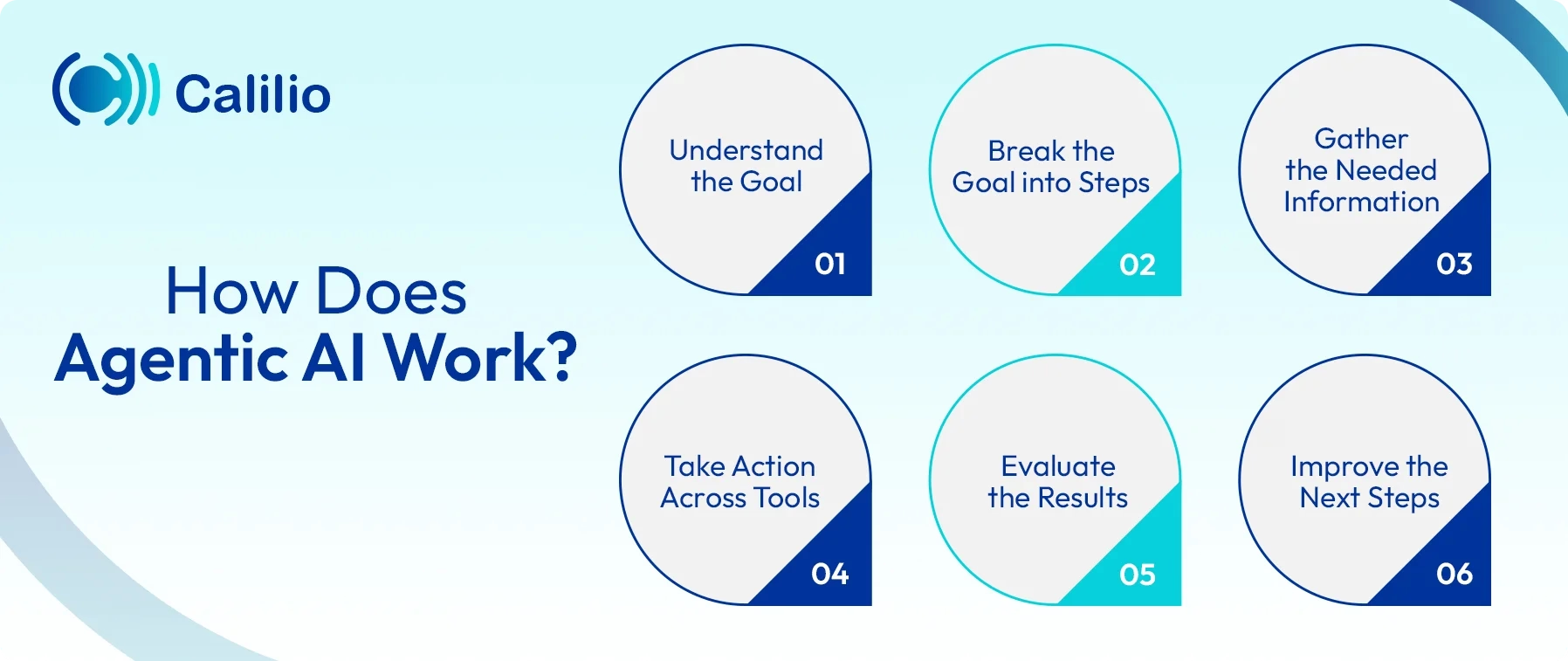
Here is a simple breakdown of how agentic AI works:
- Understand the Goal: It first identifies what outcome you want, whether it's updating records, generating a report, or managing call workflows.
- Break the Goal into Steps: It analyzes the task and creates a clear plan with smaller actions that need to be completed in order.
- Gather the Needed Information: It checks available data, past interactions, system inputs, or external tools to understand the context.
- Take Action Across Tools: It performs actions such as call routing, sending data to CRM, generating summaries, or triggering follow-up tasks.
- Evaluate the Results: It reviews its own output to see if the task met the expected outcome.
- Improve the Next Steps: If needed, it adjusts the plan, retries a step, or chooses a better path to reach the final goal.
Pros and Cons of Agentic AI
Agentic AI handles end-to-end tasks reliably, adapts its actions based on results, and reduces human involvement in repetitive work. But it demands clear instructions, technical expertise, and strict controls to manage complex decisions and system access.
Pros
- Automated workflows reduce manual effort, improve speed, and keep operations running around the clock.
- Once you set a goal, the AI continues the task independently without constant instructions.
- The clear and structured steps complete tasks faster and with fewer errors.
- Tasks follow the same process each time, ensuring steady and reliable results.
- It reviews each outcome and adjusts its next step, helping you maintain accuracy.
Cons
- If the objective is unclear, the AI may not choose the right actions.
- Building and managing these systems requires technical skills and resources.
- Its decision process is complex, which can make tracking actions difficult.
- Access to sensitive systems increases the need for strict controls and strong governance.
Understanding Conversational AI
Conversational AI is a type of artificial intelligence designed to understand questions, respond in natural language, and hold meaningful conversations with users. It focuses on communication rather than task execution. Its primary role is to provide information, answer queries, guide users, and support interactions through text or voice.
You can find conversational AI in tools like chatbots, virtual assistants, and customer support bots. These systems listen, understand, and reply in a way that feels human. They help businesses handle common questions, offer quick support, and improve customer experience without relying entirely on human agents.
How Does Conversational AI Work?
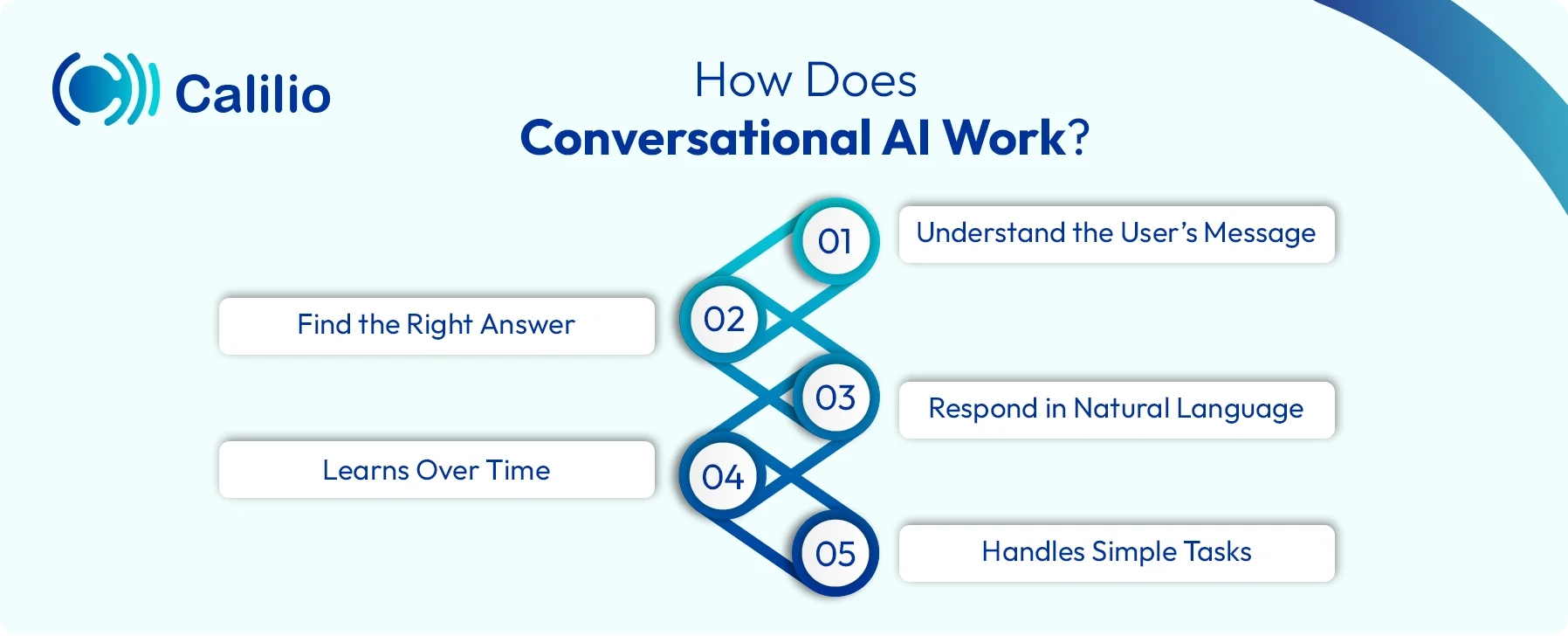
Conversational AI analyzes what the user says, identifies the request, and pulls out the information it needs to understand the question. Then, it searches its data or connected tools for the correct response and replies in smooth, human-like language. Over time, it learns from new interactions and becomes better at handling basic tasks.
- Understand the User’s Message: Conversational AI uses Natural Language Processing (NLP) to read or listen to a message, understand what the user wants, and identify the key details needed to process the request.
- Find the Right Answer: Once it understands the request, it checks its trained data, knowledge base, or connected systems to find the most accurate answer.
- Respond in Natural Language: It gives a clear and human-like reply to keep the conversation smooth and easy to follow.
- Learns Over Time: With more interactions, it becomes better at understanding questions and giving accurate responses.
- Handles Simple Tasks: It handles simple tasks such as checking account details, booking appointments, or answering common questions.
Pros and Cons of Conversational AI
Conversational AI helps businesses respond faster, handle repetitive questions, and assist users anytime with minimal resource costs. However, it cannot complete multi-step tasks, struggles with unclear messages, and often loses context in more extended conversations.
Pros
- Conversational AI understands questions and responds in human-like language, making interactions smooth.
- It can reply within seconds, helping users get quick answers without waiting for a human agent.
- It can manage hundreds of conversations at once, making it ideal for busy businesses.
- It answers fundamental questions and solves basic issues, which reduces the workload for support teams.
- Customers can get help anytime, even when the team is offline
Cons
- It cannot plan or complete multi-step actions beyond answering questions.
- Slang, mixed emotions, or vague messages often confuse the system and lead to weak or off-topic replies.
- Poor or biased data reduces the accuracy of the response.
- It often loses context during long conversations or sudden topic changes.
Agentic AI vs. Conversational AI: Core Differences
Agentic AI works independently to reach goals and handle complex, multi-step tasks, while conversational AI focuses on responding to user questions through a predefined script in a reactive way. Both serve different purposes, and the right choice depends on the task, complexity, and the outcome you expect.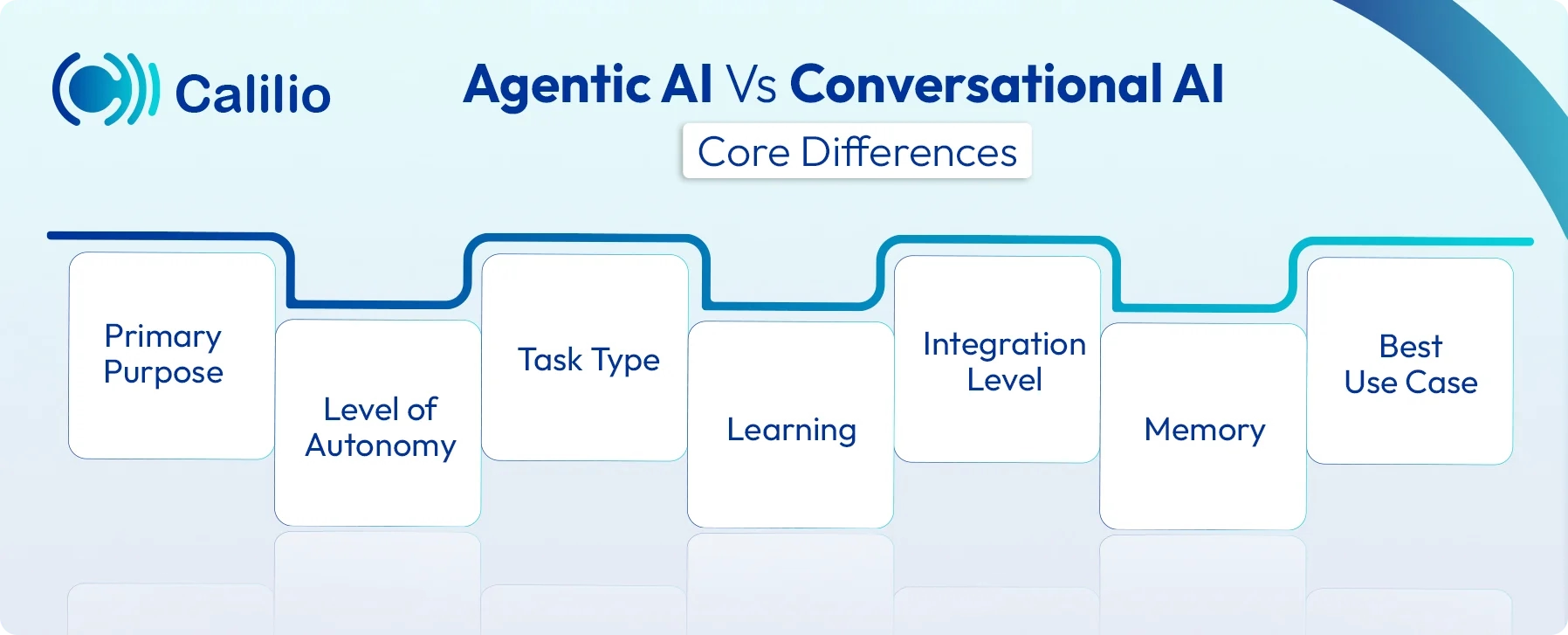
1. Primary Purpose
Agentic AI focuses on completing tasks from beginning to end. Once you set the goal, it figures out the steps and finishes the task on its own without constant instructions.
In contrast, conversational AI focuses on communication. Its purpose is to understand what the user says and respond with the right information. It behaves like a support agent that answers questions but waits for guidance before taking action.
2. Level of Autonomy
Agentic AI works with a high level of independence. It plans its own steps, makes decisions, and takes action without waiting for new instructions.
On the other hand, conversational AI is reactive. It only responds when the user asks something. It does not take the initiative or perform actions beyond the conversation.
3. Task Type
Agentic AI handles tasks that require multiple steps, decision-making, or interactions with different systems. This includes workflows, updates, and process automation.
Conversely, conversational AI handles single-step tasks, such as answering questions, checking order status, or collecting basic information.
4. Learning
Agentic AI improves through real-time feedback. As it performs actions, it learns what works and adjusts its steps to get better results.
In contrast, conversational AI has limited learning in real-world use. It relies on trained models and needs manual updates to improve its answers or add new information.
5. Integration Level
Agentic AI connects deeply with business tools like CRMs, ERPs, databases, ticketing systems, and phone systems. This allows it to perform real-time actions across systems.
Whereas Conversational AI often works inside one interface, like a chat window or voice assistant. It may connect to one or two systems, but it typically has limited access.
6. Memory
Agentic AI can remember past actions and previous instructions. It keeps context for a longer time, which helps it manage ongoing tasks and workflows across multiple sessions.
Conversational AI, on the other hand, remembers only what happens during the current chat. When the session ends, the memory resets. It does not keep long-term context unless specially designed for it.
7. Best Use Case
Agentic AI works best for tasks that need full automation from start to finish. It handles system updates, runs workflows, processes data, and completes tasks that need both planning and action.
Conversely, conversational AI is ideal for customer communication. It answers FAQs, guides users, solves simple issues, qualifies leads, and supports basic interactions where the focus is on conversation.
Here’s a quick comparison between agentic AI and conversational AI:
Factor | Agentic AI | Conversational AI |
| Primary Purpose | Completes tasks and reaches goals on its own | Communicates with users and answers questions |
| Level of Autonomy | High — plans, decides, and acts independently | Low — responds only when prompted |
| Task Type | Multi-step, action-based tasks | Simple, question-and-answer interactions |
| Learning | Learns from results and adjusts actions in real time | Limited learning; needs manual updates for major changes |
| Integration Level | Connects deeply with multiple business systems (CRM, ERP, database) | Often works in a single chat interface with basic data access |
| Memory | Maintains long-term context across tasks and sessions | Keeps context only during the current conversation |
| Best Use Case | End-to-end automation, system updates, and advanced task handling | Customer support chats, FAQs, basic troubleshooting, and lead qualification |
Conversational AI vs. Agentic AI: When to Use Each One?
Choosing between agentic AI and conversational AI depends on the type of work you want to automate. Use agentic AI for automated workflows, system updates, and tasks that require reasoning. Use conversational AI for chat-based guidance, FAQs, and simple support journeys.
Use agentic AI if:
- Your goal involves multi-step workflows that require planning and decision-making.
- You want AI to perform actions across tools, such as CRMs, databases, or ticketing systems.
- Your team handles repetitive operational tasks that can be automated.
- You need consistent and reliable task execution without manual involvement.
- You want AI that can learn from outcomes and adjust its next actions.
Use conversational AI if:
- You need AI to respond to questions quickly and accurately.
- Your tasks are simple, predictable, and information-based.
- You want to handle large volumes of user queries without adding more support agents.
- You need 24/7 assistance for FAQs, order updates, or basic help.
- You want a smooth, natural conversation experience in chat or voice channels.
Conclusion
Understanding the difference between conversational AI vs. agentic AI helps you choose the right system for your needs. Conversational AI focuses on communication. It answers questions, guides users, and supports customers through clear, natural responses. Agentic AI goes further by planning tasks, taking action, and completing multi-step workflows on its own.
Both play important roles, but the right choice depends on the outcome you want. If your goal is smooth communication and quick replies, conversational AI works well. If you need deeper automation that reduces manual work, agentic AI becomes the better fit.



Summarize this blog with:
Frequently Asked Questions
Which is better: agentic AI or conversational AI?
Agentic AI is better when you need automation and multi-step task execution, while conversational AI is better for customer support, FAQs, and quick communication. The right choice depends on whether you need action or conversation.
Can conversational AI perform complex, multi-step tasks like agentic AI?
Can agentic AI and conversational AI work together?

Still have questions?
Can’t find the answer you’re looking for? Please chat with our friendly team.
Stay in the loop
Get the latest call insights, trends, and updates delivered straight to your inbox.
By subscribing, you agree to receive updates from Calilio.
You can unsubscribe anytime.
Enter the World of AI Business Phone System with Calilio
Improve your business operation with Calilio's advanced virtual phone system. Join today for a better way to connect.