
What is the Difference Between Mass Text & Group Chat?

Messaging multiple people at once can be done in different ways, but not all methods serve the same purpose. Two of the most common options are through group chats and mass texts, and while they might seem similar, they have distinct differences.
Group chats allow everyone in a conversation to see and respond to messages, making them ideal for collaboration or ongoing discussions. In contrast, mass texts deliver the same message individually to each recipient, keeping responses private and maintaining a one-way, broadcast-style communication.
In this blog, we’ll explore the key differences between group chat and mass text in detail. We’ll also explain how each works and when to use them based on your communication needs.
Key Highlights:
A group chat is a digital conversation that brings three or more people together in a shared space, allowing all participants to send messages, images, and files that everyone can see and respond to in real time.
Mass text (also known as bulk SMS or text blast) is the process of sending one message to many recipients simultaneously, where each recipient receives it individually, not in a shared group thread.
The major difference between group chat and mass text is how communication happens. Group chat allows multiple people to interact in a shared conversation. In contrast, mass text sends the same message individually to multiple recipients.
Group chatting is suitable for team discussions, project coordination, or casual group communication.
Mass texting is suitable for announcements, reminders, alerts, or SMS marketing campaigns, where clarity and control matter more than discussion.
What is a Group Chat?
A group chat is a digital conversation involving three or more participants in a shared space, where all messages, images, and files are visible to everyone in real time. It allows multiple people to communicate simultaneously within the same thread.
One person creates the group and adds members at the beginning. After that, everyone in the group can send messages, reply, and share media. Depending on the system, sometimes only the creator (admin) can add new members, while in other cases, any member can add people. This way, the group gradually grows and communication becomes easy in one place.
Real-world Example of a Group Chat
A common example of a group chat is a family WhatsApp group. In this group, members send messages, photos, and videos in a shared conversation, allowing everyone to stay connected and updated at the same time.
Key Features of a Group Chat
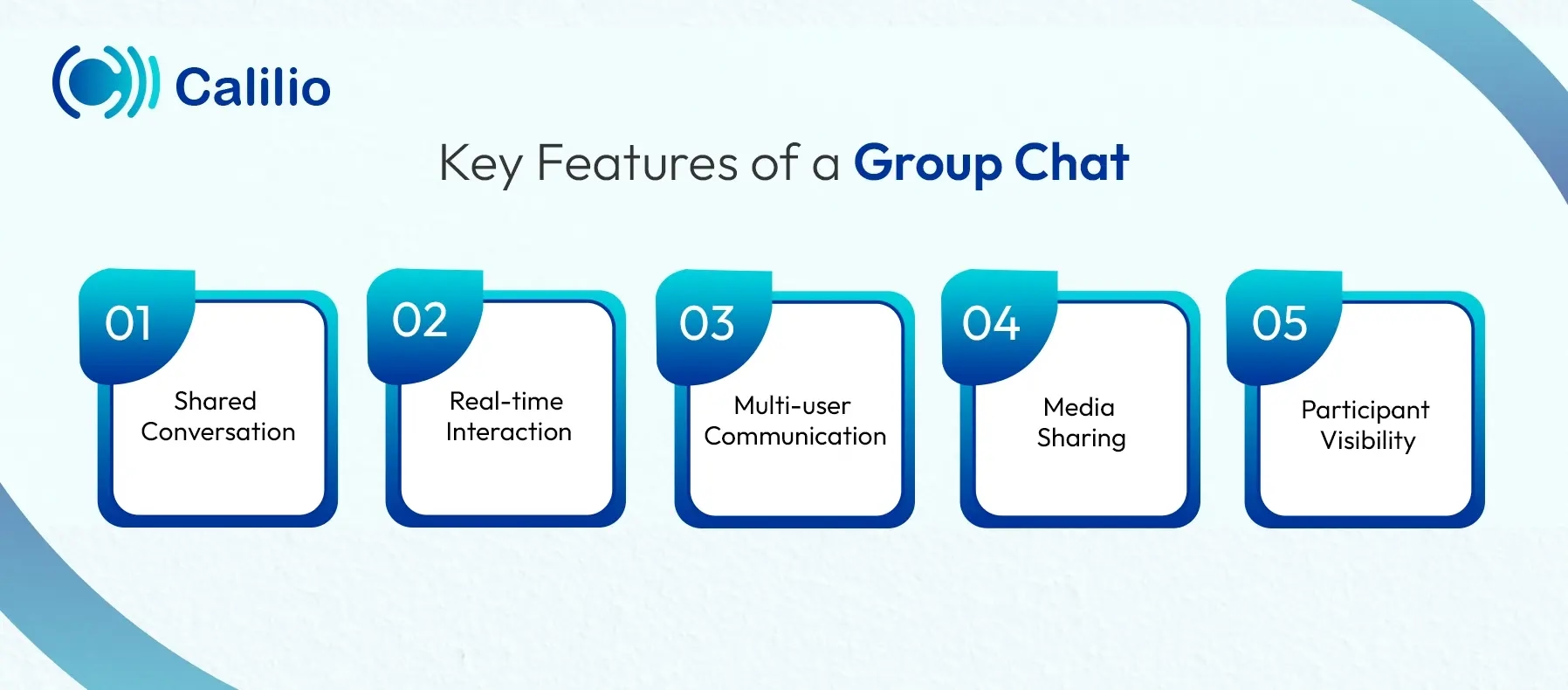
- Shared Conversation: All participants can view messages sent in the group
- Real-time Interaction: Members can reply instantly and take part in ongoing discussions
- Multi-user Communication: Supports communication between several people at the same time
- Media Sharing: Allows sharing of images, videos, files, and links within the chat
- Participant Visibility: Everyone in the group can see who is part of the conversation
| Pros | Cons |
|
|
What is Mass Text?
A mass text message is a type of one-to-many messaging where a single message is sent to multiple recipients at the same time. Each message is delivered individually, allowing you to reach a large audience through a single action.
Bulk messages are sent through long codes (10-digit numbers for two-way communication), short codes (5-6 digit numbers for high-volume campaigns), or toll-free numbers (free for recipients, mainly for alerts or support). Platforms for mass texting often support personalization, scheduling, and tracking for long codes and short codes.
Real-world Example of Mass Texting
A retail store sends a mass text message to many customers to announce a weekend sale, such as “Enjoy 20% off on all items this weekend.” Each person receives the message privately and cannot see others who got it, and any replies go directly to the business.
Key Features of a Mass Texting
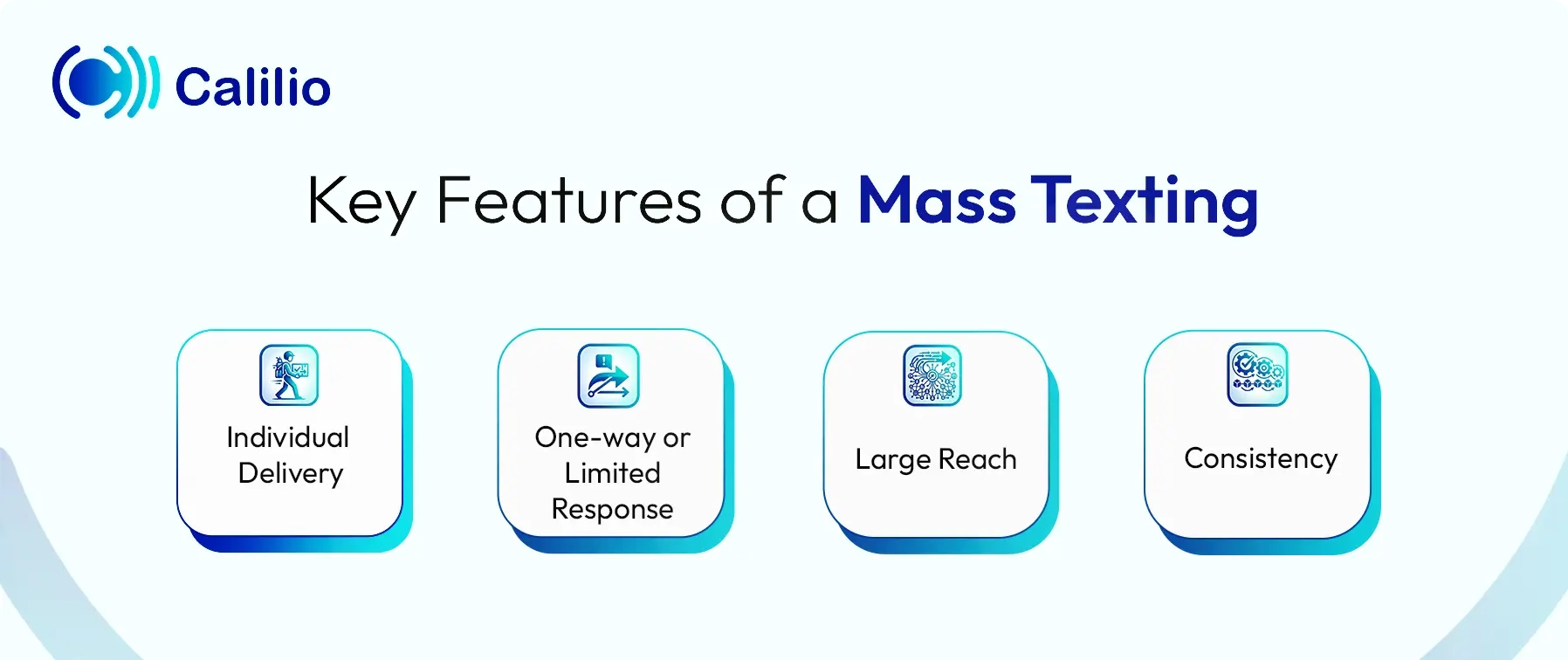
- Individual Delivery: Each recipient gets the message privately
- One-way or Limited Response: Replies are not seen by other recipients
- Large Reach: Can send the same message to thousands at once
- Consistency: Ensures the message content is identical for all recipients
| Pros | Cons |
|
|
What is the Difference Between Group Chats and Mass Texts?
The primary difference between group chats and mass texts is that group chat creates a shared conversation where everyone can see and reply to each other’s messages. In contrast, mass text sends separate messages to each recipient, keeping replies private and not visible to others.
Aspects | Group Chat | Mass Text |
| Communication Type | Many-to-many (everyone can send messages and reply to each other) | One-to-many (One person sends to many; replies go only to the sender) |
| Conversation Style | Interactive and conversational | Broadcast and informational |
| Visibility | Everyone can see replies from all participants | Replies are only visible to the sender |
| Audience Size | Often limited (e.g., 20–250 depending on the platform) | Scales to large audiences (hundreds or thousands) |
| Purpose | Collaboration, discussions, group planning | Announcements, alerts, marketing messages |
| Automation | Not typically automated | Can be automated and scheduled |
| Message Management | Can become cluttered with many replies | Easier to manage as responses are separate |
| Personalization | Limited or none | Messages can be personalized using names, preferences, or dynamic fields |
| Compliance Needs | No compliance required | Requires explicit opt-in, opt-out options, and adherence to SMS regulations (e.g., consent-based messaging) |
| Spam Risk | Generally low | High risk of being marked as spam if misused |
| Cost | Free when using internet-based apps, but SMS/MMS group chats may incur carrier charges per message sent | Involves per-message or subscription costs, depending on the platform and volume |
Below is a detailed explanation of each aspect:
1. Communication Type
Group chat supports many-to-many communication, meaning every participant can send and receive messages within the same conversation. In contrast, mass texting follows a one-to-many model, where a single sender delivers the same message to multiple recipients individually without creating a shared conversation space.
2. Conversation Style
Communication in group texts tends to be interactive and dynamic, with participants responding, reacting, and building ongoing discussions. Mass texting, by comparison, is more structured and informational, mainly used to share updates rather than encourage conversation.
3. Visibility
All participants in a group chat share the same space, so every message and reply is visible to everyone involved. With mass texting, messages are sent separately, meaning each recipient only sees their own conversation and has no access to others’ responses.
4. Audience Size
The number of participants in a group chat usually depends on the platform, which can make larger conversations harder to manage. Mass texting, however, is built for scale, allowing messages to be sent to hundreds or even thousands of recipients at once, making it ideal for large audiences.
5. Purpose
Group chats are commonly used for collaboration, discussions, and coordination, where input from multiple participants is needed. Mass texting serves a different role, focusing on delivering announcements, alerts, or promotional messages without requiring group interaction.
6. Automation
Most group chats rely on real-time participation, with users sending messages manually as conversations unfold. Mass texting, on the other hand, often includes automation features, such as scheduling messages or sending them based on triggers, which helps streamline communication.
7. Message Management
As more participants engage in a group chat, messages can pile up quickly, making it difficult to keep track of key details. With mass texting, replies are handled in separate message threads, allowing for more organized communication and easier response tracking.
8. Personalization
In group conversations, messages are usually the same for everyone, since all participants share a single thread. Meanwhile, mass texting allows for personalized text messages, where details like names or preferences can be included to make communication feel more direct and relevant.
9. Compliance Needs
From a regulatory perspective, group chats usually operate without formal consent requirements, as they are often used for casual or internal communication. Alternatively, mass texting, especially in SMS marketing or customer communication, must follow consent-based practices, including opt-in and opt-out options to ensure compliance.
10. Spam Risk
When it comes to message perception, group chats generally carry a lower risk of being flagged as spam, although too many messages can still overwhelm participants. Mass texting, however, requires more careful handling, as frequent or unsolicited messages may lead to spam reports or recipients blocking the sender.
11. Cost
If you are sending group messages through internet-based messaging apps, it is often free. However, standard SMS or MMS group chats incur charges per message or for media attachments. On the other hand, using a group texting app for business involves subscription fees or service costs. Additionally, bulk messaging platforms often charge based on the number of messages sent or offer subscription plans.
Conclusion
Choosing between mass texting and group chat depends on your communication goals, audience size, and the level of interaction needed. Mass texting is best for delivering information quickly to a large audience, making it ideal for announcements, reminders, alerts, or marketing campaigns where clarity and control are important.
In contrast, group chat is designed for ongoing interaction and collaboration, making it suitable for team discussions, project coordination, or casual conversations. By selecting the method that aligns with your purpose, you can communicate effectively, maintain privacy, and ensure your message reaches the audience in the most appropriate way.
Summarize this blog with:
Frequently asked questions
Can you convert a group chat into a mass text?
No, you cannot directly convert an existing group chat thread into a mass text thread on most smartphones. However, you can change your phone’s messaging settings so that future messages to the same contacts are sent as individual, private texts rather than as replies within a shared group conversation.
Does mass texting work without the internet?
Are there analytics available for group chats and mass texts?

Still have questions?
Can’t find the answer you’re looking for? Please chat with our friendly team.
Stay in the loop
Get the latest call insights, trends, and updates delivered straight to your inbox.
By subscribing, you agree to receive updates from Calilio.
You can unsubscribe anytime.
Enter the World of AI Business Phone System with Calilio
Improve your business operation with Calilio's advanced virtual phone system. Join today for a better way to connect.