- Partners
- Contact Us
- Log in
Carrier Fees: What are They & How to Reduce Them?

Carrier fees can drive up your communication costs, often going unnoticed until the bill arrives. For businesses with high call volumes, international calls, or bulk messaging, even small per-message or per-minute charges can quickly add up, straining budgets and raising unexpected costs.
Understanding carrier fees and taking steps to reduce them can help you save money and manage your communication expenses more effectively.
In this guide, we’ll explain what carrier fees are, what costs are involved, how they affect your business, and what factors influence them. We’ll also share practical tips to avoid high carrier fees and keep your communication budget in check.
Key Highlights:
Carrier fees are extra charges added by telecom providers whenever you make calls or send messages, increasing the overall cost of communication beyond your regular plan.
The cost of carrier fees depends on factors like the type of call you make or the message you send—whether it’s local or international, the network it uses, and the specific service provider’s pricing structure.
Carrier fees generally range from $0 to $0.0060 per SMS, $0 to $0.01 per MMS, and $0.008 to $0.022 per minute for calls, varying by provider, country, and the type of number.
For businesses, carrier fees can significantly raise communication expenses and create billing complexities, especially when dealing with high call or message volumes.
You can save on carrier fees by limiting unnecessary SMS/calls, reducing rich media messaging, and using VoIP (Voice over Internet Protocol) services.
What are Carrier Fees?
Carrier fees are extra charges imposed by telecom service providers for using their networks to send SMS, MMS, make calls, or access other communication services. There are additional charges on top of your regular plan cost. These fees cover costs such as network maintenance, regulatory compliance, and emergency services like 911. While some fees are required by the government, many are set by the carrier itself.
Carrier fees are common in the US and Canada and are charged by major carriers such as AT&T, Verizon, and T-Mobile. For businesses that send a high volume of messages, carrier fees can quickly increase monthly costs and lead to unexpected charges.
What Affects Carrier Fees?
The carrier fee can vary based on several factors, including the carrier used, usage volume, the destination of the message or calls, and whether the message is sent as SMS or MMS.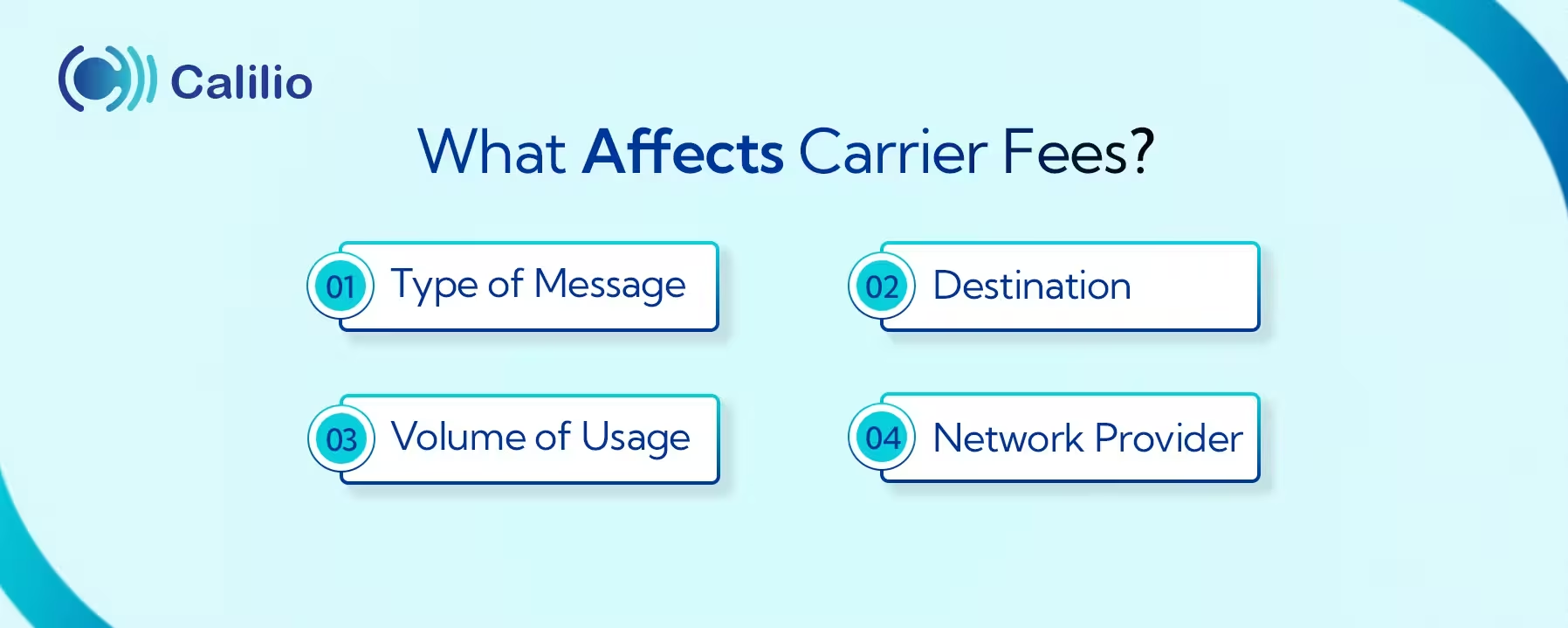
1. Type of Message
Carrier costs can vary depending on the type of communication, such as SMS or MMS. SMS is the least expensive as it only includes plain text up to 160 characters. MMS allows longer messages up to 1,600 characters and can include images, videos, or other media, which increases the fee.
2. Destination
Carrier fees also depend on where your messages or calls are sent. Local communication is usually cheaper as it stays within the same carrier network. In contrast, international messages or calls are much more expensive as they require passing through multiple networks and foreign carriers.
3. Volume of Usage
The number of calls or messages sent can quickly increase total carrier fees. The higher the usage, the more network resources your business uses. For example, a business that sends thousands of marketing texts in a month will usually pay much more in carrier fees compared to a company that only sends a small number of messages.
4. Network Provider
Each telecom company has its own rates, so fees can vary depending on the provider. For example, AT&T, Verizon, and T-Mobile may charge differently for the same service.
How Much Fee Does a Carrier Typically Charge
Carrier fees typically range from $0 to $0.0060 per SMS, $0 to $0.01 per MMS, and $0.008 to $0.022 per minute for calls. However, the cost can vary widely depending on the type of number you use, such as 10DLC, short code, and toll-free numbers.
1. Long Code (10DLC) Carrier Fees
Long codes, also called A2P 10-digit long codes in the US, are standard 10-digit phone numbers used by businesses for everyday messaging, such as customer support, appointment reminders, and notifications.
Carrier fees for long code messaging typically range from $0.003 to $0.005 per SMS, $0.0065 to $0.010 per MMS and $0.0085 to $0.014 per minute for voice calls, whether inbound or outbound.
Here’s a quick overview of per-message/per-minute carrier fees for 10DLC messaging/calling, respectively, with some popular US carriers:
Carrier | SMS Inbound | SMS Outbound | MMS Inbound | MMS Outbound | Voice Call Inbound | Voice Call Outbound |
| T‑Mobile/Sprint | $0.0025 | $0.0045 | $0.0100 | $0.0100 | $0.0085 | $0.0140 |
| AT&T | $0.0030 | $0.0030 | $0.0075 | $0.0075 | $0.0085 | $0.0140 |
| Verizon | $0 | $0.0040 | $0 | $0.0065 | $0.0085 | $0.0140 |
| US Cellular | $0.0025 | $0.0050 | $0.0100 | $0.0100 | $0.0085 | $0.0140 |
| C-Spire | $0.0035 | $0.0035 | $0.0050 | $0.0100 | $0.0085 | $0.0140 |
2. Toll-Free Carrier Fees
Toll-free numbers such as 800, 888, and 877 are commonly used by businesses to allow customers to reach them without paying for the call. They are commonly used for customer support, help desks, marketing campaigns, and service hotlines. Generally, toll-free numbers are designed for free calling, but if texting is enabled, they can also send and receive SMS or MMS messages.
Toll-free SMS and MMS carrier fees generally fall within the same range as long codes, typically $0.003 to $0.004 per SMS, $0.0065 to $0.010 per MMS, and $0.014 to $0.022 per minute for voice calls. These fees apply to both inbound and outbound messages and calls.
Here’s a quick overview of toll-free carrier fees per message (SMS/MMS) or per minute (calls):
Carrier | SMS Inbound | SMS Outbound | MMS Inbound | MMS Outbound | Voice Call Inbound | Voice Call Outbound |
| T‑Mobile/Sprint | $0.0020 | $0.0045 | $0.0100 | $0.0100 | $0.0220 | $0.0140 |
| AT&T | $0.0030 | $0.0030 | $0.0075 | $0.0075 | $0.0220 | $0.0140 |
| Verizon | $0 | $0.004 | $0 | $0.0065 | $0.0220 | $0.0140 |
| US Cellular | $0.0025 | $0.0045 | $0.0100 | $0.0100 | $0.0220 | $0.0140 |
| C-Spire | $0 | $0.0025 | $0 | $0.0100 | $0.0220 | $0.0140 |
3. Short Code Carrier Fees
Short codes are 5 or 6-digit numbers designed for businesses that send high-volume and time-sensitive messaging such as marketing campaigns, alerts, and one-time passwords (OTPs).
Short code carrier fees typically range from $0.002 to $0.005 per SMS and $0.0065 to $0.010 per MMS. Also, these numbers often come with higher setup and registration costs, making them more expensive.
Here’s a quick overview of short code carrier fees per message:
Carrier | SMS Inbound | SMS Outbound | MMS Inbound | MMS Outbound |
| T‑Mobile/Sprint | $0.0020 | $0.0045 | $0.0100 | $0.0100 |
| AT&T | $0 | $0.0030 | $0 | $0.0075 |
| US Cellular | $0 | $0.0045 | $0.0100 | $0.0100 |
| Verizon | $0 | $0.0040 | $0 | $0.0065 |
| C-Spire | $0.0035 | $0.0035 | N/A | N/A |
Note: Short codes do not support voice calls; all calling, both inbound and outbound, must be managed using a separate long code or toll-free number.
Why are High Carrier Fees a Problem for Businesses?
Carrier fees increase overall communication costs for businesses. It creates billing uncertainty, adds complexity to international operations, and negatively impacts the customer experience.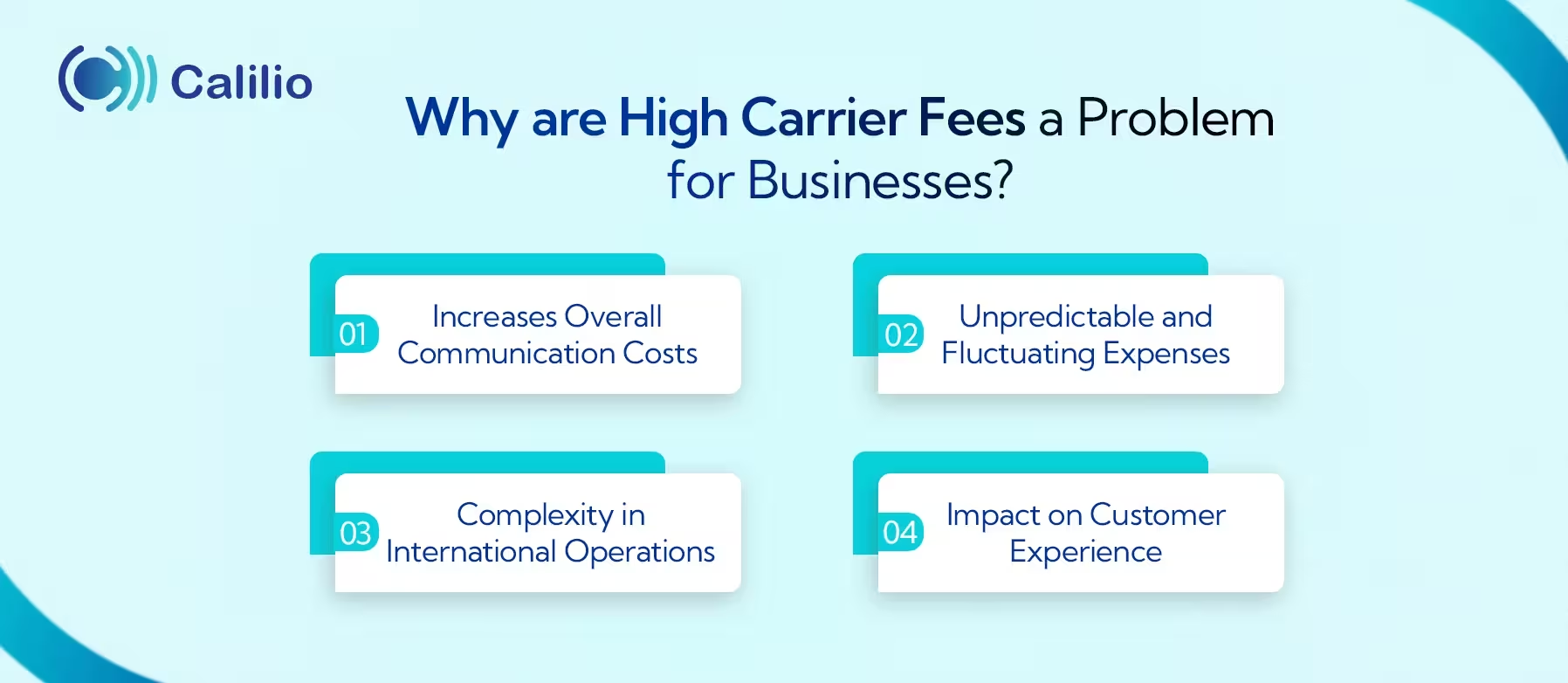
- Increases Overall Communication Costs: Carrier fees add extra costs to calls, messages, and notifications. For businesses handling large volumes of SMS or calls, small fees can quickly add up, raising overall operational expenses.
- Unpredictable and Fluctuating Expenses: As carrier fees can change due to policies, regulations, or message volume, businesses often struggle to predict their costs. This unpredictability creates challenges for budgeting and financial planning.
- Complexity in International Operations: Operating across different countries involves working with multiple carriers, pricing structures, and regulations. This makes it harder for businesses to manage costs, ensure compliance, and maintain consistent communication worldwide.
- Impact on Customer Experience: To manage rising communication costs, businesses may limit message frequency, reduce support availability, or restrict certain channels. These cost-cutting measures can lead to lower customer engagement and reduced satisfaction.
Make Calls & Send SMS at Low Costs with Calilio’s Affordable Business Phone System
How to Reduce Carrier Fees?
You can reduce carrier fees by choosing the right message methods, using VoIP phone systems, limiting call and message volume, favoring SMS over MMS when possible, and sending messages and making calls during off-peak hours.
1. Choose the Right Message Type
The two main message formats are SMS and MMS, and each comes with different costs. MMS supports images, videos, and longer content, but it comes with higher charges. So, use MMS only when visuals or advanced engagement are necessary. If you can craft a clear and understandable message with plain text, choose SMS for your business communication. This helps keep your carrier fees low.
2. Send Messages and Calls During Off-Peak Hours
Many carriers apply different pricing depending on the network traffic. The price may be higher during business hours, holidays, and major promotions. So, consider making calls and sending messages during off-peak times, such as early mornings, late evenings, or weekends. It not only saves on your carrier fee, but also helps avoid network congestion and improve delivery success.
3. Unnecessary Message and Call Volume
Sending duplicate alerts, irrelevant promotions, or excessive follow-ups increases carrier fees without adding value. Similarly, unnecessary or lengthy calls also increase costs. Keep your contact list updated, avoid inactive users, and focus on relevant, well-timed messages and calls to reduce overall expenses.
4. Use Links Instead of Long Messages
Long messages that exceed standard character limits are automatically split into multiple parts, and each part is billed separately, which increases carrier fees. Replacing long text with short, trackable links helps keep messages within a single segment, reducing costs.
5. Switch to Cloud VoIP Solutions
Cloud VoIP solutions help businesses reduce carrier costs with lower per-minute and per-message rates compared to traditional carriers. While VoIP providers charge a subscription fee similar to regular carriers, they eliminate additional charges for international roaming and include call management features like call forwarding, auto-attendants, and analytics.
VoIP services also remove the need for costly on-premise hardware, cutting setup and maintenance expenses, making it a highly cost-effective solution for managing business communications.
Conclusion
Carrier fees are additional charges applied by telecom providers for sending messages, making calls, or using certain phone services. The total cost depends on several factors, including message or call type, volume, and the provider’s pricing model.
These fees can quickly add up, especially for businesses communicating with large audiences or internationally. To reduce carrier fees, businesses can adopt strategies like choosing SMS over MMS, limiting unnecessary call/message volume, and avoiding making calls or sending messages at peak hours.
Another effective option is switching to a VoIP phone system. Platforms like Calilio offer affordable communication rates, with SMS starting at just $0.012 per message and calls at $0.0132 per minute in the US.



Summarize this blog with:
Frequently Asked Questions
Can carrier fees be reduced for international calls?
Yes, carrier fees for international calls can be reduced by subscribing to an international calling plan provided by your carrier (if available). You can also use a VoIP service provider to make calls over the internet, avoiding the expensive fees charged by traditional carriers.
Can switching providers help reduce carrier fees?
How do businesses manage carrier fees effectively?
Are carrier fees the same for all countries?

Still have questions?
Can’t find the answer you’re looking for? Please chat with our friendly team.
Stay in the loop
Get the latest call insights, trends, and updates delivered straight to your inbox.
By subscribing, you agree to receive updates from Calilio.
You can unsubscribe anytime.
Enter the World of AI Business Phone System with Calilio
Improve your business operation with Calilio's advanced virtual phone system. Join today for a better way to connect.