
What is a Landline Phone Number?

Mobile phones are everywhere today. Almost everyone carries one. Yet, many businesses still use landline numbers. Wonder why?
Well, the answer is simple. A landline number gives a business a clear regional identity. Plus, these lines run through a wired connection, so they are not affected by weak signals or frequent coverage drops, which are common with mobile communication.
Stay tuned. In this article, we'll explore what a landline phone number is in detail, including its structure, use cases, benefits, and limitations for everyday communication use.
Key Highlights:
A landline phone number is a fixed-line number connected to a specific location, such as a home or office.
A landline phone number usually includes a trunk prefix (depending on the country), area code, and local number. For international calls, the exit code and country code are added at the beginning, while removing the trunk prefix (if any).
Landlines offer clear and stable call quality and continue to work even during internet or power outages, making them reliable for critical communication.
Landlines are widely used in industries like healthcare, legal services, banking, and emergency response, where location-based calling matters.
The limitations in landline phone lines include a lack of mobility, higher setup and maintenance costs, and difficult scalability.
What is a Landline Phone Number?
A landline phone number is a fixed phone number assigned to a physical phone line that runs through cables such as copper wires or fiber lines. Because of this setup, the number stays tied to one address and does not move with the user.
Landline numbers operate through the Public Switched Telephone Network (PSTN), the traditional wired telephone network used for voice communication. These numbers are commonly used in homes, offices, and places where a stable and location-based calling setup is required.
How Do Landline Phone Numbers Work?
Landline phone numbers work by connecting calls through physical telephone lines in a fixed network. When a call is made, the network identifies the number and routes the call through local and long-distance exchanges until it reaches the receiving phone.
- Physical Line Connection: A landline phone connects to the telephone network through a physical wire (copper or fiber optic cables) installed at a fixed location, such as a home or office.
- Call Initiation: When a call is made, the phone sends the call signal through the wired line to the local telephone network.
- Local Exchange Routing: The call reaches a local exchange that is part of the Public Switched Telephone Network (PSTN). The exchange reads the dialed number and routes the call to the correct destination.
- Call Completion: The call reaches the receiving phone, allowing both parties to communicate through the wired connection.
How are Landline Numbers Formatted?
Landline numbers are structured differently depending on whether you’re making a local or international call.
1. Local Landline Number Format
For local calls, a landline phone number generally consists of a trunk prefix (0), an area code, and a local subscriber number. However, not all countries use trunk codes. For instance, the United States does not use a trunk prefix like 0, while countries such as the UK, Germany, and Australia do.
For domestic calls, the landline phone number format is usually:
Trunk Prefix + Area Code + Local Number
For Example: 020 7946 0958 (UK landline number)
- 0 – Trunk code
- 20 – Area code
- 7946 0958 – Local number
In countries that do not use a trunk prefix, it follows the following format:
Area Code + Local Number
For Example: 212 794 0958 (US landline number)
- 212 – Area code (Manhattan)
- 794 0958 – Local subscriber number
2. International Landline Number Format
International landline phone numbers consist of the exit code of the country you’re calling from, the country code of the nation being called, the area code, and the local number. This structure is defined by the E.164 format standard for international calls, which explains how country codes and national numbers are used for global calling.
A typical international landline number format looks like this:
Exit Code + Country Code + Area Code + Local Number
For Example: 00 1 212 794 0958 (US landline number when calling from the UK)
Here,
- 00 - Exit code for the United Kingdom
- 1 - Country code for the United States
- 212 - Area code for Manhattan
- 794 0958 - Local subscriber number
Note: International calling excludes the trunk prefix that’s used for local calls. It’s replaced by the exit code and the country code.
Who Uses Landline Phone Numbers?
Landline phone numbers are widely used by hospitals, law firms, banks, emergency services, and logistics companies to manage outbound and inbound calls. They are especially useful in fixed-location environments where stable calling and clear identification matter.
1. Healthcare
Hospitals and clinics use landlines for everyday coordination at desks, nursing stations, and administrative offices. Staff rely on these lines to schedule appointments, share internal updates, and communicate with patients and suppliers.
Landlines also support essential tools like fax machines that are still used for prescriptions, referrals, and medical records in many facilities. Since landlines stay available even during a power outage, they help staff stay connected during critical moments.
2. Legal Services
Legal work usually happens from offices, not on the move. Landlines provide a steady connection for long discussions with clients, courts, and government agencies. Since the number stays tied to the office, they provide dependable contact points. This reduces the risk of dropped calls and helps maintain clear, uninterrupted communication for sensitive and time-critical matters.
3. Finance and Banking
Banks and financial institutions use landline phone numbers for customer verification, account inquiries and official communication. These numbers are linked to a physical branch location, which supports proper record-keeping and regulatory compliance.
For sensitive transactions, a stable and traceable phone line also adds clarity and control. This helps reduce errors, improve accountability, and maintain clear communication in high-trust financial environments.
4. Emergency and Support Services
Emergency services and support centers rely on landline phone numbers for fast and reliable communication. Police stations, fire departments, hospitals, and helplines use these lines to receive urgent calls and coordinate responses without delay.
Landlines also continue working during power cuts or mobile network disruptions, making them a dependable option for handling critical situations and providing timely assistance.
5. Logistics and Warehousing
Logistics companies and warehouses operate in large spaces where mobile signals can be weak. So, landline phone lines are more reliable for daily coordination in these establishments. It supports communication between offices, dispatch desks, and on-site teams. They are also part of safety systems, such as emergency phones, that need to stay active at all times.
What are the Benefits of Using Landline Phone Numbers?
Landline phone numbers provide high call quality, reliable emergency access, enhanced security, and a professional business presence. They help maintain clear, dependable communication in both everyday and business environments.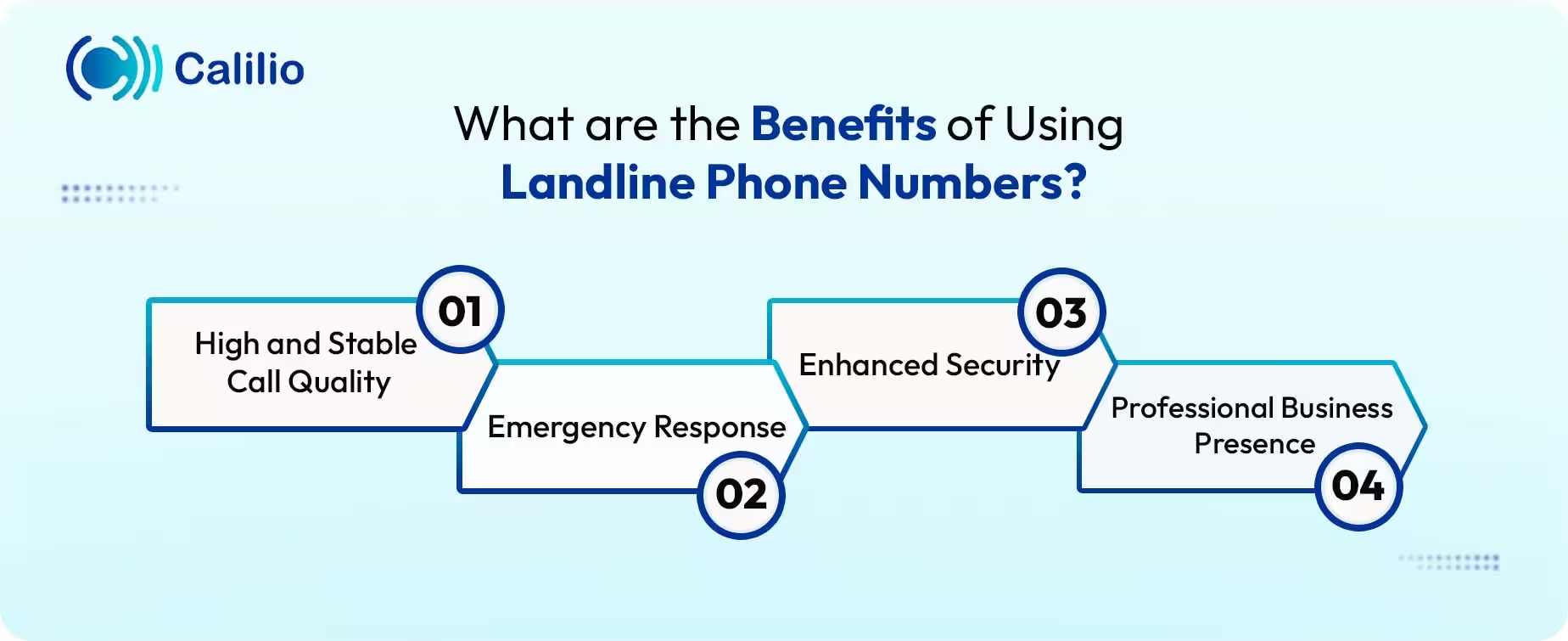
1. High and Stable Call Quality
Landlines offer clear and consistent audio quality since calls travel through dedicated phone lines. Unlike mobile and internet calling, they are unaffected by network congestion, weak signals or interference.
2. Emergency Response
Landline phone numbers operate through the Public Switched Telephone Network and continue to work even during internet outages. This makes them a reliable choice for emergency situations, where constant connectivity is critical.
3. Enhanced Security
Landline phone numbers use dedicated phone lines instead of the internet. This reduces exposure to online threats such as hacking or data interception. As a result, landlines offer a more secure option for sensitive conversations.
4. Professional Business Presence
A landline phone number helps businesses present a stable and professional image. Customers often associate fixed office numbers with established and trustworthy companies. They signal that a business operates from a real office. This improves credibility, supports brand reputation, and makes clients more comfortable starting long-term relationships.
What are the Limitations of Using Landline Phone Numbers?
Landline phone numbers come with limitations such as a lack of mobility, higher setup and maintenance costs, and slower scalability. These factors can make landlines less suitable for flexible or growing communication needs.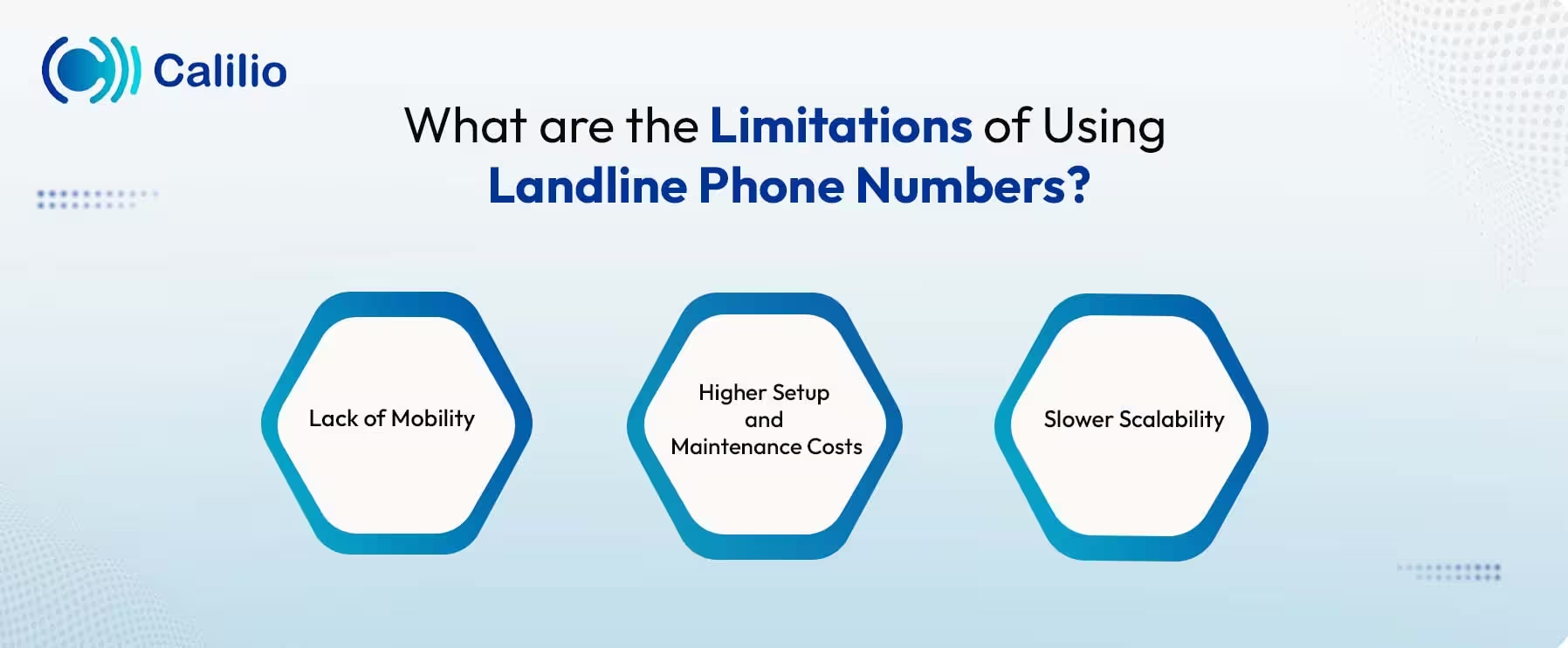
- Lack of Mobility: Landline phone numbers are tied to one physical location. Calls can only be answered where the phone is installed. This makes it difficult for people to stay reachable when they move between offices, work remotely, or travel. If no one is near the phone, important calls can go unanswered.
- Higher Setup and Maintenance Costs: Landlines require physical wiring and hardware. Installing new lines often involves technician visits and infrastructure work. Over time, maintenance costs can increase, especially if lines get damaged or need upgrades, making it more expensive than cloud telephony options.
- Slower Scalability: Expanding a landline setup takes time. Adding new phone lines usually requires physical installation and configuration. This slows down growth when businesses need to scale quickly or add temporary staff.
Get a Virtual Landline Number Today and Enjoy the Flexibility of Internet-Based Calling
Conclusion
Landline phone numbers continue to play an important role in communication, where stability, clear call quality, and location-based identity matter. They work well in fixed environments such as offices, hospitals, legal firms, and emergency services, where reliable connections are essential.
However, limited mobility, difficult scaling, and higher setup and maintenance costs make traditional landlines less suitable for today’s flexible and remote work needs.
This is where modern VoIP phone systems, like Calilio, come in. It combines the reliability, trust, and local identity of the landline number with the flexibility of internet-based calling. Calilio offers virtual landline numbers for your business, but without the complexity of wired systems. You can use your landline numbers on smartphones, laptops, and computers. Plus, it comes with plenty of call management features such as call forwarding, call transfer, and more.
Summarize this blog with:
Frequently asked questions
Is a landline phone number the same as a VoIP number?
No, a landline number is tied to a physical location and uses wired phone lines, while a VoIP number works over the internet and can be used on multiple devices.
Can landline phone numbers send or receive text messages?
Can businesses switch from landlines to VoIP easily?

Still have questions?
Can’t find the answer you’re looking for? Please chat with our friendly team.
Stay in the loop
Get the latest call insights, trends, and updates delivered straight to your inbox.
By subscribing, you agree to receive updates from Calilio.
You can unsubscribe anytime.
Enter the World of AI Business Phone System with Calilio
Improve your business operation with Calilio's advanced virtual phone system. Join today for a better way to connect.