- Partners
- Contact Us
- Log in
A Complete Guide to Call Center Sentiment Analysis
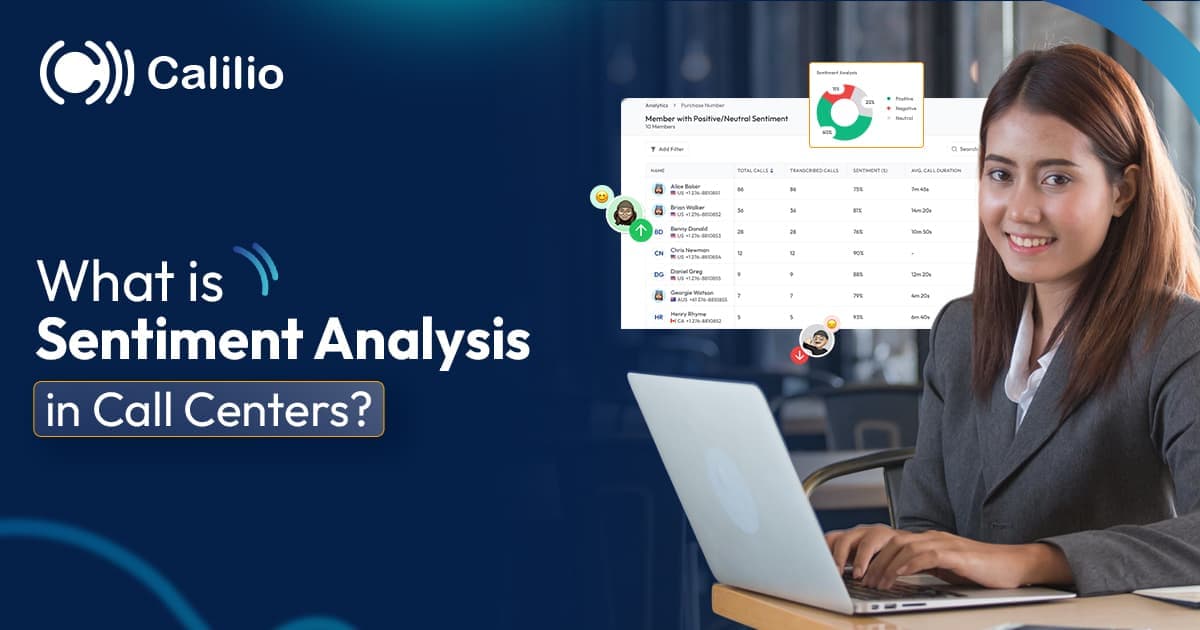

Call centers handle countless customer interactions every day. However, understanding how customers actually feel during those calls isn’t always easy. Most teams rely on basic metrics like call duration or resolution status to track call success. But those reports do not tell the whole story, whether a customer is satisfied, unhappy, or frustrated.
Sentiment analysis addresses this challenge and allows teams to gain a clear understanding of customer emotions in real time. Instead of waiting for complaints or surveys, teams can spot frustration, stress, or satisfaction as the call happens or right after it ends.
In this blog, you will learn what call center sentiment analysis is, how it works, its key benefits, best practices, and factors to consider when choosing the right solution.
Highlights:
Call center sentiment analysis uses AI and Natural Language Processing (NLP) to automatically detect customer emotions like happiness, frustration, anger, or satisfaction from calls, chats, and messages.
It works by preprocessing data from customer interactions, extracting key features, classifying emotions, and generating actionable insights.
Sentiment analysis is important for call centers as it helps improve customer experience, boost agent performance, and identify trends and patterns.
When analyzing caller sentiment, call centers can face challenges such as diverse speech accents, background noise, sarcasm detection, and poor data quality.
To select the best sentiment analysis tool, assess its accuracy, scalability, cost-effectiveness, and capacity to offer real-time insights.
What is Sentiment Analysis in Call Centers?
Call center sentiment analysis is a process of understanding the emotions and attitudes of customers during interactions (calls, live chats, emails) by leveraging AI, Natural Language Processing (NLP), and machine learning algorithms. It usually categorizes customer emotions as positive, negative, or neutral to score the customer’s feelings during or after the conversation.
Analyzing the tone and intent helps call centers know how customers actually feel rather than what they just say. These deep insights help businesses enhance service quality, improve agent performance, and increase overall customer satisfaction.
How Does Call Center Sentiment Analysis Work?
Call center sentiment analysis works by collecting data from customer interactions, analyzing it, and extracting emotions from the conversation. It then classifies the overall sentiment and converts the results into actionable insights to improve service.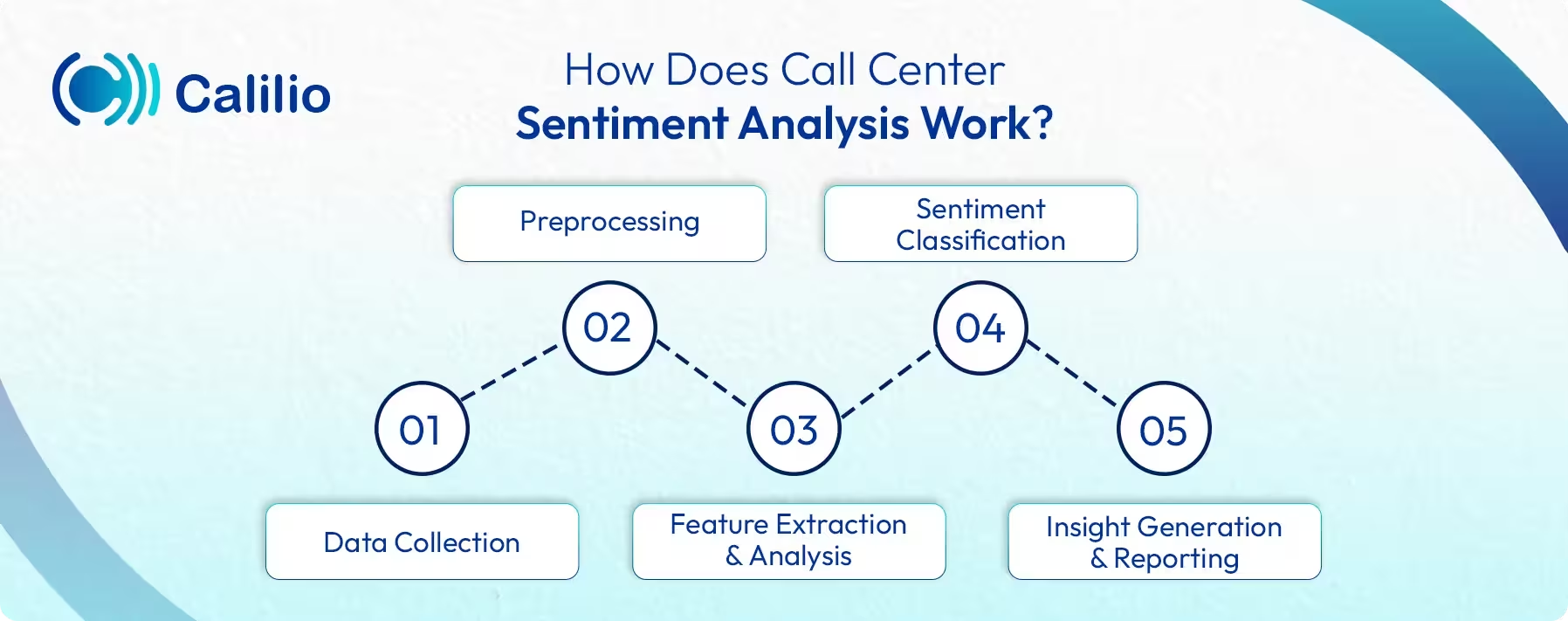
- Data Collection: Firstly, it collects customer interactions from calls, chats, emails, and surveys. During this phase, it also captures essential context, such as timestamps, agent details, and outcomes of the conversation.
- Preprocessing: Once the data is collected, it is prepared for preprocessing. For voice calls, the recordings are converted into written transcripts using AI call transcription tools, and the audio/text is cleaned by removing noise, filler, or irrelevant parts.
- Feature Extraction & Analysis: Once the data is cleaned, AI models use NLP and machine learning to extract emotional signals.
- For text-Based Interactions: Analyzes words, phrases, grammar, and context to detect the emotions behind customer messages.
- For voice call-Based Analysis: Evaluates vocal signals such as pitch, tone, speaking pace, volume changes, and pauses to reveal feelings and attitudes.
- Sentiment Classification: Using the extracted signals, the system labels and scores each interaction as positive, negative, or neutral. It can also detect specific emotions like anger, frustration, calmness, or satisfaction.
For example:- Positive: Thank you for resolving my issue so quickly! I really appreciate your help.
- Negative: I’ve been waiting for an hour, and no one has answered my call. This is frustrating.
- Neutral: I called to check my account balance and nothing else.
- Insight Generation & Reporting: After sentiment is classified, data from multiple interactions is combined to highlight patterns and trends. It helps identify recurring issues, monitor changes in customer mood, and deliver clear insights that support informed decisions and continuous improvement.
Types of Call Center Sentiment Analysis Methods
The different types of sentiment analysis methods used in call centers include text-based, speech-based, and hybrid sentiment analysis. Each approach works differently to capture customer emotions and improve service quality.
1. Text-Based Sentiment Analysis
Text-based sentiment analysis uses NLP to analyze written content like call transcripts, live chat, emails, and survey feedback. It detects sentiment by understanding word choice, context, intent, and language patterns, then labels interactions. It is used when vocal signals are not available, helping agents understand customer sentiment from written words.
2. Speech-Based Sentiment Analysis
Speech-based analysis focuses on the vocal aspects of customer interactions. It transcribes audio, removes filler words, and evaluates tone, pitch, pace, and volume to identify emotions like frustration, satisfaction, or confusion. Additionally, it also provides valuable insights into agents’ soft skills, such as empathy and patience, which are essential for handling difficult situations and boosting customer retention.
3. Hybrid Sentiment Analysis
Hybrid sentiment analysis combines text and speech-based methods to provide a detailed view of customer emotions. It integrates rule-based and machine learning techniques to analyze conversations accurately. Analyzing both textual content and vocal signals, this approach helps call centers optimize responses and enhance overall service quality effectively.
Why is Sentiment Analysis Important for Call Centers?
Sentiment analysis is important in call centers because it helps agents understand customer emotions, identify trends, resolve issues faster, and improve customer satisfaction and overall service quality.
- Understand Customer Emotions: Sentiment analysis helps call centers recognize whether customers are satisfied, frustrated, or confused, allowing agents to respond thoughtfully and improve customer experience.
- Personalize Customer Interactions: Understanding a customer’s emotional state helps agents adjust their approach in real time, creating more relevant and effective interactions.
- Improve First-Call Resolution (FCR): Call center sentiment analysis helps agents understand customer emotions, enabling them to respond more effectively during the first interaction. It helps increase FCR rates, reduces repeat calls, and improves call center efficiency.
- Measure Customer Experience: Sentiment analysis provides actionable insights into customer satisfaction and engagement, helping businesses track progress over time and set clear goals for improvement.
- Improve Agent Performance: Insights from sentiment analysis highlight areas where agents may need additional training or support, enabling managers to provide focused coaching and enhance service quality.
- Identify Trends & Patterns: By analyzing sentiment across multiple interactions, call centers can spot recurring issues, common complaints, or positive trends. It helps optimize processes, prioritize improvements, and make informed decisions.
Capture Customer Sentiment from Every Call with Calilio’s AI-Powered Sentiment Analysis!
What are the Challenges of Sentiment Analysis in Call Centers?
Using sentiment analysis in call centers brings challenges like difficulty understanding complex emotions, handling diverse accents and communication styles, and detecting sarcasm or indirect language.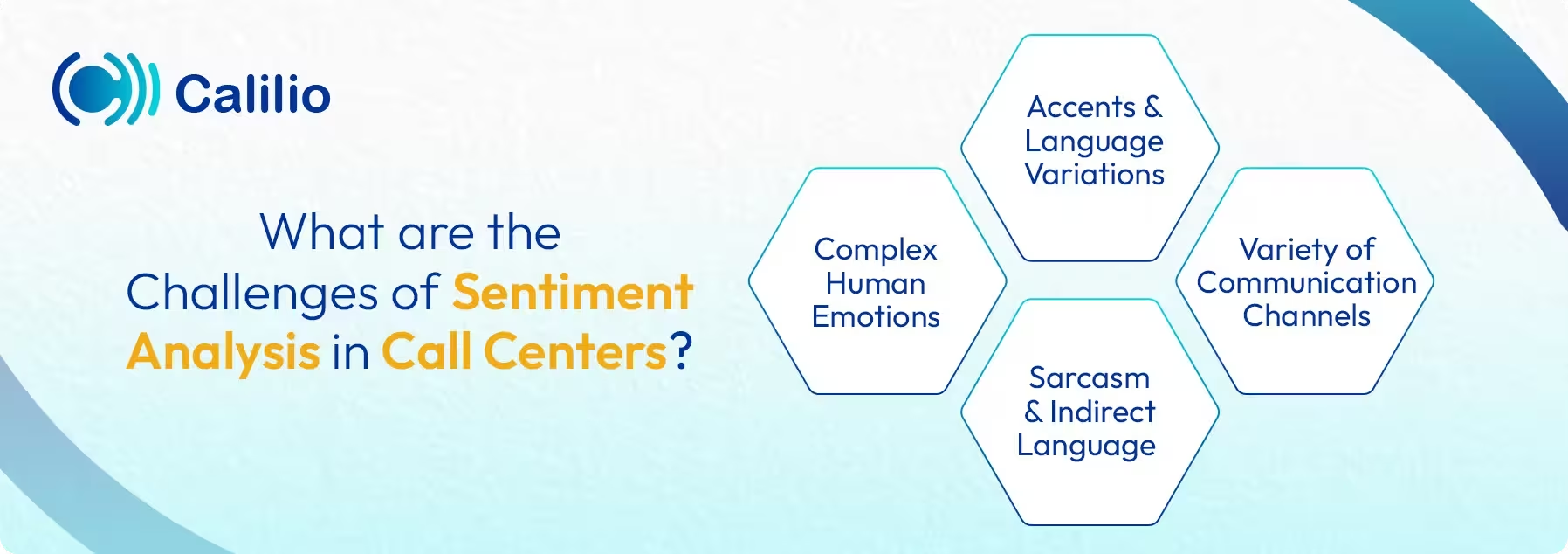
1. Accents & Language Variations
Call centers handle customers from different regions who speak with different accents and communication styles. If the model is not trained on a wide variety of voices and language patterns, it may struggle to understand emotion across diverse accents.
2. Variety of Communication Channels
Call centers manage interactions across multiple channels, including phone calls, live chat, emails, social media, and surveys. Each channel has its own format and style of communication, making it challenging to maintain consistent sentiment analysis across all customer interactions.
3. Sarcasm & Indirect Language
Customers may use sarcasm, irony, or indirect expressions that can be difficult for AI to detect. It can lead to incorrect conclusions about customer sentiment. This directly affects how agents approach a response and impact customer satisfaction.
4. Complex Human Emotions
Customer emotions often involve a mix of positive and negative feelings within the same interaction. For example, a customer may express frustration about a product issue and appreciate the support provided by an agent. AI sentiment analysis systems can struggle to interpret such emotions accurately, which may lead to inaccurate analysis and misleading insights.
Best Practices for Implementing Effective Sentiment Analysis
The best practices for implementing sentiment analysis include monitoring customer interactions across all channels, using advanced AI for accurate insights, maintaining privacy and compliance, addressing negative sentiments immediately, and training staff to act on the insights.
1. Adopt an Omnichannel Approach
An omnichannel approach tracks a customer interaction across every channel, including calls, emails, chats, social media, and messaging apps. This gives a complete view of how customers feel throughout their journey and helps teams respond consistently, even when conversations move between channels.
2. Use Advanced AI for Better Accuracy
By using advanced AI, businesses can identify detailed emotions, tone, context, and even sarcasm or mixed feelings effortlessly in a very short time. The AI tools often provide more accurate sentiment insights, enabling teams to respond effectively and improve the overall customer experience.
3. Maintain Privacy & Compliance
Customer interactions include sensitive personal and financial information, so it is crucial to follow data protection regulations such as GDPR. It helps reduce legal risks and builds customer trust, allowing businesses to conduct sentiment analysis responsibly and protect both customers and their brand.
4. Proactively Address Negative Sentiments
Sentiment analysis helps businesses identify negative feedback early. By monitoring sentiment in real time, teams can resolve issues quickly, prevent customer dissatisfaction, and turn potential challenges into opportunities.
5. Train Staff on Insights & Action
Agents must understand how to accurately interpret sentiment analysis data, recognize customer emotions, and apply these insights in their interactions. It enables agents to respond effectively, improve customer satisfaction, and turn data into actionable steps that deliver better business results.
6. Incorporate Multilingual Capabilities
To understand customer sentiment across different regions, businesses should use sentiment analysis tools that support multiple languages. It ensures feedback is accurately interpreted, enabling teams to respond, understand global customer emotions, and deliver a consistent experience across all customers.
How to Select the Best Sentiment Analysis Tool for Your Call Center?
To select the best call center sentiment analysis tool, businesses must consider the system’s accuracy in emotion detection, support for voice and text channels, CRM integration capability, data security compliance, and overall cost effectiveness.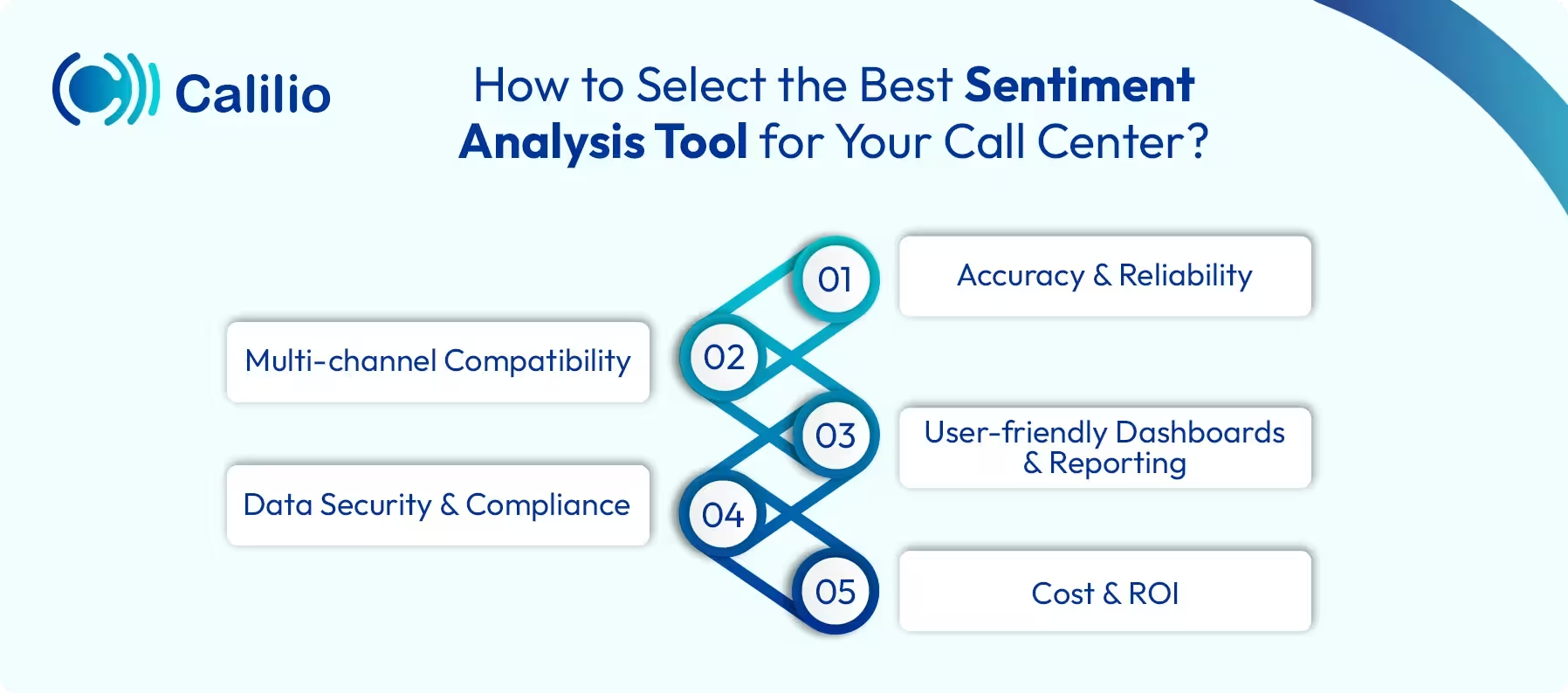
- Accuracy & Reliability: Choose a tool that accurately identifies customer emotions and sentiment, minimizing errors.
- Multi-Channel Compatibility: Ensure the tool supports all communication channels your call center uses, including calls, emails, live chat, social media, and surveys, for a complete view of customer sentiment.
- User-Friendly Dashboards & Reporting: Select a provider that offers easy-to-use dashboards and comprehensive reports to monitor trends and track agent performance.
- Data Security & Compliance: Ensure the platform complies with regulations such as the Telephone Consumer Protection Act (TCPA) and provides strong security to protect sensitive customer data.
- Cost & ROI: Select providers that offer a strong balance between cost and value. Prioritize the tools that enhance customer satisfaction, boost agent performance, and support long-term business growth.
Conclusion
Sentiment analysis is an essential tool for call centers that turns everyday customer interactions into actionable insights. By analyzing interactions, call center sentiment analysis identifies positive, negative, or neutral sentiments, allowing teams to respond quickly, resolve issues, and improve overall customer satisfaction.
However, the actual impact of sentiment analysis depends on a reliable, well-integrated platform that provides accurate and actionable insights. Calilio’s business phone system comes with the AI Call Sentiment Analysis tool to track customer emotions. You get an AI call report for every conversation that includes a call summary and sentiment score, which both agents and supervisors can view directly from the callbox.
Furthermore, Calilio can also detect the sentiment in voicemails. It analyzes voicemail messages by converting them into text and detecting emotions in the messages. So your teams can understand customer mood, even before a live conversation.



Summarize this blog with:
Frequently Asked Questions
Is sentiment analysis effective for both inbound and outbound calls?
Yes, sentiment analysis works for both inbound and outbound calls. It helps agents understand customer emotions, respond appropriately, improve engagement, and enhance overall service quality.
Can sentiment analysis be integrated with existing call center software?
Who should use call center sentiment analysis?
Is call center sentiment analysis compliant with privacy regulations?
Which customer interactions can the call center sentiment analysis track?

Still have questions?
Can’t find the answer you’re looking for? Please chat with our friendly team.
Stay in the loop
Get the latest call insights, trends, and updates delivered straight to your inbox.
By subscribing, you agree to receive updates from Calilio.
You can unsubscribe anytime.
Enter the World of AI Business Phone System with Calilio
Improve your business operation with Calilio's advanced virtual phone system. Join today for a better way to connect.