
What is Call Scoring? How Does It Help Improve Agent Performance?

Sales and support teams handle dozens of calls every day, but maintaining consistent call quality is difficult without a clear evaluation system. When issues go unnoticed, agents repeat the same mistakes, customers leave calls dissatisfied, and managers rely on guesswork instead of facts.
Call scoring converts each conversation into measurable criteria and turns call data into clear feedback. It creates a consistent way to evaluate calls and gives managers the insights needed to guide training, refine processes, and improve overall call performance.
What is Call Scoring?
Call scoring is a method used to evaluate the quality of phone calls by rating the agent's performance based on predefined criteria such as tone, adherence to scripts, problem resolution, customer engagement, and compliance. It helps businesses to analyze the conversation, identify top-performing agents, pinpoint areas of improvement, and ensure that calls meet company standards. The aim is to turn every call into actionable insight.
How Does Call Scoring Differ from Lead Scoring?
While call scoring helps teams review how well conversations are handled and where agents can improve, lead scoring focuses on identifying which calls are most likely to convert.
Here are the key differences between call scoring and lead scoring:
Aspect | Country | Area Code |
| Purpose | Evaluates the quality of phone conversations | Rates potential customers based on interest and likelihood to convert |
| Focus | Agent performance, call handling, customer engagement | Prospect behavior, engagement, and readiness to buy |
| Outcome | Helps improve agent performance, call consistency, and customer experience | Helps prioritize leads, plan follow-ups, and allocate resources efficiently |
| Use Case | Sales calls, support calls, and contact center monitoring | Lead management, sales pipeline optimization |
| Tools | Manual scoring, AI analytics, call transcription | Customer Relationship Management (CRM) scoring systems, behavior tracking, engagement metrics |
Why is Call Scoring Important for Your Business?
Call scoring measures call quality and agent performance against pre-defined standards. This helps to improve agent performance, enhance customer experience, and make data-driven decisions to optimize workflows and operations.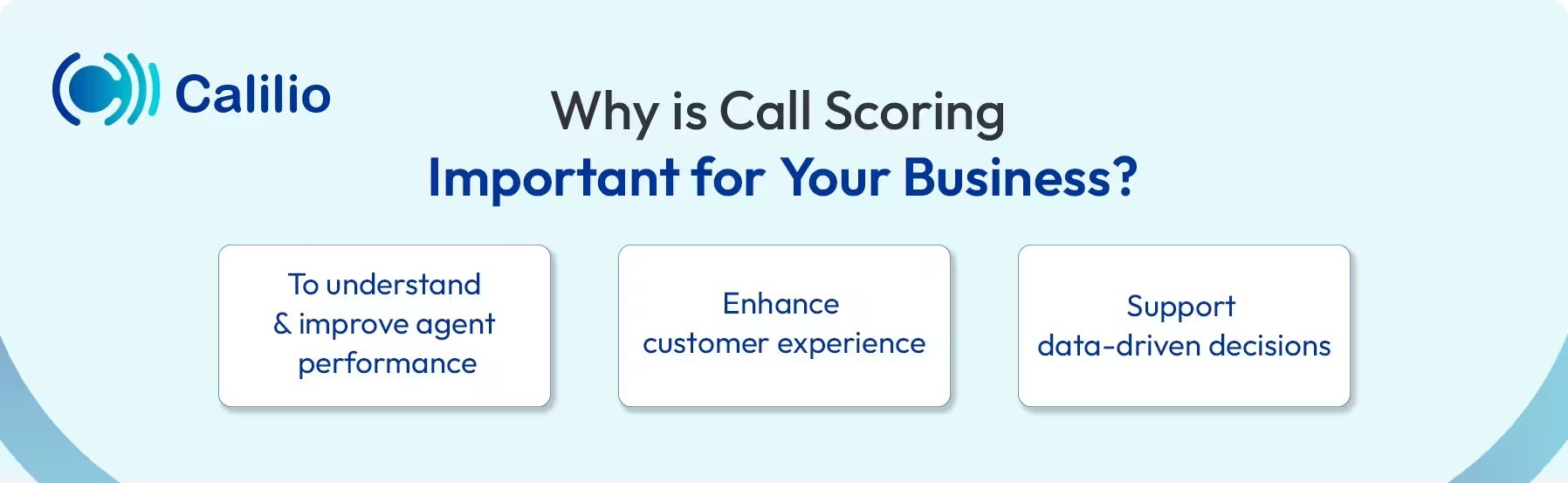
- To understand and improve agent performance: With call scoring, you can identify each agent’s strengths and pinpoint their weakness. Then, you can organize targeted coaching and training to boost overall team efficiency.
- Enhance customer experience: When agents are scored and trained to meet certain call scores, it helps to maintain a consistent service quality, eventually enhancing customer experience and the Customer Satisfaction (CSAT) score.
- Support data-driven decisions: The metrics collected from call scoring give managers actionable insights to optimize training, refine workflows, and improve overall performance.
What Key Performance Indicators (KPIs) are Used in Call Scoring?
Call scoring measures call quality, including communication quality, customer sentiment, and call outcomes. It also evaluates agent skills such as active listening and problem resolution ability to support targeted coaching and improvement.
- Communication quality: Call scoring notes how clearly agents explain information, keep a steady tone, and stay professional throughout the call. This shows how well the conversation flow is maintained.
- Listening and understanding: It tracks whether agents listen carefully, confirm details, and respond based on the customer’s real concern instead of giving generic replies.
- Problem resolution ability: It records how agents identify the issue, handle objections, and guide the call toward a solution or next step.
- Customer sentiment: Call scoring also measures how the customer reacts during the call. It can classify the experience as satisfied, frustrated, or uncertain to understand the overall call experience.
- Outcome and intent: It notes whether the call achieved its goal, like resolving a problem, booking a follow-up, or moving a sale forward.
What are the Different Methods of Call Scoring?
Businesses can score calls using methods such as call recording and monitoring, automated call scoring, customer surveys, and third-party assessments. Each approach offers a different perspective on call quality and agent performance.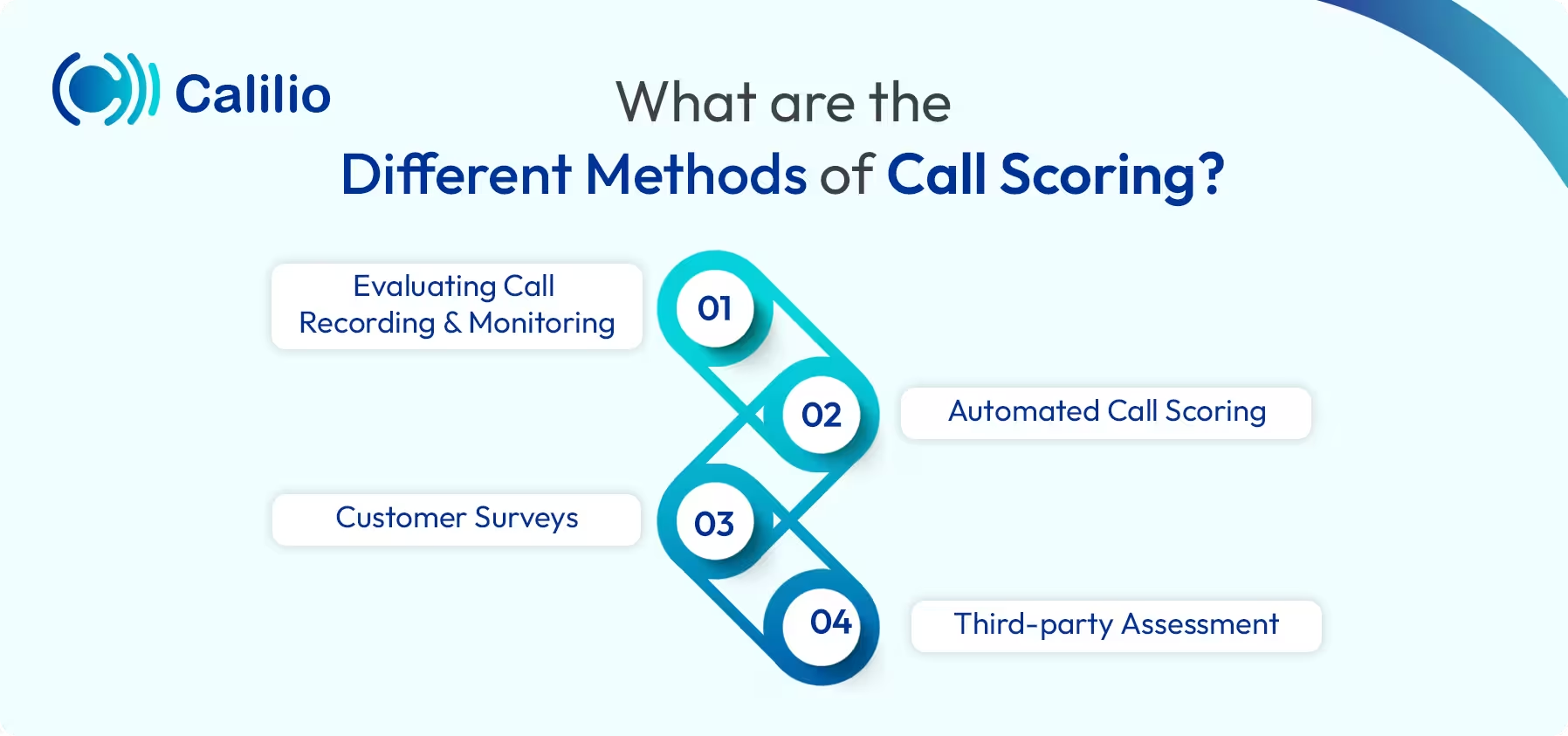
1. Evaluating Call Recording and Monitoring
Evaluating call recording and monitoring is a traditional method where supervisors or quality analysts listen to recorded calls and evaluate them using a fixed scorecard. During the review, they check how politely the agent speaks, how well they listen, how clearly they solve the issue, and whether they follow company rules.
It is best for understanding context and giving detailed coaching, but it takes time, and results can vary depending on who reviews the call. Evaluators use call monitoring tools such as call recording, call listening, and call reports to evaluate the calls.
2. Automated Call Scoring
Automated call scoring uses AI software to evaluate calls without manual review. It analyzes speech patterns, call flow, response time, keywords, and sentiment signals to score the calls. It provides consistent scoring and is helpful when measuring a large volume of calls. But the accuracy depends on how clearly the scoring rules are defined.
3. Customer Surveys
Customer surveys gather feedback immediately after a call to understand how customers felt about the interaction. Once your agents end the business phone call, a short questionnaire can be sent by email or SMS. Customers are asked about their experience, clarity of communication, and issue resolution using simple scales or brief questions.
This method captures direct feedback from the customer and helps teams understand how calls are perceived outside of internal evaluations.
4. Third-Party Assessment
Third-party assessment involves external reviewers evaluating calls based on predefined quality standards. This approach removes internal bias and provides an objective view of call quality and agent performance. It is often used to ensure consistency across teams and departments.
Improve Call Scoring with Crystal-Clear Recordings, AI Call Reports, and Built-in Sentiment Analysis
What are the Standard Evaluation Areas in Call Scoring?
During call scoring, managers are required to cover the full call flow, from the opening greeting to follow-up actions, ensuring each interaction meets service and compliance standards.
- Greetings: In this stage, the manager evaluates how well an agent opens a call, including tone, professionalism, and clarity. A strong greeting sets the stage for a positive customer experience.
- Verifying Contact Information: This criterion ensures the agent accurately collects or confirms contact details, preventing errors that could affect follow-ups or service quality.
- Customer Service Quality: In this stage, it is examined how effectively the agent addresses customer needs, solves problems, and maintains a helpful and polite tone throughout the call.
- Wrap Up: Reviewers evaluate how well the agent concludes the call, including summarizing next steps, confirming follow-ups, and leaving the customer satisfied.
How to Set Up an Effective Call Scoring System for Your Sales Team?
To set up an effective call scoring system, first define clear goals and KPIs so everyone knows what the scoring is meant to improve. Then, create a standard quality assurance scorecard and choose the right technology to keep evaluations accurate and constant.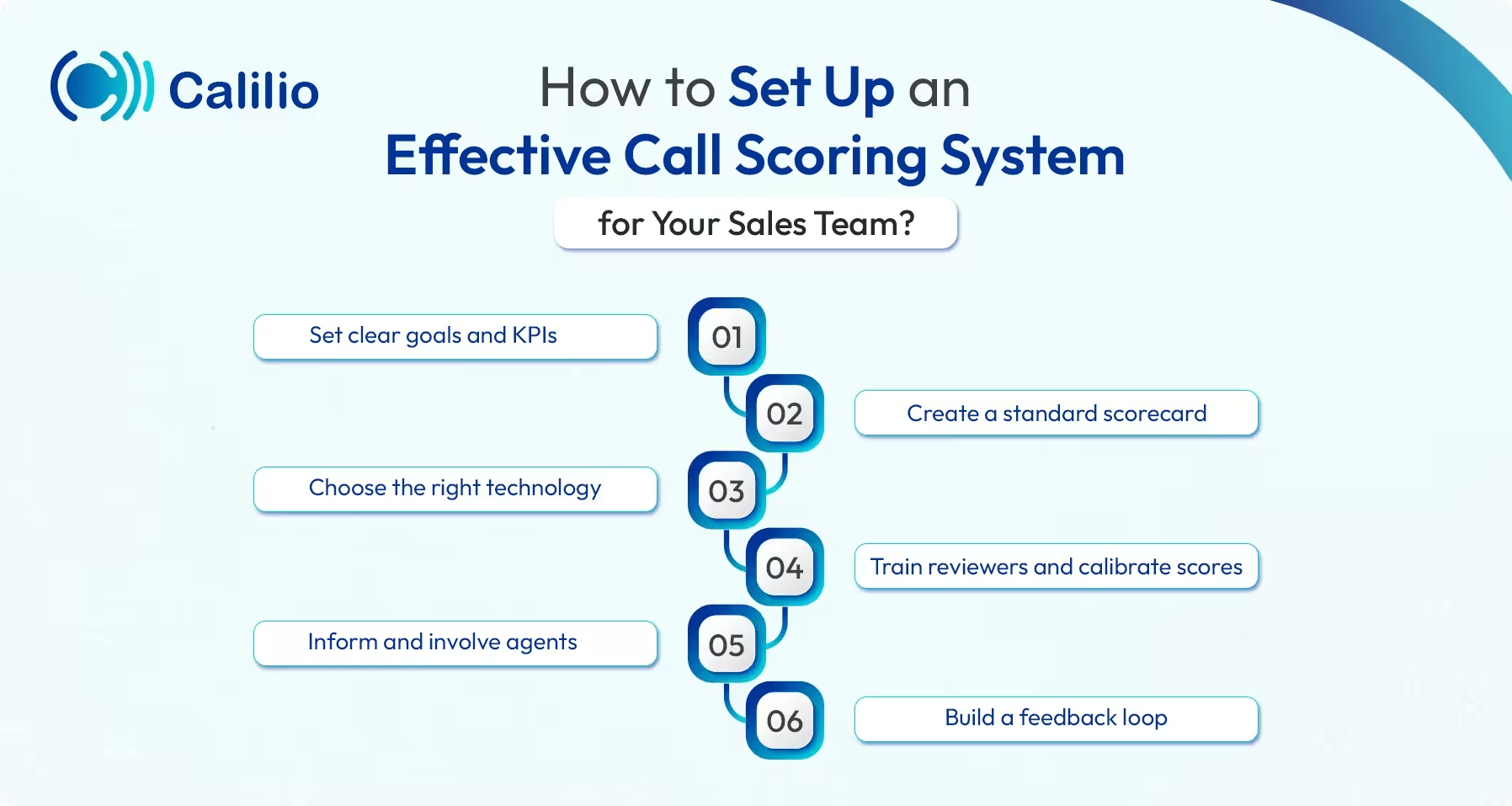
- Set Clear Goals and KPIs:
First, analyze your business needs and decide what you want to measure with call scoring, such as performance, customer satisfaction, or compliance. Ensure your goals align with the present and long-term goals of the business. - Create a Standard Scorecard:
To ensure consistency in evaluation, develop clear criteria and scoring guidelines. Include a standard call center quality assurance checklist in your card. - Choose the Right Technology:
Select manual, automated, or AI-powered tools that fit your team’s needs. If you have a small team, manual scoring may work. For larger teams, it’s recommended to go with automated tools. - Train Reviewers and Calibrate Scores:
Before beginning the evaluation, train your reviewers. Ensure every evaluator understands the criteria. Also, hold a call calibration session before the process to ensure accurate and unbiased ratings. - Inform and involve Agents:
Since agents are the ones who are evaluated, it's important to clearly communicate the purpose and process so agents understand expectations and can actively improve. - Build a Feedback Loop:
Once the evaluation is completed, managers should use call scores to coach agents. Inform the agents what needs to improve, and train them accordingly.
Best Practices to Follow for Effective Call Scoring
To get the best results from call scoring, you should use clear criteria and review scores regularly to keep evaluations fair and consistent. Also, managers should provide balanced feedback and ongoing training to help agents improve without feeling discouraged.
- Use clear criteria: Define specific and measurable scoring criteria so agents clearly understand what is being evaluated. Clear standards ensure consistent scoring, reduce subjectivity, and make it easy to develop a feedback strategy.
- Run Regular Scoring Calibrations: Managers and reviewers should align on scoring standards by reviewing sample calls together. It helps to confirm that the scoring is accurate and constant across the team.
- Focus on Balanced Feedback: To keep the agents encouraged, call scoring should also highlight their strengths. Call center coaching is all about balanced feedback, including negative and constructive feedback, to keep them motivated while improving call quality.
- Invest in Continuous Training: Businesses should turn call scoring results into training actions instead of treating them as reports. Regular coaching will help agents improve steadily over time.
- Include Customer Feedback: Combine internal call evaluations with customer feedback from surveys or ratings to get a complete view of call quality. This helps confirm whether internal scores match real customer experiences and highlights areas that need attention.
Conclusion
Call scoring allows teams to review conversations in a structured way and turn call data into meaningful feedback. It helps agents understand where they perform well and where improvement is needed, while giving managers a reliable base for coaching and planning. However, accurate call scoring depends on having complete and reliable call data. Without clear insights, evaluations can become inconsistent or subjective.
This is where Calilio can help, whether you’re using manual reviews or the automated system. Its features, such as call recording and call monitoring, allow you to review conversations closely before rating them. Similarly, AI-based call reports, sentiment analysis, and most-used-word and other tracking features help supervisors understand call patterns and agent behavior at scale. Together, these tools make it easier to score the calls and develop an accurate basis for employee training.
Summarize this blog with:
Frequently asked questions
What is the difference between call scoring and agent scorecards?
Call scoring evaluates the quality of individual calls based on specific criteria such as communication, resolution, and customer sentiment. Agent scorecards, on the other hand, assess an agent’s overall performance over time.
Does call scoring help improve customer experience?

Still have questions?
Can’t find the answer you’re looking for? Please chat with our friendly team.
Stay in the loop
Get the latest call insights, trends, and updates delivered straight to your inbox.
By subscribing, you agree to receive updates from Calilio.
You can unsubscribe anytime.
Enter the World of AI Business Phone System with Calilio
Improve your business operation with Calilio's advanced virtual phone system. Join today for a better way to connect.