
Call Center Coaching: How Does It Improve Agent Performance?

Call centers often struggle with uneven agent performance, customer complaints, and repeated call issues. Without proper guidance, agents can make avoidable mistakes in a rushed call center environment and fail to deliver consistent service.
That’s why call center coaching is essential. Through structured, ongoing coaching, managers can identify performance gaps, guide agents using real call data, and build the skills needed to handle calls with confidence. It improves agent performance, strengthens customer experience, and creates a more reliable and motivated support team.
In this guide, we’ll explore everything you need to know about call center coaching and why it matters for agent performance. We’ll also cover some helpful coaching strategies, with key metrics to track, and practical tips to coach agents effectively.
Key Highlights:
Call center coaching is an ongoing process that supports agents in improving call handling, customer interaction, and daily performance.
Regular coaching improves agent performance and call quality, speeds up issue resolution, increases customer satisfaction, and reduces errors and repeat calls.
Common types of call center coaching include one-on-one, real-time, post-call, group, and peer-to-peer coaching.
Key metrics such as Call Quality Score, FCR, AHT, and CSAT help measure agent performance and guide targeted coaching.
During the training phase, managers may face challenges like agent resistance, limited time for coaching, inconsistent feedback, and unclear performance data, which makes it harder to deliver effective and consistent training.
What is Call Center Coaching?
Call center coaching is a process of providing training to agents to improve their skills and abilities over time through structured mentoring, feedback, and guidance. It uses call monitoring, Quality Analysis (QA), and customer feedback to review performance gaps and develop a strategy to improve call center agents’ performance.
Unlike one-time training sessions, like onboarding sessions or yearly reviews, call center coaching is an ongoing process. Supervisors review agents' performance regularly, identify skill gaps, and provide essential guidance based on real-time data.
Why is Call Center Coaching Important?
Call center coaching plays a direct role in improving both agent performance and customer experience. When done consistently, it delivers clear benefits for agents, customers, and the business.
- Improves agent performance: Coaching in a call center helps agents handle calls more efficiently by improving business communication and problem-solving skills. As a result, agents resolve issues faster and make fewer mistakes.
- Enhances customer experience: Since the agents receive proper guidance, they listen better, respond with empathy, and offer resolutions more quickly. It results in higher customer satisfaction rates.
- Reduces repeat calls and errors: Call center agent coaching helps address issues correctly the first time. Over time, this lowers repeat calls, escalations, and unnecessary follow-ups.
- Helps create a positive brand image: Call center agents are often the first point of contact between customers and the brand. When agents are well-trained and confident through regular coaching, they deliver better conversations and service, creating a positive brand image.
- Supports consistent service quality: With coaching, agents follow the same service standards across all interactions. This consistency improves overall call quality and brand perception.
- Improves retention and reduces burnout: Ongoing support helps agents manage difficult calls and stress more effectively. As a result, job satisfaction increases, and turnover rates decrease.
What are the Different Types of Call Center Coaching?
The key types of call center coaching methods include one-on-one coaching, group coaching, and peer-to-peer coaching. Each method supports agents in a different way.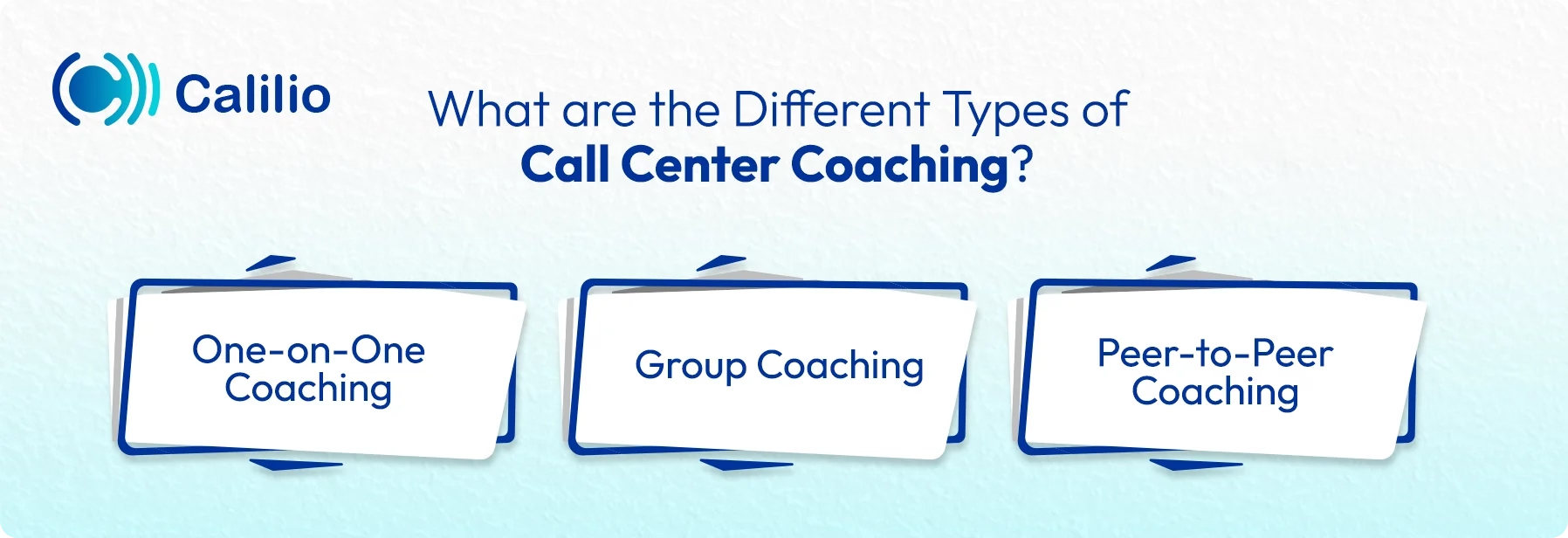
1. One-on-One Coaching
One-on-one coaching is a personalized session between a manager and an agent. It allows managers to address individual skills gaps and performance issues along with direct feedback and focused progress tracking.
2. Group Coaching
Group coaching is an approach where a manager works with multiple agents at the same time to address shared challenges and performance gaps. Instead of focusing on one individual, the session targets common issues seen across the team. It encourages discussion, shared learning, and the exchange of best practices. It helps agents learn from real examples and improve together in a supportive setting.
3. Peer-to-Peer Coaching
Peer-to-peer coaching is a collaborative approach where agents learn from one another. Rather than relying only on managers, experienced agents share practical tips and real call examples with their teammates. As a result, this type of coaching also strengthens teamwork and helps agents improve in a supportive environment.
Effective Call Center Coaching Techniques
Call centers can use methods such as real-time coaching to guide agents during live calls or post-call coaching to review performance immediately after a conversation ends. Though each applies in different situations, both help agents develop stronger call handling habits over time.
Real-time Coaching
Real-time coaching is a coaching approach where agents receive guidance during live calls through call monitoring tools. It allows managers to help agents correct mistakes as they happen, while the call is still in progress. This approach uses various call monitoring tools to support agents during live interactions and keep conversations on track.
Post-call Coaching
Post-call coaching is a type of call center coaching technique that takes place after the end of customer interactions. Supervisors review call recordings or transcripts and provide feedback based on actual call behavior and outcomes. It also helps agents reflect on their own performance and self-assess their skill improvements.
What are the Essential Tools for Call Center Coaching?
Some of the essential call center coaching tools include call monitoring, call recording, and detailed call analytics tools.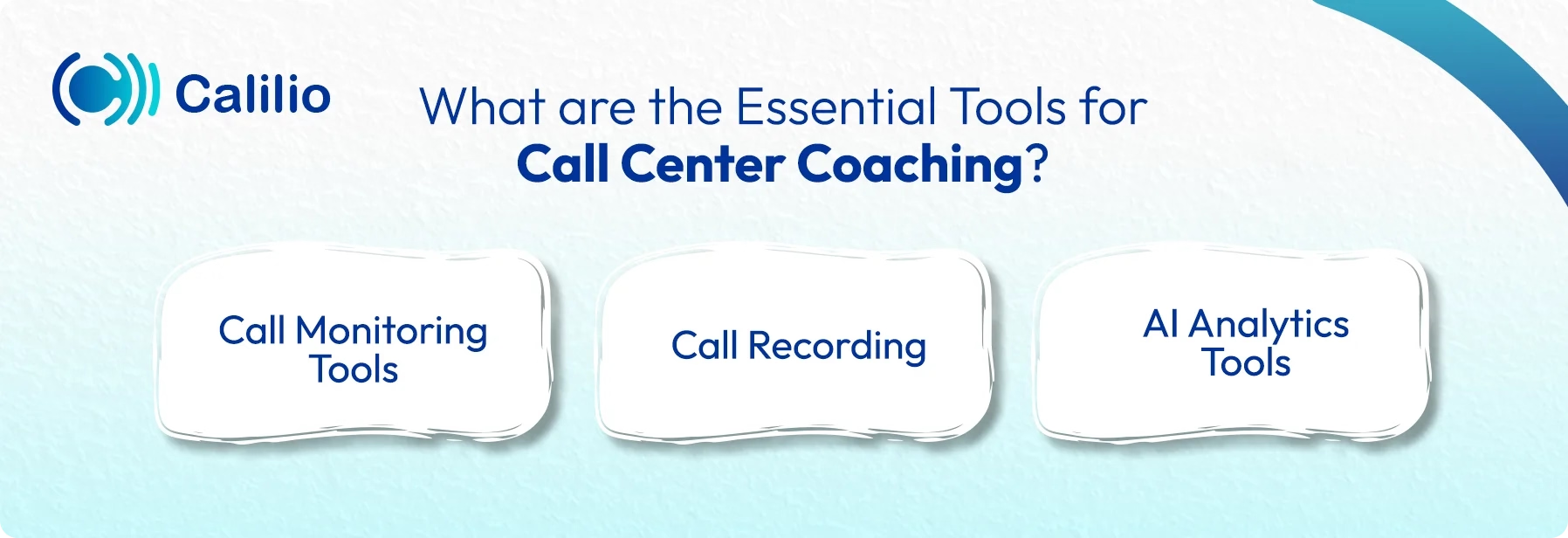
Call Monitoring Tools
Call monitoring tools include features such as call listening, call whispering, and call barging, which allow managers to review agent performance during live calls. This gives supervisors immediate visibility into how agents handle conversations, allowing them to provide guidance on the spot without interrupting the customer experience.
Call Recording
Call recording stores agent and customer conversations for future review. Managers can replay calls to highlight strong points and areas that need improvement, and use these reviews to understand performance patterns. Based on the reports, supervisors can plan coaching strategies around the identified skill gap. It’s especially useful for post-call coaching and one-on-one coaching sessions.
AI Analytics Tools
Call centers can also use AI analytics tools such as AI call sentiment analysis and call transcription to analyze calls automatically, reducing manual review work for managers. For example, sentiment analysis tracks customer emotion during live calls, while call transcription creates detailed call records and summaries that include call duration, resolution details, and customer feedback. This makes it easier for supervisors to coach agents based on the real-time data.
Coach Smarter Using Real Call Data with Calilio’s Call Monitoring and Analysis Tools
Tips to Coach Call Center Agents Effectively
Effective call center coaching starts with reviewing agent performance to identify strengths and gaps. Then, managers can set clear, personalized goals to improve agent performance. During the evaluations, managers should use real call examples, provide focused feedback, and encourage self-assessment.
1. Review Performance Before the Session
Before starting the coaching session, supervisors need to analyze the agents’ current performance. You can analyze call recordings, use call reports, quality scores, and key metrics in advanced ways to identify the weaknesses of the agents.
2. Set Clear Goals and an Action Plan for the Agents
Once performance gaps are identified, set personalized and clear expectations for each agent. These goals may include SMART (Specific, Measurable, Achievable, Relevant, and Time-bound) goals, along with the solution for how they can improve. Ensure clear instructions to keep coaching sessions productive and measurable.
3. Use Self-assessment When Coaching Agents
Encourage agents to assess their own calls to make coaching more effective. Many agents already know where they struggle, often based on direct customer feedback. Furthermore, you can ask simple, objective questions like what went well, what didn’t, and what could be done differently, which helps agents reflect without feeling judged.
4. Use Real Calls as References
Use real call examples instead of hypothetical scenarios. Reviewing both good and difficult calls shows agents what works and what needs to be improved, making feedback clear and easier to apply to real calls.
5. Provide Focused and Specific Feedback
Since every agent learns differently, coaching should address individual strengths and gaps. Managers need to focus on each agent separately rather than calling them out in a group. While group coaching can be useful for common challenges, individual feedback helps agents clearly understand what exactly they need to improve.
6. Track the Progress and Follow Up
After coaching sessions, mentors should regularly track agent performance over time. Regular follow-ups help measure improvement and adjust coaching if needed. You can use tools like call center agent scorecards to measure and compare the agent performance over different time intervals.
Key Call Center Metrics to Track Before Coaching Agents
The key performance indicators, like call quality score, first call resolution rate, average handle time, and customer satisfaction score, help identify the agent’s skill gaps when coaching in a call center.
1. Call Quality Score
Call quality score measures how well an agent handles a customer interaction. It grades agents based on factors such as issue resolution, style, tone, and compliance with guidelines. It helps managers spot the exact weakness and develop a clear, actionable strategy for the specific skill gap.
2. First Call Resolution (FCR)
First Call Resolution (FCR) is a call center metric that shows how often an issue is solved in the first call without requiring any follow-ups. A high FCR rate indicates efficient problem-handling skill, while a low FCR rate points to the need for improved agent training or processes.
3. Average Handle Time (AHT)
Average Handle Time (AHT) measures the total time an agent spends handling a customer interaction, including talk time, hold time, and after-call work. Tracking AHT helps managers understand how efficiently agents manage calls and identify whether coaching should focus on call flow, issue resolution, or time management.
4. Customer Satisfaction (CSAT)
Customer Satisfaction (CSAT) scores show how happy customers are with the support they receive, usually collected through post-call surveys. It helps managers understand how agents communicate, solve problems, and handle customer expectations. It also helps managers understand customer perceptions and guide coaching efforts toward improving call quality and overall customer experience.
Challenges Businesses May Face When Coaching in a Call Center
Common challenges in call center coaching include agent resistance to feedback, limited time for regular coaching, and inconsistent feedback from different managers. Coaching can also fall short when the same approach is applied to all agents or when precise call center performance data isn’t available to support coaching.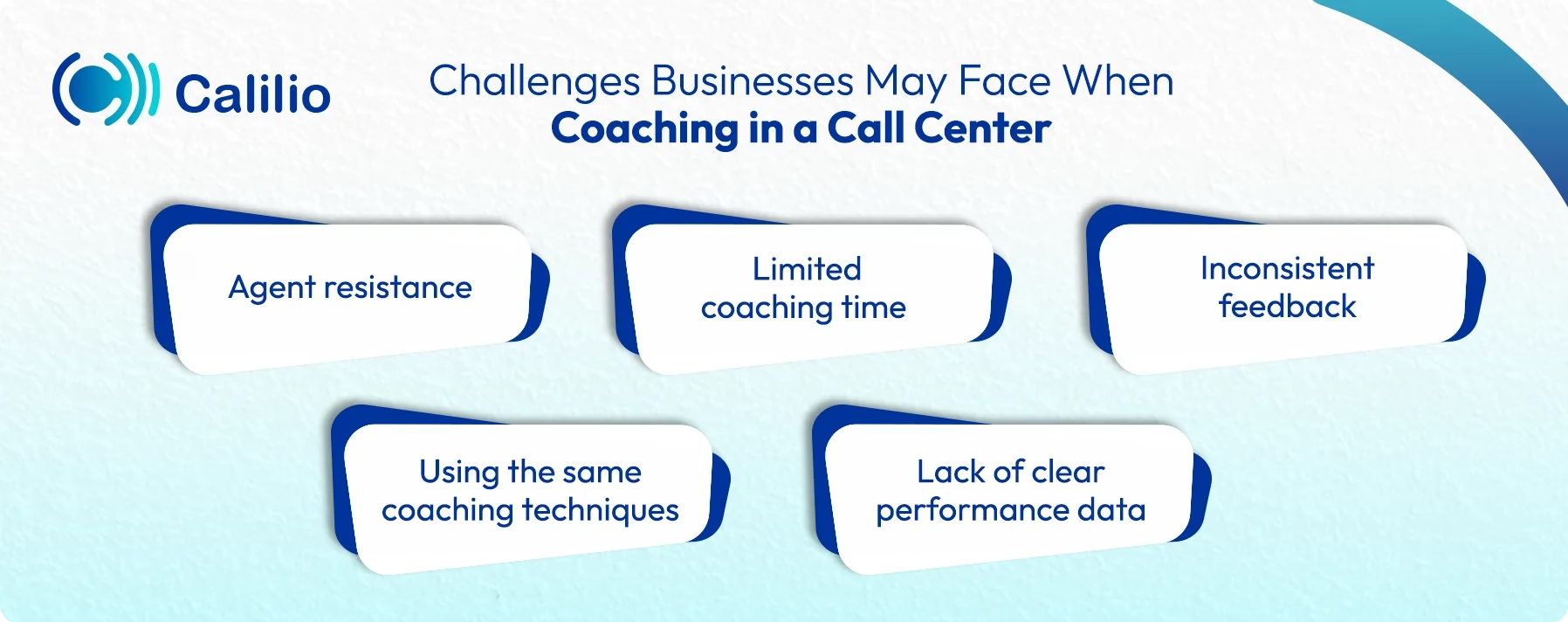
- Agent resistance: Some agents may hesitate to accept feedback. It usually happens when employees view coaching as criticism rather than support. It reduces active participation from the agents' side and slows improvement.
- Limited coaching time: Busy call schedules and staffing limits often push coaching aside. When time is limited, coaching sessions are rushed. As a result, it’s difficult to identify the exact issue, and agents do not get proper guidance.
- Inconsistent feedback: Inconsistent feedback happens when different managers evaluate an agent's performance. This can make it difficult for an agent to understand the exact expectations.
- Using the same coaching techniques: Applying the same coaching style to every agent overlooks individual skill levels and learning preferences. It can limit growth for both new and high-performing agents.
- Lack of clear performance data: When coaches don’t get access to reliable performance data, coaching can feel like assumptions rather than facts. Agents may struggle to understand where they fall short and find it harder to know what targets they should focus on improving.
Conclusion
Call center coaching plays a key role in improving agent performance and delivering up-to-the-mark customer service. By setting clear goals, providing personalized feedback, and regular follow-ups, managers can help agents build confidence and handle calls more effectively.
However, call center coaching should be data-driven, based on real facts rather than assumptions. Calilio’s business phone system supports this approach with tools such as call monitoring, call recordings, and AI call summaries. Call monitoring allows managers to listen to live calls, while call recordings help to study the conversation later. In addition, its AI-powered call reports offer detailed insights into each call to identify agent and call center performance.
Summarize this blog with:
Frequently Asked Questions
Everything you need to know about Calilio. Can't find your answer? .
Coaching in a call center starts with reviewing agent performance data to understand strengths and gaps. Managers then identify specific areas for improvement and deliver structured feedback using real call examples.
Stay in the loop
Get the latest call insights, trends, and updates delivered straight to your inbox.
By subscribing, you agree to receive updates from Calilio.
You can unsubscribe anytime.
#1 Cloud Phone System for
|
Improve your business operation with Calilio's advanced virtual phone system. Join today for a better way to connect.