- Partners
- Contact Us
- Log in
What is a Mock Call? Why is It Important for Sales & Support Teams?

Phone calls are more than just conversations; they’re one of the most direct ways a customer experiences a brand. A single call can either build trust or break it. When teams jump into calls without preparation, it can lead to poor customer service and call handling.
Mock calls help teams prepare before those real conversations take place. They support consistent practice and give teams a straightforward way to improve how calls are handled, without waiting for mistakes to happen on live customer interactions.
In this guide, we’ll explain what a mock call is and its importance. We’ll also provide tips on how to run effective mock call sessions, including examples of the scripts for training.
Key Highlights:
A mock call is a simulated phone conversation used for sales and customer service training.
It helps agents build confidence, strengthen communication skills, handle objections more effectively, and improve their product knowledge.
To conduct a mock call session, teams should choose a realistic scenario and practice
assigning roles to members using simple scripts. Also, record the session for later review and feedback.
Tools such as call monitoring, call recording, NLP (Natural Language Processing), conversation intelligence, and real-time coaching improve mock call training.
For an effective session, one should not take the session casually and try to improve many skills at once. Instead, focus on one or two key areas to get the most out of the practice.
What is a Mock Call?
A mock call is a simulated phone conversation used as part of training in sales and customer service roles, creating real-life call scenarios so agents can learn how they communicate, listen, and respond during customer interactions. During the process, one person takes the role of the agent, while another acts as the customer based on a defined scenario.
Mock calls focus on building practical call handling skills rather than achieving a real outcome. Agents practice structuring conversations, asking relevant questions, handling objections, and guiding calls toward the next step. It helps identify the potential issues during the customer call and develop the strategy before they occur during the live calls.
Why Do Businesses Use Mock Calls?
Businesses use mock calls to help agents practice real call scenarios, build confidence, and improve communication before speaking with actual customers. Mock calls serve as a rehearsal session for developing communication skills for handling objections effectively, building stronger product knowledge, and maintaining consistent call quality.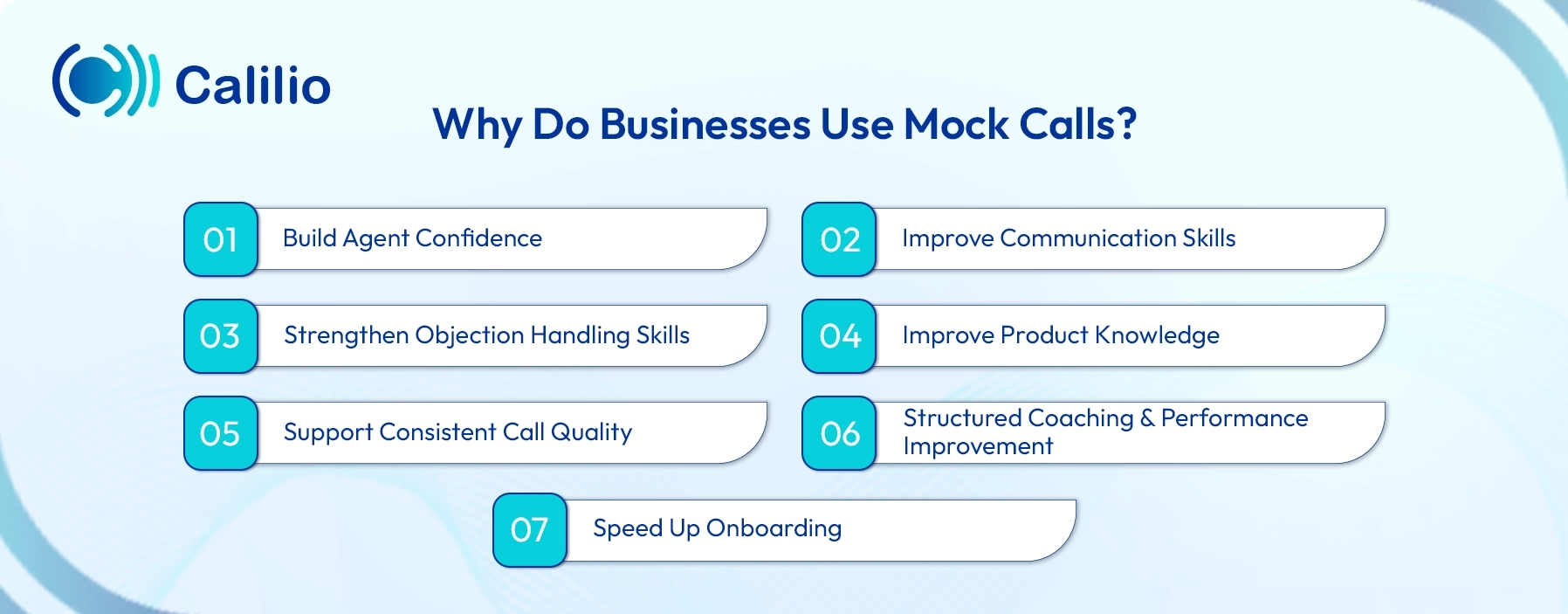
1. Build Agent Confidence
Regular practice helps agents feel prepared before they speak with real customers. When agents already know how a call should start, flow, and end, they hesitate less and sound more confident during the live calls. With high confidence, agents can maintain a steady tone, speak with clarity, and guide the conversation with more control and ease, even in tough situations.
2. Improve Communication Skills
Mock calls give agents time to practice asking relevant questions and listening actively, and responding clearly. Over time, they learn how to clarify customer needs without making assumptions and avoiding interrupting callers. This results in smoother and more productive conversations.
3. Strengthen Objection Handling Skills
Agents can get nervous when objections arise unexpectedly during the calls. Mock calls give teams a chance to rehearse common objections so agents learn to stay calm, respond logically, and keep the conversation productive.
4. Improve Product Knowledge
Mock calls give agents the chance to talk about products or services in a practical setting. By explaining features, answering questions, and handling concerns during practice, they build a stronger grasp of what they’re offering. Eventually, this helps them speak more clearly and confidently about the product in real calls.
5. Support Consistent Call Quality
Mock calls help set clear expectations for how calls should be handled. Agents learn the best way to open a call, ask a question using the right tone, and end the business phone call. This creates a more consistent and professional experience for customers.
6. Structured Coaching and Performance Improvement
Managers can use mock calls to provide focused, example-based feedback. Instead of offering general advice, they can point to specific moments in the call and suggest actionable improvements. Over time, repeated sessions make it easier to track progress, spot patterns, and address recurring issues in a more structured and effective way.
7. Speed Up Onboarding
New agents can practice real-world scenarios before handling live calls. This helps them understand call flow, customer behavior, and expectations early on. As a result, onboarding becomes faster, and new hires reach acceptable call quality without risking poor customer experiences.
How to Conduct a Mock Call Session?
To run a successful mock call session, first, define a clear objective and select realistic scenarios that reflect actual calls. Assign roles, prepare simple scripts, and run the mock call using the same tools and setup as live calls. Afterward, review the session to identify areas of improvement and provide feedback accordingly.
- Step 1: Define the purpose of the session
Start the session with measurable and clear objectives. Focus on one skill at a time, such as opening the call, asking better questions, handling objections, or closing with a next step. A clear purpose keeps the session focused and avoids scattered feedback. - Step 2: Select a realistic call scenario
Choose a real-life scenario for calls. Define who the customer is, why they are calling, and what problem they want solved. Add practical details such as industry, company size, urgency, and constraints to make the role-play realistic. - Step 3: Assign roles and rules
Decide who will play the agent and who will play the customer. If possible, assign a third person to review and score the call. Set basic rules upfront, such as time limit, whether the call can be paused, and what success looks like for that session. - Step 4: Prepare simple call scripts
Prepare simple call scripts to guide the conversation. These may include an opening line, a list of discovery questions, key talking points, one or two objection responses, and a clear closing statement. - Step 5: Conduct the mock call
Run the call like a real one. Use the same tools, headset, and environment agents use for live calls. Keep the conversation natural and stay within a set time limit based on the call type. - Step 6: Record the call for review and structured feedback
Record the call for review, precise feedback, and fair evaluation. If the recording is unavailable, the reviewer can take structured notes during the call. - Step 7: Review the call
After the call, review how well the agent met the session goal. Pay attention to call flow, listening skills, tone, pacing, objection handling, and whether the call ended with a clear next step. - Step 8: Give feedback and set action steps
Start with what worked well, then point out areas that need improvement. Tie feedback to specific moments from the call so agents clearly understand what to change.
What are the Mock Call Scenarios You Must Practice?
The sales team should practice mock call scenarios like warm calling and cold calling, discovery conversations, objection handling, follow-ups, product demo calls, and issue-resolution calls.
1. Warm Call
A warm call scenario prepares agents for conversations with leads who have already interacted with the business, whether through emails, referrals, events, or earlier discussions. Agents practice reintroducing the reason for the call, building quick rapport, and moving the conversation forward smoothly. Since there’s already some familiarity, the focus is on clarifying the product details and moving forward to the next steps, rather than introducing the business.
2. Cold Call
A cold call scenario prepares agents for conversations where the prospect does not expect the call. Agents practice introducing themselves clearly, explaining the reason for the call, and asking permission to continue. This scenario helps agents stay confident, handle early resistance, and move quickly to the core point of the conversation.
3. Discovery Call
The discovery call scenario focuses on understanding the prospect before offering any solution. Agents practice asking open-ended questions, listening carefully, and identifying key challenges. The goal is to gather accurate information and confirm needs without rushing into selling the product or service.
4. Objection Handling
This scenario helps agents practice staying calm and focused when a prospect pushes back. Common objections like pricing concerns, timing issues, or lack of interest are introduced during the call. Agents learn to acknowledge the concern, respond clearly, and balance the conversation back on track without sounding defensive.
5. Follow-up Call
A follow-up call scenario helps agents reconnect after a previous interaction. Agents practice referencing earlier conversations, sharing a clear reason for reaching out again, and suggesting a specific next step. This scenario teaches agents how to add value instead of repeating the same message.
6. Sales or Demo Call
The demo or sales call scenario prepares agents for planned business discussions. Agents practice setting expectations at the start of the call, presenting relevant information, answering questions, and guiding the conversation toward a defined outcome such as a demo or decision.
7. Support or Issue-resolution Call
The support or issue-resolution scenario helps customer service teams handle problems effectively. Agents practice listening without interruption, explaining solutions in a clear sequence, and confirming resolution before closing the call.
Mock Call Script Examples
Here are some real-world mock call examples that show how a practice call actually happens. In each scenario, the rep (representative) is the agent practicing the call, and the customer is a person, role-played by a trainer or manager.
1. Mock Call Script Example for Sales
Rep: Hi, this is Alex from [XYZ company]. You requested information on our calling software yesterday. Is now a good time to talk?
Customer: Yes, I have a few minutes.
Rep: Great. Before I explain anything, can you tell me how your team currently handles outbound calls?
Customer: We primarily use personal phones. It’s hard to track who called whom.
Rep: That makes sense. What’s the biggest issue that causes problems for your team day to day?
Customer: We miss follow-ups, and there’s no clear record of calls.
Rep: Understood. Many teams come to us for that reason. Our system keeps all calls in one place and shows follow-ups automatically.
Customer: Sounds useful, but I’m worried about the cost.
Rep: I hear that. To keep this relevant, what budget range are you trying to stay within?
Customer: Around $20 per user.
Rep: That works. Based on that, I’d suggest a quick demo so you can see if it fits. Would tomorrow or Thursday be better?
Customer: Thursday works.
Rep: Perfect. I’ll send a calendar invite right after this call.
2. Mock Call Script Example for Customer Service
Rep: Thank you for calling [ABC] support. This is Sarah. How can I help you today?
Customer: My calls keep dropping after a few minutes.
Rep: I’m sorry about that. Just to confirm, this happens on both inbound and outbound calls, correct?
Customer: Yes, mostly outbound.
Rep: Thanks for clarifying. Let me check your account settings quickly. This will take about a minute.
Customer: Okay.
Rep: I see the issue now. One setting needs to be updated. I’ll make the change and then ask you to place a test call.
Customer: Alright, I’m ready.
Rep: Please try calling any number now.
Customer: It’s working. The call didn’t drop this time.
Rep: Great. That means the issue is resolved. Is there anything else I can help you with today?
Customer: No, that’s all.
Rep: Thank you for calling. Have a great day!
What are the Features & Tools that Support Mock Calling?
Tools such as call monitoring, call recording, and conversation intelligence support mock call training. These features allow supervisors to observe practice calls, review recordings, analyze tone and call flow, and give immediate feedback.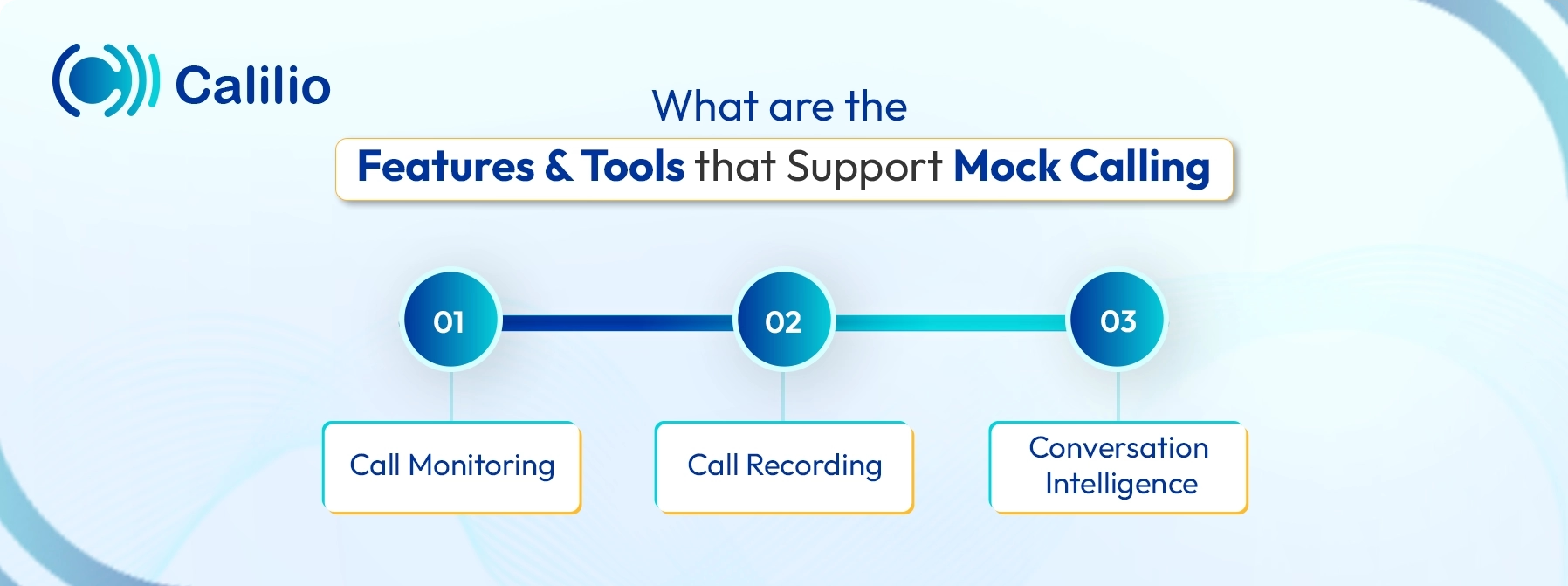
- Call Monitoring: Call monitoring allows supervisors to listen to mock calls in real time. This helps them observe agent behavior as it happens and step in with guidance when needed.
- Call Recording: Recorded mock calls give agents and managers the ability to replay conversations. Managers can review the recording carefully, spot the exact training needs and provide specific feedback.
- Conversation Intelligence: Conversation intelligence tools transcribe and analyze mock calls automatically. They track metrics such as talk-to-listen ratio, sentiment, keywords, and call flow, giving teams clear, data-backed feedback instead of guesswork.
Enhance Your Mock Call Training with Call Monitoring, Call Recording, and Call Analysis Tools from Calilio
What are the Common Mistakes to Avoid During Mock Calls?
Common mistakes in mock calls include not taking the practice sessions seriously, trying to improve too many skills at once, and mishandling objections. Agents also often talk more than they listen and practice unrealistic scenarios, which limits the effectiveness of training.
- Treating Mock Calls Casually: When agents do not take mock calls seriously, the practice does not reflect real call behavior. This reduces the impact of training.
- Practicing Too Many Skills in One Session: Trying to fix opening, discovery, objections, and closing in one session leads to shallow feedback. Each session should focus on only one or two skills.
- Struggling with Objections: Many trainees become defensive or rushed when objections arise instead of responding calmly and asking clarifying questions.
- Talking More Than Listening: Trainees often focus on what to say next instead of listening carefully.
- Using Unrealistic Customer Scenarios: Overly simple or exaggerated scripts do not prepare agents for real conversations. Scenarios should match actual call patterns.
What are the Best Practices for Successful Mock Calls?
Use the same calling tools and reliable audio equipment to make the mock call feel as close to a real conversation as possible. Stick to real call behavior, stay within time limits, and treat the session with the same focus as a live customer call.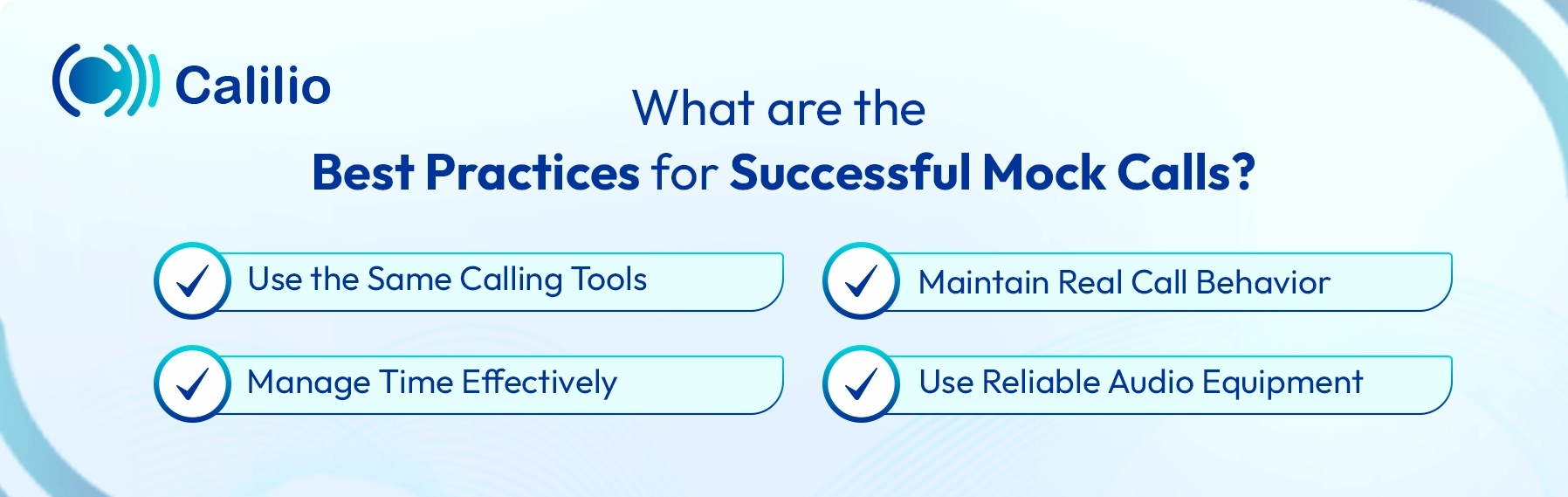
Use the Same Calling Tools
Use the same dialer, call controls, and call management features available during real customer interactions. Practice actions such as placing calls, transferring calls, putting callers on hold, and using call recording. This helps build comfort with the system and reduces errors during live calls.
Maintain Real Call Behavior
Begin each mock call by clearly understanding the assigned role and call objective. Speak with the same tone, pace, and professionalism used in real customer conversations. Avoid casual language or off-script behavior. Treat the mock call as a live interaction to develop consistent habits and confidence.
Manage Time Effectively
Follow realistic call durations based on the call type, such as sales, support, or follow-up calls. Control the pace of the conversation by knowing when to ask questions, when to listen, and when to guide the call toward the next step. Avoid rushing through key points or allowing the call to lose direction.
Use Reliable Audio Equipment
Use a high-quality headset or audio setup to ensure clear communication throughout the call. Test audio levels before starting to avoid disruptions. Clear audio supports accurate call recordings and helps identify issues related to tone, clarity, and pacing during review sessions.
Conclusion
Mock calls help teams prepare before speaking with real customers. They give agents time to practice call openings, guide conversations smoothly, and close calls with clear next steps. Instead of relying on guesswork during live interactions, agents learn how to listen actively, respond with confidence, and stay composed when conversations take an unexpected turn.
However, to run mock calls effectively, the right tool matters. A business phone system like Calilio makes it easier to simulate real scenarios with features such as call recording, call monitoring, and call transfer. It also supports training with tools such as call whispering, real-time listening, and call analysis, all of which are essential for structured training sessions.



Summarize this blog with:
Frequently asked questions
What is the difference between a mock call and a real call?
A mock call is a simulated conversation used for training, where one person acts as the agent and another plays the customer based on a scenario. On the other hand, a real call involves an actual customer and directly affects customer experience, sales outcomes, or support resolution.
How often should the team practice mock calls?
Are mock calls helpful for customer support teams?

Still have questions?
Can’t find the answer you’re looking for? Please chat with our friendly team.
Stay in the loop
Get the latest call insights, trends, and updates delivered straight to your inbox.
By subscribing, you agree to receive updates from Calilio.
You can unsubscribe anytime.
Enter the World of AI Business Phone System with Calilio
Improve your business operation with Calilio's advanced virtual phone system. Join today for a better way to connect.