
What is Call Monitoring? Types, Benefits, & Best Practices
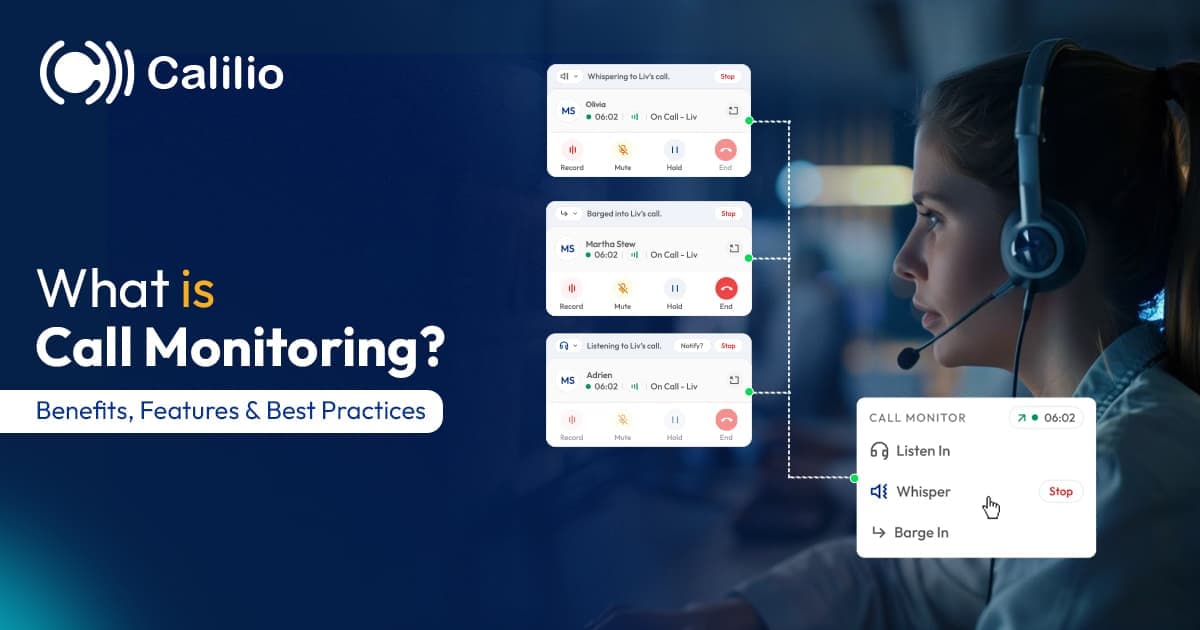

Inconsistent customer service can quickly damage a business’s reputation. Missed details, uneven agent performance, and unresolved issues often lead to frustrated customers, negative reviews, and lost revenue, directly impacting growth and productivity.
Call monitoring offers a practical way to stay in control of every customer interaction. By listening to calls in real-time or reviewing recordings later, businesses can identify problems early, guide agents with clear feedback, and ensure each call meets quality standards.
In this guide, we'll explore what call monitoring is and how it works in detail. We’ll also cover its benefits, key features, use cases, and best practices to boost customer satisfaction and improve agent performance.
Key Highlights:
Call monitoring allows businesses to evaluate customer interactions to ensure high service quality and identify areas of improvement.
Supervisors can monitor calls in real-time, offer immediate feedback, and track agent performance using call tracking tools.
It enhances customer satisfaction, speeds up agent training, improves operational efficiency, and provides insights that drive business growth and ensure consistent service quality.
Call recording, transcription, sentiment analysis, and AI-powered scoring are essential features in a call monitoring tool for effective performance evaluation.
To effectively monitor phone calls, businesses should prioritize balancing real-time and recorded monitoring.
What is Call Monitoring?
Call monitoring is the process in which managers or supervisors listen to, record, review, and analyze phone conversations to ensure service quality, provide real-time feedback, and enhance agent performance and customer satisfaction. This feature is essential in call centers for uncovering customer needs, pinpointing training gaps, refining sales pitches, and gaining critical insights to optimize sales and service.
Types of Call Monitoring
Calls can be monitored in five main ways: Call Listening, Call Barging, Call Takeover (Call Intercept), Call Whispering, and Call Recording & Review. Each method supports a different level of involvement, depending on urgency and training needs.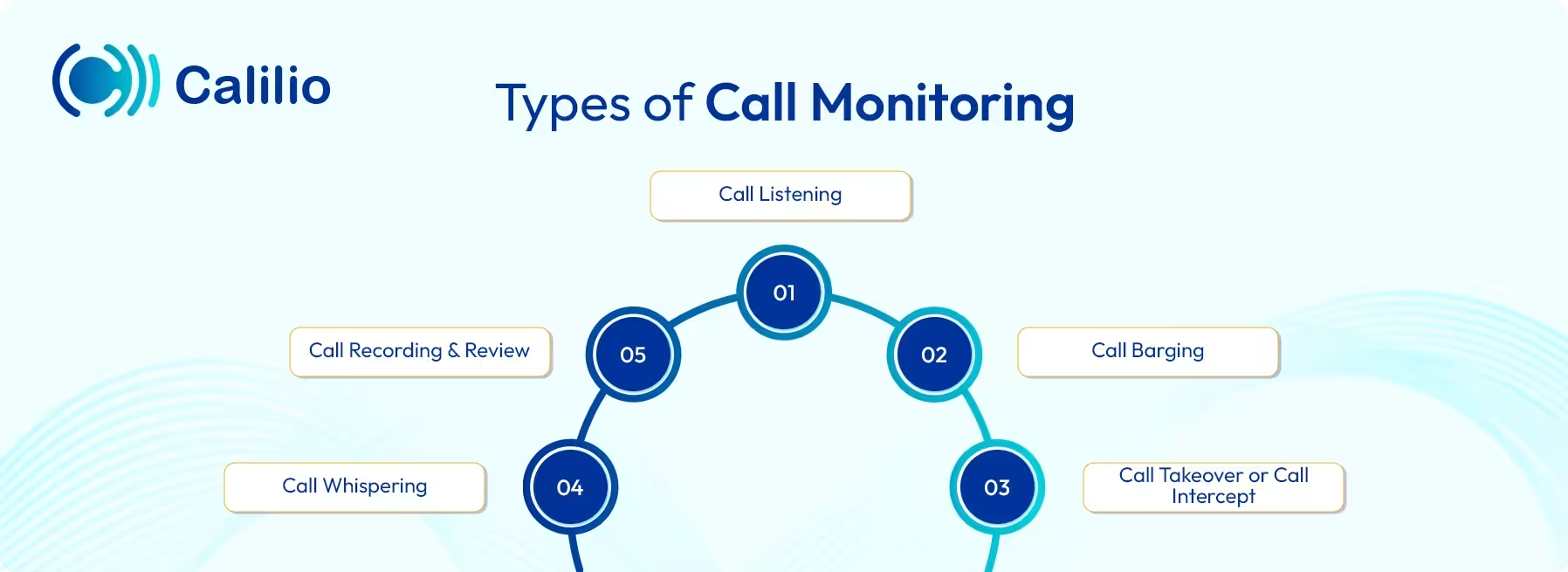
1. Call Listening
Call listening allows managers to monitor live conversations between agents and customers without either party knowing. It’s commonly used for quality checks, compliance reviews, and performance evaluations.
Listening to the call silently, supervisors can assess how agents handle different situations and identify areas that may need coaching or improvement.
2. Call Barging
When a situation escalates or an agent needs live assistance, managers can use call barging to join the conversation. Unlike in call listening, the manager becomes an active participant, turning the call into a three-way interaction. It’s useful for resolving disputes or offering direct support when the agent is unable to move the conversation forward.
3. Call Takeover or Call Intercept
In urgent or sensitive situations, supervisors may need to take full control of the call. Call takeover removes the agent from the line and allows the manager to speak directly with the customer. This is helpful in critical situations, where immediate decisions need to be made.
4. Call Whispering
With call whispering, managers can guide agents during live calls without the customer hearing anything. It acts as a real-time coaching tool, helping agents navigate difficult questions, follow scripts correctly, or adjust their tone. This approach helps train new team members or support agents handling complex cases.
5. Call Recording & Review
Call recording captures conversations between agents and customers so they can be reviewed later. Unlike live monitoring methods, recording focuses on post-call analysis rather than real-time involvement. It helps teams review performance, identify recurring issues, and use real examples for training.
How Does Call Monitoring Work?
During call quality monitoring, managers and supervisors observe customer calls as they happen and review them later. They can choose specific agents or call queues and listen using silent, whisper, or barge-in modes, depending on the situation. Once the call ends, the recording is reviewed, and feedback or coaching is shared to help agents improve their performance.
- Step 1: System Integration
Call monitoring features are built into the telephone system to track and review calls. - Step 2: Supervisor Access
Managers or Quality Assurance (QA) specialists are given access to a monitoring dashboard, which provides real-time visibility of ongoing calls. - Step 3: Agent Selection
The supervisor selects an active agent or call queue they want to monitor from the dashboard. - Step 4: Real-time Listening
The manager can listen to the call in different modes: silent mode, whisper mode, or barge-in mode. - Step 5: Post-call Review
Once the call ends, it’s saved as a recording. The manager reviews the call and provides feedback or coaching to the employee to improve performance.
Must-have Features in Call Monitoring Tools
Call monitoring tools must include features like call recording, call transcription, sentiment analysis, evaluation scorecards, automatic call scoring, real-time dashboards, and CRM integration. Together, these features help teams review calls accurately, track agent performance in one place, and take faster action to improve call quality and customer experience.
- Call Recording: Captures every conversation between agents and customers for later review. It’s especially helpful in ensuring compliance, training, and dispute resolution.
- Call Transcription: Converts recorded calls into text, making it easier to search, analyze, and extract key information quickly.
- Analysis: Evaluates the tone and language used during calls to gauge customer emotions, helping agents to understand caller mood, respond more appropriately, and handle conversations with better context.
- Evaluation Forms/Scorecards: Customizable forms that allow supervisors to assess agent performance based on specific criteria like professionalism, accuracy, and script adherence.
- Automatic Call Scoring (Auto QA): Uses AI to automatically grade calls against predefined criteria, reducing the need for manual review and ensuring consistency.
- CRM Integration: Connects call monitoring tools with CRM systems to give agents and managers a complete view of customer histories when evaluating conversations.
What are the Benefits of Call Monitoring for Businesses?
Call monitoring helps businesses improve customer satisfaction, accelerate agent training, and ensure regulatory compliance. It boosts operational efficiency, reduces costs, and improves First-Call Resolution (FCR). Call monitoring also helps identify effective sales techniques and provides actionable insights for better decision-making.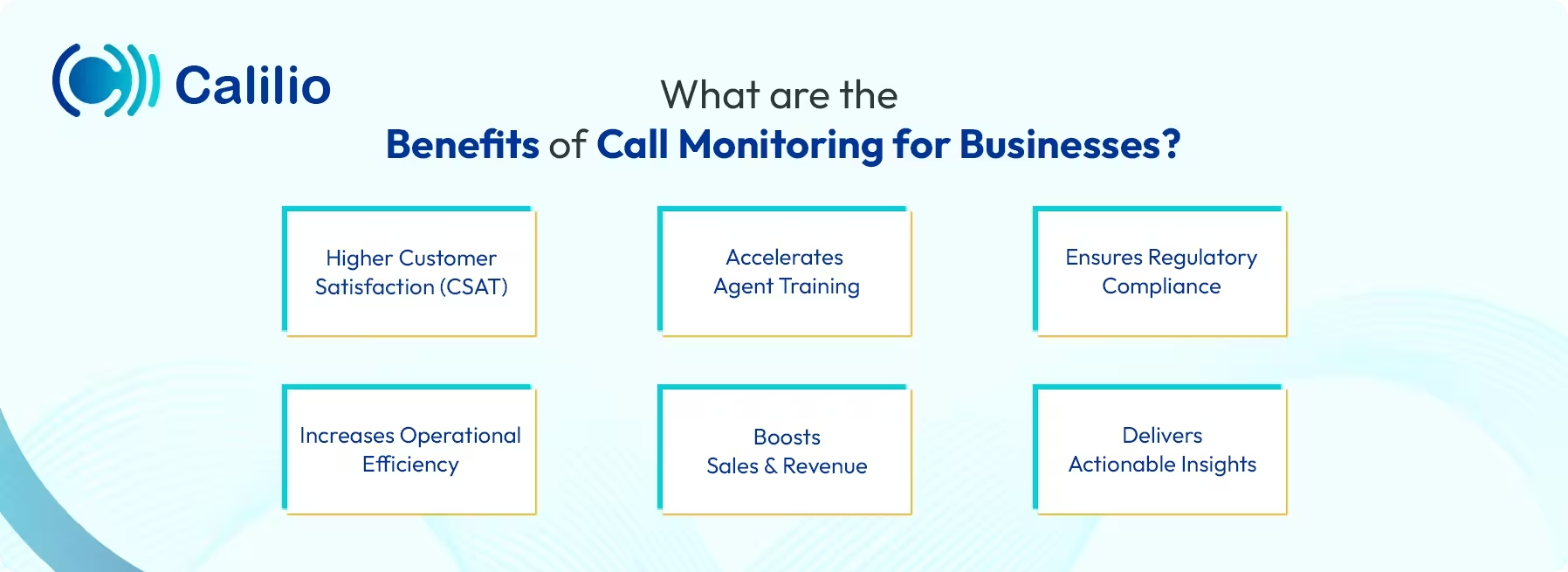
1. Higher Customer Satisfaction (CSAT)
Call monitoring ensures that agents deliver accurate, consistent, and high-quality service in every call. It helps agents address customer queries clearly and professionally, ultimately improving customer satisfaction and strengthening long-term loyalty.
2. Accelerates Agent Training
Real-time call monitoring, including Whisper Mode, allows supervisors to coach agents during live interactions without interrupting the customer. Immediate guidance helps agents correct mistakes quickly.
3. Ensures Regulatory Compliance
Recording and monitoring calls provides verifiable evidence of customer interactions. This helps organizations comply with legal, regulatory, and industry standards while ensuring agents follow internal policies, reducing legal and financial risk.
4. Increases Operational Efficiency
Call quality monitoring helps identify process gaps, inefficiencies, and performance issues. Addressing these areas reduces Average Handle Time (AHT), improves First-Call Resolution (FCR), and lowers operational costs.
5. Boosts Sales and Revenue
By analyzing calls from high-performing agents, businesses can identify effective sales techniques and messaging. Applying these best practices across teams improves conversion rates and increases revenue.
6. Delivers Actionable Insights
Businesses can analyze call data to uncover customer concerns, recurring issues, and emerging trends. These insights support informed decisions in marketing, product development, and customer service improvements.
Who Uses Call Monitoring?
Customer support teams, sales teams, and marketing teams in an organization can use call monitoring tools to ensure consistent service quality, refine agent performance, and boost customer satisfaction.
- Customer Support Teams: Support teams handle customer issues effectively, follow company protocols, and deliver high-quality service consistently through call monitoring.
- Sales Teams: Sales managers review interactions to refine pitches, train agents on successful strategies, and improve conversion rates by identifying best practices from top performers.
- Marketing Teams: Marketers use call monitoring to see which campaigns drive calls, understand customer needs from live conversations, improve lead quality, track ROI (Return on Investment) by channel, and keep messaging consistent across ads and calls.
Optimize Agent Performance with Calilio’s Real-time Call Monitoring Tools for Businesses!
Best Practices for Effective Call Monitoring
For effective call monitoring, set clear goals, balance real-time and recorded monitoring, and use AI for consistent evaluations. Similarly, provide actionable feedback, promote a learning culture, and ensure compliance with regulations. Also, regularly update standards to align with evolving business goals and customer expectations.
1. Set Clear and Relevant Goals
Define what you want to achieve through call quality monitoring. Whether it’s improving first-call resolution, increasing customer satisfaction scores, or ensuring regulatory compliance, be clear about the specific outcomes you want. Establish measurable criteria such as professionalism, empathy, problem-solving, and adherence to scripts.
2. Balance Real-time and Recorded Monitoring
Use real-time monitoring to provide immediate feedback and coaching during calls, especially in high-stakes or learning situations. Similarly, recorded monitoring allows you to review recorded calls for trends, recurring issues, and agent performance over time, providing a deeper insight into overall service quality.
3. Utilize AI and Automated Scoring
Implement AI-driven tools to score calls based on set criteria automatically. This reduces manual work, provides consistent evaluations, and helps identify key customer needs. AI tools can analyze call data for tone, sentiment, and keywords that indicate issues such as frustration or non-compliance.
4. Provide Actionable Feedback
Offer clear, specific, and actionable feedback after every review. When doing so, highlight both strengths and areas for improvement, using examples from the call. Focus on guiding agents toward improvement by suggesting concrete changes. Make sure the feedback is framed positively and is easy to implement for agents.
6. Prioritize Compliance
For industries with strict regulatory requirements, ensure that agents follow compliance protocols by regularly monitoring calls for legal and policy adherence. Set up compliance checkpoints within your monitoring process to catch and address any violations before they become a risk.
5. Create a Learning Culture
Create an environment where agents view feedback as an opportunity for growth. Hold regular coaching sessions, peer reviews, or group discussions to share best practices. Encourage agents to learn from both positive and negative experiences to improve their skills over time.
7. Review and Update Standards Regularly
As customer expectations and business goals evolve, regularly revisit your call monitoring standards. Collect feedback from agents and customers to refine your criteria and ensure that your quality expectations remain relevant and achievable.
Legal Considerations When Monitoring Calls
Before monitoring calls, businesses must follow specific call recording and monitoring laws that vary by country and region. The US federal and state laws, along with international regulations like GDPR, set clear rules around consent and data handling. Understanding these laws helps avoid legal issues and protects customer privacy.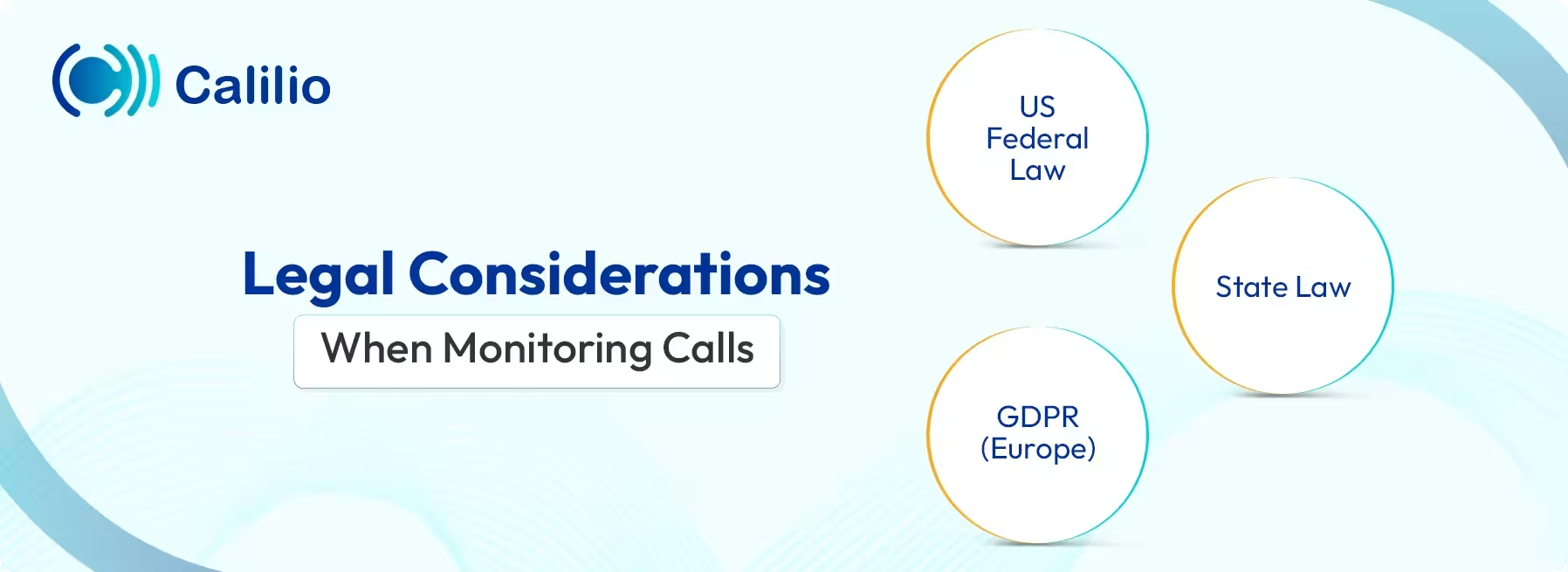
US Federal Law
At the federal level, the United States follows a one-party consent rule. This means a call may be monitored as long as at least one person on the call is aware of and agrees to it. In most business scenarios, the employee or agent handling the call provides the required consent, which makes the practice lawful at the federal level.
State Law
While federal law allows one-party consent, some states like California, Florida, and Pennsylvania require all-party consent, meaning everyone on the call must be informed and must agree before any recording starts. If not, the business must avoid monitoring or recording that call.
GDPR (Europe)
In the European Union, the General Data Protection Regulation (GDPR) has strict guidelines around call monitoring. Consent must be explicit and informed, often requiring the caller to take an action, like pressing a button to agree. Additionally, businesses are required to provide a copy of any call recording upon request, typically within 30 days.
Conclusion
Call monitoring is an essential tool for businesses that want to stay competitive and continuously improve. It allows you to fine-tune every interaction, ensuring that agents provide high-quality service, adhere to policies, and meet customer expectations. With actionable insights and real-time coaching, your business can increase customer loyalty and optimize agent performance.
Calilio’s AI-powered call monitoring system simplifies the call monitoring process by providing real-time tracking, evaluation, and coaching. It gives supervisors access to key metrics, call data, and performance trends, enabling quick identification of service gaps and ensuring consistent service quality.
Summarize this blog with:
Frequently asked questions
How secure is call monitoring data?
Call monitoring data is highly secure when proper protocols are followed. Leading platforms use encryption to protect both call content and associated data. However, businesses must comply with privacy regulations, such as GDPR or HIPAA, to prevent unauthorized access.
Is call monitoring suitable for all business sizes?
What is the role of AI in enhancing call monitoring?
How often should call monitoring be reviewed?

Still have questions?
Can’t find the answer you’re looking for? Please chat with our friendly team.
Stay in the loop
Get the latest call insights, trends, and updates delivered straight to your inbox.
By subscribing, you agree to receive updates from Calilio.
You can unsubscribe anytime.
Enter the World of AI Business Phone System with Calilio
Improve your business operation with Calilio's advanced virtual phone system. Join today for a better way to connect.