
What is Non-Fixed VoIP & How Can It Benefit Your Business?

Today, most businesses operate from multiple locations, with teams working from home, separate office branches, or different countries. While this setup offers freedom and a better work-life balance, it also creates challenges in staying connected.
Traditional phone systems are designed for fixed office setups. As a result, teams are often forced to rely on separate devices or make constant switches between communication platforms, leading to missed calls, delayed responses, and fragmented conversations.
With non-fixed VoIP, your phone system moves with you. It lets you make and receive calls and send texts over the internet from any device, without relying on traditional carrier networks. This makes communication faster, simpler, and more flexible for modern teams.
In this guide, we’ll explain what non-fixed VoIP is, how it works, and why it’s ideal for modern businesses. We’ll also cover setup tips, common challenges, and helpful strategies for effective use.
Key Highlights:
Non-fixed VoIP enables businesses to make and receive calls over the internet, offering flexibility, cost savings, and virtual numbers for global operations without the need for physical offices or traditional phone lines.
Setting up non-fixed VoIP involves selecting a provider, signing up for an account, obtaining a virtual number, and configuring essential features like voicemail, call forwarding, and other call management tools.
Non-fixed VoIP is ideal for remote teams, small businesses, startups, frequent travelers, and international companies, providing flexible and cost-effective communication solutions.
Poor connectivity, security concerns, and limitations for emergency services can affect call quality and reliability on non-fixed VoIP.
To use non-fixed VoIP effectively, set up a professional voicemail, educate your team about 911 limitations, use local area codes for credibility, and regularly test the system to ensure high call quality.
What is Non-Fixed VoIP?
Non-fixed VoIP is a phone system that uses the internet for making and receiving calls without being linked to a physical address. Unlike traditional phone numbers, you don’t need an office location or a fixed telephone line to use it. The system is hosted in a secure data center, and users can access it through their mobile phones, laptops, or VoIP desk phones, as long as they have an internet connection.
A key feature of non-fixed VoIP is the virtual phone number, which businesses can use to appear local in different regions. This makes it easy to operate in multiple markets without needing an office in each location.
How Does Non-Fixed VoIP Work?
Non-fixed VoIP converts your voice into digital data packets, which are sent over the internet. These packets travel through routers and servers until reaching the recipient's device, where they are reassembled and turned back into sound. Along with the voice data, caller ID information, such as the phone number and name, is also sent.
Here’s a simple breakdown of how data flows through a non-fixed VoIP system:
- Convert Voice to Data Packets: When you speak during a call, your voice is converted into digital data packets. Each packet contains a small piece of your voice so it can travel easily across the internet.
- Internet Transmission: These packets are sent over the internet instead of traditional phone lines. They move through routers and servers until they reach the recipient’s device.
- Data Packets Back to Voice: The recipient’s device receives the data packets and puts them back together. It converts the digital packets into audible sound so the person can hear your voice clearly.
- Caller ID Transmission: Along with the voice data, caller ID information, like the phone number and the caller’s name, is sent using a CNAM tag. This lets the receiver know who is calling before answering.
What are the Benefits of Using Non-Fixed VoIP?
A non-fixed VoIP system gives businesses flexibility, lower calling costs, simple scalability, and the ability to use phone numbers from any location for a global presence.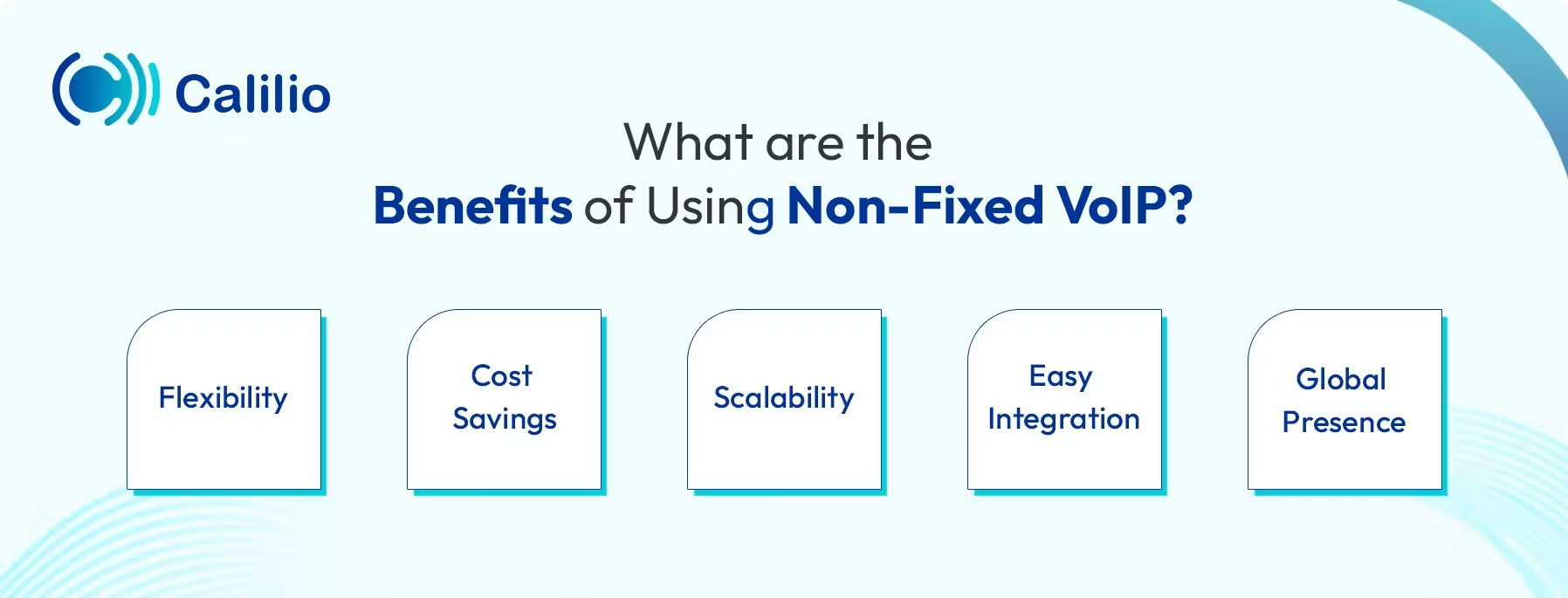
- Flexibility: Employees can make and receive calls from anywhere with an internet connection, making it perfect for remote work or businesses with multiple locations.
- Cost Savings: VoIP calls cost significantly less than traditional phone services. You avoid installation fees, maintenance charges, and high international calling rates.
- Scalability: With non-fixed VoIP, it's easy to add or remove users as your business grows, without complicated installations or extra costs.
- Global Presence: Businesses can get virtual phone numbers from different regions, creating a local presence in various countries without needing a physical office.
- Easy Integration: Non-fixed VoIP can easily integrate with other business systems like CRMs, improving efficiency and workflow.
How to Set Up Non-Fixed VoIP for Your Business?
To set up a non-fixed VoIP for your business, select a non-fixed VoIP provider that meets your needs, then sign up and get your virtual number. Download the provider’s app on your devices, set up call features like voicemail and call forwarding, and test the system to ensure everything works smoothly.
- Step 1 - Choose a VoIP Provider: Select a non-fixed VoIP provider that suits your business needs. Look for features like mobile compatibility, international calling, scalability, and integration options.
- Step 2 - Sign Up and Get Your VoIP Number: After choosing a provider, sign up for an account. During the setup, you can acquire a virtual phone number. You can select an area code or choose a number from different countries.
- Step 3 - Download the VoIP App: Non-fixed VoIP services usually have apps for mobile devices, desktops, and laptops. Download the app on your devices to make and receive calls.
- Step 4 - Configure Call Settings: Once the app is installed, configure your call settings. Set up voicemail, call forwarding, and other features like auto-attendants or IVR if needed.
- Step 5 - Test the System and Go Live: Make test calls to ensure everything is working correctly. Check the audio quality, call connection, and features like voicemail or call forwarding.
Upgrade to a Reliable Non-Fixed Voip Phone System Built for Remote and Global Teams
Who Should Use Non-Fixed VoIP?
Non-fixed VoIP is ideal for remote teams, small businesses, startups, frequent travelers, and international businesses.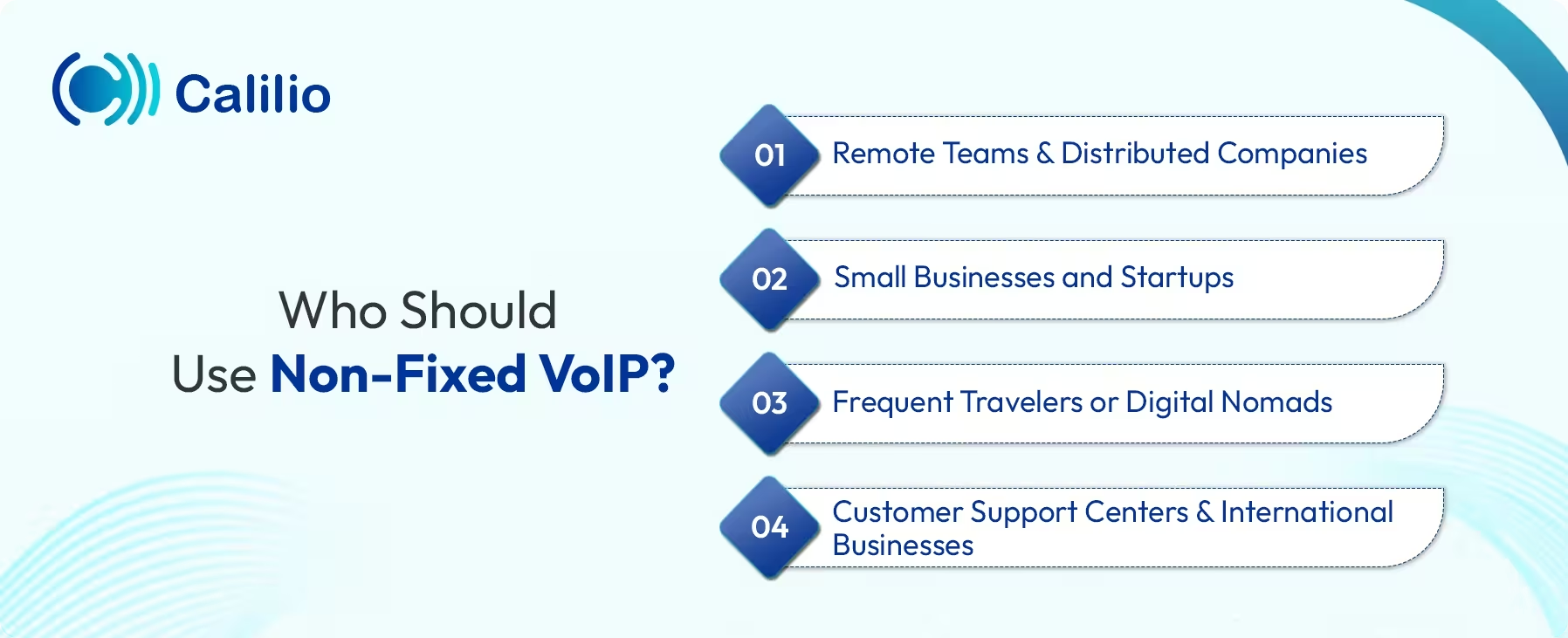
- Remote Teams and Distributed Companies: Employees can make and receive calls from anywhere without being tied to a fixed office desk.
- Small Businesses and Startups: New businesses often choose non-fixed VoIP because it’s affordable, easy to scale, and requires no hardware or office setup.
- Frequent Travelers or Digital Nomads: Users can keep one consistent number across countries, making communication easier while moving between regions.
- Customer Support Centers and International Businesses: Establish a professional presence with local or toll-free numbers in multiple regions or countries without physical offices.
Common Issues with Non-Fixed VoIP
A non-fixed VoIP system depends on internet quality, so issues like weak connectivity or low bandwidth can cause call drops and poor audio. It also has limits with emergency services, higher risks of scams or spoofing, and may face verification challenges in industries that require fixed VoIP numbers.
- Internet Dependence: Non-fixed VoIP relies entirely on a stable internet connection. Poor connectivity, low bandwidth, or network congestion can result in dropped calls, lag, and poor audio quality.
- Emergency Services (911) Limitations: Non-fixed VoIP numbers are not tied to a physical location, making it difficult for emergency services like 911 to pinpoint your exact location during an emergency.
- Scams and Spoofing: Non-fixed VoIP numbers are more vulnerable to scams and robocalls, which can lead to your business number being spoofed by scammers. This can harm your business's reputation and trustworthiness.
- Verification Challenges: Certain industries or countries require fixed VoIP numbers for verification or regulatory compliance. A non-fixed number may not meet those requirements.
Best Practices for Effectively Using Non-Fixed VoIP
To use non-fixed VoIP effectively, verify your caller ID, set up call routing and business hours, and use a local number to increase answer rates. Make sure your team knows the limits of 911 calling and list your number on your website to strengthen credibility. Also, regularly monitor call quality and implement strong security settings to ensure stable and safe communication.
1. Use Verified Caller IDs
A verified caller ID helps customers recognize your business and feel confident answering your calls. This reduces call avoidance and improves overall engagement. It also builds credibility, which is important when using a non-fixed VoIP number.
2. Set Up Call Routing and Business Hours
Routing rules ensure calls reach the right team members quickly, whereas setting business hours helps manage customer expectations and reduces missed calls outside working times.
3. Educate Agents on 911 Limitations
Since non-fixed VoIP numbers aren't tied to a specific physical address, calls made from these numbers can be harder to trace by emergency services. Ensure your employees are aware of this limitation and have a protocol in place. For emergencies, remind them to use personal mobile phones or provide their location clearly when calling emergency services.
4. List Your Number on Business Websites
To boost credibility, consider listing your non-fixed VoIP number on your company website and third-party directories. This helps customers verify your business and feel more confident when answering calls from unfamiliar numbers. It also reduces the likelihood of your number being flagged as spam.
5. Use Local Numbers
Choose local area codes for your non-fixed VoIP numbers. This makes your business seem more local and familiar, which builds trust with customers. Local numbers also help avoid the perception of spam, as many people are wary of calls from non-local or unfamiliar numbers.
6. Regularly Test Call Quality
Non-fixed VoIP relies heavily on your internet connection. So, regularly monitor for issues like dropped calls, lag, or poor audio quality, and take steps to resolve them promptly by optimizing your internet connection or adjusting your VoIP settings.
7. Secure Your VoIP System
Non-fixed VoIP systems are susceptible to security threats like hacking and fraud. Protect your system by using strong passwords, encryption, and secure authentication methods. Regularly update your system to stay ahead of security vulnerabilities and ensure the safety of your communications.
Conclusion
Non-fixed VoIP offers businesses the flexibility to make and receive calls from anywhere, making it ideal for companies with employees in multiple locations. It eliminates the need for traditional phone lines, saving costs while providing a professional presence with virtual numbers. However, to ensure optimal performance, businesses need a reliable VoIP service that combines affordability with high-quality service.
That’s where Calilio excels, providing a cost-effective solution with features designed for modern business needs. With affordable plans starting at just $15 per user per month, it offers virtual numbers in over 100 countries, allowing businesses to easily expand their presence globally.
Additionally, Calilio integrates powerful AI tools such as call transcription, sentiment analysis, and call summarization, providing businesses with valuable insights that enhance customer interactions and improve decision-making.
Summarize this blog with:
Frequently asked questions
Can I integrate non-fixed VoIP with other business tools?
Yes. Many non-fixed VoIP services offer integrations with other business tools such as CRM, customer support platforms, and productivity tools. It enables smooth communication across multiple software.
What is the difference between fixed and non-fixed VoIP?
Can I use non-fixed VoIP internationally?
Are there any hidden costs with non-fixed VoIP services?

Still have questions?
Can’t find the answer you’re looking for? Please chat with our friendly team.
Stay in the loop
Get the latest call insights, trends, and updates delivered straight to your inbox.
By subscribing, you agree to receive updates from Calilio.
You can unsubscribe anytime.
Enter the World of AI Business Phone System with Calilio
Improve your business operation with Calilio's advanced virtual phone system. Join today for a better way to connect.