- Partners
- Contact Us
- Log in
PRI vs. SIP Trunking: Which One to Choose?
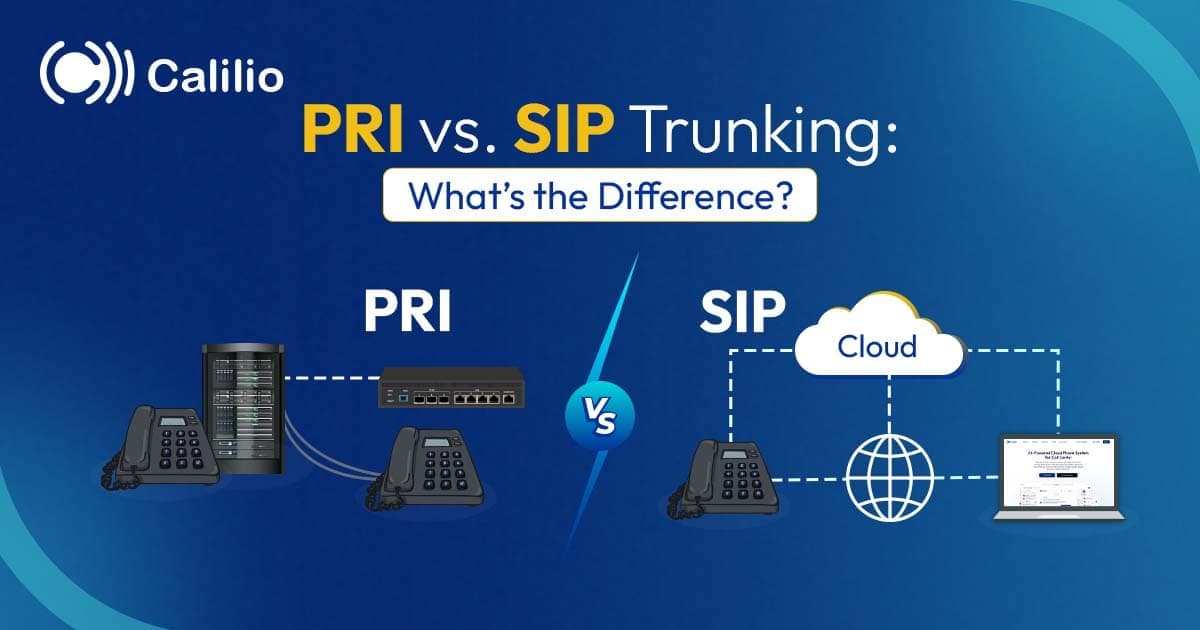

As businesses grow, the number of incoming and outgoing calls grows too. Sales teams or support desks depend on a reliable phone system to handle the growing call traffic without delays or dropped connections. To manage these calls, businesses use a system that links their internal phone system to the public phone network.
And, two of the most common options are Primary Rate Interface (PRI) and Session Initiation Protocol (SIP) trunking.
Both systems allow your business to make and receive multiple calls at the same time. However, the difference lies in how they work and how they support growth. PRI uses fixed physical lines with a set call limit, while SIP trunking runs over the internet and adjusts more easily as demand changes. Each option solves a different problem.
In this blog, we’ll compare PRI and SIP trunking, explain how each one supports different business calling needs, and help you decide which option fits your call volume, budget, and future plans.
Key Highlights:
PRI is a digital phone line that connects business phone systems to the public phone network, allowing simultaneous calls over one line.
SIP trunking connects a business phone system to the public phone network over an Internet Protocol (IP) connection.
The main difference is that PRI relies on dedicated physical circuits with fixed channel limits, while SIP trunking relies on an internet network and is easier to scale.
PRI fits businesses with steady call volume and legacy PBX systems, while SIP trunking is suitable for growing businesses with variable call demand or remote work needs.
What is PRI?
PRI (Primary Rate Interface) is a traditional digital phone service that connects a business phone system directly to the Public Switched Telephone Network (PSTN). It uses dedicated physical circuits provided by a telecom carrier, allowing businesses to handle multiple calls at the same time through a fixed number of channels.
PRI is often used by organizations that need consistent call quality and prefer a setup that does not rely on internet connectivity. It is common in offices running on-premise Private Branch Exchange (PBX) systems and environments where call traffic stays steady throughout the day.
What are the Key Components of PRI?
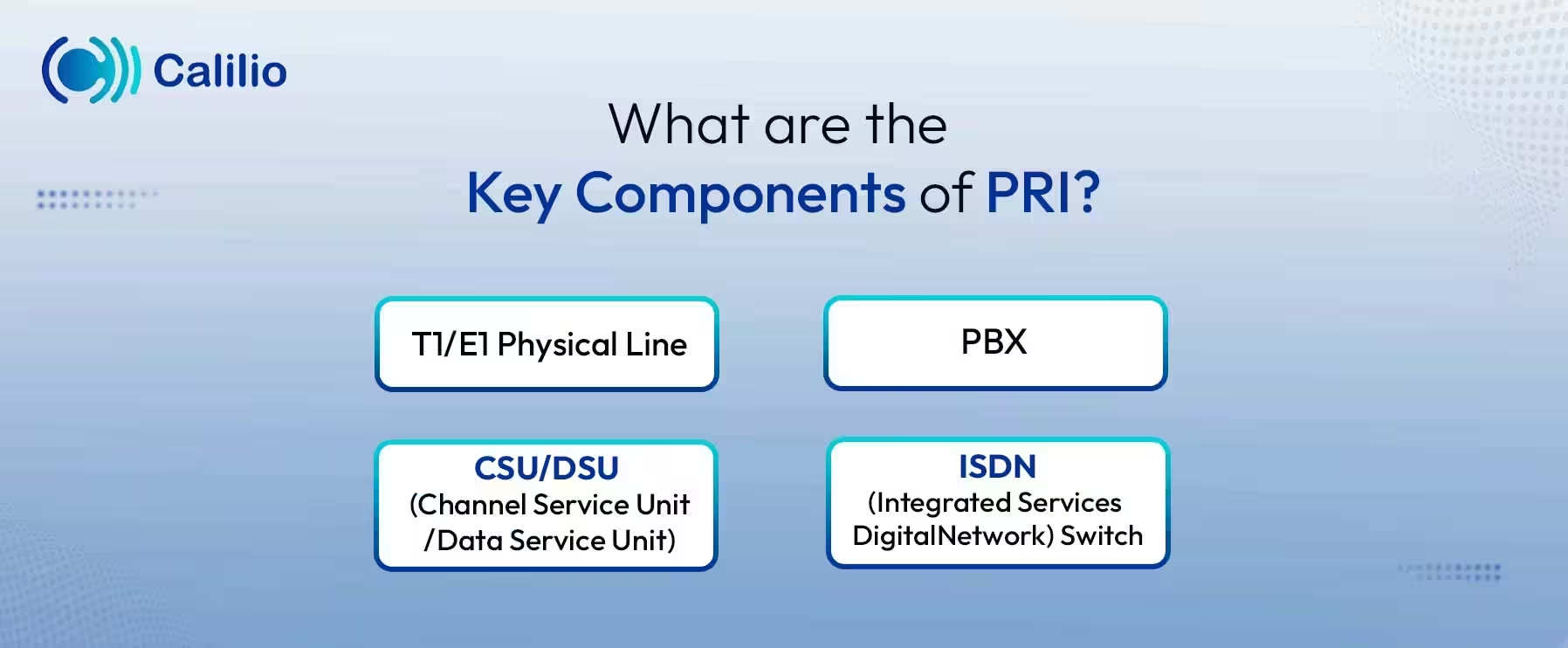
- T1/E1 Physical Line: The physical copper-based digital circuit that connects the business location to the service provider’s central office.
- PBX: PBX is the on-site phone system that manages internal extensions and routes incoming and outgoing calls through the PRI circuit.
- CSU/DSU (Channel Service Unit/Data Service Unit): Hardware that connects the T1 or E1 line to the PBX. In many modern systems, this function is built directly into the PBX or gateway device.
- ISDN (Integrated Services Digital Network) Switch: A carrier-side network switch located at the central office that controls call routing and manages the PRI connection.
Who Uses PRI?
- Large offices with steady inbound and outbound call traffic.
- Call centers with fixed staffing and predictable call volumes.
- Businesses using legacy or on-premise PBX systems.
- Organizations located in areas with unstable or limited internet connectivity.
- Enterprises that prefer a dedicated phone connection separate from data networks.
Pros of PRI
- Consistent call quality due to dedicated circuits
- Predictable performance with low latency
- No dependence on internet bandwidth
- Strong compatibility with legacy phone systems
Cons of PRI
- Fixed call capacity that is difficult to scale
- Higher installation and maintenance costs
- Requires physical wiring and on-site equipment
- Slow to adapt to changing call volumes or remote work needs
What is SIP Trunking?
SIP trunking is a modern way to connect a business phone system to the public telephone network using an internet connection instead of physical phone lines. Calls travel as digital data through the Session Initiation Protocol (SIP), which controls how calls start, connect, and end.
Unlike traditional phone services, SIP trunking lets businesses adjust call handling capacity as needs change. It supports remote teams, cloud-based phone systems, and fast-growing organizations that want more control over costs and call volume without adding new hardware.
What are the Key Components of SIP Trunking?
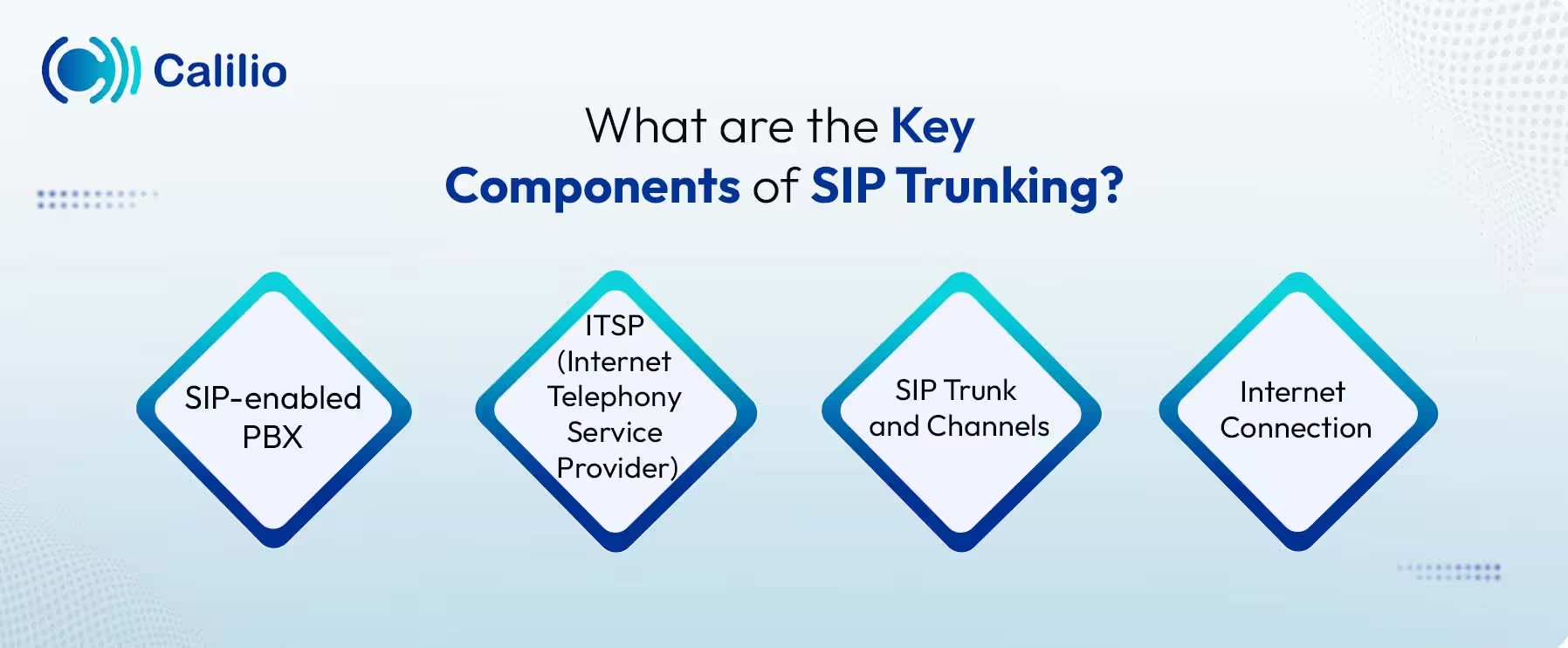
- SIP-enabled PBX: It is the internal phone system, either on-premise or cloud-based, that manages calls. It allows SIP to connect calls over the internet.
- ITSP (Internet Telephony Service Provider): ITSP is the service provider that delivers the SIP trunk and connects the business phone system to the PSTN.
- SIP Trunk and Channels: A virtual connection between the PBX and the ITSP. Each trunk contains multiple channels, and each channel supports one simultaneous call.Internet
- Connection: SIP trunking requires a reliable, high-speed internet connection for managing calls.
Who Uses SIP Trunking?
- Growing businesses that need flexible call capacity.
- Companies with remote or hybrid teams.
- Organizations using cloud-based systems.
- Call centers with changing call volumes.
- Teams that want fast scaling without installing physical lines.
Pros of SIP Trunking
- Scales call capacity up or down without installing new physical lines
- Supports remote and hybrid teams across locations
- Low calling and infrastructure costs compared to PRI
- Enables DID (Direct Inward Dialing) numbers for teams, departments, and extensions
- Works well with cloud phone systems and SIP-enabled PBX platforms
- Allows fast setup and easier expansion as the business grows
Cons of SIP Trunking
- Depends highly on your internet connection for call quality and uptime
- Call quality can drop if bandwidth is limited or the network is congested
- Needs strong security controls to prevent SIP-based threats
- May require Quality of Service (QoS) setup and network tuning for reliable voice performance
- Power or internet outages can disrupt service without a backup plan
Switch to an All-in-One Cloud Phone System That Replaces PRI Lines and Eliminates Manual SIP Channel Setup
PRI vs. SIP Trunking: Key Differences
The main difference between PRI and SIP trunking is how calls are delivered. PRI uses a dedicated physical circuit at a fixed location with a fixed number of channels for simultaneous calls. SIP trunking, on the other hand, sends calls over an IP network and allows businesses to increase or decrease call capacity through simple configuration. Additionally, SIP trunking and PRI also differ in cost, setup time, reliability, flexibility, and management.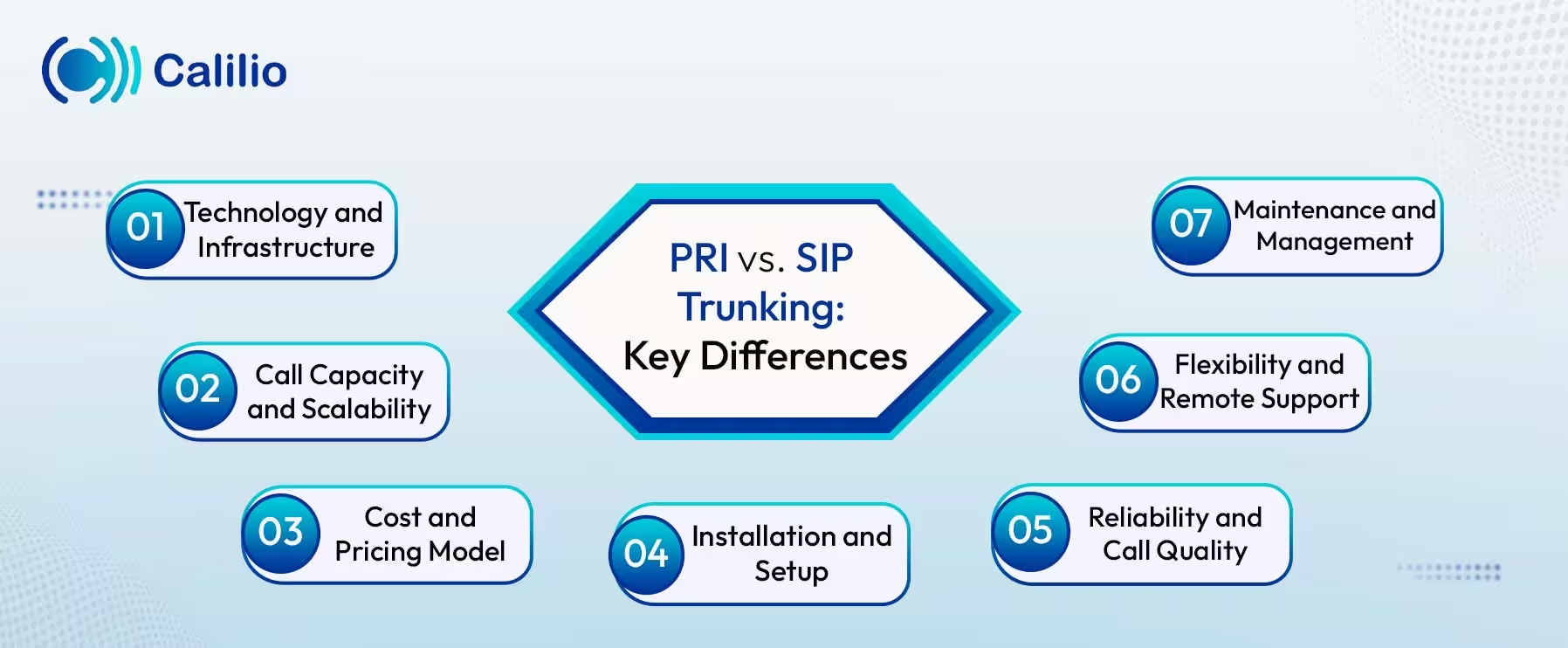
1. Technology and Infrastructure
PRI connects your phone system to the PSTN using a dedicated physical circuit, usually T1 or E1. The carrier installs this line at your site, and your on-premise PBX connects to it using PRI-compatible hardware. Since it depends on physical circuits and carrier provisioning, changes often require the provider’s input.
SIP trunking connects your phone system to the PSTN over an IP network. A SIP-enabled PBX (on-premise or cloud) links to an ITSP through the internet, and calls move as data. This reduces reliance on dedicated phone circuits, but it increases reliance on network readiness, security controls, and stable connectivity.
2. Call Capacity and Scalability
PRI’s call capacity is fixed. A PRI circuit provides a set number of voice channels, and each channel supports one concurrent call. When all channels are busy, new callers cannot connect unless calls are routed elsewhere or you add another PRI circuit. Scaling usually means installing more circuits, which can take time.
SIP trunking is more flexible. Providers typically let you add or remove call channels through software configuration, and scaling does not require new physical lines. However, the call quality highly depends on your internet bandwidth and network quality. If bandwidth is limited, adding channels impacts call quality.
3. Cost and Pricing Model
PRI often comes with higher fixed costs because it requires dedicated carrier circuits, physical installation, and on-site equipment. Pricing is predictable because each PRI line comes with a fixed number of channels. However, upgrades can be expensive since scaling usually means paying for another full PRI line even if you only need to handle a few more concurrent calls.
SIP trunking cost is more flexible and is usually based on the number of channels, usage, or a bundle plan. Businesses pay only for the capacity they need and scale as demand changes. That said, SIP can require spending on network upgrades, setups, security tools, and backup connectivity to keep calls stable.
4. Installation and Setup
PRI setup typically requires a carrier to install a physical T1/E1 circuit at the business location. After installation, you also need to connect the circuit to the PBX and configure signaling and calling channels. Because physical installation is involved, the setup process usually takes longer.
Meanwhile, SIP trunking setup is mostly configuration-based. You just need to connect the PBX or cloud phone system to the ITSP, set up SIP credentials, and tune the network to handle the voice traffic. The process is quick if your network is already prepared, but it takes longer if you need to upgrade bandwidth or apply QoS.
5. Reliability and Call Quality
PRI is known for consistent call quality because it uses a dedicated circuit. It is less affected by network congestion inside your office. However, PRI can still face outages at times due to issues on the provider side, equipment faults, or physical line damage.
SIP trunking can deliver excellent call quality, but it depends on internet stability. If bandwidth drops or the network experiences jitter or packet loss, call audio can degrade. When you have enough bandwidth, proper network settings, and a backup internet connection in place, SIP trunking can reach PRI-level reliability for many businesses.
6. Flexibility and Remote Support
PRI is tied to a physical location. So, remote work support usually requires extra setup, such as call forwarding, additional infrastructure, or separate systems for remote staff. For this reason, it works best for teams that operate mainly from a central office.
SIP trunking supports remote and multi-site teams more easily because it runs on the internet. Calls can be routed across offices, and users can connect through compatible desk phones, softphones, or cloud PBX setups. This makes SIP trunking a better fit for hybrid work or distributed teams.
7. Maintenance and Management
PRI maintenance heavily depends on physical hardware and the carrier’s infrastructure. Troubleshooting often involves checking the PBX, cabling, or gateway equipment, and working closely with the provider.
SIP trunking shifts maintenance responsibility to your IT team and internal network. You need to monitor bandwidth, apply QoS, and manage security controls to protect SIP traffic. While it offers more control and flexibility, it requires ongoing network monitoring to maintain call quality and reduce system risk.
PRI vs. SIP Trunking: Which is Better for Your Business?
SIP trunking is the better option for most businesses because it offers lower costs, flexible scaling, and support for remote or multi-site teams. It adapts more easily to growth and changing call volumes.
PRI still works well for organizations with existing on-premise PBX systems or that operate in areas with unreliable internet connectivity.
Here’s a quick look to help you decide which suits your business better:
Factor | PRI (Primary Rate Interface) | SIP Trunking |
| Call volume pattern | Works best when call volume stays steady and predictable | Works best when call volume changes and scaling is needed |
| Existing setup | Best if you already use an on-premise, PRI-based PBX and want to keep it | Best if you use a SIP-enabled PBX or a cloud phone system |
| Internet reliability | Suitable when the internet is unreliable or not trusted for voice calls | Best when the internet is stable |
| Team setup | Strong fit for a single main officE | Strong fit for remote, hybrid, and multi-location teams |
Conclusion
PRI and SIP trunking both connect a business phone system to the public phone network, but they serve different needs. PRI runs on dedicated physical circuits, while SIP trunking runs over the internet, making it easier to scale the phone system to meet the changing call volumes.
For growing businesses, an easier-to-manage calling setup with telephony features and reporting matters more than just a connection line. Moreover, adding new PRI lines or configuring SIP channels requires technical effort and ongoing maintenance.
That’s why many businesses today have transitioned to Voice over Internet Protocol (VoIP) cloud phone systems that combine connectivity with built-in management tools in a single platform.
Calilio’s business phone system builds on this cloud-based approach. It delivers VoIP calling with integrated call handling tools, AI-powered call reports, and a centralized dashboard. Teams can make and receive calls from anywhere, scale easily as needed, and manage operations without relying on fixed circuits or complicated SIP configurations.



Summarize this blog with:
Frequently Asked Questions
Is SIP trunking cheaper than PRI?
Often, yes, but it depends on the setup. SIP trunking costs less because it avoids dedicated circuits and scales by adding channels instead of installing new lines. However, costs increase if you need better internet, QoS configuration, security tools, or a backup connection to keep quality and uptime strong.
Can PRI and SIP trunking work together?
Does SIP trunking require the internet?
Is PRI being phased out?

Still have questions?
Can’t find the answer you’re looking for? Please chat with our friendly team.
Stay in the loop
Get the latest call insights, trends, and updates delivered straight to your inbox.
By subscribing, you agree to receive updates from Calilio.
You can unsubscribe anytime.
Enter the World of AI Business Phone System with Calilio
Improve your business operation with Calilio's advanced virtual phone system. Join today for a better way to connect.