- Partners
- Contact Us
- Log in
What is PBX? A Comprehensive Guide to PBX Phone Systems
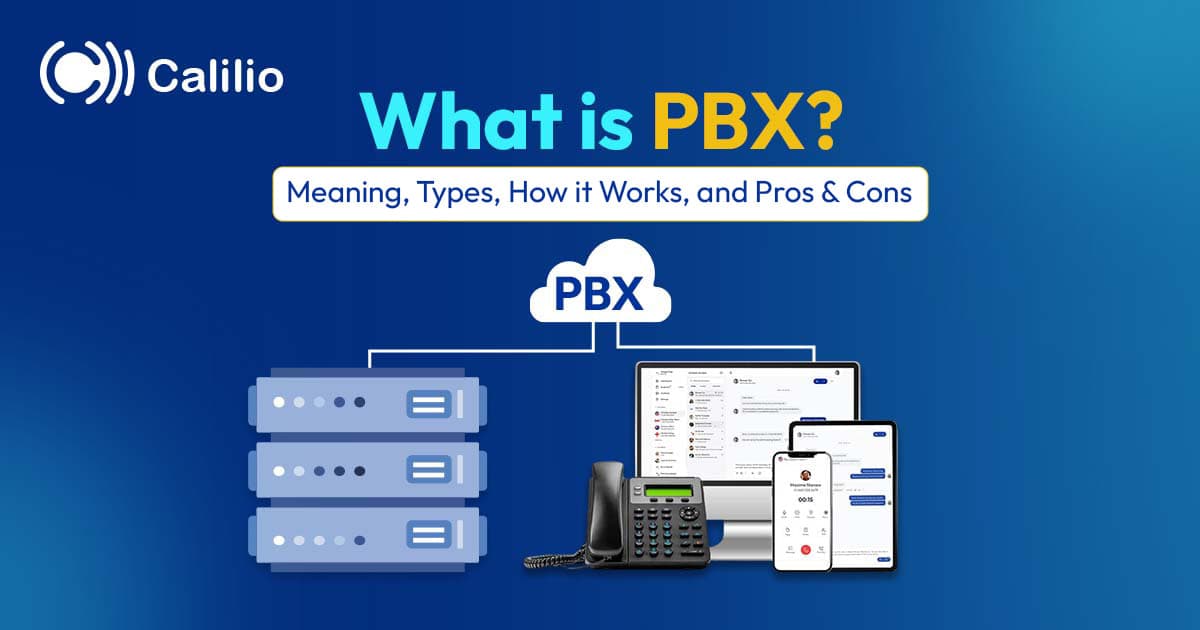

When business communication channels are not properly managed, internal and external communication often gets mixed and results in missed calls, scattered messages, and inefficient workflows. Furthermore, teams struggle to connect quickly, customers experience delays, and simple coordination turns into a time-consuming task.
Consequently, employees waste hours navigating unreliable communication channels, important client calls slip through the cracks, and scaling the system becomes expensive and chaotic. So, without a proper communication framework, businesses risk appearing unprofessional and losing opportunities simply because they lack the right tools to manage their call flow.
This is where a PBX (Private Branch Exchange) system comes in. It resolves the issues mentioned earlier by offering a scalable, efficient, and cost-effective communication framework. So, in this blog, let’s learn what PBX is, how it works, its different types, and ultimately decide whether it’s the right fit for your business or not.
Key Highlights:
A PBX is a private phone network that manages internal, inbound, and outbound business calls efficiently using shared lines.
Four main PBX types include Analog, IP, Hybrid, and Cloud-based, which offer different flexibility, technology, and setup requirements.
PBX systems include advanced features such as call recording, conferencing, DID, voicemail-to-email, call queues, and analytics, depending on the type of PBX you are using.
PBX improves communication with lower costs, easier scalability, software integration, mobility support, and call center monitoring.
Drawbacks of the PBX system include high upfront costs, potential single-point failures, limited legacy features, and ongoing maintenance needs.
What is a PBX?
A PBX (Private Branch Exchange) is a private telephone network used within an organization to manage and route incoming, outgoing, and internal calls efficiently. So, instead of relying on multiple individual phone lines, a PBX connects all internal phones to a central system, allowing employees to communicate with each other and the outside world using shared lines.
In simple terms, a PBX acts as the control center of a business phone system, handling tasks like call routing, call transfers, extensions, voicemail, auto-attendants, and more. Likewise, this centralized setup streamlines communication, reduces costs, and ensures smoother call management across the company.
Therefore, whether you have a small startup or a large enterprise, PBX systems offer the structure and flexibility needed to keep business communication organized and efficient.
How Does a PBX Phone System Work?
PBX creates a private internal calling network for a company, operating like an intelligent switchboard that links employee extensions and bridges them to external numbers using minimal lines. It directs calls through built-in software logic and routing rules. Here is the detailed breakdown:
1. Internal Calls
When employees call each other within the organization, the PBX handles the entire process internally without using external phone lines. Here are the detailed steps on how it operates:
- Each employee is assigned a phone extension instead of a complete phone number.
- When one extension dials another, the PBX internally switches and connects the call.
- No external phone lines or telecom carriers are involved.
This setup allows businesses to maintain efficient, cost-effective communication between team members without relying on external lines.
2. External Calls (Inbound & Outbound)
PBX also manages how calls enter and leave the organization. So, this involves interaction with the public telephone network or Voice over Internet Protocol (VoIP) services.
A. Inbound Calls (From Customers to the Business)
- The inbound call enters through the company’s main phone number.
- The PBX receives it and determines the best route.
- The calls can be directed to a specific employee, department, IVR menu, voicemail or even a call queue.
B. Outbound Calls (From Employees to Outside Numbers)
- When an employee dials an outside number, the PBX connects the call through the available external line or VoIP connection.
- It handles the switching required to link the internal extension with the public telephone network.
- This ensures high-quality, reliable outbound communication.
In short, the PBX acts as the bridge between your internal phone network and the outside world, ensuring smooth, controlled, and cost-efficient communication.
Types of PBX System
Traditional, IP-based, Hybrid, and Cloud-based are the key types of PBX systems.
Analog or Traditional PBX System
An Analog or Traditional PBX System is the original form of PBX. It uses physical wiring and switchboards to connect calls within and outside of a business. This system works by manually or electronically switching calls on private lines and connecting these calls to public telephone networks for external communication.
How to Set Up an Analog or Traditional PBX System
- Step 1: Install physical phone lines connected to a central PBX box.
- Step 2: Connect the PBX box to the public telephone network.
- Step 3: Set up internal phone extensions.
- Step 4: Program the PBX for basic functions like call routing and transferring.
- Step 5: Test the system with internal and external calls.
Internet Protocol (IP) PBX System
An Internet Protocol (IP) PBX System operates over a LAN (Local Area Network) or the Internet. It converts voice calls into digital signals and routes them through the internet. IP phone PBX system system is more flexible and feature-rich than traditional systems.
How to Set Up an Internet Protocol PBX System
- Step 1: Establish a stable and robust internet connection.
- Step 2: Install IP phones or adapt existing phones with IP converters.
- Step 3: Configure the IP PBX server software on a network computer.
- Step 4: Set up user extensions and assign them to phones.
- Step 5: Configure the settings.
Hybrid PBX System
A Hybrid PBX System combines elements of both traditional and IP-based systems. It allows businesses to integrate their existing analog equipment with newer IP technology. As such, it provides a cost-effective way to upgrade their communication systems.
How to Set Up a Hybrid PBX System
- Step 1: Assess existing analog equipment and infrastructure.
- Step 2: Install an IP PBX that supports both analog and digital lines.
- Step 3: Configure the system to integrate with existing analog lines.
- Step 4: Set up digital lines or VoIP as required.
- Step 5: Test the system to ensure seamless integration and functionality.
Hosted or Cloud PBX System
A hosted or Cloud PBX system is hosted in the cloud. This system is the most popular PBX system, and it's easy to see why. You don't have to worry about managing or maintaining the physical hardware – the service provider handles everything.
How to Set Up a Hosted or Cloud PBX System
- Step 1: Choose a reputable cloud PBX service provider.
- Step 2: Define your business’s telephony needs.
- Step 3: Set up an internet connection for all users.
- Step 4: Install softphones or IP phones as needed.
- Step 5: Collaborate with the provider to configure and activate the system.
What are the Features of a PBX System?
Despite some potential limitations, implementing a PBX Phone System can be highly advantageous with the right approach due to its exceptional features. These features make your everyday operations more efficient and professional.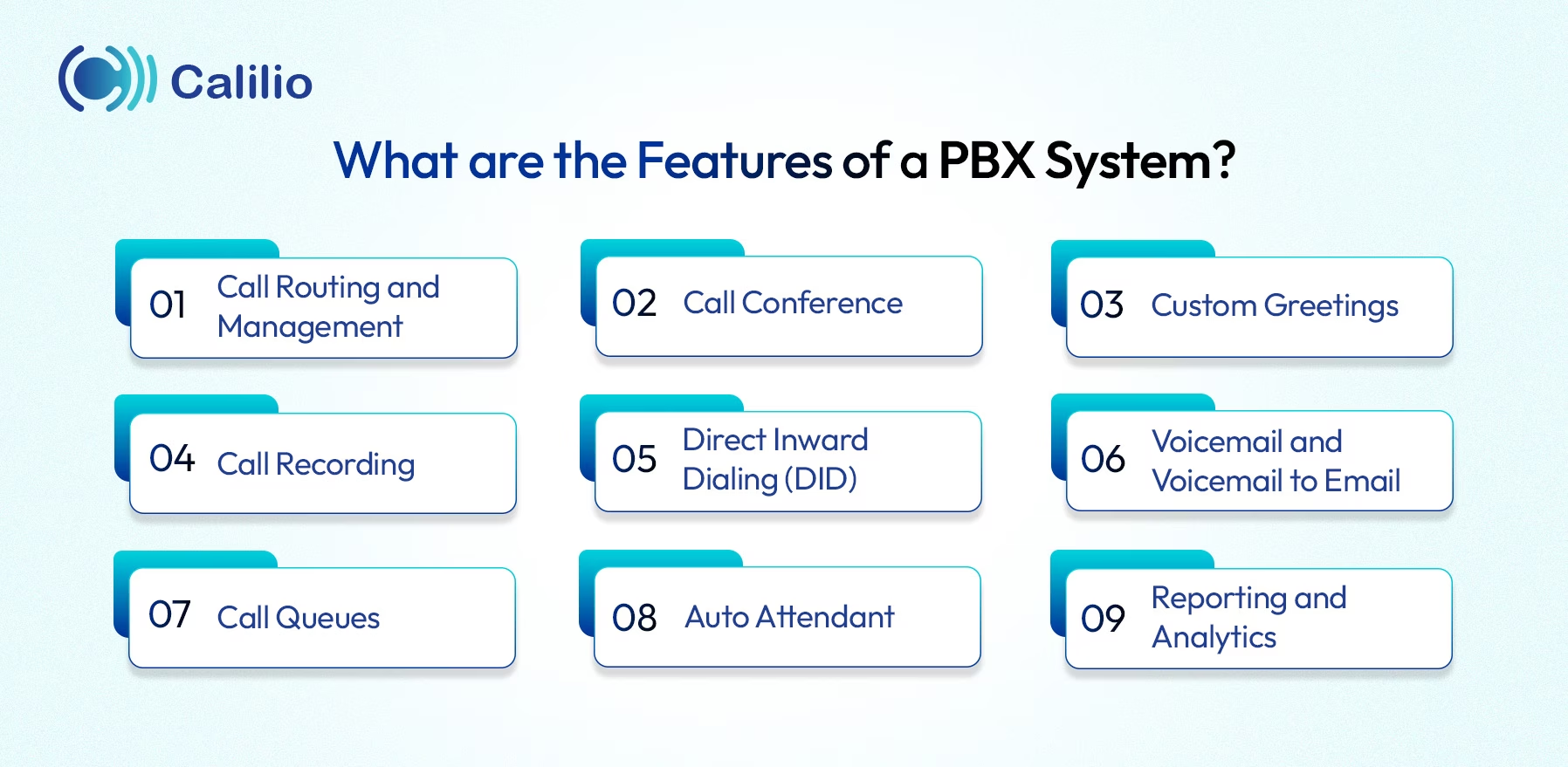
1. Call Routing and Management
The call routing and management feature of a PBX Phone System allows you to direct incoming calls to the appropriate department or individual efficiently. It improves customer satisfaction and reduces wait times by aiding quick and professional handling of every call.
2. Call Conference
With a call conferencing feature, you can enable multiple team members to participate in a single call. This feature is invaluable for team meetings, client calls, or discussions with remote workers. It facilitates collaboration and decision-making regardless of your team’s location.
3. Custom Greetings
Custom greeting aids you in providing a personalized touch to your communication. By setting up tailored messages for callers, you can create a lasting impression right from the first point of contact. It enhances the caller experience and reinforces brand identity.
4. Call Recording
Call recording is a crucial feature for quality control and training purposes. It enables your businesses to record calls and review them later for performance evaluation or legal compliance. This feature helps maintain high customer service standards and resolve any disputes that might arise.
5. Direct Inward Dialing (DID)
Utilizing the Direct Inward Dialing feature, your business can facilitate external callers to reach a specific extension without going through an operator. It enables quick and direct connection, therefore saving time for both employees and callers.
6. Voicemail and Voicemail to Email
PBX phone systems offer voicemail functionality, including voicemail-to-email services. It converts voicemails to emails and sends them directly to your email. This feature ensures you do not miss any important messages and paves the way for prompt responses.
7. Call Queues
Call queues in PBX Systems manage large volumes of incoming calls by placing them in a line to be answered in order. This feature is essential for businesses with high call traffic. It aids your agents to attend every call in an organized manner.
8. Auto Attendant
An auto-attendant is a virtual receptionist that greets callers and directs them to the appropriate department or extension through menu options. Callers can connect to their desired agent or agents without a human operator. It ensures efficient call management while saving time and resources.
9. Reporting and Analytics
Reporting and analytics features in PBX Systems provide valuable insights into call patterns, volumes, and staff performance. These analytics help your businesses make informed decisions to improve communication strategies and customer service efficiency.
Advantages of PBX Phone System
The key advantages of a PBX phone system include cutting communication expenses by avoiding multiple dedicated lines, offering flexible scalability as your team grows, and simplifying setup. Plus, it also supports remote communication through features like call forwarding and mobile apps.
1. Lower Cost
Unlike traditional phone systems, a modern PBX doesn’t require separate lines for each user. It means you can significantly cut down on your phone bills. Moreover, internal calls within the PBX are free, and long-distance charges are often lower. For your business, this cost reduction can make a substantial difference in managing your overall expenses.
2. Flexibility
The modern PBX telephone system is incredibly adaptable; it can efficiently scale as your business expands. It allows you to add or remove lines, integrate new features, or scale up for additional departments. With such a flexible solution, you can always adapt your communication capabilities to evolving needs.
3. Easy Implementation and Maintenance
Modern PBX options offer user-friendly interfaces that don't require specialized technical knowledge. Also, with hosted or cloud-based PBX systems, the service providers themselves handle the maintenance. This ease of implementation and maintenance saves your business time and resources.
4. Integrate with Multiple Software
In the case of the latest PBX systems, you can seamlessly integrate them with your various business software and tools. This includes CRM systems, email platforms, and other enterprise applications. It improves workflow efficiency, which leads to better customer service and streamlined internal processes. As a result, it enhances your overall operational efficiency and productivity.
5. Mobility
Today’s business landscape demands mobility, and PBX phone systems cater well to this need. In particular, the PBX phone system allows your team to communicate effectively from anywhere with features like mobile extensions, softphones, and cloud-based call routing. This ability is especially beneficial for remote employees.
6. Monitoring Call Center
VoIP-based PBX systems provide excellent call monitoring capabilities, which can particularly benefit businesses with customer service or sales teams. They offer features like call recording and analytics, which are vital for quality assurance and training. This monitoring helps maintain high customer interaction standards and identify areas for improvement in call handling.
7. High Security
In a world where data breaches are a constant threat, the robust security features of a PBX telephone system are a shield for your communication. It offers encrypted calls, secure voicemail, and protected access to records to keep your conversations confidential. This level of security aids in maintaining trust in your communication channels.
Disadvantages of using PBX Systems
The key disadvantages of a PBX phone system include the high upfront investment, the risk of the entire setup going down if the central unit fails, and the limited feature set compared to modern cloud solutions. It also requires ongoing technical maintenance, which can become costly over time.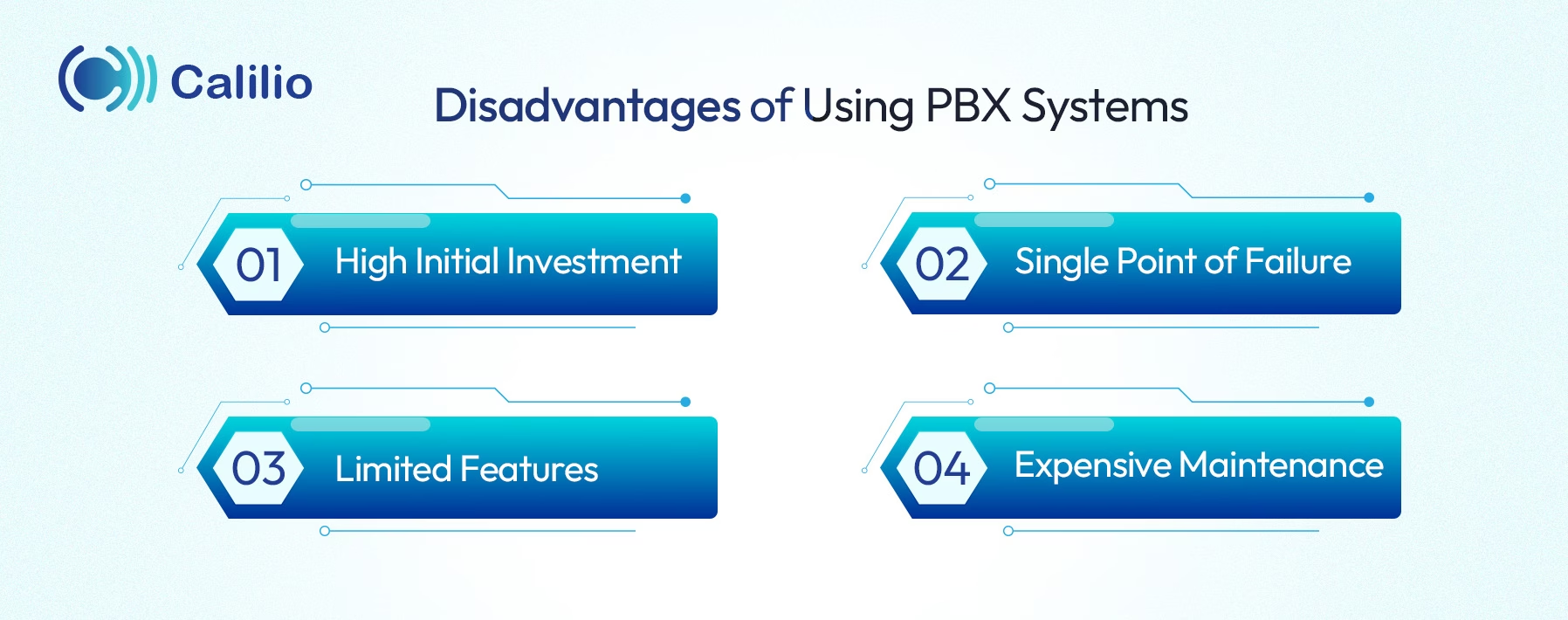
1. High Initial Investment
Traditional PBX systems require a substantial upfront cost for hardware, installation, wiring, and configuration. For small businesses, this capital-intensive setup can be difficult to justify compared to cloud-based alternatives that require minimal equipment.
2. Single Point of Failure
Since on-premise PBX relies on a central hardware unit, any malfunction, whether from power issues, overheating, or hardware failure, can bring the entire phone system offline. Plus, restoring functionality often requires waiting for technical support, causing communication downtime.
3. Limited Features
Traditional PBX systems mainly support voice communication and often lack modern features like mobile integration, analytics, or unified messaging. Plus, adding new capabilities usually requires costly hardware or software upgrades, which still may not match cloud-based flexibility.
4. Expensive Maintenance
Maintaining a traditional PBX system involves regular servicing, updates, and hardware repairs that require specialized expertise. These ongoing costs can accumulate quickly, especially as the equipment ages and becomes harder to support, making long-term ownership more expensive.
Understand the Future of PBX System
With its extensive features and continual advancements, PBX stands at the forefront of transforming communication technology. This system is not just keeping pace with the evolving digital landscape but is also setting new benchmarks in efficiency and innovation. The future looks quite exciting for any business, including those considering a PBX phone system for small businesses.
In the coming years, we can expect PBX systems to get smarter with features like artificial intelligence (AI). It will make them even more user-friendly and efficient. Moreover, they will likely integrate more smoothly with other business tools, like customer relationship management (CRM) software. It will make your business operation more productive and effective.
This is great news for businesses of all sizes. A PBX technology will keep everyone connected seamlessly as work becomes more digital and teams spread out more. It will continue to be a reliable, adaptable choice for businesses wanting to keep up with communication technology.
Looking for a Business Phone System that’s Flexible and Affordable?
Conclusion
A reliable PBX system can provide businesses with smooth communication and professional call management. However, traditional PBX setups come with drawbacks—high installation costs, ongoing maintenance, limited scalability, and hardware that becomes outdated over time.
Modern PBX options like IP PBX, hosted PBX, and cloud PBX address these issues. They remove bulky hardware, reduce costs, and offer flexible, scalable features that support both office-based and remote teams while improving overall call handling.
VoIP-based telephony systems go even further. In addition to solving traditional PBX challenges, VoIP offers benefits modern PBXs can’t match, such as AI-powered call routing, real-time analytics, global access, and seamless integration with CRMs and business applications. And, among the VoIP-powered telephony systems, Calilio stands out as the best.



Summarize this blog with:
Frequently Asked Questions
Are PBX systems still used?
PBX systems are still widely used, especially in businesses needing a reliable and feature-rich phone system. Modern PBX systems have evolved to include IP-based technology to offer more flexibility and integration with other digital tools.
How much does a PBX phone system cost?
Is PBX better than VoIP?
What type of PBX is used in most companies today?
What’s PABX? Is it the same as PBX?
What is the difference between PBX and VoIP?

Still have questions?
Can’t find the answer you’re looking for? Please chat with our friendly team.
Stay in the loop
Get the latest call insights, trends, and updates delivered straight to your inbox.
By subscribing, you agree to receive updates from Calilio.
You can unsubscribe anytime.
Enter the World of AI Business Phone System with Calilio
Improve your business operation with Calilio's advanced virtual phone system. Join today for a better way to connect.