
Power Dialer vs. Auto Dialer: Which is Better for Your Business?

Outbound sales calls are essential for growing your business, but manually dialing numbers can slow your team down. Agents often spend more time dialing than talking, which leads to missed opportunities and lower productivity.
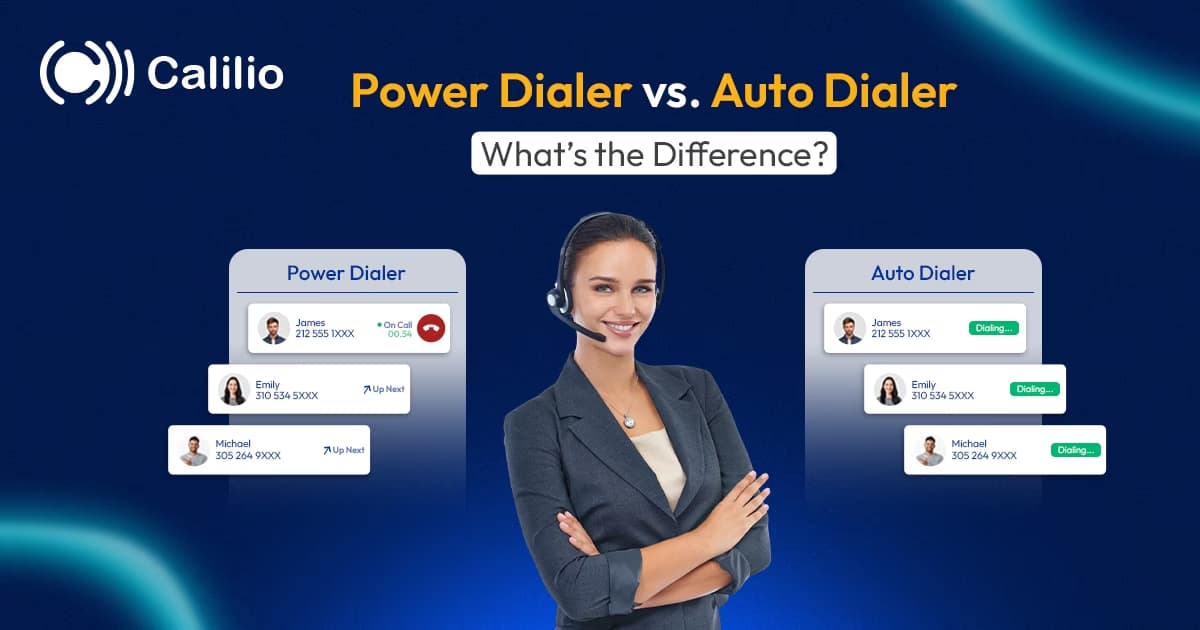
This is where sales dialers come in. These tools automate the dialing process, helping agents spend more time on live conversations and less on repetitive tasks. Among the most common dialers are auto dialers and power dialers. Simply put, a power dialer is a type of auto dialer—every power dialer is an auto dialer, but not every auto dialer is a power dialer. Each type works differently and fits different sales needs.
In this article, we’ll break down the key differences and best uses for each, so you can decide which dialer is right for your business.
Highlights:
Power dialer is a type of auto dialer that dials numbers from a contact list one by one, letting agents review details before each call.
Auto dialer automatically dials numbers using modes like progressive, predictive, or broadcast, and connects answered calls to available agents.
Every power dialer is an auto dialer, but not every auto dialer is a power dialer, as some are built for high-volume campaigns or automated broadcasting.
Auto dialers are ideal for high-volume outreach, helping businesses reach as many prospects as possible.
Power dialers are best for quality-focused calls, where personalized conversations and agent control are more important than speed.
What is a Power Dialer?
A power dialer is a type of auto dialer that automatically calls the next number on an outreach list as soon as the previous call ends. While doing so, it skips busy signals, voicemails, and unanswered calls, connecting agents only when a person answers. The system helps minimize idle time and keeps agents focused on conversations, boosting overall productivity.
After each call, agents can also add call tags like ‘not interested’ or ‘follow-up’, and move to the next lead. Moreover, many power dialers integrate with CRM systems, enabling teams to track leads, follow-ups, and call history, which helps to optimize outreach efforts.
Pros
- Reduces human error in dialing and logging call outcomes.
- Supports personalized, controlled outreach by giving agents time to prepare for each call.
- Saves time between calls by dialing the next number automatically.
- Easy tracking with notes, tags, and call outcomes after each call.
Cons
- Less suited for campaigns that prioritize call quantity over quality conversations.
- Can lead to gaps in outreach if many calls are missed or unanswered.
- Less suitable for businesses that need instant, high-speed outbound dialing for thousands of leads.
Best For
- Sales teams focused on quality conversations and building relationships.
- Support teams managing personalized follow-ups or complex customer queries.
Optimize Your Outbound Calling with Calilio’s Budget-Friendly Power Dialer!
What is an Auto Dialer?
An auto dialer is a broad term used for outbound dialing systems that automatically call numbers from a contact list. It includes several dialing approaches, such as predictive, progressive, preview, and power dialing, each designed for different calling speeds and use cases.
It can detect busy signals, voicemails, or disconnected numbers and respond based on preset rules, such as skipping the number or leaving a recorded message.
Pros
- Offers different dialing modes like predictive, progressive and power dialer.
- Handles high-volume outbound calls, allowing agents to focus on live conversations.
- Integrates with CRM systems to track leads, call history, and follow-ups.
- Supports IVR systems for self-service options, providing flexibility in handling different types of sales calls.
- Can schedule retries for unanswered calls, ensuring no lead is left uncontacted.
- Supports automated compliance features such as Do Not Call (DNC) scrubbing.
Cons
- May overburden agents if too many calls are routed at the same time, potentially reducing call quality.
- Can result in dropped calls or delays if system limits are exceeded or not properly managed.
- Not suitable for highly personalized calls that require research before dialing.
Best For
- Businesses that need flexible dialing modes to manage both high-volume campaigns and targeted outreach.
- Companies that want to reduce agent idle time to the maximum level.
What are the Differences Between Power Dialers & Auto Dialers?
Although power dialers fall under the broader category of auto dialers, the two differ significantly in how calls are paced, managed, and distributed to agents.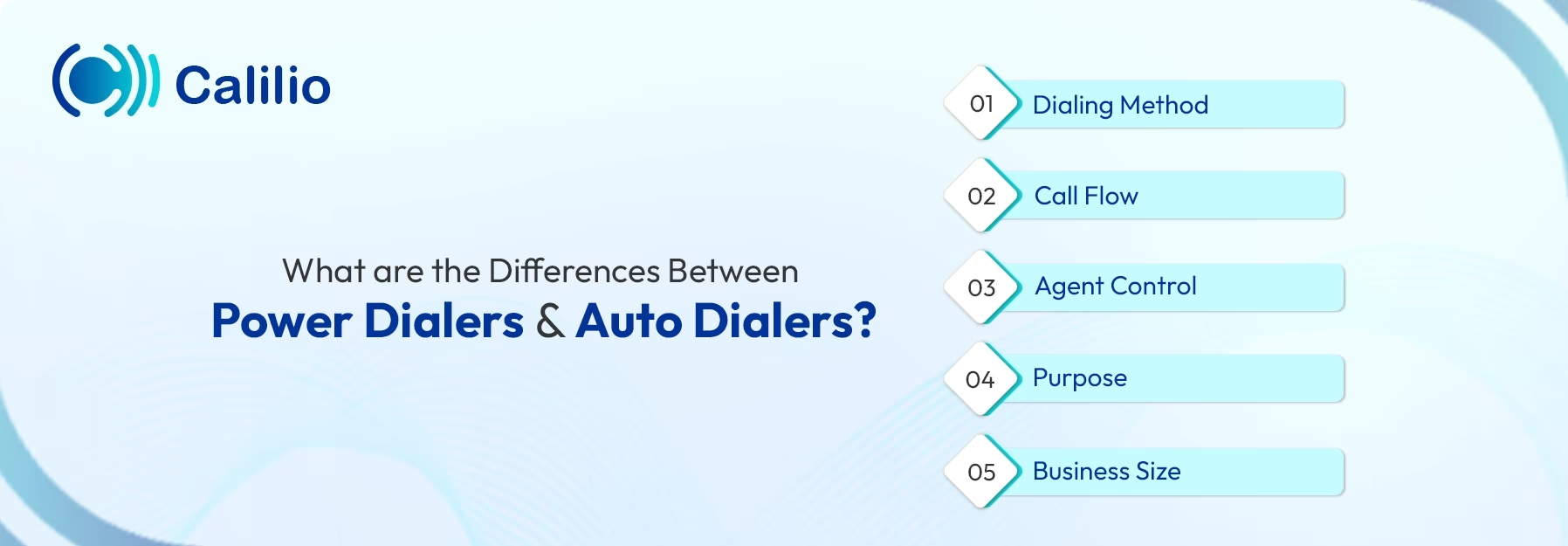
- Dialing Method: An auto dialer can operate in multiple modes, such as predictive, progressive, or voice broadcasting, while a power dialer dials one call at a time per available agent.
- Call Flow: An auto dialer can dial multiple numbers or use strategies like predictive, power, or broadcast dialing. In contrast, a power dialer dials one call at a time per agent for a steady flow.
- Agent Control: An auto dialer may offer limited agent control depending on the type of dialing method used, but a power dialer provides higher control by letting agents handle calls individually.
- Purpose: An auto dialer is suitable for marketing campaigns, survey calls, or large-scale dialing, whereas a power dialer is ideal for sales teams where call quality matters.
- Business Size: Power dialers are best suited for small to medium-sized businesses that focus on personalized sales and value agent control. In comparison, auto dialers are appropriate for medium to large companies that manage high-volume outreach.
Power Dialer vs. Auto Dialer: A Quick Comparison
The table below compares power dialers with other types of auto dialers used for high-volume calling.
Criteria | Power Dialer | Auto Dialer |
| Dialing Approach | Dials one call at a time per available agent. | Can operate in multiple modes such as predictive, progressive, or voice broadcasting. |
| Agent Control | Provides higher control, letting agents handle calls individually. | May provide limited control depending on the type. |
| Purpose | Best suited for sales teams needing continuous agent engagement. | Ideal for marketing campaigns, notifications, or large-scale dialing. |
| Call Volume Handling | Ensures a steady, manageable call flow per agent. | Can handle large call volumes depending on the mode. |
| Personalization | Generally cost-effective for small sales teams focused on live calls. | Limited personalization; focuses on speed and reach. |
| Cost | Higher per-agent cost due to quality and personalization focus. | Varies widely depending on features and scale. |
| Business Size | Ideal for small to medium-sized teams needing controlled, consistent calling. | Suited for medium to large organizations or campaigns with high call volumes. |
Power Dialer vs. Auto Dialer: Which One is Best for Your Business?
If your focus is personalized, high-quality conversations with strong agent control, a power dialer is the better choice. In contrast, an auto dialer is ideal if you prefer high-volume calling where speed and efficiency matter.
Pick a power dialer if:
- You want agents to have control over calls and review customer details before each call.
- You run a small to medium-sized business focused on personalized sales.
- Your focus is on high-quality sales interactions rather than high-volume dialing.
Pick an auto dialer if:
- You want multiple dialing modes like predictive, progressive, or voice broadcasting.
- You want to maximize agent efficiency by instantly connecting live calls.
- You operate a medium to large sales team focused on speed, efficiency, and call volume.
Conclusion
Power dialers and auto dialers both help businesses automate outbound calls, but they serve different calling needs. An auto dialer is a general term for software that automatically dials numbers from a list, while a power dialer is one specific type of auto dialer that focuses on calling numbers one by one with greater agent control.
If your team prioritizes meaningful conversations, personalized outreach, and better preparation before each call, a power dialer is the right fit. On the other hand, if your goal is to reach a large number of contacts quickly and maximize call volume, an auto dialer with high-speed dialing modes makes more sense.
No matter which option you choose, the platform you use plays a major role in your results. Calilio’s power dialer helps sales teams automate dialing, reduce idle time, and stay focused on live conversations. With features like easy contact uploads, number validation, a built-in preview window, post-call notes, and real-time analytics, your team can work more efficiently and close more deals, all from one simple platform.
Summarize this blog with:
Frequently asked questions
Can auto dialers and power dialers integrate with my existing CRM?
Yes, most auto dialers and power dialer tools allow CRM integration. You can sync calls with your contact list, automatically log outcomes and notes, and track performance, manage follow-ups, and generate reports, making your sales workflow more efficient.
Which dialer is best for small and large businesses: power dialer or auto dialer?

Still have questions?
Can’t find the answer you’re looking for? Please chat with our friendly team.
Stay in the loop
Get the latest call insights, trends, and updates delivered straight to your inbox.
By subscribing, you agree to receive updates from Calilio.
You can unsubscribe anytime.
Enter the World of AI Business Phone System with Calilio
Improve your business operation with Calilio's advanced virtual phone system. Join today for a better way to connect.