Conversational AI: Types, Benefits, Challenges, Use Cases, & Tips

When customers contact a business, they expect a fast reply and a real conversation, not long waits or automated delays. But when chats pile up, and call queues grow, it becomes hard for the customer support team to respond to everyone on time.
That’s where conversational AI helps. It understands what users are asking and replies instantly through chat or voice, while sending complex issues to the right human agent.
In this blog, you’ll learn in detail what conversational AI is and how it works, including its types, benefits, challenges, real-time use cases, and best practices to implement it effectively.
Key Highlights:
Conversational AI enables software applications, websites, or contact center platforms to understand and respond to users naturally through chat or voice, similar to a human support agent.
There are five main types of conversational AI: rule-based, AI-powered, generative, voice-based, and hybrid systems.
Conversational AI works through a combination of language processing, intent understanding, dialogue control, response generation, learning models, and voice support.
Conversational AI is widely used to automate customer support, sales interactions, bookings, internal requests, and e-commerce updates.
To implement conversational AI successfully, begin with a few simple tasks, train it using correct business information and guide users step by step. Also, program it to send complex issues to human agents.
What is Conversational AI?
Conversational AI is an artificial intelligence technology that enables computers to interpret human inputs (through text or voice) and respond naturally. It reads or listens to what someone says, understands the request, and then replies with a helpful answer, similar to how a call center agent responds.
Conversational AI is widely used in customer support and call centers to answer common questions, collect details, and route customers to the right team, without human involvement. You’ll also often see them on website chatbots, messaging apps like WhatsApp or Messenger, in-app support, and even on phone calls through voice bots or IVR (Interactive Voice Response).
How Does Conversational AI Work?
Conversational AI works by understanding the intent and key details from the received text or voice input to generate or deliver a response naturally.
Here are the details: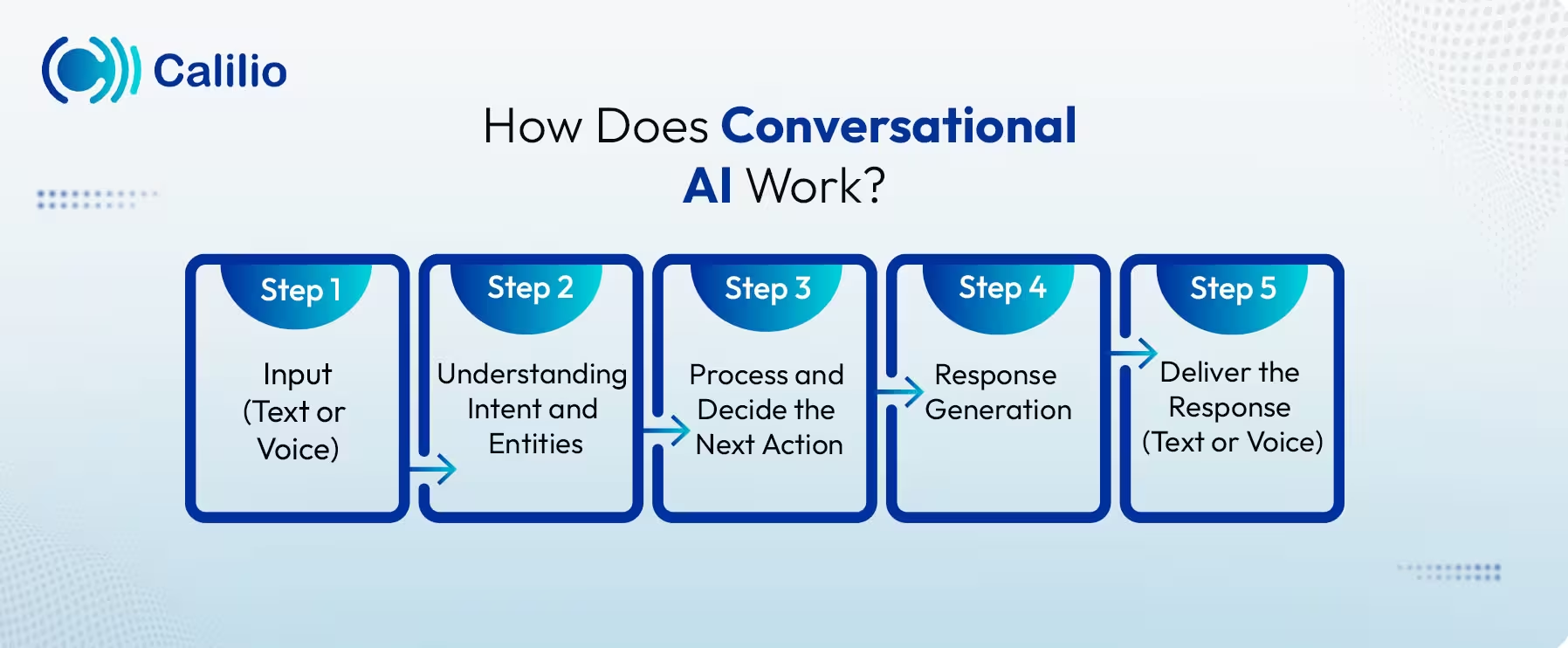
- Step 1: Input (Text or Voice)
A user types a message in chat or speaks on a phone call. If it’s a voice call, the system first converts the speech into text so it can process the words. - Step 2: Understanding Intent and Entities
The AI analyzes the user’s message to understand what they want and extract important details like order numbers or dates. It identifies the goal behind the message and prepares the information needed to respond correctly. - Step 3: Process and Decide the Next Action
The system analyzes the detected intent and decides what to do next. It may retrieve information from a database, ask a follow-up question, or trigger an action like booking an appointment or checking order status. - Step 4: Response Generation
The AI prepares the response content. This could be a written reply, a follow-up question, a confirmation message, or instructions for the next step. - Step 5: Deliver the Response (Text or Voice)
The system sends the response back to the user. In chat, it appears as text. In voice interactions, the system converts the response into speech so the user can hear it.
What are the Core Components of Conversational AI?
Conversational AI leverages different AI technologies to understand and process human language. These include Natural Language Processing (NLP), Machine Learning (ML), and Natural Language Understanding (NLU) to understand intent and details of languages. Likewise, it relies on dialogue management technology to control the conversation flow and Natural Language Generation (NLG) to generate replies.
1. NLP
Natural Language Processing (NLP) processes human language so the system can work with it, even when the message includes slang, typos, or incomplete sentences. It prepares the text for understanding and response generation.
Example: NLP understands that “Where’s my order?”, “Whr is my order?” “Order status?” all mean the same request.
2. NLU
Natural Language Understanding (NLU) identifies what the user wants (intent) and pulls out key details (entities) like names, dates, or order IDs. This helps the system respond based on meaning, not just keywords.
Example: “Track order 5821” → intent: order tracking, entity: 5821.
3. Dialogue Management
Dialogue management controls the flow of the conversation and decides what to do next: ask a question, confirm details, answer, or transfer to a human.
Example: If the user says “Refund,” it asks “Can you share your order number?” before proceeding.
4. NLG
Natural Language Generation (NLG) turns the system’s decision into a natural-sounding reply that matches the user’s request and context. It focuses on phrasing the response clearly and correctly.
Example: “Your order has shipped and should arrive by Friday.”
5. Machine Learning Models
Machine learning models train the AI to recognize patterns and improve its understanding over time. They help the AI detect intent, classify requests, and choose the most accurate response. Modern conversational AI platforms often use Large Language Models (LLMs) to better understand context, handle complex queries, and generate more natural replies.
Example: It learns that “cancel my plan” and “stop my subscription” mean the same action.
6. Speech-to-Text (STT) and Text-to-Speech (TTS)
STT (Speech-to-Text) converts spoken voice into text so the AI can understand what the caller says. TTS (Text-to-Speech) converts the AI’s text response back into spoken words so the caller can hear the reply. Together, these technologies allow conversational AI to handle full voice conversations over phone calls.
Example: NLP understands that “Where’s my order?”, “Whr is my order?” “Order status?” all mean the same request.
What are the Types of Conversational AI?
There are five main types of conversational AI: rule-based systems, AI-powered models, generative AI systems, voice-based AI, and hybrid solutions. Each type works differently, depending on the level of intelligence, flexibility, and control.
1. Rule-Based Conversational AI
Rule-based conversational AI follows predefined scripts and decision trees. It responds based on specific keywords, buttons, or menu selections. You can use it for simple FAQs, structured workflows, and predictable queries. It works well for simple and predictable questions, but may struggle when someone asks something unusual or more complicated.
2. AI-powered (Intent-based) Conversational AI
AI-powered conversational AI uses machine learning to understand user intent and extract important details from messages. It recognizes different ways of asking the same thing and responds with the right answer each time. This approach helps teams answer customer questions, identify potential leads, and manage routine service tasks more efficiently.
3. Generative AI-Based Conversational AI
Generative conversational AI uses LLMs to create responses dynamically. Instead of selecting from predefined answers, it generates new replies based on context. It handles open-ended questions and natural conversations but requires proper controls to prevent inaccurate responses.
4. Voice-based Conversational AI
Voice-based conversational AI understands spoken language and responds using voice instead of text. It listens to what a person says, converts the speech into text to understand the request, and then speaks the response back to the caller. Teams use it in AI voice agents, call center automation, and IVR systems to handle phone conversations automatically.
5. Hybrid Conversational AI
Hybrid conversational AI combines fixed rules with advanced AI understanding. It follows set rules to stay accurate and controlled, while also using AI to handle more natural and flexible conversations. Many enterprises use this approach to manage large volumes of interactions while keeping responses reliable and consistent.
What are the Benefits of Conversational AI for Businesses?
Conversational AI helps businesses respond to customers instantly and resolve issues faster. It also handles multiple chats or calls at once, reduces the workload for agents, while maintaining the answers consistent across all channels.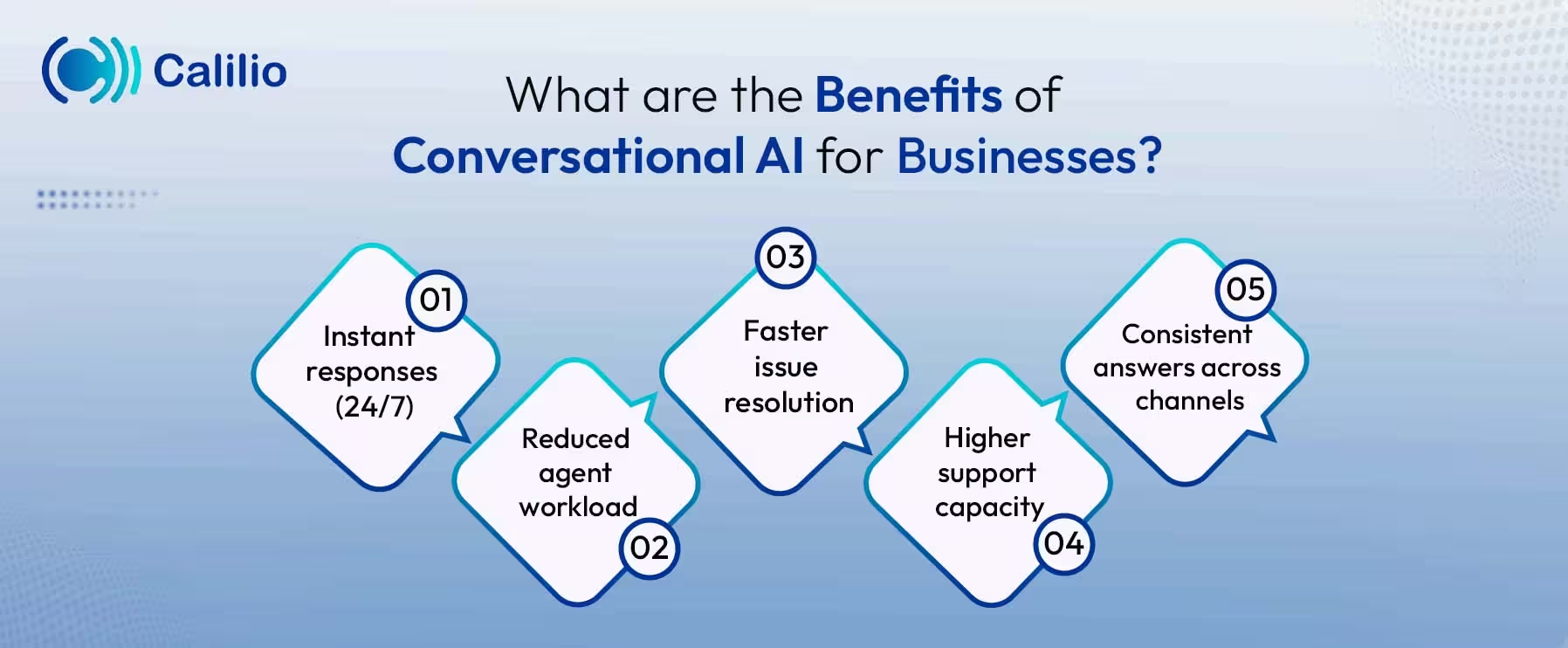
- Instant Responses (24/7): Customers receive replies right away, even at night or on weekends. They no longer need to wait for office hours to get basic help. This makes support feel fast and always available.
- Reduced Agent Workload: Common and repeated questions get handled automatically. This lowers the number of simple tasks agents must manage each day. Agents can, instead, focus on solving more complex customer issues.
- Faster Issue Resolution: Conversational AI answers common questions in real-time and routes complex cases to the right agent with full context, which reduces back-and-forth and helps issues get resolved faster.
- Higher Support Capacity: Multiple chats and calls are handled at the same time without delays. This reduces long call queues during busy hours and helps teams support more customers without adding staff.
- Consistent Answers Across Channels: It shares the same approved information across chat and phone conversations. Customers receive accurate answers no matter how they contact the business.
Common Use Cases of Conversational AI in Businesses
Conversational AI is commonly used in sales and support teams for lead qualifications and to help customers with appointment booking and reminders, order tracking, and status updates. Many organizations also use it for internal purposes, like answering employee queries on HRMS (Human Resource Management Systems).
1. Sales and Lead Qualification
Businesses can deploy conversational chatbots on their websites to interact with visitors and ask basic questions about their needs. It can ask structured questions to capture interest levels. Based on the responses, the chatbot collects the contact details and pushes qualified leads to the sales team.
2. Appointment Booking and Scheduling
Businesses often integrate AI-powered chat assistants with calendar systems like Google Calendar or CRM schedulers to allow customers to book, reschedule, or cancel appointments directly from chat or voice. The bot checks real-time availability, suggests open slots, confirms bookings instantly, and sends automated reminders via text or email. This saves time for both customers and staff.
3. Order Tracking and Account Inquiries
Conversational AI connected to order management systems or customer databases allows customers to enter an order ID or registered phone number and instantly receive delivery status, payment confirmation, refund updates, or account balances. Instead of calling support for basic updates, customers get real-time information within seconds.
4. Internal Employee Support
For internal employee support, organizations can integrate AI-powered internal chat assistants with a human resource management system to answer employee queries. For example, employees can ask about leave balance, company policies, or system access and get quick replies.
5. Feedback Collection and Surveys
Businesses also use conversational AI to trigger short questions after a purchase or service request through their apps or websites. They ask short rating-based or open-ended questions through chats. Responses are logged automatically into the analytics dashboard. Teams can use it to track CSAT (Customer Satisfaction Score) and improve service quality.
What are the Key Challenges of Implementing Conversational AI?
Conversational AI may produce incorrect responses and create privacy or compliance risks while handling customer data. It can also show unsafe language and require complex integration with systems like CRM, helpdesk, and databases.
- Accuracy and Hallucinations: Conversational AI can misunderstand questions or give incorrect answers when information is missing or unclear.
- Privacy and Compliance: Chats and call transcripts may include sensitive information, so access, storage, and retention must be managed carefully.
- Handling Unclear Questions: When users type incomplete or mixed requests, it can lead to wrong intent detection and poor replies.
- Use of Unprofessional Language: Without proper controls and training, the generated responses may sound rude, overly casual, sarcastic, or insensitive.
- Integration Complexity: Connecting conversational AI with CRM, helpdesk, and internal systems can take time and requires careful setup.
Best Practices to Implement Conversational AI Successfully
To implement conversational AI effectively, start with simple tasks and train the system using accurate information. Make sure it keeps the conversation secure and easy by guiding users step by step. Set clear handoff rules to pass complex conversations to human agents and continue to improve the system over time by learning from real chats and calls.
- Start with a Few Clear Tasks: Pick 3–5 common requests like FAQs, order status, booking, or call routing. Launch these first, then add more once results look stable.
- Use Real, Updated Business Info: Build responses from your actual policies, pricing, and workflows. Update the AI whenever information changes so it doesn’t give outdated guidance.
- Keep Conversations Simple and Guided: Make sure it asks one question at a time, use short options, and collect details step-by-step (order ID, issue type).
- Set Strong Human Handoff Rules: Train the AI receptionist to transfer challenging issues like billing disputes, complaints, or complex cases to an agent quickly.
- Protect Customer Data By Default: Ensure the system collects only necessary information, never asks for passwords, and masks sensitive details. Also, ensure it follows clear data storage and retention rules.
- Monitor and Improve Continuously: Review failed chats, drop-offs, and feedback regularly. Regularly refine the process based on the performance.
Conclusion
Conversational AI is transforming how businesses communicate by making interactions faster, smarter, and more consistent. It listens to customer queries, understands user intent, responds naturally through chat or voice, and supports tasks like answering questions, routing calls, booking appointments, and collecting important details.
There are various types of conversational AI that businesses can use. From rule-based systems to AI-powered and hybrid models, each type offers different levels of flexibility and automation.
The right choice depends on your business goals, the complexity of customer interactions, your integration needs, and how much automation you want to implement without losing human control.



Summarize this blog with:
Frequently Asked Questions
Can conversational AI replace human agents completely?
Conversational AI cannot replace human agents completely; it handles routine questions and simple tasks, then hands complex or sensitive issues to human agents.
What’s the difference between a chatbot and conversational AI?
How does conversational AI know what the user wants?
How accurate is conversational AI, and why does it sometimes give wrong answers?
How do businesses use sentiment analysis in conversational AI?

Still have questions?
Can’t find the answer you’re looking for? Please chat with our friendly team.
Stay in the loop
Get the latest call insights, trends, and updates delivered straight to your inbox.
By subscribing, you agree to receive updates from Calilio.
You can unsubscribe anytime.
Enter the World of AI Business Phone System with Calilio
Improve your business operation with Calilio's advanced virtual phone system. Join today for a better way to connect.