
Virtual Number vs. SIM Card: What’s Best for You?

For decades, SIM cards have powered everyday mobile communication, connecting our phones to carrier networks for calls, texts, and data. But today, a modern alternative is becoming increasingly popular—virtual phone numbers. Both options help you stay connected, yet they differ greatly in how they operate and the flexibility they provide.
Understanding these differences is key to choosing the right solution for your needs, whether you want a simple personal number or a scalable business communication setup.
In this article, we’ll break down the core differences between SIM cards and virtual numbers, compare their pros and cons, and help you decide which one suits your communication needs best.
Key Highlights:
A SIM card connects your phone to a mobile carrier’s network, enabling calls, texts, and mobile data. It’s essential for traditional cellular communication.
Virtual numbers use the internet for calls, offering advanced features like call forwarding and routing.
SIM cards are best for basic communication needs in one location, offering reliability without needing internet access.
Virtual numbers can be used across smartphones, desktops, and VoIP phones, making them ideal for global communication.
Understanding SIM Cards
A SIM card (Subscriber Identity Module) is a small chip used in mobile phones to connect to a cellular network. It stores important information, such as your phone number, network details, and security data, which allows your phone to access services like voice calls, text messages, and mobile data via a cellular network.
SIM cards are issued by mobile carriers and come in various sizes, including standard, micro, and nano, depending on the device.
How Does a SIM Card Work?
A SIM card connects your phone to a mobile network, enabling you to make calls, send texts, and access mobile data. When you insert the SIM card into your phone, it provides your device with a unique identity that the network can recognize. This identity lets your phone communicate with the network's towers and establish a connection.
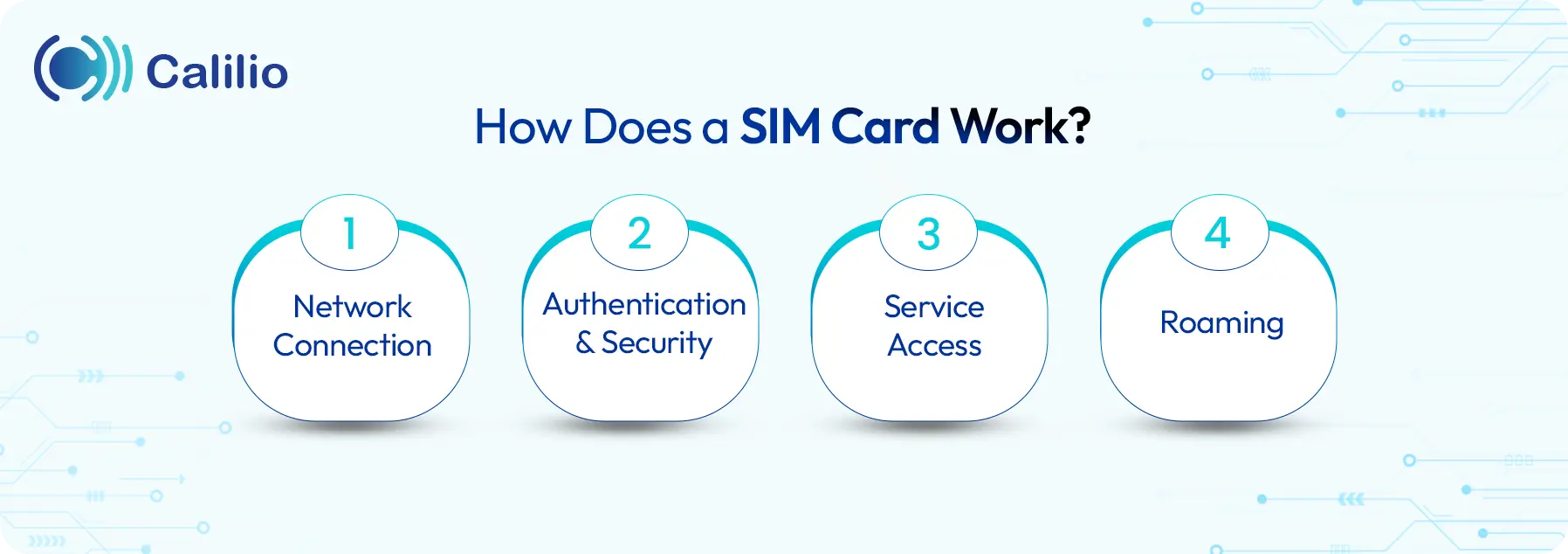
Here’s how it works:
- Network Connection: The SIM card connects your phone to your carrier’s network by identifying your phone number and account information.
- Authentication & Security: The SIM card ensures security by verifying your identity. It also generates an encryption key, which is used by your phone’s processor to encrypt your calls, texts, and internet data before they’re sent over the network.
- Service Access: Once connected, the SIM card allows you to use mobile services. It acts as the gateway between your phone and the carrier’s network, providing access to calling, messaging, and internet services.
- Roaming: If you travel, your SIM card can connect to networks in other countries, allowing you to use your phone abroad. However, this may come with extra charges, depending on your carrier’s roaming policies.
Pros and Cons of SIM Cards
SIM cards are reliable, easy to set up, and work without the internet for calls and texts. However, they are limited to one device, can incur high roaming charges internationally, and lack call management features.
Pros
- SIM cards work with most mobile networks, making them reliable.
- You can use them to make calls and send texts without the internet.
- Setting up a SIM card is quick and easy.
- SIM cards allow you to connect to local networks and avoid roaming charges in some areas.
Cons
- A SIM card can only be used in one device at a time.
- Using a SIM card internationally can lead to high roaming charges.
- SIM cards offer basic services but lack advanced features like call management.
- Adding more numbers or services requires additional SIM cards or devices.
Understanding Virtual Numbers
A virtual number allows you to make calls over the internet using VoIP (Voice over Internet Protocol) technology, bypassing cellular networks. As such, these numbers come with added flexibility, allowing communication across different devices like smartphones, tablets, and computers, all through VoIP apps provided by service providers.
The VoIP service providers also often include additional telephony features with the virtual phone numbers. These may include call forwarding, call transfer, voicemail, IVR (Interactive Voice Response) and others.
How Does a Virtual Number Work?
A virtual phone number works by routing your call over the internet using VoIP technology. When the call is made, it’s first sent to a cloud server, which processes the call and directs it to the recipient’s device.
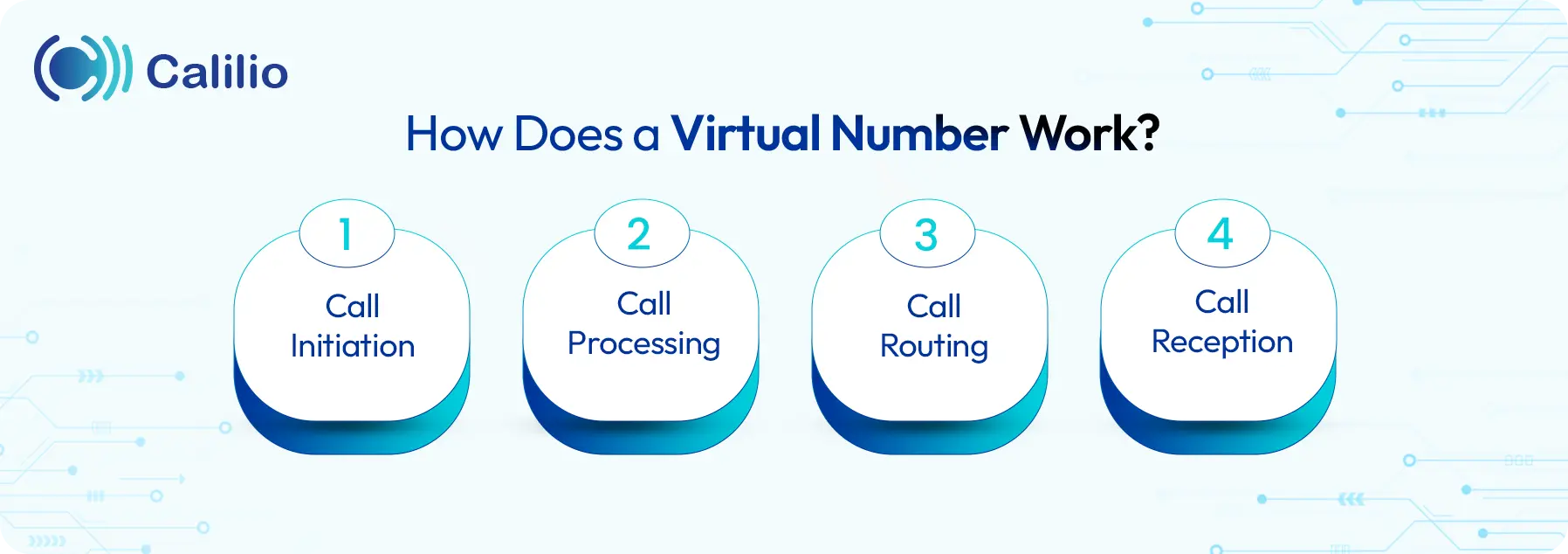
- Call Initiation: When the call is made, the call is first received by the VoIP provider’s cloud-based server.
- Call Processing: The server converts the voice or analog signals into data packets and sends them over the internet.
- Call Routing: Based on the user's settings, the call is directed to a specific destination (mobile phone, desktop app, or VoIP desk phone).
- Call Reception: The receiving device decodes the data packets and converts them back into a regular voice call in real time.
Pros and Cons of Virtual Numbers
Virtual numbers can be used to separate personal and business calls, are easy to scale, and support call forwarding on any device. However, they need a stable internet connection, may not support emergency services, and some features may require extra costs or technical setup.
Pros
- They keep personal and professional numbers separate for privacy.
- Easy to scale by adding or removing numbers.
- Support for call forwarding and use on any internet-connected device.
- Local virtual phone numbers help establish a business presence in different regions.
Cons
- Require a stable internet connection for good call quality.
- Many virtual numbers don’t support emergency services.
- Some advanced features may require technical setup and additional cost.
- Availability and features may be restricted in certain regions.
Virtual Number vs. SIM Cards: Key Differences
While both virtual numbers and SIM cards are used for communication, the key difference lies in their connection and flexibility. Virtual numbers operate over the internet, allowing calls and messages across multiple devices, which makes them ideal for businesses and remote work.
On the other hand, SIM cards rely on cellular networks, are tied to a specific device, and primarily offer basic services like calls and texts, limiting their flexibility and scalability.
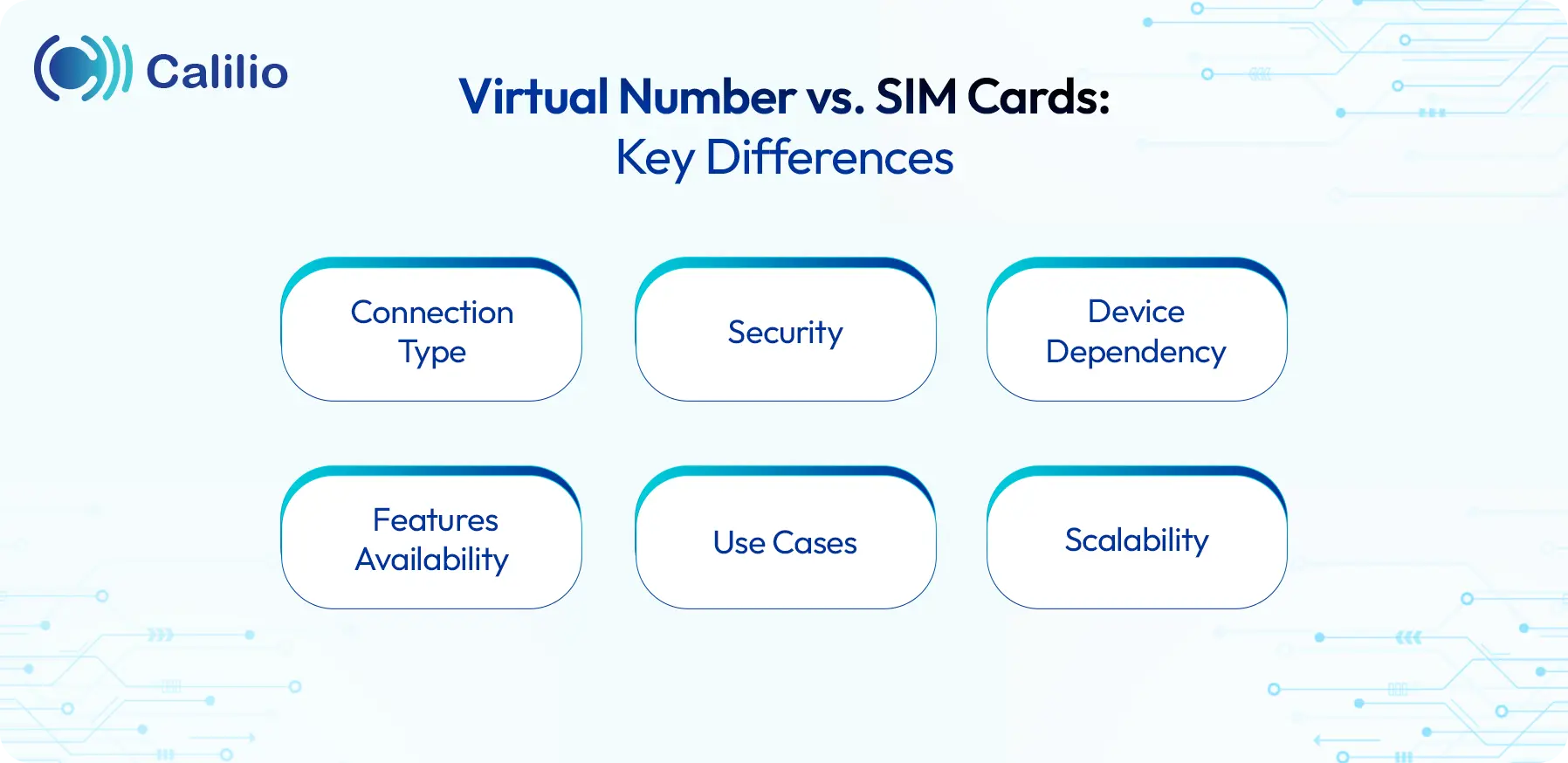
1. Connection Type
A virtual number operates on the cloud, allowing you to make and receive calls from anywhere with an internet connection. This provides flexibility for remote work and international communication.
In contrast, a SIM card connects to a mobile carrier’s cellular network, requiring mobile coverage, which limits its functionality in areas with poor or no signal.
2. Security
If not used properly, both virtual numbers and SIM cards carry security risks. Virtual numbers can be vulnerable to hacking and unauthorized access due to their internet-based nature. Using 2FA, authentication apps, and secure VoIP providers can help protect your numbers from hackers, though.
SIM cards, while more physical in nature, are at risk of SIM swap attacks and device theft, where someone could hijack your number and access sensitive accounts. To minimize the risk, you can consider using strong PIN codes and strict identity verification during SIM replacements.
3. Device Dependency
Virtual numbers are not tied to a specific device. You can use them on multiple devices like smartphones, tablets, or computers, simultaneously.
SIM cards, however, are linked to a particular device, and switching devices requires physically swapping the SIM, which can be inconvenient.
4. Features Availability
Virtual numbers offer a wide range of advanced features, including call forwarding, voicemail, and call routing, which are particularly beneficial for businesses.
SIM cards generally offer basic features such as voice calls, text messages, and mobile data, and require additional services from the carrier for more advanced options.
5. Use Cases
Virtual numbers are ideal for businesses, remote teams, freelancers, and travelers who need flexible communication. Businesses primarily use them for customer support, sales, marketing, and staying connected globally without roaming or multiple SIMs.
SIM cards are best for personal use, offering voice, SMS, and data through mobile networks. They’re suited for users who stay in one region and don’t require advanced features or multi-device access.
6. Scalability
Virtual numbers are highly scalable, making them ideal for firms that need to add a business line or remove it quickly. You can add or remove the new number without needing any hardware- just configure them through your VoIP provider’s app on any device.
SIM cards, on the other hand, are less scalable. Adding new lines requires purchasing additional SIM cards, phones, and mobile plans, which can be time-consuming and costly for expanding businesses.
Quick Comparison on Virtual Numbers vs. SIM Cards:
Factor | Virtual Number | SIM Card |
Connection Type | Works over the internet (VoIP) | Connects through a cellular network via a carrier |
Device Dependency | Can be used on multiple devices simultaneously | Tied to a single device with a SIM card slot |
Features Availability | Advanced features like call forwarding, voicemail, and automated messaging | Basic communication features (calls, texts, mobile data) |
Use Cases | Individuals as well as businesses used it for added flexibility and benefits | Primarily used by individuals for basic voice calls and texting |
Security | Vulnerable to provider issues and online risks | Susceptible to physical theft and SIM swap attacks |
Scalability | Easily scalable, ideal for businesses needing multiple lines | Limited scalability, requires separate SIM cards for adding new lines |
Virtual Number vs. SIM Cards: Which One is Right for You?
When selecting between SIM cards and virtual numbers, the choice depends on your needs.
Choose a virtual number if:
- You need to manage calls across multiple devices.
- You require advanced call features like call forwarding, advanced routing, and automated messaging.
- You need flexibility for remote work or managing international communication.
- You want a cost-effective, scalable solution for business or personal use.
Choose a SIM card if:
- You prefer a simple, reliable solution for traditional mobile communication (voice calls, text messages, data).
- You need a local network connection for mobile use and emergency services.
- You want easy access to traditional mobile services without relying on the internet.
Wrapping Up
In conclusion, SIM cards are suitable for traditional mobile communication, but they come with limitations in flexibility and higher costs. Virtual numbers, on the other hand, offer more flexibility, advanced features, and are ideal for businesses and individuals needing scalable solutions.
If you’re looking for an affordable virtual phone number with added business communication features, consider Calilio. It offers virtual phone numbers from over 100 countries, including local and toll-free options, along with low international call rates. Calilio’s basic plan starts at just $15/month, and you get a U.S. virtual phone number for free with every subscription.
Summarize this blog with:
Frequently asked questions
How secure is a virtual number compared to a SIM card?
SIM cards carry risks like SIM swap attacks, cloning, and physical theft. Though virtual numbers can face threats like hacking or unauthorized access, they remain secure when managed by a reliable VoIP provider with strong encryption, two-factor authentication, and robust cloud security measures.
How do I get a virtual number or SIM card for my business?
Can I port my existing phone number to a virtual number or SIM card?

Still have questions?
Can’t find the answer you’re looking for? Please chat with our friendly team.
Stay in the loop
Get the latest call insights, trends, and updates delivered straight to your inbox.
By subscribing, you agree to receive updates from Calilio.
You can unsubscribe anytime.
Enter the World of AI Business Phone System with Calilio
Improve your business operation with Calilio's advanced virtual phone system. Join today for a better way to connect.