- Partners
- Contact Us
- Log in
How to Turn Call Forwarding On or Off on Android? (3 Easy Methods)

Call forwarding is a useful communication feature available on most Android devices, which allows incoming calls to be redirected to another phone number. However, many users find the setup process confusing. This is mainly because Android devices use different interfaces depending on the manufacturer.
The complexity often continues even after locating the call forwarding settings. Since Android supports multiple forwarding conditions, such as forwarding all calls, forwarding when busy, or forwarding when unreachable, this can be confusing. Plus, you may encounter issues like “Invalid MMI Code” when using star codes or “Network Error”, resulting in calls being redirected unexpectedly, sent directly to voicemail, or dropped.
So, this guide explains how to forward calls on Android using three reliable methods: built-in phone settings, MMI/USSD codes, and third-party apps. Additionally, the guide also covers common issues and practical solutions to help ensure the feature works correctly.
Key Highlights:
Call forwarding on Android is a network-based feature that redirects incoming calls to another number, even if your phone is off, unreachable, or out of battery.
Android supports multiple forwarding options, including Always Forward, Forward When Busy, Forward When Unanswered, and Forward When Unreachable for flexible call handling.
You can enable call forwarding through built-in phone settings, MMI/USSD codes, or third-party apps, depending on your preference and device.
MMI/USSD codes provide a quick and reliable way to activate or deactivate call forwarding directly through your carrier’s network.
Common issues like MMI errors, voicemail conflicts, or disabled settings can usually be resolved with simple fixes such as adjusting network settings, checking carrier support, or resetting forwarding rules.
What is Call Forwarding on Android?
Call forwarding (also known as call divert/redirect) on Android is a telephony feature that redirects incoming calls from your Android device to another phone number. Instead of ringing on your phone, the call is automatically routed to a number you choose, such as another mobile or landline number.
Based on the conditions, call forwarding is further divided into two types: conditional and unconditional call forwarding. Basically, unconditional call forwarding helps redirect all the calls, whereas conditional call forwarding only diverts the call if a certain criterion is met. For instance, diverting when your phone is busy, unreachable or if the call is not answered.
How to Forward Calls on Android?
To forward calls on Android, open the Phone app, go to Settings, and access Call Forwarding under your SIM or calling account options. Then, choose a forwarding condition, enter the target number, and enable the feature to start redirecting calls.
1. Using Built-In Settings
For Samsung
To forward calls on a Samsung phone, open the Phone app, go to Settings, and access Call Forwarding under supplementary services. Then, choose the forwarding condition, enter the target number, and enable it to start redirecting calls.
- Open the Phone App: Tap the Phone icon from your home screen or app drawer.
- Access More Options: Tap the three-dot menu in the top-right corner.
- Open Settings: Select Settings, then scroll to Supplementary Services.
- Select Your SIM Card: Select between SIM 1 and SIM 2 if you use dual SIM. Then, tap Call Forwarding.
- Choose Call Type: Tap Voice Calls to configure forwarding for standard incoming calls.
- Select the Forwarding Condition: Choose when the calls should be redirected:
- Always Forward: Redirects every incoming call.
- Forward When Busy: Redirects calls when you are already on another call.
- Forward When Unanswered: Redirects calls if you do not answer after several rings.
- Forward When Unreachable: Redirects calls when your phone is off or has no network signal.
- Enter the Destination Number: Type the phone number where calls should be forwarded, including the area code.
- Enable Call Forwarding: Tap Enable to activate the forwarding rule.
For Android Smartphones with the Google Phone App
To forward calls on Android using the Google Phone app, open the app, go to Settings, and access Call Forwarding under calling accounts. Then, pick the forwarding condition, enter the destination number, and turn it on to start redirecting calls.
- Open the Phone App: Launch the Phone app from your home screen or app drawer.
- Open the Menu: Tap the three-dot menu icon in the top left corner of the screen.
- Go to Settings: Select Settings from the menu options.
- Open Calling Accounts: Tap Calling Accounts to manage call-related settings.
- Select your SIM Card: Choose SIM 1 or SIM 2 if you are using a dual-SIM device.
- Tap Call Forwarding: Open the Call Forwarding option.
- Choose a Forwarding Condition: Select one of the available options:
- Always Forward
- Forward When Busy
- Forward When Unanswered
- Forward When Unreachable
- Enter the Forwarding Number: Type the phone number where you want calls to be redirected.
- Turn On Call Forwarding: Tap Turn On to activate the forwarding rule.
Note: In some Android phones like Redmi, the steps can vary based on their specific UIs.
2. Using MMI/USSD Codes
You can enable call forwarding using Man-Machine Interface (MMI) codes like *21 or *72, if you prefer to bypass the phone’s settings menu. These are short dialer commands that communicate directly with your mobile carrier’s network. So, they are often a reliable way to configure call forwarding settings.
However, the code you use depends on your mobile carrier. In particular, GSM carriers (AT&T, T-Mobile, Mint) use MMI codes like *21*, *67*, while Verizon and legacy CDMA carriers use star codes like *72.
Here are the star codes that enable/disable the call forwarding features in Android on the network level
Forwarding Condition | For GSM Carriers (AT&T, T-Mobile) | For CDMA Carrier (Verizon, US Cellular) |
| Always Forward (Unconditional) | *21*[Number]# | *72 + [Number] |
| Forward When Busy | *67*[Number]# | *71 + [Number] |
| Forward When Unanswered | *61*[Number]# | *71 + [Number] |
| Forward When Unreachable | *62*[Number]# | - |
| Check Current Status | *#21#, *#67#, *#61#, or *#62# | - |
| Deactivate All Rules | ##002# | *73 |
Steps to Activate Call Forwarding using USSD Codes:
- Open the Dial Pad: Launch the Phone app and open the dialer.
- Dial the Activation Code: Enter the appropriate code based on the forwarding condition.
- Enter the Destination Number: Type the phone number where you want calls to be forwarded.
- End with the Hash Symbol (#): The final code should look like this: *21*1234567890#
- Activate the Service: Press the Call button. A confirmation message/notification will appear once the forwarding rule is enabled.
3. Using Call Forwarding Apps
You can also manage call forwarding using third-party call forwarding apps for Android. These apps provide a simpler interface for configuring forwarding rules without navigating through system menus.
Some of the popular apps include Easy Call Forwarding, Call Divert, and Call Forwarding & Scheduled, which allow users to configure forwarding with just a few taps. Likewise, some carriers also provide apps or web portals to activate such services.
Most of these apps rely on the same carrier-level call forwarding settings available on Android devices. However, they often provide additional convenience features such as quick toggles, scheduling options, or easier management of multiple forwarding numbers.
Steps to Set Up Call Forwarding on Android Using an App:
- Open the Google Play Store: Go to the Google Play Store and search for a call forwarding app compatible with your device.
- Install the App: Download and install the selected app.
- Grant Required Permissions: Allow the app to access phone settings if prompted.
- Enter the Forwarding Number: Input the phone number where incoming calls should be redirected.
- Choose the Forwarding Condition: Select when calls should be forwarded, such as always, when busy, or when unanswered.
- Activate Call Forwarding: Enable the forwarding rule through the app interface.
Once configured, the app will apply the forwarding rule using your carrier’s network settings.
Note: Some apps may require specific carrier support or additional permissions to manage call forwarding properly.
How to Turn Off Call Forwarding on Android?
To turn off call forwarding on Android, go to the Phone app settings, open Call Forwarding, and disable the active option so calls ring normally again. In case of USSD/MMI code, you must use USSD codes or switch it off directly within any third-party app used to set it up.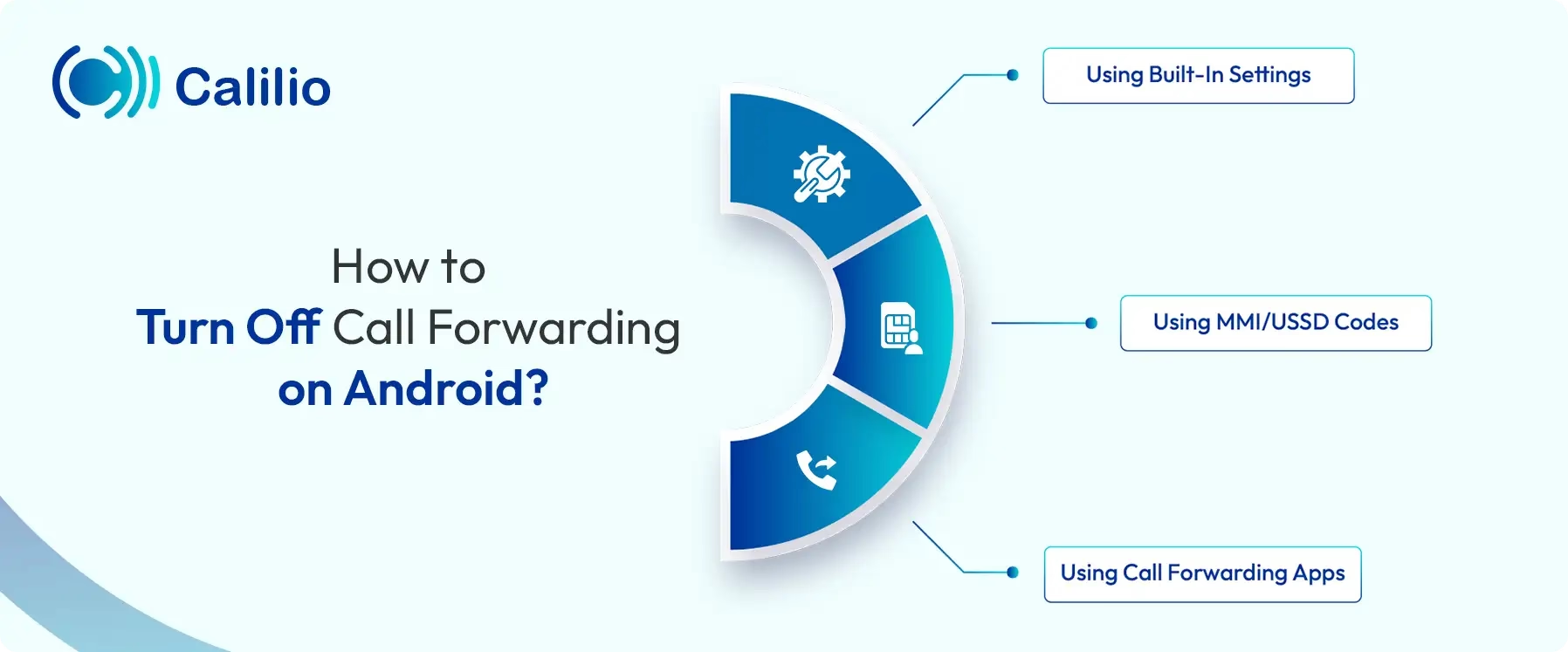
1. Using Built-In Settings
If you enabled call forwarding through your phone’s settings, you can disable it from the same location. Open the Phone app → Settings → Calling Accounts (or Supplementary Services) → Call Forwarding, then select the active forwarding option and turn it off. Once disabled, calls will ring normally on your device.
2. Using MMI/USSD Codes
You can also disable call forwarding using MMI/USSD dial codes, which removes the rule directly from your carrier’s network. Dial ##21# to disable unconditional forwarding, ##67# for busy calls, ##61# for unanswered calls, or ##62# for unreachable calls. To remove all forwarding rules at once, dial ##002# for GSM service and *73 for CDMA service.
3. Using Call Forwarding Apps
If you have enabled call forwarding using a third-party app, you can usually disable it from within the app’s interface. Most apps provide a toggle or disable option to remove the forwarding rule. Alternatively, you can also disable the rule using MMI/USSD deactivation codes, which will override the app’s settings and remove the forwarding rule directly from your carrier’s network.
Get an Affordable Cloud Phone Solution with Built-in Call Forwarding
Common Issues While Forwarding Calls on Android & Their Solutions
Common call forwarding issues on Android include MMI errors, automatic disabling, voicemail conflicts, grayed-out settings, call loops, or very short ring durations before forwarding. These can usually be fixed by adjusting network settings, checking forwarding rules, updating carrier services, or using USSD codes to reset or reconfigure the feature.
1. Unexpected Response from Network/MMI Code Errors
This error usually appears as a “Connection problem or invalid MMI code” message immediately after dialing a star code. It indicates that the command sent to the carrier network was either corrupted during transmission or rejected because the network did not recognize the request.
Here are the possible solutions:
- Disable Wi-Fi: Turn off Wi-Fi to ensure the command is sent through the cellular network.
- Toggle Airplane Mode: Turn Airplane Mode on and off to reset the connection to the nearest cell tower.
- Use International Number Format: Enter the forwarding number using “+” and the country code.
- Verify Carrier Support: Contact your mobile carrier to confirm that Supplementary Services are enabled on your plan.
2. Forwarding Turns Off Automatically
You may notice that call forwarding disables itself after being activated. In some cases, calls start ringing on your primary phone again even though forwarding was previously enabled. This usually happens due to network reconnections or carrier-side rule resets.
Here are the possible solutions:
- Turn Off Extreme Battery Saver: Aggressive power-saving modes can interrupt network communication.
- Check Scheduled Focus Modes: Features like Sleep Mode or Work Mode may automatically reset certain network settings.
- Update Carrier Services: Install the latest Carrier Services update from the Google Play Store.
3. Call Forwards to Voicemail Instead
One of the most frustrating issues is when you forward your calls to a backup number, but the caller still ends up in your personal voicemail. One of the main reasons for this issue is that your carrier’s voicemail is being activated before the forwarding rule is triggered.
Here are the possible solutions:
- Extend the Ring Time: Use the USSD code **61*Number**30# to increase the delay to about 30 seconds.
- Disable Voicemail Temporarily: Turn off voicemail through your carrier settings to prevent it from intercepting calls.
- Check Conditional Rules: Make sure Forward when Busy or other rules are not pointing to your voicemail number.
- Verify the Destination Number: Ensure the number you are forwarding to is active and not using Do Not Disturb.
4. Options Grayed Out in Settings
When you open the Call Forwarding menu, the options may appear grayed out, or the screen may remain stuck on “Reading settings.” This usually means your phone cannot access the Supplementary Service (SS) channel of the SIM card.
Here are the possible solutions:
- Disable VoLTE or HD Voice: Turn off Enhanced Calling in your mobile network settings temporarily.
- Disable Wi-Fi Calling: Some Android versions cannot modify forwarding rules while Wi-Fi calling is active.
- Restart the Phone App: Force stop the Phone app and clear its cache.
- Use USSD Codes: If the menu remains unavailable, configure forwarding using MMI dial codes instead.
5. Endless Loops
An endless loop can occur if two phones forward calls to each other. For example, your phone forwards calls to another number, while that phone is also configured to forward calls back to yours. The network eventually detects this loop and ends the call.
Here are the possible solutions:
- Reset Forwarding Rules: Dial ##002# or *73 based on your service on both devices to remove all active call forwarding settings.
- Review Forwarding Configurations: Ensure both phones are not using conditional forwarding for the same scenarios.
- Set a Final Destination: The last phone in the chain should send unanswered calls to voicemail, not another forwarding rule.
6. "Only Rings Once" Before Forwarding
If your phone rings only briefly before forwarding the call, the ring delay interval may be set too short. This usually happens when the forwarding timer is configured to the minimum duration.
Here are the possible solutions:
- Check the forwarding type: Make sure Always Forward has not been enabled accidentally.
- Adjust the ring delay: Use the dial code **61*ForwardNumber*25# to increase the ring duration to about 25 seconds. In case of CDMA service, you need to contact your carrier for the increased ring duration.
- Review call screening apps: Third-party apps such as Truecaller may identify calls and redirect them too quickly.
Conclusion
While call forwarding on Android is useful for staying connected, the setup process can often come with challenges like invalid MMI codes, disabled settings, or conflicts with voicemail. These issues make manual configuration unreliable and can result in calls not being forwarded correctly.
For professionals and businesses, depending only on device settings or carrier-based codes may not provide the consistency needed for smooth communication. Problems like dropped calls or incorrect routing can impact customer experience and lead to missed opportunities.



Summarize this blog with:
Frequently Asked Questions
Does Android have call forwarding?
Yes, call forwarding is a native feature on all Android devices. It is located within the Phone app settings, though the specific menu name, such as 'Supplementary Services' or 'Calling Accounts', varies slightly depending on your device brand and mobile carrier.
How do I forward my calls to another number?
How do I know if call forwarding is enabled on Android?
What is the shortcut for call forwarding on Android?

Still have questions?
Can’t find the answer you’re looking for? Please chat with our friendly team.
Stay in the loop
Get the latest call insights, trends, and updates delivered straight to your inbox.
By subscribing, you agree to receive updates from Calilio.
You can unsubscribe anytime.
Enter the World of AI Business Phone System with Calilio
Improve your business operation with Calilio's advanced virtual phone system. Join today for a better way to connect.