
Call Center Outsourcing: Benefits, Costs, Risks and Setup Steps


Call center outsourcing means hiring an external team to manage customer calls for your business. Companies use it when call volume grows, support costs rise, or the in-house team cannot cover every shift without delays.
A good outsourcing setup can reduce hiring pressure, improve availability, and help customers get faster answers. A poor setup can damage brand voice, customer trust, and data security. The goal is not just to outsource calls. The goal is to outsource the right calls with the right training, tools, and quality control.
Highlights:
Call center outsourcing helps businesses handle customer calls without building a full in-house team.
Outsourced call centers can manage inbound support, outbound sales, appointment booking, overflow calls, technical support, and after-hours service.
Call center outsourcing cost depends on location, call complexity, coverage hours, language needs, and pricing model.
The biggest risks are poor call quality, weak product knowledge, hidden costs, data security issues, and loss of brand control.
Businesses should start with a clear scope, run a pilot, track KPIs, and review performance before expanding the outsourced team.
What Is Call Center Outsourcing?
Call center outsourcing is the process of hiring a third-party company to handle customer calls on behalf of your business. The outsourced team can answer questions, solve support issues, qualify leads, book appointments, process orders, or follow up with customers.
Outsourcing works best when the provider acts like an extension of your team. Agents need your product knowledge, brand voice, call scripts, escalation rules, and access to the right systems. Without that foundation, outsourcing becomes cheap call handling rather than good customer support.
Common Types of Call Center Outsourcing
Call center outsourcing can cover different parts of customer communication. The right model depends on the type of calls your business receives, your team size, and the level of control you want to keep. 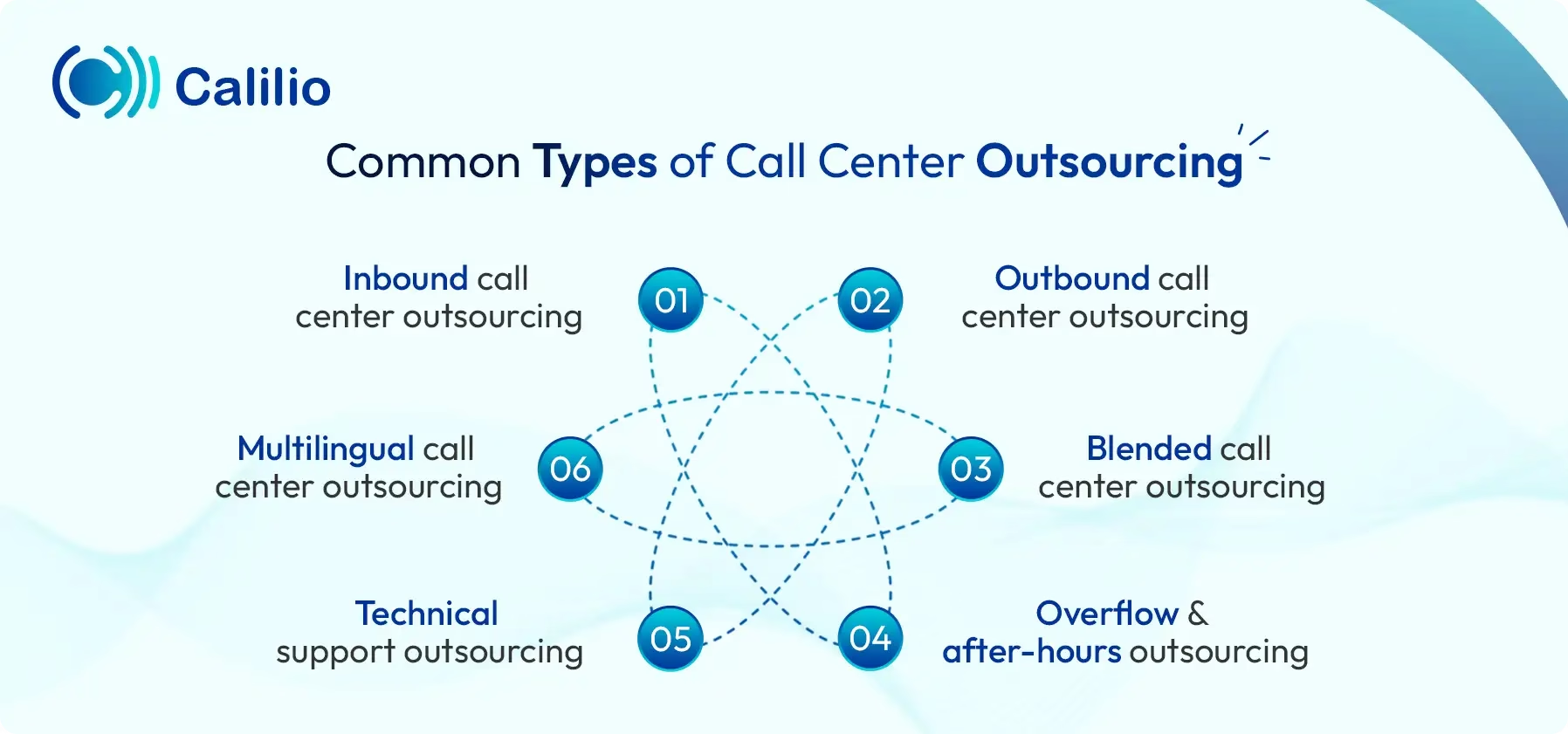
- Inbound call center outsourcing
Inbound outsourcing handles incoming customer calls. Businesses use it for customer support, product questions, billing issues, appointment booking, order updates, complaints, and technical help. - Outbound call center outsourcing
Outbound outsourcing handles calls made by agents to customers or prospects. Businesses use it for lead generation, sales calls, renewals, survey calls, reminders, and follow-up campaigns. - Blended call center outsourcing
Blended outsourcing combines inbound and outbound calling. This model works well when agents need to answer customer calls and make follow-up calls from the same operation. - Overflow and after-hours outsourcing
Overflow outsourcing covers calls your internal team cannot answer during peak hours. After-hours outsourcing helps customers reach support outside normal business hours. - Technical support outsourcing
Technical support outsourcing gives customers access to trained agents who can troubleshoot product, software, or account issues using a defined support process. - Multilingual call center outsourcing
Multilingual outsourcing helps businesses support customers across different languages and regions without hiring separate language teams internally.
How Call Center Outsourcing Works?
Call center outsourcing works by routing selected customer calls to an external provider. The provider trains agents, manages schedules, answers calls, follows your scripts, logs outcomes, escalates complex issues, and shares performance reports with your team.
A simple outsourcing flow usually looks like this:
- You decide which call types should be outsourced.
- You choose an onshore, nearshore, or offshore provider.
- You share scripts, product details, FAQs, policies, and escalation rules.
- The provider trains agents and connects with your call system, CRM, or helpdesk.
- Calls route to the outsourced agents based on your business rules.
- Managers review call quality, response times, resolution rates, and customer feedback.
What is the Cost of Outsourcing a Call Center in 2026?
Call center outsourcing cost depends on where the agents are located, how complex the calls are, how many channels you need, and whether you pay by hour, minute, call, or dedicated agent. Simple customer support usually costs less than technical support, regulated industry support, or high-pressure sales calling.
Pricing model | Typical cost range | When it fits |
| Inbound per-minute model | $0.50 to $1.75 per minute | Good for fluctuating call volume and simple inbound support. |
| Outbound hourly model | $10 to $50 per agent hour | Common for sales calls, appointment setting, surveys, and follow-ups. |
| Offshore agent hour | $6 to $16 per hour | Lower-cost option for high-volume support, usually from locations such as the Philippines or India. |
| Nearshore agent hour | $10 to $20 per hour | Balanced option for US-facing businesses that need closer time zones and better cultural alignment. |
| US onshore agent hour | $25 to $50 per hour | Higher-cost option for complex support, sensitive industries, or strong local communication needs. |
| Custom managed service | Custom quote | Used for enterprise support, multilingual service, complex integrations, or full CX outsourcing. |
Be mindful that the cheapest hourly rate is not always the best deal. A lower-cost provider can become more expensive if customers need repeat calls, agents make more mistakes, or your internal team spends too much time fixing escalations.
What Affects Call Center Outsourcing Cost?
- Location: Onshore agents usually cost more than nearshore or offshore agents.
- Call complexity: Technical, legal, medical, financial, and complaint-heavy calls need more training and better quality control.
- Coverage hours: 24/7 support, weekends, holidays, and urgent response usually increase cost.
- Language needs: Multilingual support can cost more when you need trained agents across several languages.
- Channel mix: Voice-only support may cost less than voice, chat, SMS, email, and social media support together.
- Technology setup: CRM integration, call recording, analytics, QA tools, and reporting can affect the final price.
- Pricing model: Per-minute, per-call, hourly, dedicated FTE, and outcome-based pricing all create different cost patterns.
Use Calilio So That You Don’t Need to Outsource Your Call Handling
With Calilio, you can route calls, monitor agents, record conversations, and review AI call reports by yourself. You don’t need to let a third-party team handle your customer calls.
Benefits of Call Center Outsourcing
Call center outsourcing helps businesses increase support capacity without hiring, training, and managing every agent internally. It can improve customer availability, reduce missed calls, and give growing teams more time to focus on core business work.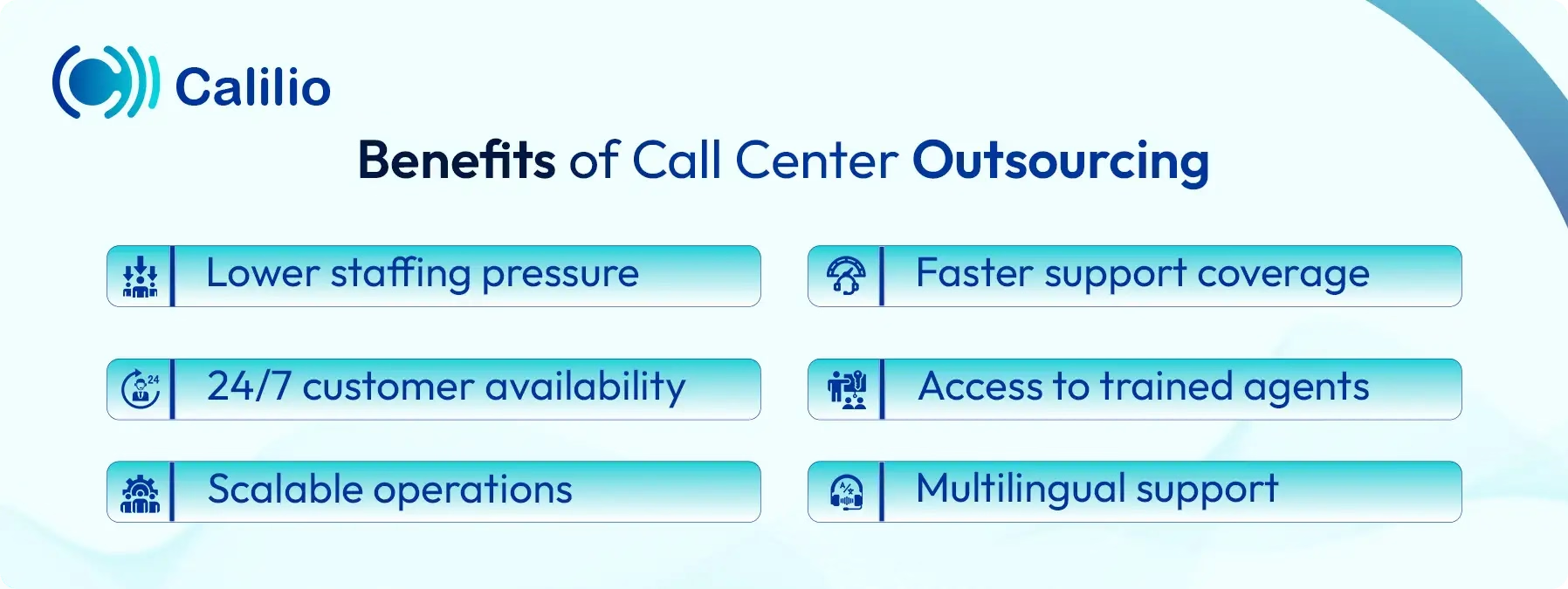
- Lower staffing pressure
Outsourcing reduces the need to recruit, train, schedule, and manage a large support team. Your internal team can focus on complex cases, customer relationships, product improvements, and revenue work. - Faster support coverage
An outsourcing partner can add agents faster than most businesses can hire internally. This helps during seasonal peaks, product launches, marketing campaigns, and sudden call spikes. - 24/7 customer availability
Many outsourcing providers offer evening, weekend, and overnight coverage. This helps customers reach support even when your internal office is closed. - Access to trained agents
Experienced outsourcing companies already have call handling processes, coaching systems, workforce management, and quality assurance teams. That experience can reduce setup time. - Scalable operations
Outsourcing lets you scale agents up or down based on demand. This is useful for businesses with seasonal traffic or uncertain call volume. - Multilingual support
An outsourcing partner can help you serve customers in different languages without building every language team in-house.
Risks of Call Center Outsourcing
Call center outsourcing can reduce workload, but it can also create problems if you choose the wrong provider or hand over calls without enough control. The main risks come from poor training, weak quality checks, unclear responsibilities, and limited access to customer context.
- Loss of brand voice
Customers may feel disconnected if outsourced agents sound scripted, rushed, or unfamiliar with your company. Share tone guidelines, examples, and approved responses before launch. - Weak product knowledge
Agents cannot solve problems well if they do not understand your product, service, pricing, policies, and common customer concerns. Build a practical knowledge base and update it often. - Data security concerns
Outsourced agents may need access to customer information. Use strict permissions, call recording policies, compliance checks, and clear data-handling rules. - Hidden costs
Setup fees, training costs, after-hours charges, QA add-ons, integration fees, holiday rates, and minimum monthly commitments can increase the real cost. - Poor quality control
If the provider does not monitor calls, coach agents, and report results, service quality can drop quickly. Ask for QA scorecards, call samples, coaching plans, and manager review cycles from the service provider regularly. - Difficult escalations
Some customer issues need internal decisions. Without clear escalation rules, customers may repeat themselves or wait too long for a final answer.
When Should You Outsource a Call Center?
You should outsource a call center when customer call volume is too high for your current team, missed calls are hurting revenue, or you need support coverage that your internal staff cannot provide. Outsourcing also makes sense when calls are repetitive, process-driven, or easy to train with scripts and knowledge-base articles.
Outsourcing may not be the best choice when calls need deep product knowledge, sensitive customer data, complex judgment, or close coordination with internal teams. In those cases, a better option may be to keep the team in-house and improve the call setup with the call center software.
Best decision | Call types that fit |
| Outsource | Routine customer support, order updates, appointment booking, overflow calls, after-hours support, basic lead qualification and simple technical help. |
| Keep in-house | High-value sales conversations, complex complaints, regulated data, sensitive financial or medical issues, enterprise accounts, product-specific technical escalations. |
| Use a hybrid model | Outsource first-level calls and keep escalations, VIP customers, retention calls, and complex cases with your internal team. |
In-House vs Outsourced Call Center
The choice between an in-house and outsourced call center depends on cost, control, customer expectations, and call complexity. Outsourcing gives faster scale, while an in-house team gives stronger brand control and closer product knowledge.
Factor | In-house call center | Outsourced call center |
| Control | High control over scripts, training, customer data, and agent behavior. | Lower direct control, but manageable with strong SLAs, QA reviews, and escalation rules. |
| Cost | Higher fixed costs for hiring, salaries, software, management, and training. | Lower startup cost in many cases, but the total cost depends on usage, contract terms, and quality. |
| Speed to scale | Slower because hiring and training take time. | Faster because providers already have agents and managers. |
| Product knowledge | Stronger for complex products and sensitive customers. | Depends on training quality and documentation. |
| Availability | Limited by internal shifts unless you hire more staff. | Often easier to support nights, weekends, and global time zones. |
| Technology | You choose and manage the tools. | Provider may supply tools, or you may connect them to your own stack. |
How to Outsource a Call Center?
To outsource a call center properly, define the exact work first, then choose a provider that can match your call volume, customer expectations, tools, and quality standards. A small pilot is safer than moving all calls at once.
- Define the calls you want to outsource
Start with a clear scope. Decide whether the outsourced team will handle customer support, sales calls, appointment booking, order updates, lead qualification, overflow calls, or after-hours support. - Review your current call volume
Check daily call volume, peak hours, missed calls, average call duration, repeat calls, and top reasons customers call. This helps you estimate staffing and cost. - Choose onshore, nearshore, or offshore support
Pick a location model based on budget, time-zone needs, language fluency, cultural fit, and call complexity. Do not choose a location based on price alone. - Shortlist providers with relevant experience
Look for providers that already serve your industry or call type. A provider with healthcare, finance, ecommerce, SaaS, or real estate experience will usually train faster for similar work. - Ask for a clear service plan
Request details on staffing, training, reporting, QA reviews, escalation flow, data security, account management, and backup coverage. - Prepare scripts and knowledge-base content
Give agents clear call scripts, FAQs, product details, refund rules, pricing explanations, troubleshooting steps, and escalation triggers. - Set up call routing and tools
Use a reliable phone system to route calls, record calls, track outcomes, and review performance. A good setup should support call queues, IVR menus, notes, reporting, and manager visibility. - Start with a pilot
Begin with one call type, one region, one shift, or one small agent group. Review results before expanding. - Track quality and improve weekly
Measure call quality, first-call resolution, customer satisfaction, missed calls, escalation rate, response time, and cost per resolved issue.
What KPIs Should You Track While Outsourcing a Call Center?
KPIs show whether outsourcing is improving customer support or only reducing short-term workload. Track all the important metrics like quality, speed, cost, and customer outcome together because one metric alone can hide bigger problems.
KPI | Why it matters |
| First-call resolution | Shows how often agents solve issues without repeat calls. |
| Average speed of answer | Shows how quickly customers reach an agent. |
| Average handle time | Shows how long agents spend on each call. |
| Customer satisfaction score | Shows how customers feel after the interaction. |
| Escalation rate | Shows how often outsourced agents need internal support. |
| Call abandonment rate | Shows how many customers hang up before speaking to someone. |
| QA score | Shows whether agents follow your process, tone, and compliance rules. |
| Cost per resolved issue | Shows the real cost of solving customer problems, not just the hourly rate. |
Conclusion
Call center outsourcing helps businesses handle more customer calls without building a full internal support team. It can reduce hiring pressure, expand support hours, improve coverage, and give customers faster answers when the provider has the right training and tools.
The best outsourcing setup starts with a clear call scope, realistic cost planning, strong quality control, secure data access, and a small pilot before full rollout. If your business wants more control before outsourcing everything, a cloud call center system like Calilio can help you manage calls and monitor performance.
Manage your business calls in-house with Calilio
Managing customer calls with Calilio’s call center software instead of outsourcing your business calls to a third-party team.
Summarize this blog with:
Frequently Asked Questions
Everything you need to know about Calilio. Can't find your answer? .
Call center outsourcing means hiring an external company to handle customer calls for your business. The provider can manage inbound support, outbound sales calls, technical help, appointment booking, overflow calls, or after-hours service.
Stay in the loop
Get the latest call insights, trends, and updates delivered straight to your inbox.
By subscribing, you agree to receive updates from Calilio.
You can unsubscribe anytime.
Enter the World of AI Business Phone System with Calilio
Improve your business operation with Calilio's advanced virtual phone system. Join today for a better way to connect.