
Phone Number Lookup vs. Verification: Why Businesses Need Both?

Businesses often collect phone numbers from customers for account signups, OTPs, sales calls, customer support and SMS campaigns. But when a number enters your system, two questions matter: What do you know about this number? And is it safe to contact? That's where number lookup and phone number verification come in.
Number lookup helps you find details about a phone number, such as its carrier, location, line type, or possible spam risk. Phone number verification, on the other hand, checks whether the number is valid, reachable, or actually belongs to the user. When used together, they help businesses reduce fake signups, avoid failed calls or messages, detect risky numbers, and keep customer data accurate.
In this guide, we’ll explain the difference between number lookup vs verification, how both work, and why smart businesses use both for safer and more reliable communication.
Key Highlights:
Number lookup helps businesses identify details linked to a phone number, such as caller name, carrier, region, line type, and possible spam risk.
Phone number verification checks whether a number is valid, active, reachable, and accessible to the user through SMS or voice call.
The main difference between number lookup vs verification is that lookup gives phone number context, while verification confirms access and usability.
Businesses use both to reduce fake signups, avoid failed calls and SMS, detect risky numbers, and maintain cleaner customer data.
Lookup is useful before outreach or caller review, while verification is useful during signups, logins, payments, and account recovery.
What Is Phone Number Lookup?
A phone number lookup is a search process used to identify details linked to a phone number, such as the caller's name, location, line type, carrier, and possible risk signals. It works by checking the number against public records, telecom data, business listings, or user-reported databases. So, the accuracy and depth of the results can vary based on the source used.
How Does Number Lookup Work?
Number lookup works like a search engine for phone numbers. You enter a number, and the system compares it with stored records from phone carriers, caller ID services, public directories, and user reports. If a match is found, it may display useful details such as the number’s location, provider, and whether it has been reported for spam or scams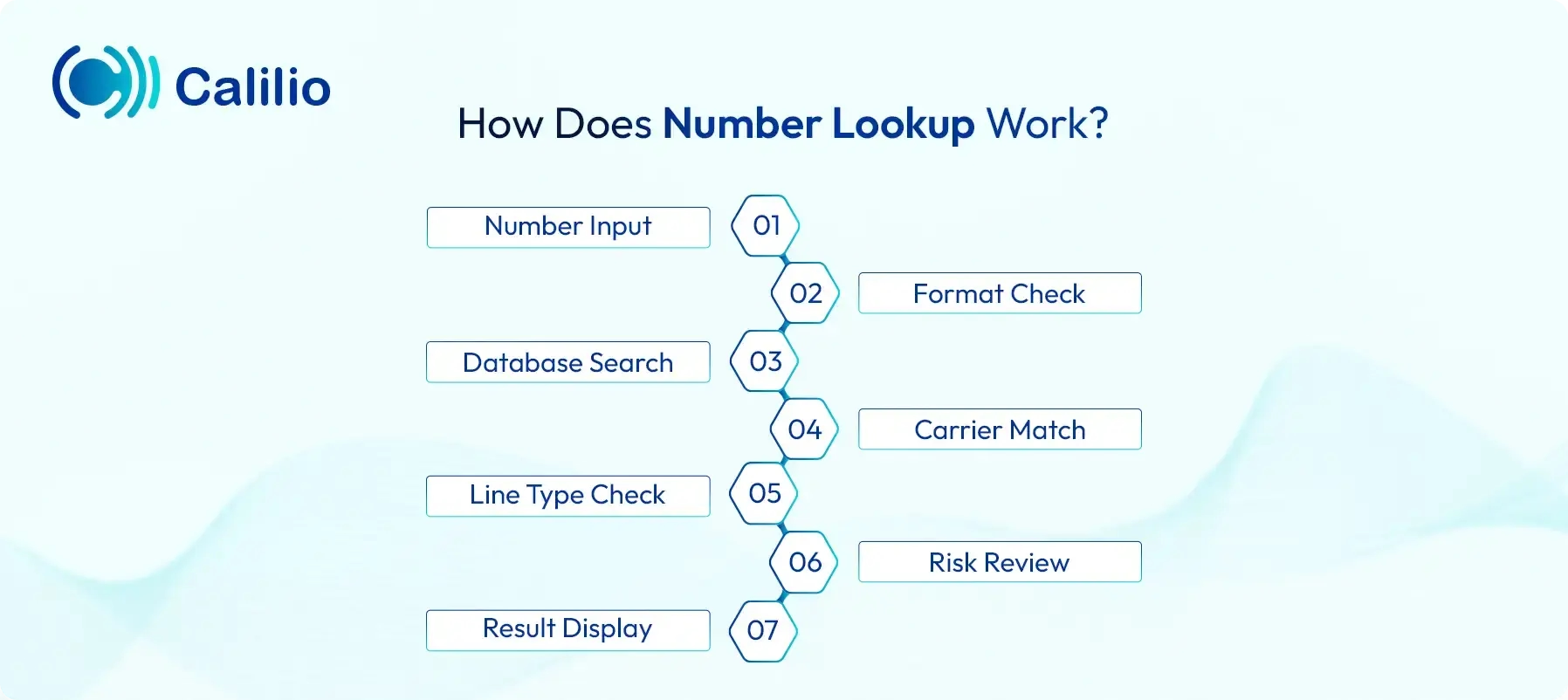
- Number Input: The process starts when a user enters a phone number into a number lookup tool or search system.
- Format Check: The tool first checks whether the number follows a valid phone number format, including the country code, area code, and number length.
- Database Search: Then, the system searches public records, telecom data, carrier databases, business listings, and user-reported sources for matching details.
- Carrier Match: The lookup tool may identify the carrier or network provider connected to the number.
- Line Type Check: The system checks whether the number is a regular mobile number, landline, toll-free number, or VoIP number.
- Risk Review: Some tools check spam reports, fraud signals, or user complaints linked to the number.
- Result Display: The tool shows available details, such as caller name, location, carrier, line type, and possible spam risk, depending on the data source.
When Should Businesses Use Number Lookup?
Businesses should use number lookup when they need to identify unknown callers, check lead quality, detect spam, or reduce failed SMS delivery. It gives teams useful phone number details before they spend time or money on outreach.
- Unknown Calls: Businesses should use number lookup when they receive calls from unknown numbers and need to check who may be contacting them before calling back.
- Lead Review: Sales teams can use a lookup to check whether a lead's phone number looks valid, relevant, and reachable before starting outreach.
- Spam Detection: A lookup helps identify numbers linked to spam reports, fraud complaints, or unusual calling patterns.
- SMS Campaigns: Before sending messages, businesses can check the line type to avoid sending SMS to landlines, toll-free numbers, or numbers that may not support texting.
- Fraud Prevention: Businesses can review phone number details during signups, transactions, or account changes to spot suspicious activity early.
- Call Prioritization: Teams can use lookup data like location, carrier, or line type to decide which calls or leads need faster attention.
Limitations of Number Lookup
The biggest limitation of number lookup is that the result depends on the data source used by the tool. If the number is unlisted, protected, recently changed, or not reported in public databases, the lookup may return only basic or outdated information.
- A number lookup may not always show the caller's name if the number is private, unlisted, newly activated, or not available in public databases.
- Lookup results can be outdated if the number was recently changed, reassigned, or ported to another carrier.
- Some lookup tools may show only basic details, such as country, carrier, or line type, instead of full caller information.
- A number lookup cannot always confirm whether the person using the number is the real owner.
- Privacy laws and carrier restrictions can limit how much personal information a lookup tool can show.
- Spam or risk labels may not always be accurate because they often depend on user reports, complaint history, or third-party data.
What Is Phone Number Verification?
Phone number verification is the process of checking whether a phone number is valid, active, reachable, and usable for business communication. Most verification systems send a time-sensitive OTP through SMS or voice call, and the user enters that code on the app or website to prove they can access the number. It helps businesses check whether the number follows the correct format, belongs to a real network, can receive calls or SMS, and is not fake or inactive.
How Does Phone Number Verification Work?
The phone number verification process begins when a user submits their number. Then the system validates the number’s format, sends a unique code to it, and waits for the user to enter that code. Once the code matches, the number is verified and can be used for login, account recovery, or security alerts.
- Number Entry: The user enters a phone number during signup, login, account recovery, payment, or another security-related action.
- Format Review: The verification tool checks whether the number exists within an active numbering range and is not randomly typed.
- Validity Scan: A verification tool then confirms whether the number belongs to an active numbering range instead of being fake, incomplete, or randomly entered.
- Carrier and Line Type Check: Some systems identify the carrier and line type, such as mobile, landline, VoIP, or toll-free, to determine whether it supports calls, SMS, or OTP delivery.
- OTP Delivery: For ownership confirmation, the business sends a one-time password through SMS or voice call to the number entered by the user.
- User Confirmation: The user enters the OTP, and the system confirms that the person has access to that phone number.
- Final Status: The number is marked as verified, invalid, unreachable, or risky based on the checks completed.
When Should Businesses Use Number Verification?
Businesses often use phone number verification during signups, logins, payments, account recovery, and security checks to confirm that the user can receive a call or SMS on that number.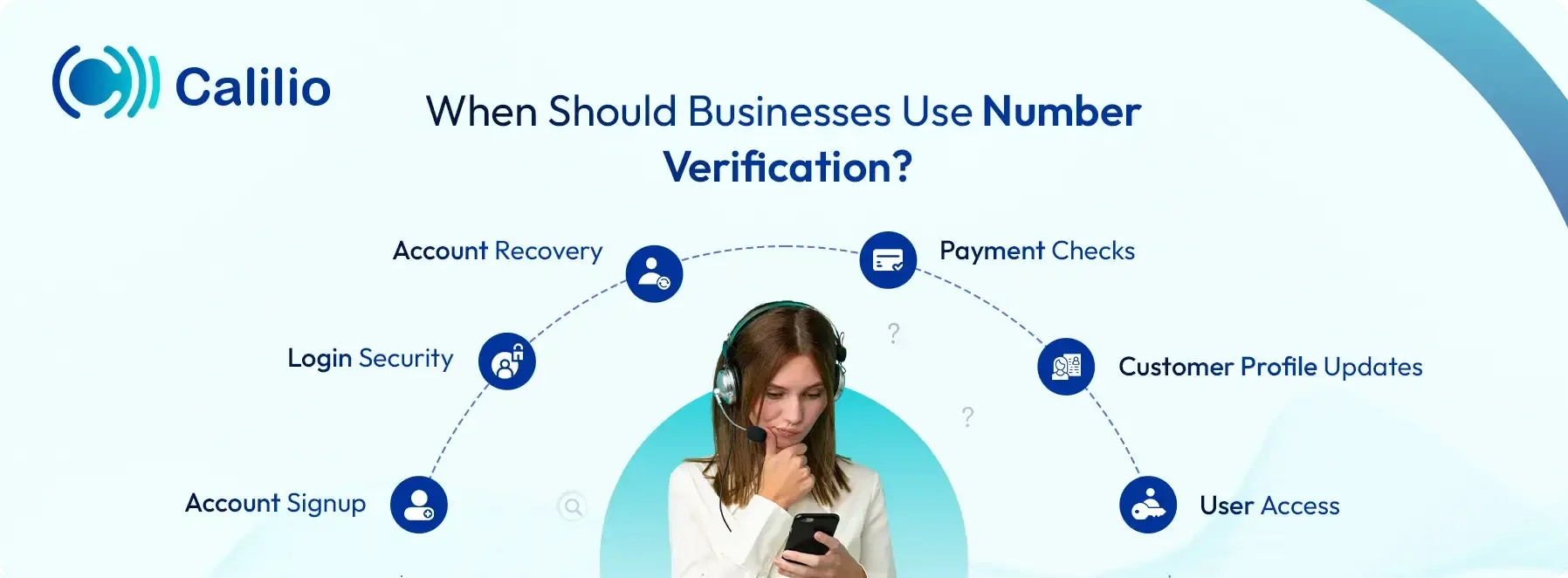
- Account Signup: Use phone number verification when users create an account, so you know the number is real, and they can access it.
- Login Security: Ask users to verify their number during sensitive logins, especially when they sign in from a new device or location.
- Account Recovery: Verification helps users regain access to their accounts by confirming they can receive a code on the saved number.
- Payment Checks: Use verification before high-value payments, refunds, or order changes to reduce the chance of account misuse.
- Customer Profile Updates: When users add or change their phone number, verification confirms the new number belongs to them.
- User Access: Use verification before giving access to private data, account settings, or sensitive customer information.
Limitations of Phone Number Verification
Phone number verification cannot fully protect a business from fake or risky users because it only confirms access to a number. It may not provide other necessary information, like whether the number is a temporary number or a disposable number. It also does not always show risk signals such as spam history, carrier changes, or other details.
- Phone number verification cannot confirm the real identity of a user; it only proves that the person has access to the number.
- OTP-based verification can fail if the user has poor network coverage, delayed SMS delivery, or an inactive number.
- Some users may verify with temporary, VoIP, or disposable numbers that are not suitable for long-term communication.
- Verification does not provide full context, such as caller name, spam history, carrier details, or line type.
- A verified number can still become invalid later if the user changes, ports, or disconnects the number.
Difference Between Number Lookup vs. Number Verification
Number lookup is an information-gathering process used to identify the owner, location, or carrier of a phone number, whereas number verification is a security measure that confirms a user has access to the number by sending a one-time code to their device.
1. Purpose
The main purpose of a number lookup is to find information linked to a phone number. It helps you understand who may be behind the number, where it may be registered, what carrier manages it, and whether it has any spam or fraud signals.
On the other hand, Phone number verification confirms whether a number can be trusted for communication or account access. It checks if the number is real, active, reachable and connected to the user who entered it.
2. Data Returned
Number lookup gives you descriptive details about a phone number. The result includes the caller’s name, business name, country, region, carrier, line type, number format, or spam risk, depending on the data source.
In contrast, Phone number verification gives you status-based results. It tells you whether the number is valid, active, reachable, verified, invalid, unreachable, or risky based on the checks completed.
3. User Involvement
Number lookup usually does not require the customer to do anything. You can enter the phone number into a lookup tool and get available details without asking the user to confirm access.
Whereas phone number verification often requires user participation. In OTP-based verification, the user must receive a code through SMS or voice call and enter it into the app or website to prove they have access to the number.
4. Workflow Timing
Number lookup is often used before communication starts. You can use it to identify an unknown caller before calling back or to check whether a number looks safe and relevant enough to contact.
Phone number verification is usually done when identity or account access matters. You can use it during signup, login, account recovery, payment approval, profile updates, or any process where you need to confirm that the user owns the number.
5. Fraud Control
Number lookup helps detect risky numbers by checking spam reports, unusual activity, VoIP usage, fake-looking numbers, or numbers linked to complaints. It gives you an early warning before they trust or contact the number.
Phone number verification prevents fraud by confirming access to the number. A fake user may enter a random number, but they cannot complete verification unless they can receive the OTP or verification call.
6. Business Use Case
Number lookup works best when a business needs information before taking action. It is useful for caller identification check, lead review, spam detection, SMS list cleaning, and outbound campaign planning.
Phone number verification works best when a business needs trust before giving access or sending important messages. It is commonly used for signups, logins, password resets, payment checks, and customer profile updates.
Below is a quick comparison between number lookup and number verification:
Factor | Number Lookup | Phone Number Verification |
| Purpose | Finds details linked to a phone number. | Confirms whether a number is valid, reachable, and accessible to the user. |
| Data Returned | Caller name, location, carrier, line type, spam risk, and number format. | Validity status, reachability, OTP confirmation, and verification result. |
| User Involvement | Usually, it does not require user action. | Often requires the user to enter an OTP received by SMS or voice call. |
| Workflow Timing | Used before calling, texting, reviewing leads, or responding to unknown numbers. | Used during signups, logins, payments, account recovery, and profile updates. |
| Fraud Detection | Flags suspicious numbers based on lookup data and risk signals. | Stop fake users by confirming they can receive a code on the number they entered. |
| Business Use Case | Best for caller identification, lead review, spam checks, outbound calling, and SMS list cleaning. | Best for account security, user onboarding, OTP delivery, payment checks, and access control. |
Why Businesses Should Use Both Number Lookup and Phone Number Verification?
Using number lookup and phone number verification together helps businesses collect accurate phone data and communicate with real customers. Lookup checks what type of number it is, and verification confirms the user can receive calls or SMS, which improves fraud control, sales follow-ups, and customer communication.
1. Cleaner Customer Data
When you use number lookup and verification together, you collect cleaner phone data from the start. Lookup helps you understand the number type, carrier, and region, while verification confirms that the number is active and accessible. It means your database is less likely to contain fake numbers, mistyped entries, inactive contacts, or numbers that do not belong to the user.
2. Fewer Failed Calls and SMS
Not every phone number can receive every type of message or call. A landline may not support SMS, a VoIP number may trigger risk checks, and an inactive number may fail completely. Number lookup helps you identify these details before you contact the customer. Verification adds another layer by confirming whether the number can actually receive a call or message.
3. Stronger Fraud Control
Some people use a random number, a disposable number, or a number already linked to spam activity to create fake accounts, bypass checks, or hide a real identity. Number lookup helps you detect those numbers by checking available risk signals. Phone number verification adds a second check by sending a code through SMS or a voice call. If the user cannot enter the code, your system can stop the process before the account or action is approved.
4. Improve Sales and Support Efficiency
Your teams lose time when they call wrong numbers, chase fake customers, or respond to suspicious callers without context. Lookup gives them useful details before they act, while verification filters out numbers that users cannot access. Together, both tools help your team avoid suspicious contacts, save time, and communicate with more confidence.
5. Lower Communication Costs
Failed calls and undelivered SMS can slowly increase business costs, especially when you handle large customer lists or marketing campaigns. Number lookup helps filter out unsuitable numbers before outreach, and verification confirms whether the number is usable. It helps your business spend less on failed messages, wrong calls, and repeated contact attempts.
Know who’s behind a number before you call, text, or verify it with Calilio’s free Reverse Phone Number Lookup tool.
Common Mistakes Businesses Make When Using Lookup and Verification Tools
Businesses often use number lookup and phone number verification by treating every number the same, trusting outdated results, or adding too many verification steps. This can increase failed outreach, create friction during signups, weaken fraud checks, and raise privacy or compliance risks.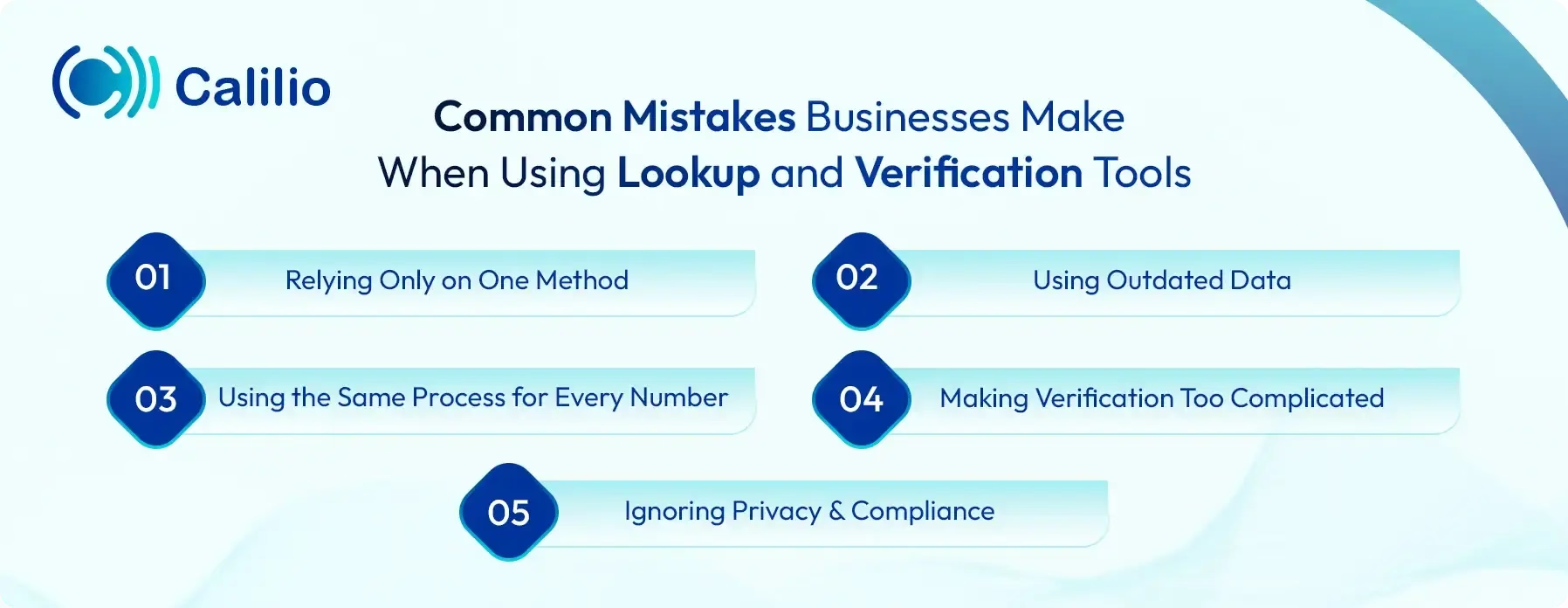
I. Relying Only on One Method
A lookup result may show carrier, region, line type, or spam signals, but it may not confirm whether the number is active. Whereas phone number verification can confirm that the user has access to the number, but it may not reveal whether the number is risky, temporary, disposable, or linked to suspicious activity.
II. Using Outdated Data
Phone numbers can be reassigned, ported, disconnected, or moved to a new carrier. If your lookup or verification system uses old data, your team may contact the wrong person or trust a number that is no longer safe to use.
III. Using the Same Process for Every Number
Not all phone numbers carry the same level of risk or value. A new account signup, a high-value payment, and a simple support inquiry may need different levels of lookup, verification, or manual review.
IV. Making Verification Too Complicated
Too many checks can frustrate genuine customers. If your verification process is slow, unclear, or repetitive, users may leave before completing the action. Keep the process simple, explain why you need the number, and use a lookup in the background to reduce friction.
V. Ignoring Privacy and Compliance
Some businesses collect, store, or use phone number data without clear consent, proper security, or a defined purpose. It can lead to privacy complaints, legal issues, customer distrust, and damage to the brand if users feel their personal information is being misused.
Conclusion
The difference between number lookup and verification comes down to context and confirmation. Number lookup gives you details about a phone number, while verification confirms that the user can access it. If a business uses only one method, it may still deal with risky numbers, fake signups, or unreachable contacts. By using both, you can keep cleaner contact lists, reduce fraud, avoid failed calls or SMS, and communicate with customers more reliably.
If your business is looking for cleaner and safer phone communication, consider Calilio. It’s Reverse Phone Number Lookup tool helps check phone number validity, format, location, line type, and carrier details, while its SMS-enabled virtual phone number helps you send verification codes to verify if the phone number is active.
Join Calilio today.
Summarize this blog with:
Frequently Asked Questions
Everything you need to know about Calilio. Can't find your answer? .
No, phone number verification does not prove a user’s real identity. It only confirms that the person can access the phone number by receiving an OTP through SMS or voice call, so businesses may still need other checks for high-risk actions.
Stay in the loop
Get the latest call insights, trends, and updates delivered straight to your inbox.
By subscribing, you agree to receive updates from Calilio.
You can unsubscribe anytime.
#1 Cloud Phone System for
|
Improve your business operation with Calilio's advanced virtual phone system. Join today for a better way to connect.