
What is round robin call routing?
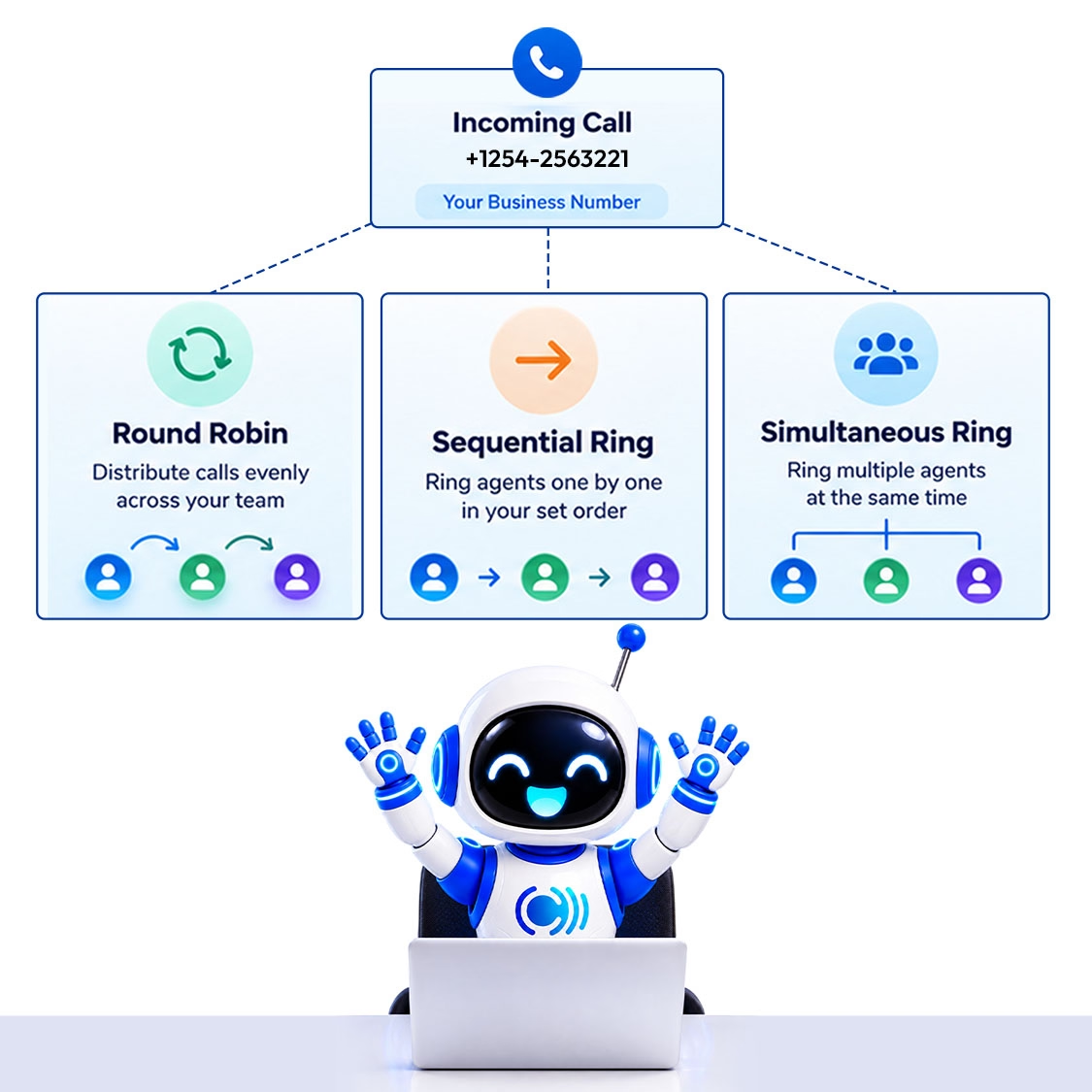
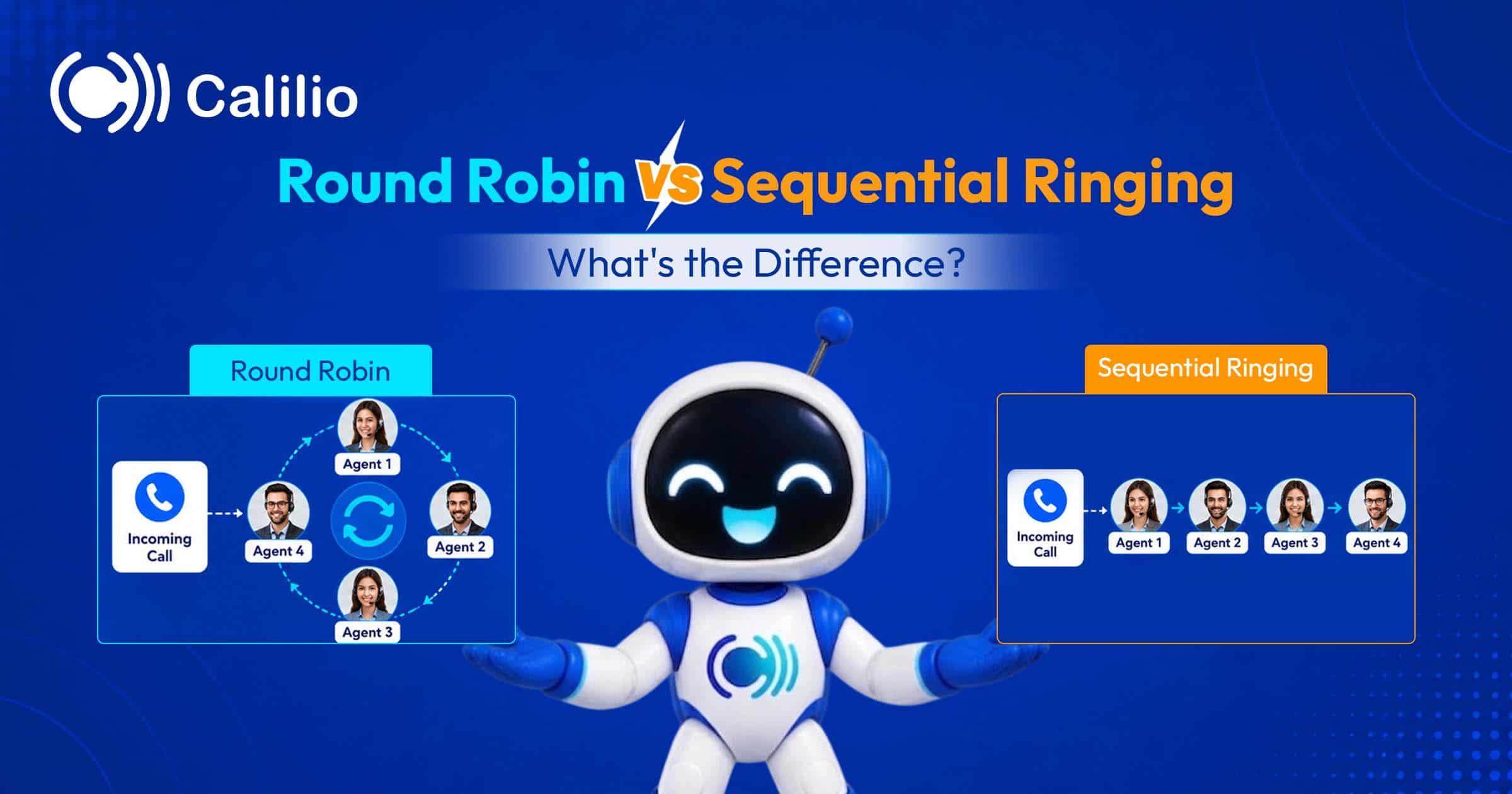
Round robin sends each new incoming call to the next agent in a rotation. If three people are in the group, the first call goes to agent one, the second to agent two, the third to agent three, and the fourth starts again at agent one. The system remembers who took the last call, so nobody is skipped and nobody gets two in a row while others sit idle.
If the agent whose turn it is does not answer within the ring time, the call moves to the next person in the rotation. The point of round robin is fairness: over a day, every agent ends up with roughly the same number of calls and, in a sales team, the same number of leads.
In Calilio, you turn it on by choosing Round Robin as the ring strategy in your call flow, picking the agents who join the rotation, and setting how long each one rings before the call moves on. Read more about round robin routing.
What is sequential ringing?
Sequential ringing (sometimes called a hunt group or ring order) sends every call down the same chain. Agent one rings first. If they do not pick up within the set time, the call moves to agent two, then agent three, until someone answers or the chain runs out. The order never changes between calls.
This means the first person in the chain takes most of the calls, and the people further down act as backup. That is the intent: sequential ringing is for teams where calls have a clear first choice, and the rest of the group is there to make sure nothing goes unanswered.
In Calilio, you choose Sequential as the ring strategy, drag agents into the order you want, and set the ring time for each step. Read more about sequential ring.
Round robin vs sequential ringing: side by side
Comparison | Round Robin | Sequential Ringing |
| The rule | Next agent in rotation takes the next call | Same fixed order, every call |
| Optimises for | Fairness — equal share of calls and leads | Priority — the right person tried first |
| Who answers most | Everyone, about equally | The first person in the chain |
| If the first agent misses | Moves to the next in rotation; the miss shifts one turn | Moves to the next in the chain, as designed |
| Caller wait time | One ring cycle, usually | Grows with each step in the chain |
| Setup detail that matters | Who is in the rotation | The order you put them in |
| Best for | Sales and support teams of equals | Account owners, senior-first, receptionist with backups |
The same three calls, under each rule
The clearest way to see the difference is to follow a few calls through a team of three: Sarah, James and Priya. Sarah is at her desk, James steps away for the second call, and Priya is available throughout.
When to use round robin
Choose round robin when the people in the group are interchangeable and you care about sharing the work. Typical cases:
$
☺
⇆
⚖
When to use sequential ringing
Choose sequential ringing when one person should answer if they can, and others are there as backup. Typical cases:
★
☎
↑
☾
What about simultaneous ring?
There is a third option worth knowing. Simultaneous ring rings every agent in the group at the same time, and whoever picks up first takes the call. It is the fastest way to get a call answered, because nobody waits for a ring cycle to finish, but it has two side effects: the quickest person takes most of the calls, and everyone's phone rings for every call.
A simple way to hold the three apart: simultaneous ring optimises for speed, round robin for fairness, and sequential ringing for priority. Calilio offers all three as ring strategies, and you can use a different one on each number or call-flow branch.
How to set up either strategy in Calilio
Both live in the same place and take the same steps. The only difference is the strategy you pick and, for sequential, the order you drag the agents into.
Two settings matter more than people expect. Keep the ring time per agent short, around 15 to 20 seconds; with sequential ringing especially, a 30-second step across four agents means a caller could wait two minutes. And always set a fallback: what happens when the whole group misses the call. In Calilio that can be voicemail, forwarding to another number, or the AI voice agent, which answers the caller, takes the details and lets the team follow up.
Conclusion
Round robin and sequential ringing solve different problems. Round robin shares calls evenly across a team of equals, which is what most sales and support groups want. Sequential ringing follows a fixed order, which is what you want when one person should be tried first and others are there as backup. Both are available on every Calilio plan as ring strategies inside a call flow, so pick the one that matches how your team works, keep the ring time short, and set a fallback so no call is left ringing.
Pick a Ring Strategy per Number, Change It Any Time
Round robin, sequential and simultaneous ring are all in Calilio's call flows on every plan. Set the order, set the ring time, set the fallback, done.