
Phone Number Porting: Everything You Need to Know

Despite struggling with weak signal strength, frequent call drops, or overpriced phone plans, many people stick with their current carrier simply because they don’t want to lose their phone number, assuming switching means starting over with a new one.
The truth is, you don’t have to stay stuck with poor service or high costs. With phone number porting, you can move to a new carrier and keep the same number you’ve always used. It’s a quick, hassle-free way to switch providers, enjoy better coverage, and reduce costs without interrupting your communication.
In this guide, you’ll learn what phone number porting is, how the process works, what documents you need, and what to check before transferring your number to a new carrier.
Key Highlights
Phone number porting lets you move your existing number from one carrier to another without changing it.
Porting allows you to keep your number while enjoying better network coverage, lower costs, and modern calling features.
Before porting, check your account details, settle any dues, and keep your number active until your new carrier confirms the transfer.
Submit a recent bill, valid ID, authorization letter, and account PIN to your new carrier to verify your identity and number ownership.
You can port your number between mobile, landline, and VoIP networks depending on your communication needs.
Your new carrier submits a port-in request, your old provider verifies it, and your number activates on the new network.
What is Phone Number Porting?
Phone number porting is the process of transferring your existing phone number from one carrier or service provider to another without changing the number itself. In simple terms, it means your number moves with you, no matter which provider you choose.
This process gives you the flexibility to keep the same number when switching networks, moving from landline to mobile, mobile to mobile, or upgrading to a Voice over Internet Protocol (VoIP) system. This is possible because telecom providers follow a system that lets numbers transfer between different networks, known as number portability or mobile number portability (MNP).
Benefits of Phone Number Porting
Phone number porting gives users and businesses the flexibility to change carriers without losing their existing number, along with improved service quality at low costs.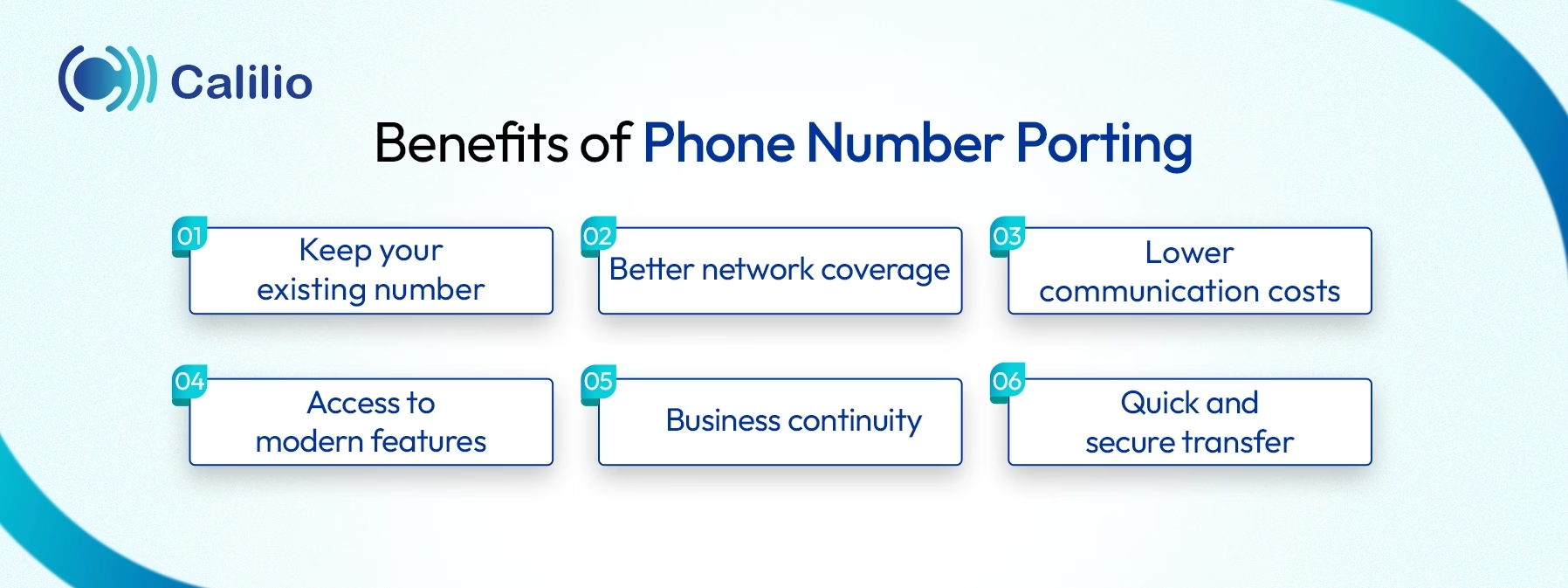
- Keep your existing number: Phone number porting allows users to retain their current number when changing carriers, helping maintain consistent communication.
- Better network coverage: It enables a smooth move to a provider with stronger network signals and improved reliability.
- Lower communication costs: Users can choose carriers or VoIP systems that offer more affordable plans while continuing to use the same number.
- Access to modern features: Porting often provides access to upgraded calling features such as call analytics, voicemail-to-email, and call forwarding.
- Business continuity: For businesses, it supports brand consistency and customer trust by keeping the same contact number.
- Quick and secure transfer: The mobile number portability (MNP) system ensures a regulated, secure process that typically completes within a few hours to a few business days.
How to Port Your Phone Number?
To port your phone number, select a new provider, confirm your number’s eligibility, and submit your account details and verification documents. After your current carrier approves the request, your number is activated on the new network with minimal downtime.
Step 1: Choose a New Provider
Start by selecting a mobile or VoIP provider that supports number porting and offers the right balance of coverage, features, and pricing for your needs. You can port your number from one carrier, like AT&T, to another carrier or a VoIP provider, depending on how you want to use your phone number.
Mobile carriers keep your number on a physical SIM with traditional calling. On the other hand, VoIP providers let you use your traditional number as a virtual phone number over the internet on any device with advanced features. Choose the provider that offers the coverage, flexibility, and tools that best match your communication needs.
Step 2: Check Number Eligibility
Before starting the transfer, confirm that your phone number is active, registered under your name or business, and free from unpaid bills. If your number is inactive or disconnected, it can’t be ported.
Moreover, you should also check your number’s portability on the new carrier’s website or portability tool to verify whether your current number can be moved to that specific network or carrier. Once your number is confirmed as portable, you can move forward with the porting process confidently.
Step 3: Submit a Port-in Request
After gathering the required information and documents, share it with your new carrier, who will then submit an official port-in request to your current (old) carrier. This request asks your old provider to verify ownership and initiate the number transfer process.
Step 4: Approve Verification and Wait for Transfer
Your current carrier reviews the porting request to confirm ownership and account validity. Once approved, they release your number to the new carrier. During this stage, keep your old service active; canceling it too early can cause the port to fail.
Whether you're moving your landline to a mobile network, switching mobile carriers, or transferring your number to a VoIP system, it can take anywhere from a few hours to a couple of business days.
Step 5: Activate and Test Your New Line
Once your number is transferred, your old SIM card is deactivated, and you’ll need to use a new SIM card from your new mobile carrier to access their network. This new SIM links your existing phone number to the new provider’s system, allowing you to make calls, send messages, and use mobile data.
If you’re porting to a VoIP service, you won’t need a SIM card; simply log in to your VoIP app or dashboard to start using your number. In most cases, you can port your number for free, making it easy to move to a new provider without paying transfer fees.
What Documents are Required for Phone Number Porting?
To port your phone number, you will require a recent phone bill, a valid ID, an authorization letter, business registration proof, and an account PIN for verification. You must submit the legal and registered documents to confirm your ownership for a smooth and verified number transfer.
1. Recent Phone Bill or Account Statement
A recent phone bill or account statement from your current service provider acts as official proof that you own the number and that the account is active. Make sure these statements are usually issued within the last 30 days.
Account statement should clearly display:
- Your full name or business name
- The phone number to be ported
- The billing address linked to your account
- Your account number or customer ID
2. Valid Proof of Identity (for Individuals)
Carriers and VoIP providers verify your identity by requiring a government-issued ID. The name and address on the ID should align with the details in your billing account. If they don’t match, your porting request may face delays or rejection.
Ensure you have the following acceptable identification:
- Passport
- Driver’s license
- National ID card
- Voter ID or Social Security card (depending on your region)
3. Letter of Authorization (LOA)
A Letter of Authorization (LOA) is mandatory for most number porting requests, especially for business or multi-line accounts. This document allows your new carrier to contact your existing provider and process the port on your behalf.
A valid LOA must include the following:
- Your current provider’s name
- The phone numbers to be ported
- Your account number and service address
- The authorized signature of the account holder or company representative
- The date of signing
Note: For businesses, print out the LOA on official company letterhead to speed up verification.
4. Proof of Address or Business Registration (for Businesses)
If you’re porting a business phone number, your new provider may ask for documents proving your organization’s legal identity and address. These help confirm that the number is tied to a legitimate business entity.
Here are the following acceptable documents:
- Business registration certificate or tax ID number
- Utility bill (electricity, internet, or water) showing the same address as your current account
- Business license or trade certificate
- Authorized signatory’s ID and designation
Note: This verification step is essential for multi-line business accounts, toll-free numbers, or cloud-based VoIP systems.
5. Account PIN or Password
Many mobile and VoIP carriers secure user accounts with a PIN, passcode, or security key. You can send “PORT <your number>” to the existing carrier, requesting a porting code, and give it to your new carrier. It is then submitted during the porting request to verify your ownership.
However, if you’ve forgotten your PIN, you can retrieve or reset it from your current provider’s online account portal before initiating the port. Without a PIN, your porting request may be delayed or automatically rejected.
6. Customer Authorization Form (CAF)
In some regions or with certain providers, you may also need to fill out a CAF. It is a secondary consent that clearly states your intention to move your number to a new provider. It often includes your signature and date, serving as an additional security measure against unauthorized transfers.
Things to Consider Before Porting Your Phone Number
Before starting your number transfer, you must settle any financial commitments and collect essential account details, like the porting PIN. Do not cancel your current phone service. Your number must remain active until your new carrier tells you the transfer is fully finished.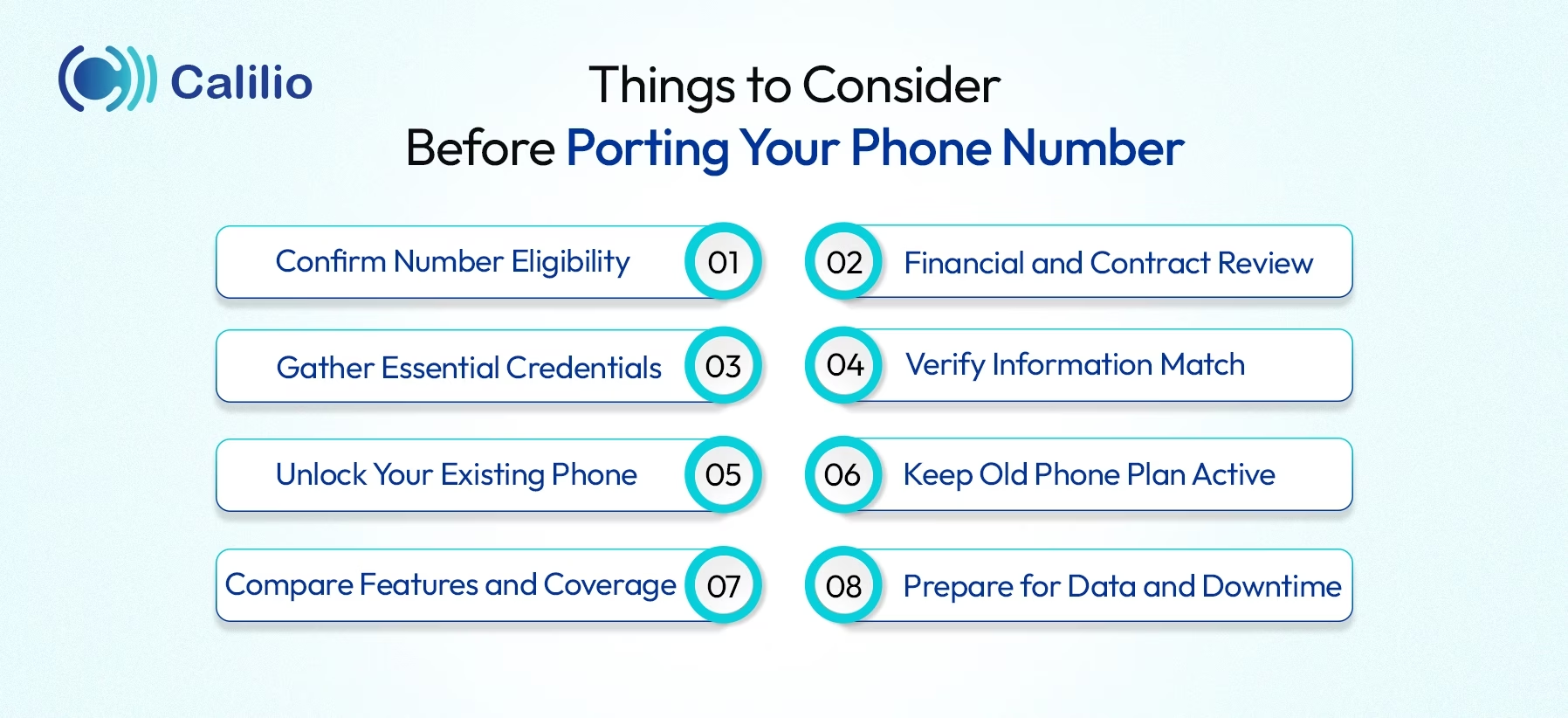
- Confirm Number Eligibility: Check phone number portability and verify that your specific local, mobile, and toll-free number and location are supported by the new carrier's network.
- Financial and Contract Review: Check and pay any early termination fees or unpaid fees with your old provider. Most carriers will not release your number until all dues are settled. Also, confirm if the new carrier charges a porting fee.
- Gather Essential Credentials: Obtain your accurate Current Account Number and the required porting PIN from your existing carrier. Here, the porting pin is often a temporary authorization code separate from your 4-digit security passcode.
- Verify Information Match: To submit your details to the new carrier, ensure the name and billing address match with details registered on your old account. Any discrepancy, including abbreviations or punctuation, will cause an immediate rejection and delay.
- Unlock Your Existing Phone: Make sure your phone is unlocked to prevent activation issues during the porting process. If needed, contact your current carrier to confirm your device’s lock status and request an unlock.
- Keep Old Phone Plan Active: Do not cancel your phone plan. Your number must remain active for the new carrier to successfully claim it. Cancelling early makes the number inactive, and you risk losing it permanently.
- Compare Features and Coverage: Check that your new carrier offers the necessary features, like Wi-Fi calling, voicemail, and international roaming. Additionally, verify it has adequate network coverage in the areas you use your phone most.
- Prepare for Data and Downtime: Back up essential data, like voicemails, texts, and call logs, as they typically do not transfer with the number. Be prepared for a final bill from your old carrier and a short period of service downtime on the day of the transfer.
Conclusion
Phone number porting makes it easy to move to a new carrier or VoIP service without losing your current number. By keeping your number active, confirming eligibility, and submitting the right documents, you can move your number to any mobile or VoIP provider with ease.
Whether you’re transferring a landline, mobile, or business number, the overall porting process remains the same: verify your details, wait for your current carrier to approve the request, and activate your number on the new network.
If you’re looking for a reliable platform that makes number porting smooth and secure, Calilio is a smart choice. It allows you to port your existing number effortlessly while accessing cloud-based tools like call routing, analytics, voicemail-to-email, and multi-device calling. Port your number to Calilio today!
Summarize this blog with:
Frequently Asked Questions
Everything you need to know about Calilio. Can't find your answer? .
To port a phone number, the charges may range from $5 to $20, depending on the region and service type. It’s always best to confirm with your new carrier before starting the process, as many providers, like Calilio, port US numbers for free.
Stay in the loop
Get the latest call insights, trends, and updates delivered straight to your inbox.
By subscribing, you agree to receive updates from Calilio.
You can unsubscribe anytime.
#1 Cloud Phone System for
|
Improve your business operation with Calilio's advanced virtual phone system. Join today for a better way to connect.