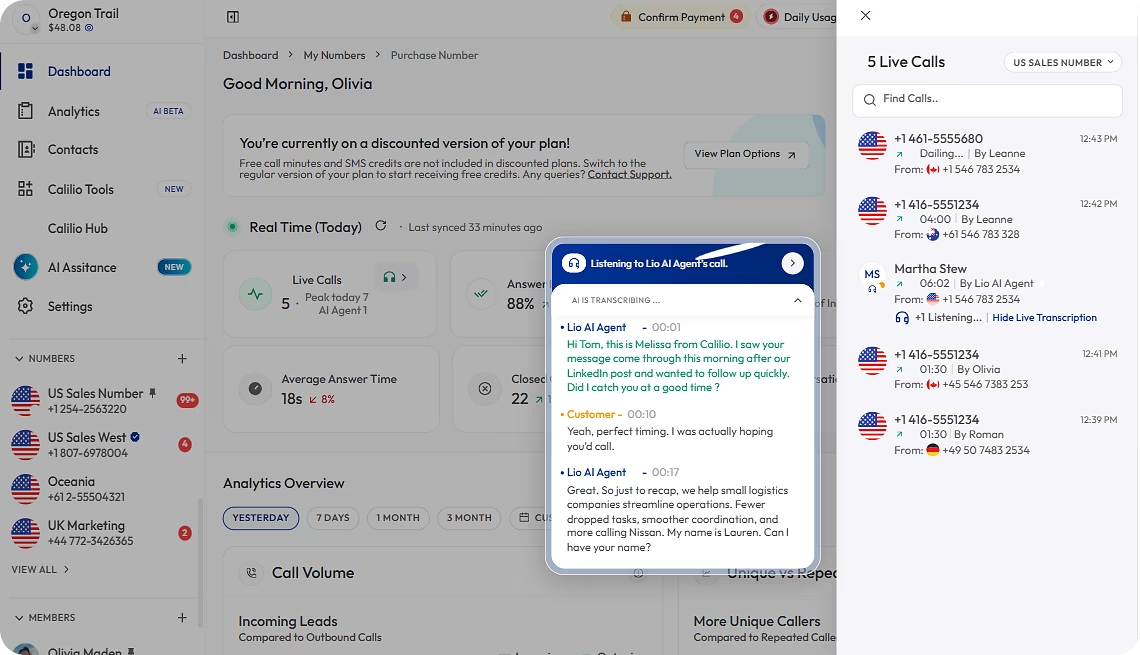

A virtual receptionist is usually a real person answering your calls remotely through a staffed service. An AI receptionist is software that answers using natural language understanding, with no person on the line unless it escalates.
- "Virtual" describes where the receptionist works from — not in your building. It does not mean software.
- AI receptionists are generally 60-90% cheaper at the same call volume.
- A trained person still handles complaints, nuance and unusual requests better than AI.
- Many providers now combine both — AI first, human escalation for harder calls.
Side by side
Eight ways they actually differ, beyond the marketing pages.
# | AI Receptionist | Virtual Receptionist |
| Who answers | Software | A real person, working remotely |
| Availability | 24/7 at no extra cost | Usually business hours by default; 24/7 costs more |
| Handles nuance and emotion | Weak — should escalate | Strong — reads tone and context |
| Setup time | Configure knowledge and instructions yourself | Account and script setup with a team |
| Typical monthly cost | $25-150 for small-business volume | $235-720+ for comparable volume |
| Billing model | Flat rate or per-call, often no overage | Usually per-minute, with overage charges |
| Consistency | Identical every call | Varies by agent and shift |
| Best for | Repetitive, well-defined calls | Complex, emotional or high-stakes calls |
Cost compared
At the same call volume, the gap is large — and the reason is structural, not a temporary promotion.
Model | Typical Range | Why |
| AI receptionist | $25-150/month | Flat rate or per-call, often bundled into a phone system with no separate bill. |
| Virtual receptionist (human) | $235-720+/month | Per-minute billing with overage charges once you exceed the included allowance. |
| Hybrid (AI + human escalation) | $95-800/month | AI handles routine calls; a live agent takes over anything it cannot resolve. |
When AI is the right choice
✓
✓
✓
✓
When a human is the right choice
✕
✕
✕
✕
Using both together
The two are not mutually exclusive, and combining them is increasingly common. The AI receptionist takes the first call, resolves what it can — booking, FAQs, order status — and escalates anything ambiguous, emotional or outside its knowledge to a live virtual receptionist. You get the cost and availability benefits of AI on the bulk of your calls, with a human safety net for the ones that actually need one.
The bottom line
"Virtual" and "AI" describe two different things wearing similar marketing language. A virtual receptionist is a person, priced and staffed like one. An AI receptionist is software, priced and behaves like one — cheaper, always on, and weaker on anything that needs real judgment.
Most businesses do not need to pick a side permanently. Start with what your calls actually require, and treat AI as the default for routine volume with a clear, fast escalation path to a person for everything else.
See Which Fits, Without Committing to Either
Try Calilio's AI receptionist on your own calls first — free up to 10 minutes per user a month on Standard, or up to 100 minutes on Premium, then low per-minute rates apply. No script writing, no staffing contract.