
What is the Average Cell Phone Bill Per Month in 2026?
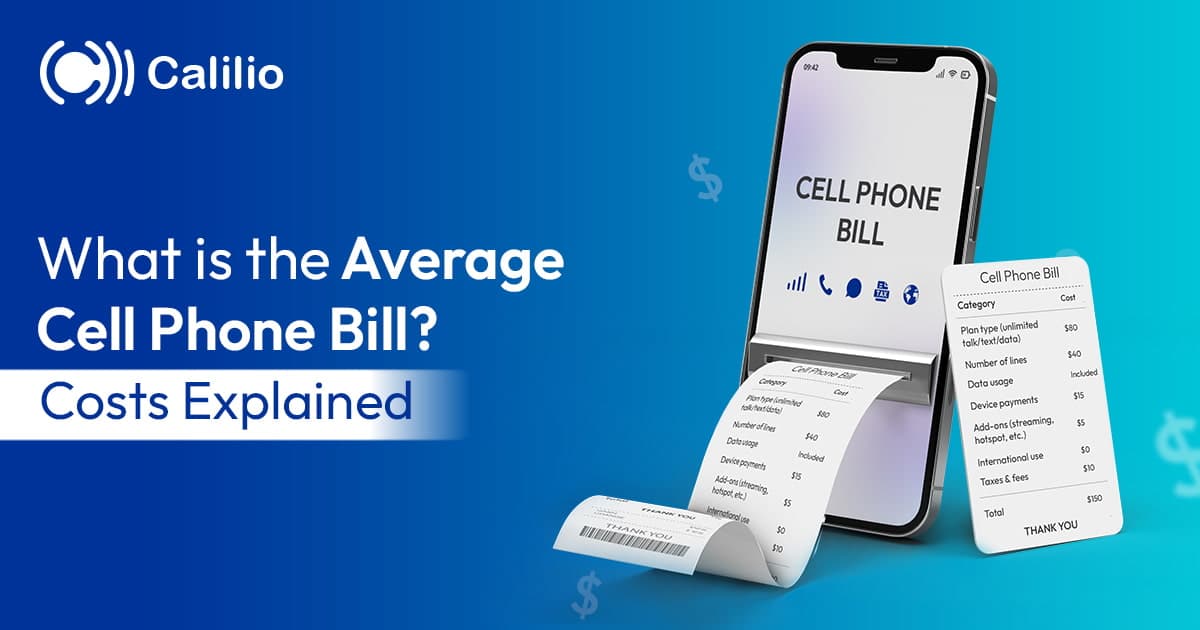

Calls, texts, and mobile data are now part of everyday life, but they often come with a high monthly cost. From data charges to hidden add-ons, costs add up quickly, leaving you unsure of how much the average monthly cell phone bill really is. Without a clear idea of the standard cost, it’s easy to overspend on your plan or stay stuck with a bill that strains your budget.
The good news is that once you know the standard monthly cost, you can make better decisions. It helps you spot extra charges, compare plans, and manage your expenses effectively.
In this guide, we’ll break down the average monthly cell phone bill in 2026, explain the factors that influence it, and compare costs across different plan types. You’ll also find practical tips to reduce your expenses and make your cell phone plan more cost-effective.
Key Highlights:
The average monthly cell phone bill varies by country, with the U.S. around $141, the UK about $44, Canada near $33, and Australia roughly $16–17, depending on plans and usage.
The average phone bill for one person typically costs $25–$60 for prepaid and $70–$100 for postpaid, while unlimited plans range from $80–$120 per line.
Main factors that affect your bill include plan type, number of lines, data usage, device payments, add-ons, international use, taxes, and fees.
You can lower your bill by switching to smaller carriers, using Wi-Fi for calls, choosing the right data plan, bundling family lines, removing extras, delaying upgrades, and checking for discounts.
How Much is the Average Cell Phone Bill Per Month?
What are the Factors that Affect Your Cell Phone Bill?
Your average cell phone bill depends on usage and plan details, including data limits, international calls, and the type of phone you own. Extra costs like insurance, overages, and taxes further impact the total you pay.
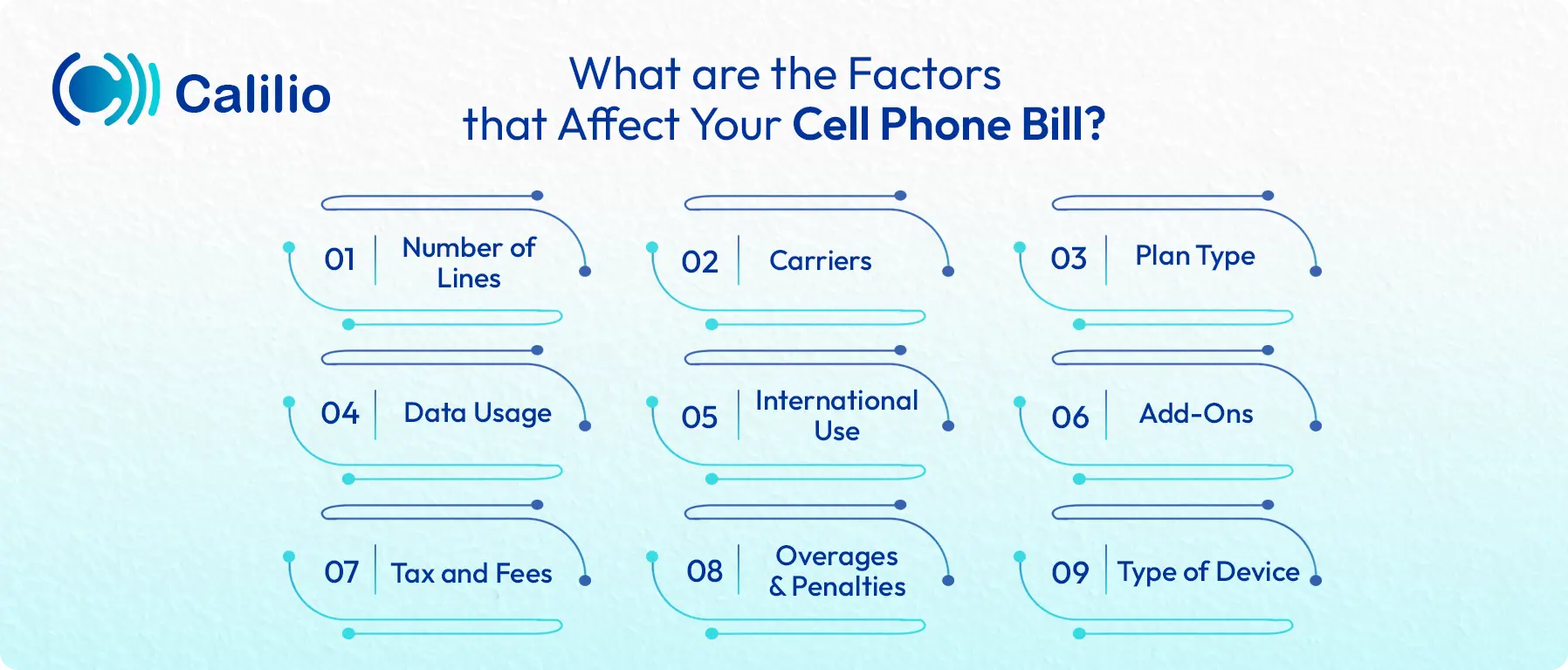
- Number of Lines: Adding more lines for family or friends often lowers the cost per person. Still, the overall bill increases because each line adds to the base price.
- Carriers: Different carriers charge differently and offer varying coverage.
- Plan Type: An unlimited data plan will always cost more than a by-the-gig plan. Likewise, family plans offer multi-line discounts that can make the cost per line much lower than an individual plan.
- Data Usage: Your bill often depends on how much mobile data you use each month. Exceeding your data allowance can lead to extra charges.
- International Use: Using your phone in another country adds roaming fees. So, making international calls or sending texts abroad often costs extra.
- Add-Ons: Things like phone insurance, hotspot data, or premium services can also be tacked onto your plan. Even small monthly add-ons can add up over time.
- Tax and Fees: Government taxes and regulatory fees are added to every bill and vary by location. Your carrier may also include its own administrative fees.
- Overages and Penalties: Going over your limits or missing a payment can trigger extra fees. These charges can add up quickly if they happen more than once.
- Type of Device: High-end devices usually cost more to pay off monthly than older or budget models. Your phone’s compatibility with 5G or advanced features can also affect plan pricing.
Cell Phone Plan Costs by Type
The average monthly cell phone bill can vary based on the plan type, with prepaid being the cheapest at $25–$60 and unlimited plans the highest at $80–$120 per line. Similarly, family or multi-line plans reduce per-person costs, averaging $160–$200 for four lines.
1. Prepaid Plans
Prepaid plans usually cost between $25 and $60 per month for a single line. They are cheaper because you pay upfront, and they often come with limited data, fewer extras, and no long-term contracts.
2. Postpaid Plans
Postpaid plans typically cost $70–$100 per month per line, especially for unlimited data. They often include better coverage, premium features, and device financing options, making them more expensive than prepaid.
3. Unlimited Data Plans
Unlimited data plans are the most costly, ranging from $80–$120 per month for a single line. They are best for heavy users who stream, game, or work online without worrying about data caps.
4. Family and Multi-Line Plans
If you have multiple lines, a family plan is almost always the most cost-effective solution. The average 4-line family plan costs around $160–$200 per month. These plans offer shared data or unlimited options and provide the best value for households.
Major Cell Phone Carriers & Their Average Monthly Charges
Below are multiple tables showing the average cell phone bills across different countries, based on major carriers and commonly used plans.
Methodology: This analysis is based on publicly available carrier pricing, government reports, and trusted industry sources. We compared average monthly costs for single-line plans across regions and converted all prices to USD using recent exchange rates. Promotional offers, taxes, and device payments were excluded to keep comparisons consistent.
i. US:
Carrier | Average Monthly Cost (Single Line) | Notes |
| Verizon | $65–$90 | Entry plans start lower, while premium plans cost more; family plans reduce per-line cost. |
| T-Mobile | $60–$70 | Basic plans start around this range; multi-line plans lower the cost per line. |
| AT&T | $35–$65 | Lower-cost unlimited plans are available; pricing drops as you add more lines. |
ii. Canada:
Carrier | Average Monthly Cost (Single Line) | Approx. Cost in USD | Notes |
| Rogers | CAD 70–105 | $51–$77 | Pricing depends on bundles, BYOD discounts, and the number of lines. |
| Bell Mobility | CAD 70–95 | $51–$69 | BYOD plans only; device costs are extra. |
| AT&T | $35–$65 | $44–$77 | Discounts often apply with automatic payments. |
iii. UK:
Carrier | Average Monthly Cost (GBP) | Approx. Cost in USD | Notes |
| EE | £12–£90+ | $15–$114 | Social tariffs are lowest; premium bundles and devices increase costs. |
| Bell Mobility | £6.99–£50+ | $9–$63 | Prices depend on data and plan type; most plans see a £2.50 monthly increase from April 2026. |
| AT&T | £7–£60+ | $9–$76 | SIM-only plans are cheaper; bundled contracts cost more and include a £2.50 monthly rise from April 2026. |
iv. Australia:
Carrier | Average Monthly Cost (AUD) | Approx. Cost in USD | Notes |
| Telstra | AU$50–99 | $32–$65 | Basic plans cost less; high-data and premium plans cost more; device fees are extra. |
| Optus | AU$25–55 | $16–$36 | Prepaid plans are cheaper; SIM-only postpaid plans usually start higher. |
| Vodafone Australia | AU$35–73 | $23–$48 | SIM-only plans scale by data; prepaid options cost less with auto-recharge discounts. |
How to Lower Your Average Monthly Cell Phone Bill?
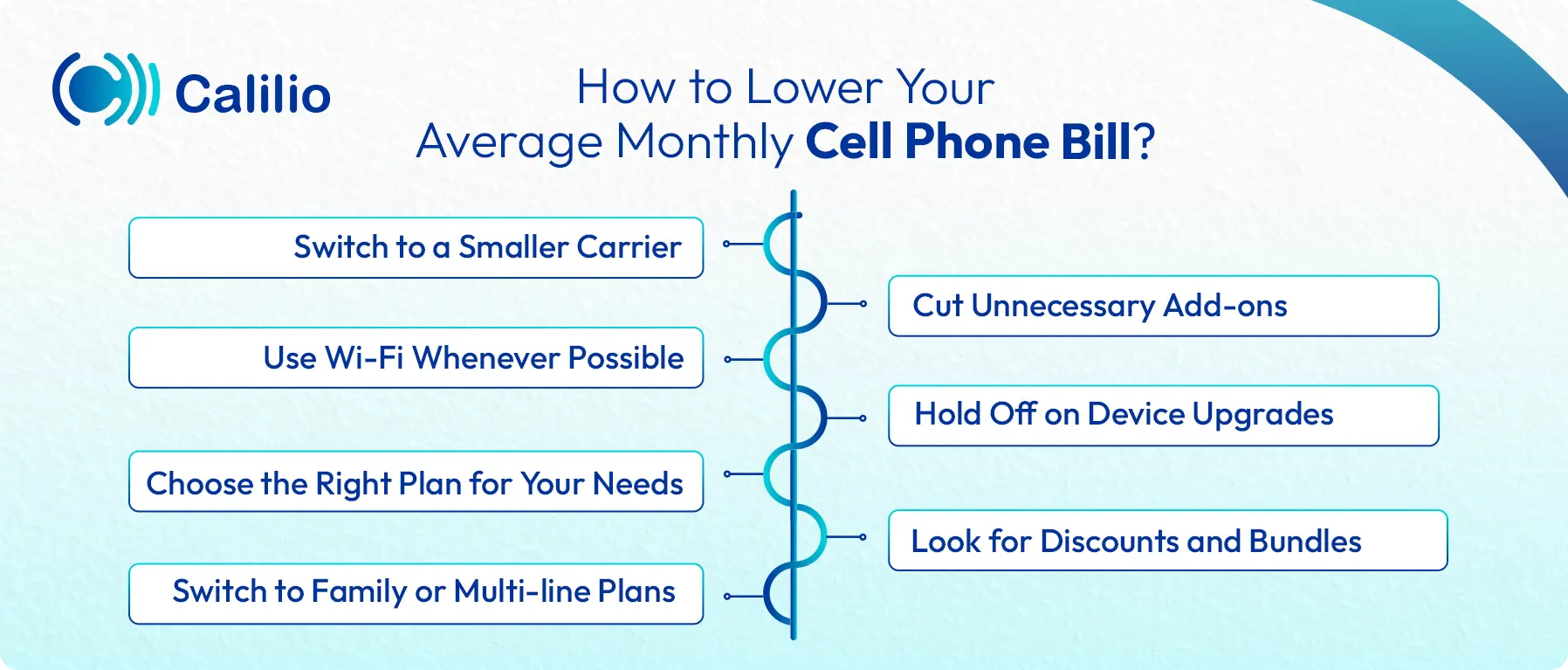
To reduce your average cell phone bill per month, switch to cheaper carriers, use Wi-Fi for calling, and select a plan that matches your data usage. You can also join family plans, remove unnecessary add-ons, and avoid frequent phone upgrades for further long-term savings.
I. Switch to a Smaller Carrier
Mobile Virtual Network Operators (MVNOs) like Mint Mobile, Visible, or Cricket, use the networks of major providers like Verizon or AT&T but charge much less. Plans can start as low as $25–$40 per month, which is much cheaper than big carriers.
II. Use Wi-Fi Whenever Possible
Relying on Wi-Fi at home, work, or public places helps you use less mobile data. Features like Wi-Fi calling and texting let you make calls and send messages over the internet, so you don’t need an expensive unlimited plan.
III. Choose the Right Plan for Your Needs
Many people overpay by choosing unlimited data plans they don’t fully use. If your average monthly data use is modest, a limited-data plan can cut $20–$40 per month from your bill.
IV. Switch to Family or Multi-line Plans
Most carriers offer discounts when multiple lines are on one plan. If you have family members, friends, or even roommates, combining accounts can bring down the per-person cost.
V. Cut Unnecessary Add-ons
Extras like phone insurance, international calling, or bundled subscriptions often sneak onto bills without being essential. Removing them can lower your payment without affecting your daily use.
VI. Hold Off on Device Upgrades
Upgrading your phone frequently can add significant monthly costs. Unless your device is outdated or broken, delaying upgrades is one of the simplest ways to keep your expenses low.
VII. Look for Discounts and Bundles
Some carriers offer discounts if you bundle phone service with home internet or pay through autopay. So, check for promotions and loyalty deals regularly for discount offers.
Conclusion
The average cell phone bill per month shows how costly staying connected can be, especially with postpaid and unlimited plans. Between device payments, add-ons, and rising data usage, many people pay far more than they need to. The real savings come from making smarter choices, like switching to smaller carriers, choosing the right plan, or cutting off unnecessary add-ons.
The most effective way to save on your cell phone costs is to embrace modern telephony solutions like Calilio. As a cloud-based business phone system, Calilio offers virtual phone numbers that let you make calls and send messages over the internet, eliminating expensive phone lines and hidden fees. With plans starting at just $15 per month and AI-powered tools, Calilio delivers more features and better value at a much lower cost.
Summarize this blog with:
Frequently asked questions
Do smaller carriers (MVNOs) offer reliable service at a lower cost?
Yes, smaller carriers known as MVNOs often provide reliable service at a lower cost because they lease network access from major providers like Verizon, AT&T, or T-Mobile. While speeds may slow during peak hours, their plans can be significantly cheaper.
What is the average cell phone bill for one person?
What is the average cell phone bill for a family (multi-line) plan?
Are unlimited data plans always more expensive?

Still have questions?
Can’t find the answer you’re looking for? Please chat with our friendly team.
Stay in the loop
Get the latest call insights, trends, and updates delivered straight to your inbox.
By subscribing, you agree to receive updates from Calilio.
You can unsubscribe anytime.
Enter the World of AI Business Phone System with Calilio
Improve your business operation with Calilio's advanced virtual phone system. Join today for a better way to connect.