- Partners
- Contact Us
- Log in
Telecom Cost Optimization Guide for Businesses


Telecommunication, or Telecom, is an essential part of your business operations. But managing telecom expenses is not easy, as it requires tracking every line, carrier contract, and vendor invoice. When these services are not monitored properly, costs can quietly increase and become a major financial burden.
Telecom cost optimization helps you control unnecessary spending, align services with real business needs, and manage vendors more efficiently. However, if not done right, it can impact performance and service quality.
In this blog, we will explore the best telecom cost optimization strategies to help you lower expenses. The article also includes the common reasons behind your increasing telecom costs and common mistakes to avoid when implementing the optimization strategies.
Key Highlights:
Telecom expenses are all communication-related costs, including mobile plans, SIM cards, landlines, VoIP (Voice over Internet Protocol) services, internet connections, hardware, and ongoing maintenance required to support business operations.
Telecom costs increase when businesses pay for unused services, work with multiple vendors offering similar features, overlook auto-renewing legacy contracts, and lack clear visibility into billing.
Telecom cost optimization should focus on long-term cost control, not just short-term cost cutting.
Effective telecom cost control requires regular invoice reviews, tracking usage trends, enforcing clear usage policies, and renegotiating vendor contracts annually.
What are Telecom Expenses in a Business?
Telecom expenses are the recurring operational costs organizations incur for voice, data, internet, and network services. These include the service costs of mobile plans, SIM cards, landlines, VoIP services, and internet connections that support essential voice and data communication across the team.
Beyond services, they also cover physical infrastructure such as desk phones and routers, as well as the ongoing maintenance and support required to ensure reliable performance.
What is Telecom Cost Optimization?
Telecom cost optimization is the process of managing telecom expenses to reduce unnecessary spending. It focuses on monitoring telecom charges, reviewing service usage, and identifying cost gaps across communication systems.
Unlike cost-cutting, which focuses on immediate savings, telecom cost optimization emphasizes long-term cost control. It prevents waste, supports better cost decisions, and keeps monthly telecom costs predictable.
Potential Reasons Behind the Increasing Telecom Costs in Your Business
Telecom costs rise when your business overlooks unused lines and SIMs, pays for overlapping services across multiple vendors, and remains tied to legacy contracts that auto-renew without review.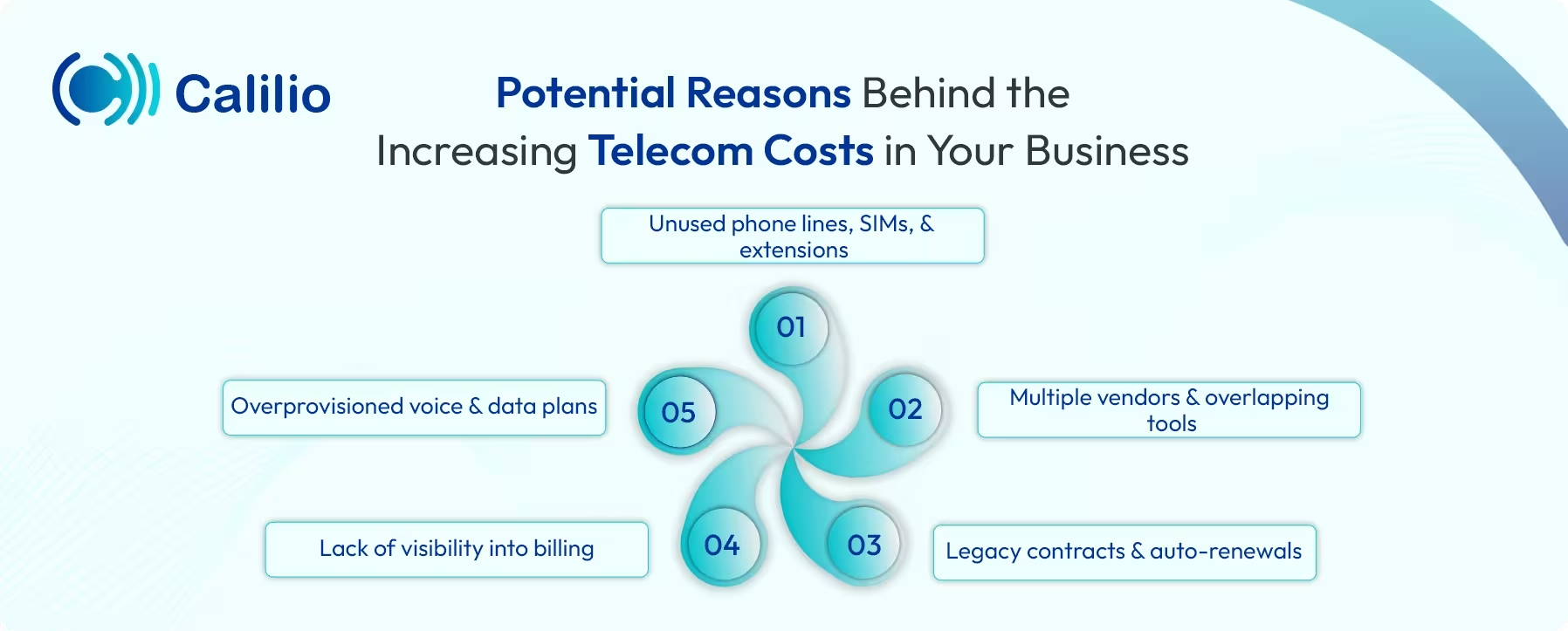
- Unused Phone Lines, SIMs, and Extensions: Your businesses may keep paying for services that are no longer in use. When employees leave, change roles, or switch devices, old lines and SIMs often remain active. These small, forgotten charges add up over time.
- Multiple Vendors and Overlapping Tools: Companies often work with several telecom providers for different services. In many cases, these providers offer similar features, such as calling, messaging, or data. So, you may also be paying twice for the same type of service, increasing overall costs.
- Legacy Contracts and Auto-renewals: Outdated telecom plans often renew automatically if you fail to review. It may be locking your business into higher rates, unused features, and rigid terms for a longer period.
- Lack of Visibility into Billing: When data usage and billing details are unclear, it becomes hard to track where money is going. Teams cannot easily see which services are used and which are not. As a result, businesses may struggle to control expenses or make informed decisions.
- Overprovisioned Voice and Data Plans: Your business may have subscribed to plans with higher limits than what you actually need. Paying for excess minutes or data that go unused leads to steady and avoidable overspending.
7 Effective Ways to Reduce Telecom Expenses
For effective telecom cost optimization, you should build and maintain a centralized telecom inventory, consolidate vendors and plans, set clear usage policies, train employees, choose plans based on actual usage, and implement telecom expense management tools.
Moving to cloud-based and VoIP phone services while continuously monitoring and reviewing telecom spending also helps control costs long-term.
1. Build and Maintain a Central Telecom Inventory
Create a single telecom inventory that gives you a clear and accurate record of all the services and assets your company is paying for. This includes phone numbers, SIM cards, devices, circuits, licenses, and service contracts. Since everything is in one place, it's easier to track usage and assign ownership.
Once the inventory is created, ensure it’s maintained with up-to-date information. Every new line, upgrade, transfer, or cancellation should be documented immediately. That makes it easy to track changes to spot and remove unused services and “ghost assets” before they drive up costs.
2. Monitor and Review Telecom Spending Regularly
Review your telecom spending on a monthly basis to ensure costs remain aligned with actual usage and business needs. Companies should track factors such as cost per user, line utilization, vendor service, and cost per call level to identify early signs of inefficiency.
Use these insights to make regular adjustments to plans, services, and contracts. You can control unnecessary network expenses from building up when you consistently review and adjust plans regularly.
3. Consolidate Vendors and Plans
Review how many providers are managing your voice, data, and mobile services. When services are spread across multiple vendors, costs become harder to control and unnecessary charges are more likely to slip through.
If possible, move to fewer reliable providers and negotiate bundled plans based on your actual usage to reduce scattered billing complexity. With simpler billing and unified contracts, you can track spending more easily, resolve issues faster, and keep telecom expenses under control.
4. Set Clear Usage Policies and Train Employees
Create clear rules for how employees use company phones, data, and communication tools, especially for mobile usage and international calls. Also, make sure these guidelines are easy to understand and communicated regularly so everyone knows what is acceptable and what is not.
When employees are properly trained and aware of the impact of their usage, they are less likely to generate unnecessary charges. This approach helps you control telecom spending without affecting productivity.
5. Move to Cloud-based and VoIP Communication
Traditional phone systems depend on physical lines and hardware, which makes them expensive to install, maintain, and upgrade. VoIP solutions offer an affordable alternative. It operates on the internet for telecommunication and reduces the dependency on hardware.
Moreover, you can only pay for what you actually use, helping you keep telecom costs under control. These platforms also offer flexible pricing models such as subscriptions, usage-based plans, per-user pricing, bundled packages, and pay-as-you-go options, so you pay for only what you need.
Overall, switching to cloud phone systems helps you lower call charges, reduce maintenance work, and avoid investing in new equipment.
Switch to a Cloud-Based Phone System and Reduce Your Telecom Expenses Significantly
6. Avoid Overpaying by Choosing Plans Based on Actual Usage
Review voice and data usage regularly and select only the plans you need. Instead of paying for oversized packages, move heavy users to suitable plans, downgrade low-usage lines, and remove inactive services that no longer provide value.
Also, focus on usage reports to manage roaming, personal use, and unnecessary upgrades. You can also apply pooled data plans or secure BYOD (Bring Your Own Device) programs to reduce device and subscription costs.
7. Implement Telecom Expense Management Tools
Telecom Expense Management tools help centralize billing data, monitor usage, and identify inconsistencies across vendors and contracts. Instead of reviewing invoices line by line, businesses gain a clear dashboard view of expenses, trends, and contract terms.
These tools also automate invoice validation, flag billing errors, track contract renewals, and generate detailed reports for improved decision-making. With better visibility and control, you can reduce billing mistakes, avoid late fees, negotiate from a stronger position, and keep telecom spending aligned with actual business needs.
Common Mistakes to Avoid When Implementing Telecom Cost Optimization
When optimizing telecom costs, avoid focusing only on short-term savings or cutting services without proper analysis. Do not ignore usage data or rely solely on manual tracking to manage expenses.
Also, avoid making changes and then failing to monitor performance, as ongoing oversight is necessary to ensure savings remain effective and sustainable.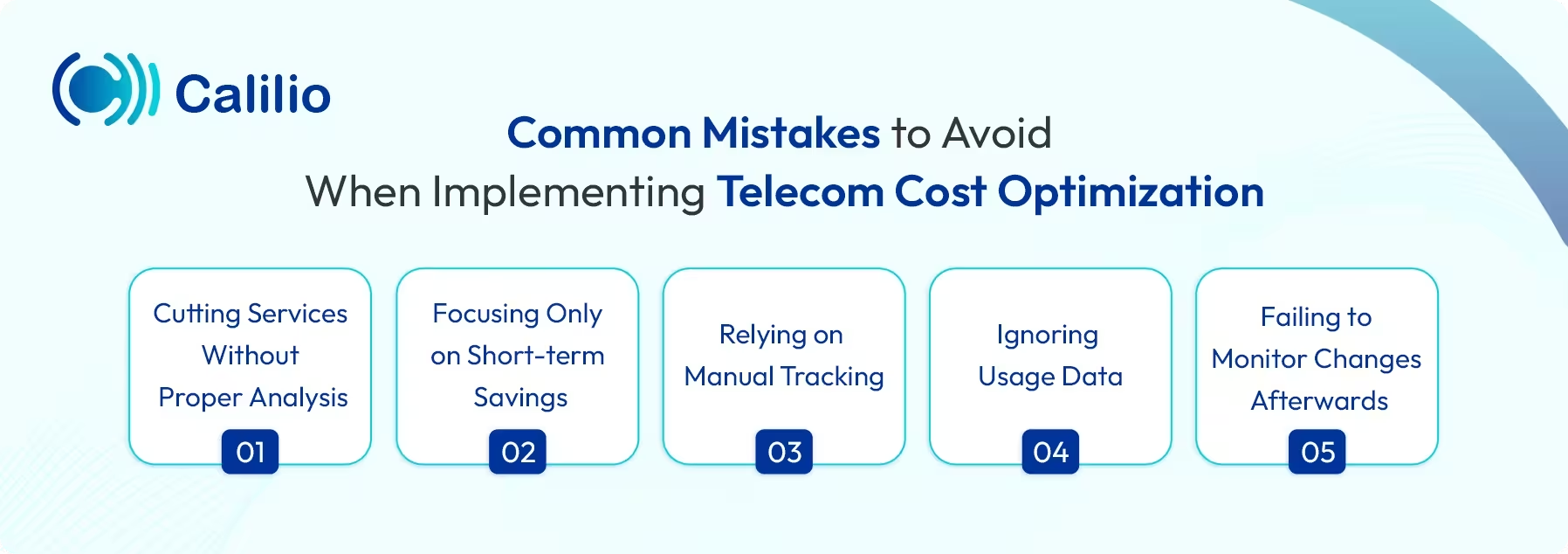
1. Cutting Services Without Proper Analysis
Avoid canceling lines or tools without checking how they are used. Some low-activity numbers may still support compliance, security, or legacy systems. Removing them too quickly can disrupt operations and create costly fixes later.
2. Focusing Only on Short-term Savings
Implementing the short-term cost-saving strategy, like choosing cheaper plans, removing features, or switching providers, may reduce this month’s bill but create performance gaps and upgrade costs later. For sustainable optimization, you must focus on steady, strategic savings rather than quick reductions that lead to future expenses.
3. Relying on Manual Tracking
Spreadsheets and manual reviews are prone to errors and delays. Without automation, billing mistakes and unused services can go unnoticed for months.
4. Ignoring Usage Data
Making decisions without reviewing actual usage reports leads to mismatched plans and unnecessary spending. When changes are based on assumptions instead of real data, businesses may overpay for unused capacity or downgrade plans that teams still rely on. Cost optimization should always be guided by accurate usage insights, not estimates or guesswork.
5. Failing to Monitor Changes Afterwards
Cost optimization is not a one-time task. If you stop reviewing spending after making changes, old issues will return. Regularly monitor your telecommunication spending to maintain savings.
Conclusion
Telecom costs do not rise suddenly. They increase slowly over time due to billing errors, unused features, overlapping vendors, and limited visibility into actual spending. What feels manageable each month can quietly turn into a heavy annual expense. That’s why telecom cost optimization is essential. By reviewing expenses, removing unused services, and centralizing management to regain control, businesses can regain control before small inefficiencies turn into long-term financial strain.
One effective way to support this effort is to modernize your phone system. Moving to a cloud-based business phone system like Calilio simplifies telecom cost optimization by lowering infrastructure, maintenance, and line expenses. It also offers more competitive calling rates than traditional carriers. Plus, with a subscription model, you pay only for what you use and gain clear visibility into call activity and data usage.



Summarize this blog with:
Frequently asked questions
Is a VoIP phone system cheaper than traditional phone systems?
Yes, a VoIP phone system is usually cheaper than traditional phone systems because it uses the internet instead of physical phone lines. This reduces installation, maintenance, and infrastructure costs while lowering long-distance and international calling charges. It also offers better flexibility and scalability for growing businesses.
How often should telecom costs be reviewed?
Does telecom cost optimization affect call quality?

Still have questions?
Can’t find the answer you’re looking for? Please chat with our friendly team.
Stay in the loop
Get the latest call insights, trends, and updates delivered straight to your inbox.
By subscribing, you agree to receive updates from Calilio.
You can unsubscribe anytime.
Enter the World of AI Business Phone System with Calilio
Improve your business operation with Calilio's advanced virtual phone system. Join today for a better way to connect.