- Partners
- Contact Us
- Log in
Virtual Agent vs. Chatbot: Key Differences, Benefits & Use Cases

Customers today expect faster support and round-the-clock service. To meet these expectations, many companies now rely on automated tools that can handle conversations without human involvement. Two of the most common tools are virtual agents and chatbots. They may seem similar on the surface, but they work in very different ways and solve different types of problems.
A chatbot handles simple, repetitive questions, while a virtual agent manages deeper, more natural interactions using advanced AI. Understanding the difference between the two helps you choose the right tool for your business.
In this blog, we’ll compare virtual agents vs. chatbots, explore how each one works, and when a business should use them.
Key Highlights:
A virtual agent is an AI-driven assistant that uses AI, NLP (Natural Language Processing), and machine learning to handle natural, human-like conversations.
A chatbot is a rule-based tool designed to automate simple, repetitive queries through predefined flows or keyword triggers.
Virtual agents offer deep understanding and learning ability, while chatbots focus on simple, rule-based automation.
Chatbots fit simple workflows, while virtual agents suit businesses needing smarter, more conversational automation.
What is a Virtual Agent?
A virtual agent is an AI-powered software program that uses artificial intelligence to interact with humans. It’s designed to listen, understand, and provide guidance to customer queries intelligently.
A virtual agent uses NLP and machine learning to figure out what a user means, not just what they type. This helps it manage multi-step queries, provide accurate answers, and support conversations that need deeper understanding.
How Does a Virtual Agent Work?
A virtual agent works by using AI and natural language processing to understand what the user wants. It then generates the right response by pulling information from its training, past interactions, or connected systems.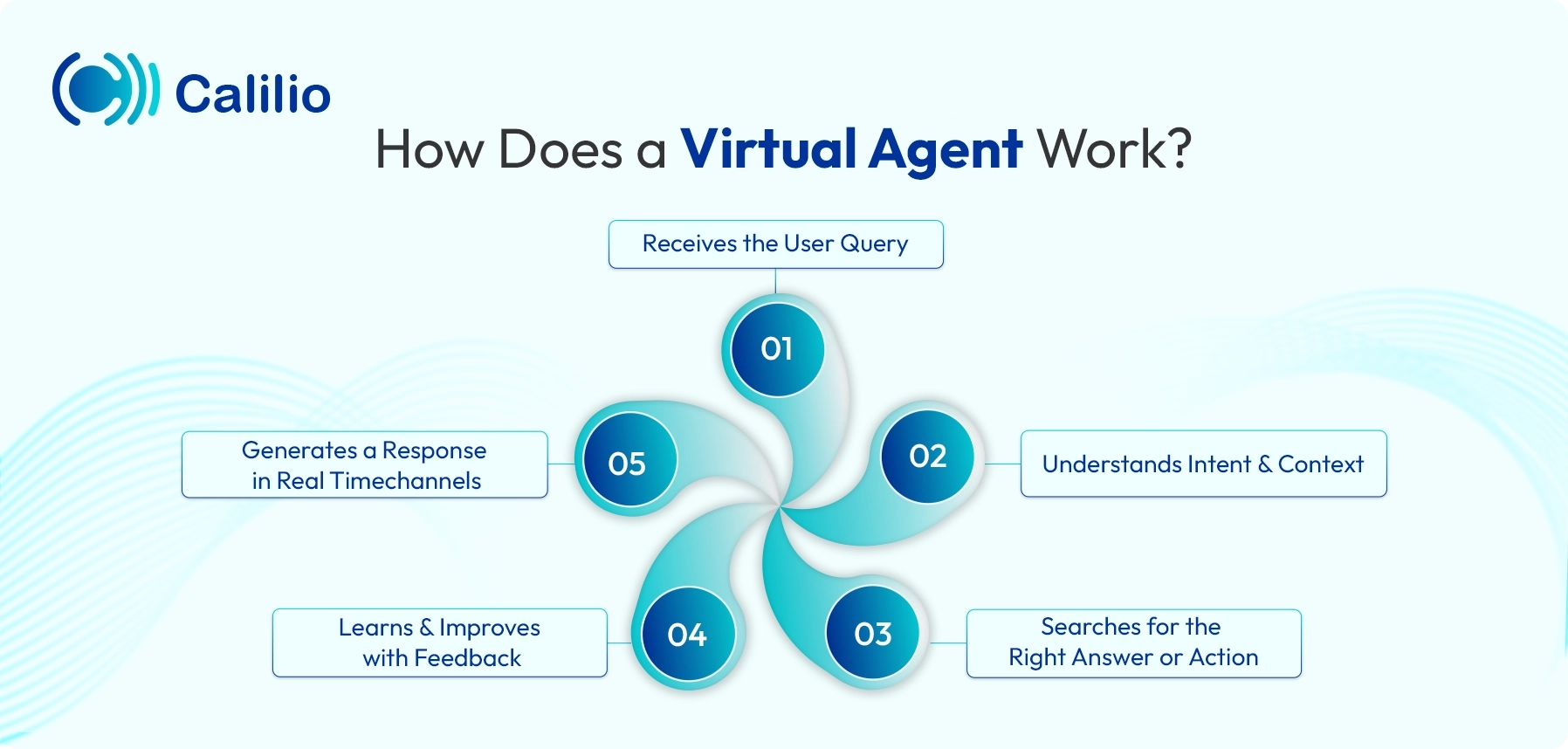
- Receives the User Query: The virtual agent collects the message or voice input from the customer through chat, calls, or digital channels.
- Understands Intent and Context: Using NLP, it identifies what the user wants and interprets the meaning behind the words. An Intelligent Virtual Agent (IVA) can even analyze customer sentiments and respond in a more natural way.
- Searches for the Right Answer or Action: It connects with knowledge bases, workflows, or integrated systems to find accurate information or trigger the correct process.
- Generates a Response in Real Time: The virtual agent creates a natural, human-like reply based on the user’s request.
- Learns and Improves with Feedback: Through machine learning, it refines its accuracy over time by analyzing past interactions and outcomes.
Benefits of a Virtual Agent
A virtual agent provides quick, consistent assistance, responding with clarity. It helps teams save time by managing routine questions.
- A virtual agent understands intent, context, and natural language, making it suitable for detailed support queries.
- Customers receive assistance at any time without waiting for human agents, which helps to solve customer issues faster.
- It handles routine questions instantly, which allows human agents to focus on critical issues.
- Every customer receives the same clear, accurate information, which reduces communication errors.
Limitations of a Virtual Agent
A virtual agent can be costly and time-consuming to set up because it depends on advanced AI systems. It also needs frequent updates and human oversight to stay accurate, especially when handling complex or emotional queries.
- A virtual agent requires more time and resources during setup.
- It can be more expensive due to its AI-driven capabilities.
- Unusual or highly emotional queries may still require human judgment.
- Continuous monitoring and updates are needed to maintain accuracy and improve performance.
What is a Chatbot?
A chatbot is a software program that automates conversations by following predefined rules or patterns. It focuses on quick, structured interactions rather than deep understanding.
Most chatbots work through keyword triggers, which guide the user to the right answer or action. Since they don’t rely on advanced AI, chatbots respond fast, require minimal setup, and offer predictable outcomes.
How Does a Chatbot Work?
A chatbot follows preset rules and matches user questions with prepared responses. When someone sends a message, it looks for keywords and picks the closest matching reply from its programmed list.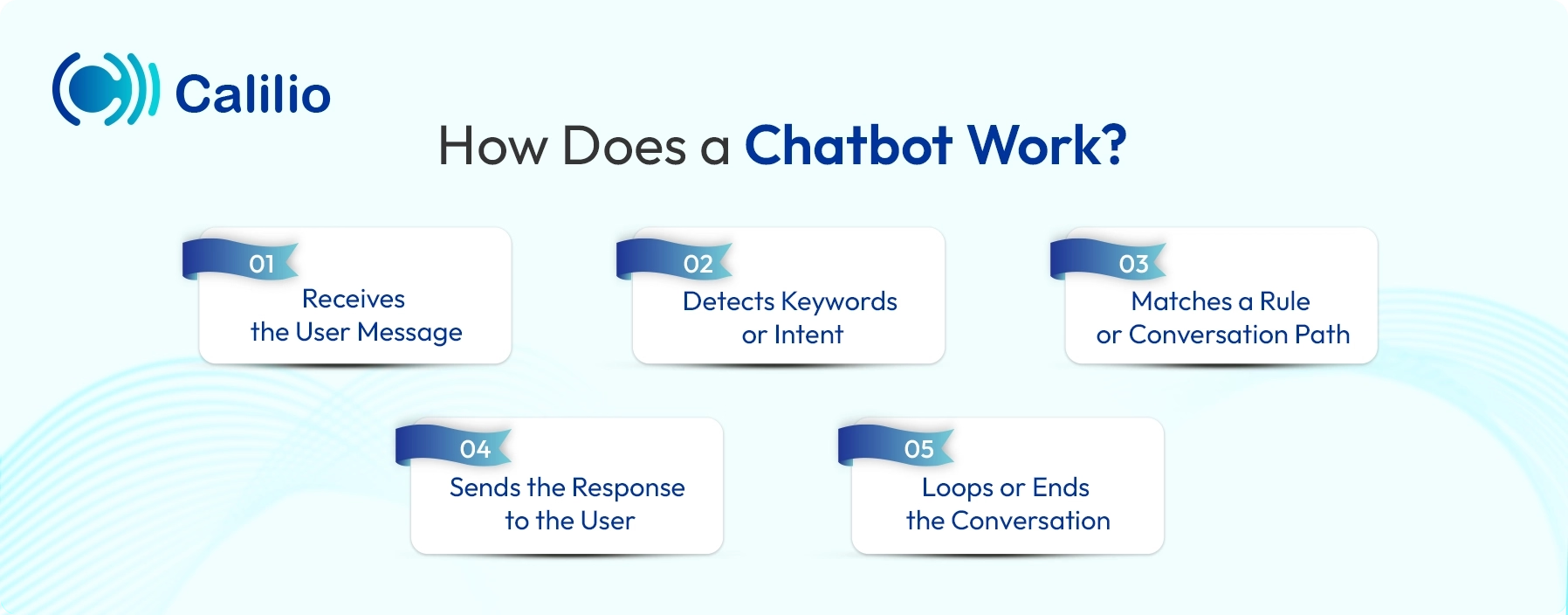
- Receives the User Message: The chatbot captures the text or button input from the user on a website, app, or messaging platform.
- Detects Keywords or Intent: It scans the message for specific keywords, phrases, or patterns that match its predefined rules or flows.
- Matches a Rule or Conversation Path: Based on the detected input, the chatbot selects a relevant response path, such as an FAQ answer, menu option, or next question.
- Sends the response to the user: It replies with a scripted auto reply message or canned responses, link, button, or action that guides the user toward a solution or next step.
- Loops or ends the conversation: The chatbot either continues the guided flow with follow-up questions or ends the chat once the user’s request is resolved.
Benefits of a Chatbot
Chatbots offer quick deployment and low maintenance while managing repetitive tasks with ease. Their automated responses help customers get information instantly, improving service speed.
- Chatbots launch quickly because they rely on predefined rules and workflows.
- They reduce operational costs by handling common questions without human involvement.
- Fast, automated responses help customers get answers instantly.
- Routine tasks like FAQs, order updates, or appointment reminders are managed with consistent accuracy.
- Easy to integrate into websites, apps, and messaging platforms.
Limitations of a Chatbot
Since chatbots rely on fixed scripts, they may give incorrect replies when questions don’t match their patterns. They also need regular updates and cannot handle complex issues without human support.
- Chatbots struggle when the question doesn’t match their predefined rules or keywords.
- They cannot understand complex intent or emotional tone, which limits the quality of conversations.
- Requires regular updates whenever workflows, products, or FAQs change.
- Handling long or unstructured messages often leads to incorrect or irrelevant replies.
What are the Key Differences Between a Virtual Agent & a Chatbot?
A chatbot handles simple, rule-based questions, while a virtual agent uses AI to understand intent and manage more complex conversations. The two solutions differ in technology, complexity handling, learning ability, cost, and ideal use cases.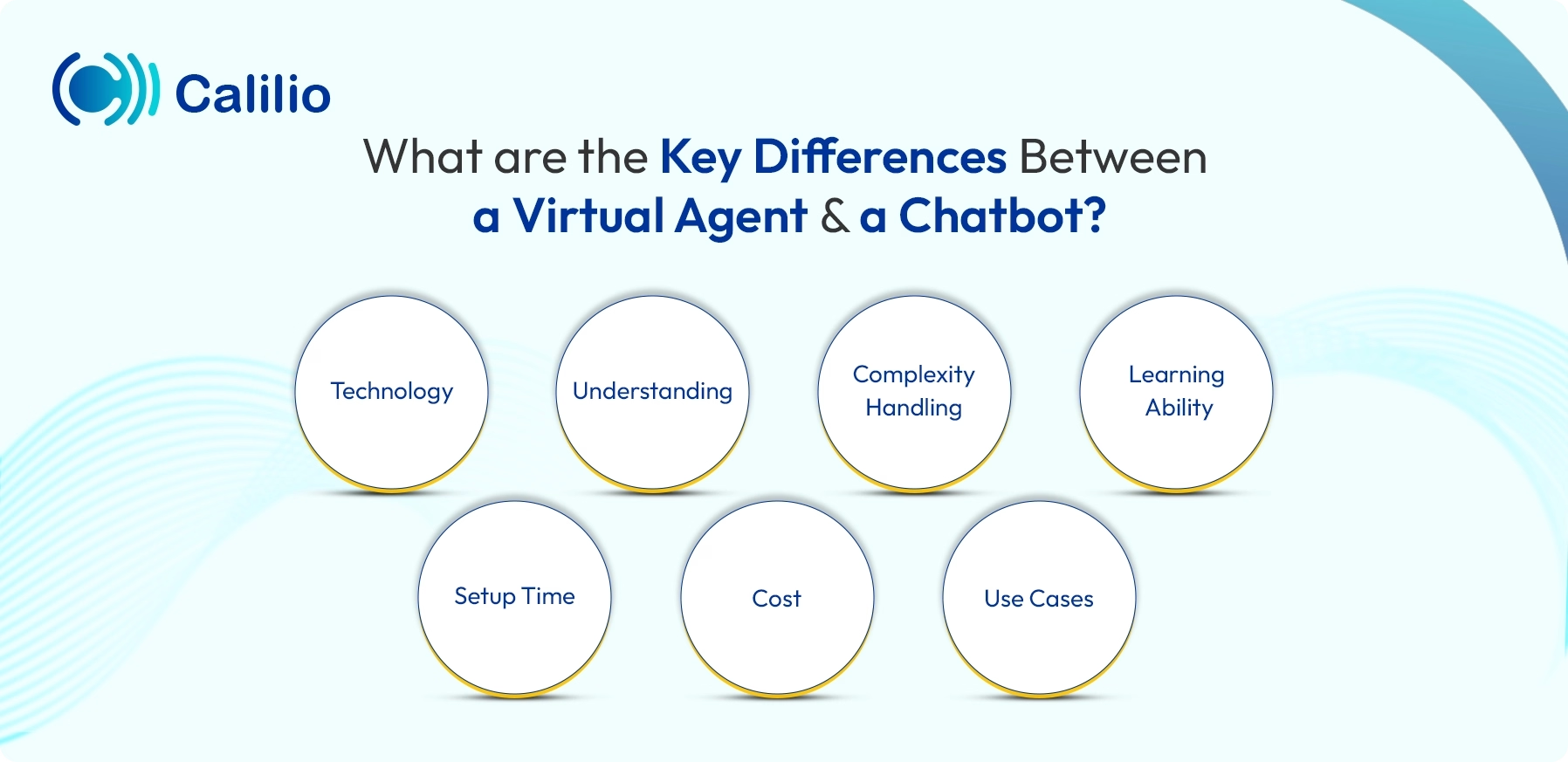
1. Technology
A chatbot works through fixed rules and keyword triggers, so it can only respond to inputs it already recognizes. On the other hand, a virtual agent uses AI technologies like NLP and machine learning, which help it understand language more naturally and perform human-like conversations.
2. Understanding
Chatbots look for specific keywords to decide how to respond, so they struggle when messages are long, unclear, or written in different ways. However, virtual agents understand caller intent and emotions, allowing them to interpret informal language, incomplete sentences, and more complex questions accurately.
3. Complexity Handling
Chatbots work best with simple tasks, like account updates or basic troubleshooting. Anything outside their workflow becomes a challenge. On the contrary, virtual agents can handle multi-step processes, layered questions, and detailed problem-solving, making them suitable for customer support and technical scenarios.
4. Learning Ability
A chatbot stays the same unless someone manually updates the rules or scripts. It cannot improve on its own. Conversely, a virtual agent learns from every interaction. It updates its responses, recognizes patterns, and gets better over time without heavy manual work.
5. Setup Time
Chatbots are quick to deploy because they use ready-made templates and rule-based flows. Whereas virtual agents need more time to set up. They require data training, conversational design, and proper configuration before they perform accurately.
6. Cost
Chatbots are cost-effective and ideal for businesses starting with basic automation. Virtual agents, on the other hand, require a higher investment because they involve AI models, training, and deeper functionality.
7. Use Cases
A chatbot fits simple, predictable tasks such as FAQs, order tracking, and appointment reminders. In contrast, a virtual agent suits advanced needs like billing questions, technical support, multi-step troubleshooting, or other scenarios requiring human-like understanding.
Quick comparison on chatbots vs. virtual agents:
Feature | Chatbot | Virtual Agent |
| Technology Used | Works on predefined rules, keyword matching, and decision trees. | Uses AI, NLP, NLU, and machine learning. |
| Understanding | Limited understanding; struggles with complex language or context. | Understands intent, context, and natural conversation flow. |
| Complexity Handling | Handles simple and repetitive queries only. | Manages complex questions, intent, and multi-step issues. |
| Learning Ability | Does not learn unless updated manually. | Continuously improves through data, patterns, and user feedback. |
| Setup Time | Quick to deploy with minimal configuration. | Requires more setup, data preparation, and training. |
| Cost | Low-cost automation solution. | Higher cost due to advanced AI capabilities. |
| Use Cases | FAQs, order tracking, basic troubleshooting, and simple workflows. | Customer support, billing queries, technical issues, and conversational tasks. |
Which is Better for Your Business: Virtual Agent or Chatbot?
Choosing between a virtual agent and a chatbot depends on how complex your customer conversations are and what level of support you want to offer. Choose a virtual agent for complex, high-volume support needs, and choose a chatbot for simple queries that require fast, easy automation.
Choose a virtual agent when:
- You want conversations that feel more natural.
- Your customers need help completing tasks, not just receiving answers.
- You rely on several internal systems and want the assistant to pull data from them.
- You need to handle high call volume and need a tool that can handle broad customer queries.
Choose a chatbot when:
- Your users mostly ask the same questions.
- You want something simple that’s quick to set up.
- You don’t need deep system connections.
- You have a small support team and want to reduce predictable tasks.
Conclusion
Both virtual agent vs chatbot solutions help businesses automate conversations, but each serves a different purpose. Chatbots keep simple tasks moving with quick, rule-based responses, while virtual agents manage deeper, more human-like interactions that need context and understanding. The right choice depends on how complex your customer queries are and how much flexibility your support workflow requires.



Summarize this blog with:
Frequently Asked Questions
Are virtual agents more advanced than chatbots?
Yes, virtual agents are more advanced than chatbots because they use AI, NLP, and machine learning to understand intent, context, and natural language. This allows them to handle complex, human-like conversations that traditional rule-based chatbots cannot manage.
Can a business use both a chatbot and a virtual agent together?
Which tool is more cost-effective: chatbot or virtual agent?

Still have questions?
Can’t find the answer you’re looking for? Please chat with our friendly team.
Stay in the loop
Get the latest call insights, trends, and updates delivered straight to your inbox.
By subscribing, you agree to receive updates from Calilio.
You can unsubscribe anytime.
Enter the World of AI Business Phone System with Calilio
Improve your business operation with Calilio's advanced virtual phone system. Join today for a better way to connect.