
9 Best SMS Marketing Platforms for Bulk Messaging (2026)

Every SMS marketing platform here sends a text to a list. What separates them is everything around that: how contacts get in, what fires afterward, whether replies reach a human, and how much of the compliance work is done for you. We compared the capabilities that decide what your team can actually run, and priced each one alongside.
THE SHORT ANSWER
“SMS marketing platform” describes four different product types. Choosing the wrong type costs more than choosing the wrong vendor within one, so start here:
General business texting — reminders, updates, promos
SimpleTexting gives you the fullest toolkit: keyword opt-in, drip campaigns, a shared two-way inbox, AI message drafting and an API, all at the entry tier. EZ Texting trades automation depth for a genuinely simple drag-and-drop builder.
Shopify or DTC ecommerce
Postscript reads Shopify events directly — cart abandonment, browse abandonment, order status, post-purchase — and attributes revenue back to each send. Klaviyo instead makes SMS a channel inside your existing email segments and customer profiles.
Enterprise retail with a named SMS owner
Attentive is the deepest personalization and AI-journey engine here, with the most developed subscriber-growth suite and a managed strategy and deliverability team behind it.
SMS alongside your business phone line
Calilio treats bulk SMS as part of the phone system: three contact sources, automatic duplicate removal, scheduled sends, and replies landing in the same inbox as calls on the same number.
How We Compared the SMS Marketing Platforms
We weighted six criteria to compare 25 SMS marketing platforms and kept the nine strongest options. Since every platform can send a text, we focused on the differences that affect what your team can actually do: campaign tools, automation, subscriber growth, two-way messaging, integrations, and total cost.
We reviewed current official product, pricing, and support pages rather than relying on reseller estimates.
Automation depth
Whether you get one-off broadcasts, scheduled drips, or flows that fire on customer behavior.
List building
Keyword opt-in, web forms, CSV import, CRM sync — how contacts actually enter the system.
Segmentation
Whether you can target by behavior, purchase history and engagement, or only by static list.
Two-way messaging
A shared inbox where replies become conversations, versus a broadcast tool that ignores them.
Integrations
Native connections to your store, CRM and helpdesk rather than a Zapier chain you maintain.
Compliance & deliverability
10DLC handling, opt-out enforcement, quiet hours, and the carrier relationships behind your sends.
WHY YOU SHOULD TRUST THIS COMPARISON
Everything here comes from the platforms’ own pricing pages and product documentation, checked in August 2026, plus current G2 and Capterra reviews so we could see where real users run into deliverability or billing problems rather than taking marketing claims at face value. No platform paid to be included, to be placed higher, or to have criticism removed, and there are no affiliate links in this article.
Calilio offers bulk messaging as part of its phone system, so we compete here. We have written our own limitations into our entry in the same detail as everyone else’s, and named other platforms as the better answer wherever they are. This is desk research, not nine live rollouts — use it to build a shortlist, then trial your final two.
Four Product Types Wearing the Same Label
This is the decision that matters most, and it is rarely made explicitly. Teams compare vendors across categories, then discover three months in that the tool they bought was never designed for the job. Identify your type first; the shortlist follows from it.
SMS marketing platforms help businesses collect subscribers, send campaigns, automate follow-ups, and manage replies from one dashboard. They suit promotions, reminders, service updates, and other campaigns sent to an opted-in contact list.
Strength
Keyword opt-in, drip sequences, autoresponders, a shared two-way inbox and dedicated compliance teams behind your sends.
Trade-off
Segmentation is list-based rather than behavioural, and they sit outside your phone system and CRM.
Ecommerce SMS platforms connect text campaigns with online store activity such as cart abandonment, product browsing, purchases, and order updates. They work best for Shopify and direct-to-consumer brands that want to track revenue from each message.
Strength
Flows that trigger on store events — cart, browse, order status — with revenue attributed back to each message.
Trade-off
The whole value depends on having a storefront feeding events in; useless without one.
Developer APIs let businesses build SMS directly into websites, apps, CRMs, and custom workflows. They offer more control over routing, automation, and global delivery, but require technical resources to create the campaign tools, reporting, and compliance workflow.
Strength
Total control over routing, logic and global delivery, scaling from ten messages to millions.
Trade-off
No campaign builder, inbox, scheduler, compliance workflow or reporting — you build every one.
Phone systems with bulk messaging combine business calling and mass texting in one communication platform. They suit teams that want to send campaigns from a familiar business number, manage replies, and keep calls and messages connected in the same workspace.
Strength
Campaigns send from the number customers already call, replies join calls in one inbox, contacts arrive from CSV, CRM or manual entry.
Trade-off
No behavioral triggers, revenue attribution or subscriber-growth funnel.
# | Product type | What It Does | Right for |
| 1 | SMS marketing platforms | Runs subscriber SMS campaigns | Most SMBs run reminders, promotions and service updates to a list they own. |
| 2 | Ecommerce SMS platforms | Automates store-triggered text campaigns | Shopify and DTC brands where SMS is a revenue channel with an owner. |
| 3 | Developer APIs | Powers custom programmatic messaging | Teams with engineering capacity and a product that sends programmatically. |
| 4 | Phone systems with bulk messaging | Combines calling and bulk texting | Teams whose texting supports a phone-led relationship rather than a storefront. |
The 9 Best SMS Marketing Platforms, Reviewed
Here are the nine best SMS marketing platforms based on our research. The order reflects overall buyer value, campaign workflow, automation, subscriber-growth tools, pricing transparency, integrations, and suitability for common business needs.
# | Platform | Core Capabilities | Starting Price | Type |
| 1 | SimpleTexting | Keyword opt-in, drip automation, shared two-way inbox, AI drafting, API | $39/mo (500 credits) | SMS marketing platform |
| 2 | EZ Texting | Drag-and-drop builder, group texting, autoresponders, contest tools | $20/mo annual (Launch) | SMS marketing platform |
| 3 | Calilio | CSV + CRM + manual upload, duplicate removal, scheduling, unified inbox | $12–28/user/mo | Phone system with bulk messaging |
| 4 | Postscript | Native Shopify event flows, cart/browse abandonment, revenue attribution | $0 + $49 min spend | Ecommerce SMS platform |
| 5 | Klaviyo | Shared email/SMS segments, unified profiles, cross-channel flows | From ~$30/mo | Multichannel marketing platform |
| 6 | Attentive | AI journeys, deep personalization, subscriber growth, managed strategy | Quote only | Enterprise SMS platform |
| 7 | Twilio | Programmable API, routing control, global reach, no campaign UI | ~$0.0083/SMS | Developer API |
| 8 | Textedly | Keyword campaigns, group texting, autoresponders, templates | $29/mo advertised | SMS marketing platform |
| 9 | TextMagic | Send-and-go texting, email-to-SMS, templates, no automation | Pay-as-you-go | Transactional SMS utility |
1. SimpleTexting
Best overall value - The most complete general-purpose toolkit here
You build a list through keyword opt-in, web signup forms, CSV import or CRM sync; you send broadcasts or multi-step drip sequences on a schedule; and every reply lands in a shared two-way inbox where any of your seats can pick up the conversation. An AI assistant drafts and rewrites message copy, and an API is included if you later want to trigger sends from your own systems.
Where it separates from the cheaper tools is the middle layer — autoresponders, recurring scheduled campaigns, contact custom fields, and reporting that ties clicks and replies back to a specific send. It also has the strongest delivery record in the category, around 99% in independent 50,000-message testing, which comes from direct carrier relationships and a compliance team that actively maintains 10DLC registrations on customers’ behalf.
WHAT WORKS
- Keyword opt-in, web forms, CSV and CRM sync for list building
- Create drip campaigns, autoresponders, recurring texts, and scheduled messages
- Manage customer replies through two-way business texting
- AI message drafting plus a full API with no upgrade required
- Connect workflows through its API, Zapier, Mailchimp, and other integrations
WHAT TO WATCH
- Segmentation is list and custom-field based, not behavioral
- No storefront event triggers or revenue attribution
- Credits expire monthly rather than rolling over
- Overage credits are priced well above the bundled rate
2. EZ Texting
The simplest path from signup to a first campaign
EZ Texting is built so a non-technical person can send their first campaign in an afternoon. The drag-and-drop composer, keyword signup codes, group texting and autoresponders are the whole product, and they are deliberately shallow — there is no flow builder to learn and no segmentation model to configure. It also includes contest and sweepstakes tooling, a genuine differentiator for restaurants, gyms and event-driven businesses growing a list from foot traffic.
That simplicity is the trade. Automation stops at autoresponders and scheduled sends, so you cannot build behavior-triggered sequences, and the integration library is narrower than SimpleTexting's or Klaviyo's. Delivery is strong at around 98.7% in independent testing, close behind SimpleTexting, so you are not sacrificing reach for the simpler interface.
WHAT WORKS
- Fastest route from signup to a first campaign — minimal learning curve
- Use templates and AI-assisted tools to create messages faster
- Group texting and autoresponders included at the entry tier
- Strong measured deliverability, close behind SimpleTexting
WHAT TO WATCH
- The Launch plan includes only one user
- One MMS can consume up to three message credits
- Narrower integration library
- Plans are recommended according to contact count, so costs rise as the list grows
3. Calilio
Best when bulk SMS belongs next to your phone line, not in a separate tool
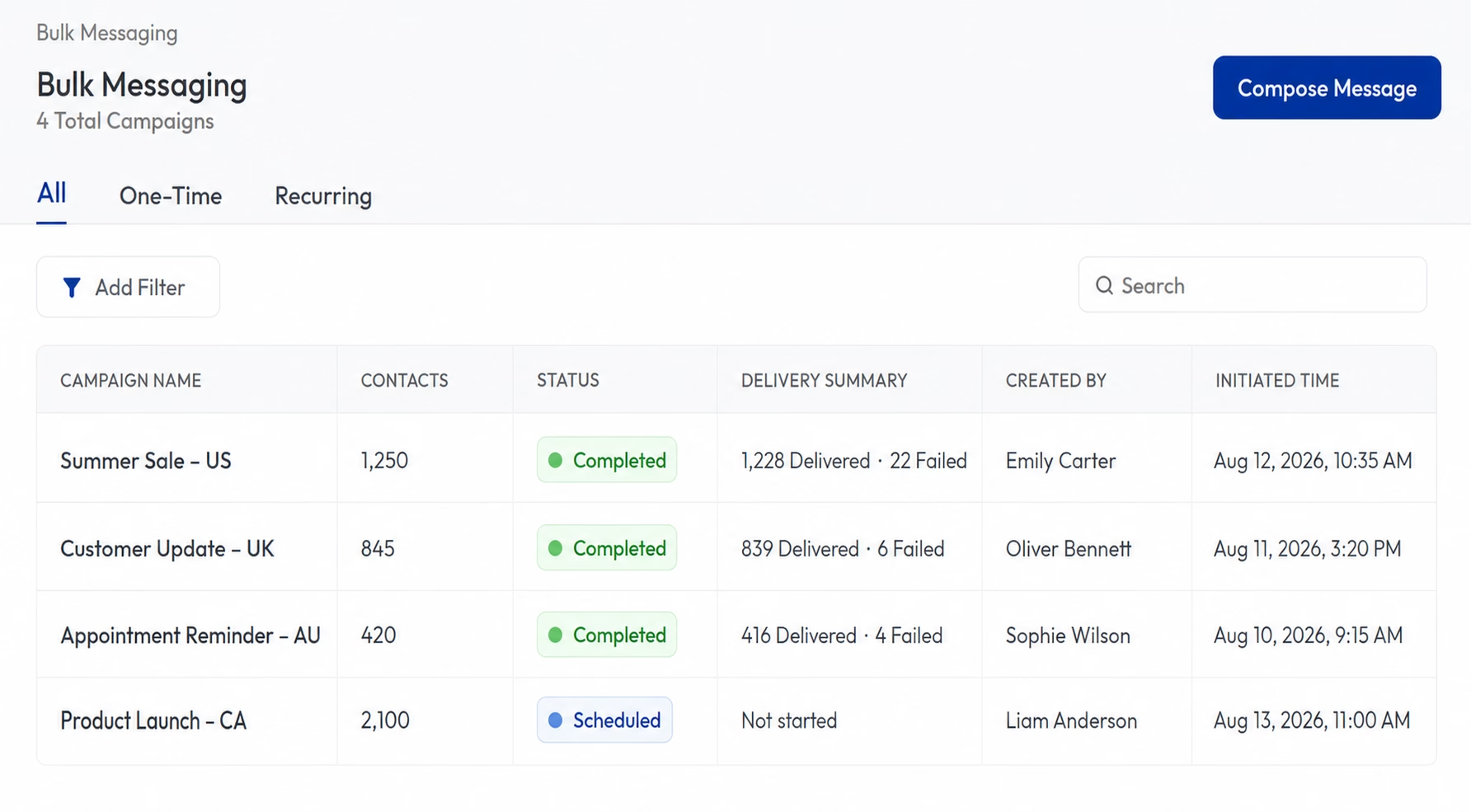
Calilio approaches bulk SMS as part of the phone system rather than as a separate marketing channel. A campaign takes contacts from three sources — CSV upload, CRM integration, or numbers entered manually — and can combine them, then checks the merged list and removes duplicate numbers before anything sends, including duplicates arriving from different sources. You can send immediately or schedule the campaign for a date and time, and it runs whether or not anyone is logged in.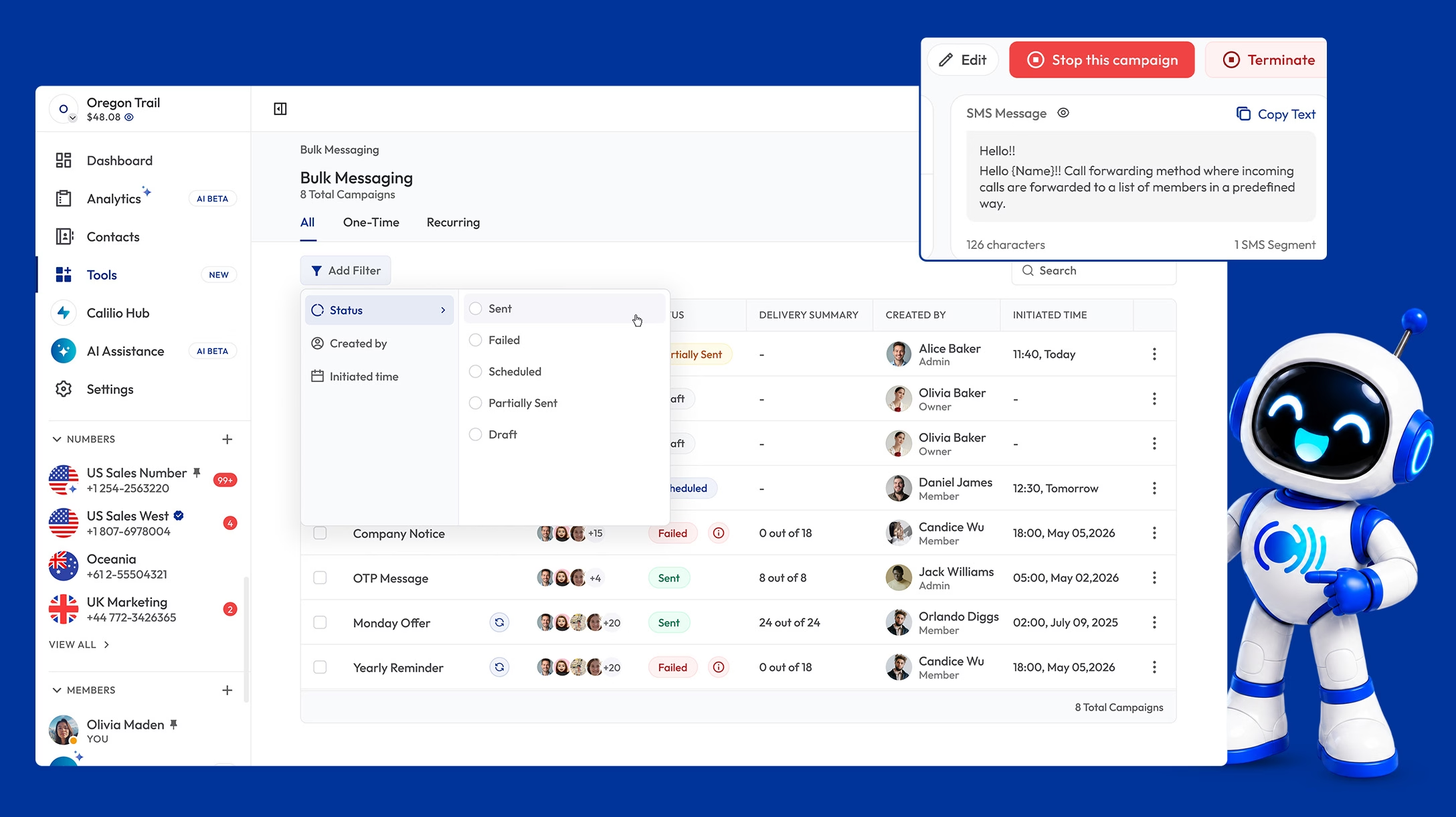
The capability that distinguishes it is what happens after the send. Campaigns go out from your business number, so recipients see a number they recognize and can call back, and every reply lands in the same shared inbox as your calls and voicemails — one thread per contact, visible to the whole team rather than sitting on one person’s phone. Saved replies speed up the follow-up. What it does not have is the marketing layer: no keyword opt-in, no behavioral triggers, no revenue attribution.
WHAT WORKS
- Three contact sources — CSV, CRM integration and manual entry — combinable in one campaign
- Duplicate numbers detected and removed across all sources before send
- Send or schedule bulk messages from a business phone number
- Sends from your business number, so replies join calls in one shared inbox
- Saved replies for handling the responses a campaign generates
WHAT TO WATCH
- No keyword opt-in or web signup forms for growing a list
- No behavior-triggered flows — broadcasts and schedules only
- Built for teams that call as well as text, not pure SMS marketers
4. Postscript
Flows that trigger on real Shopify behavior
Postscript reads Shopify directly, and that changes what a campaign can be. Instead of sending to a list, you build flows that fire on store behavior: an abandoned cart, an abandoned browse, a shipped order, a first purchase, a subscription renewal. Each message can carry product and order data, and revenue is attributed back to the send that produced it — so SMS becomes a measurable channel rather than a cost line.
List building is equally store-native, with popups, keyword opt-in and two-tap signup designed to convert storefront traffic into subscribers. Its tiers unlock specific capabilities rather than vague allowances: unlimited keywords arrive on Growth, and the Professional tier removes the “Powered by Postscript” footer and opens fuller API access — which is the constraint most growing stores hit first.
WHAT WORKS
- Flows triggered by real Shopify events — cart, browse, order, subscription
- Connect campaign activity with ecommerce revenue reporting
- Grow subscriber lists through popups, landing pages, and opt-in keywords
- Product and order data available inside message content
WHAT TO WATCH
- It is primarily designed for Shopify merchants
- API access and removal of Postscript branding require Professional or higher
- Unlimited keywords require the Growth plan
5. Klaviyo
Best for SMS that reuses the segments your email already built
Klaviyo’s advantage is that SMS is not a separate system inside it. Every text draws on the same customer profile as your email — purchase history, browse behavior, engagement scores, predicted lifetime value — so a segment you built for email works unchanged for SMS. Flows can branch across channels too: email first, SMS if unopened after a day, with the whole sequence and its revenue reported in one place.
That makes it the deepest segmentation engine in this comparison for anyone with an ecommerce dataset behind it. The cost is complexity: a considerably steeper learning curve than SMS-only platforms, and pricing that scales on both contact count and message volume rather than a flat bundle. Without an existing email program feeding its profiles, most of that capability sits idle.
WHAT WORKS
- SMS shares one customer profile with email — purchase, browse and engagement data
- Cross-channel flows that branch between email and SMS in one sequence
- Trigger multi-step SMS flows from real-time customer actions
- Combine automated replies with live two-way SMS conversations
WHAT TO WATCH
- Steepest learning curve of the SMB-accessible platforms
- SMS credit consumption can vary by destination and carrier
- More capability than a non-ecommerce team will use
6. Attentive
Best for AI journeys and subscriber growth at enterprise scale
Attentive is built for the case where SMS has a named owner and a revenue target. Its AI journey tooling generates and optimizes message content and timing per subscriber, personalization goes well beyond merge tags into behavior and affinity, and its subscriber-growth suite — two-tap signup units, targeted popups, offline and in-store capture — is the most developed in the category. It is also expanding into email, so the same journey engine can run both channels.
A significant part of what you buy is people rather than software: strategy, onboarding and a deliverability team monitoring your sending reputation. At enterprise volume, that support is genuinely valuable and below it entirely wasted. Pricing is quote-only and firmly enterprise, with reported entry for a 50,000-subscriber list commonly landing in the low thousands per month — and the onboarding commitment alone rules it out for smaller teams.
WHAT WORKS
- Build personalized SMS journeys triggered by customer activity
- The most developed subscriber-growth suite — two-tap, popups, in-store capture
- Optimize audiences and sending times using AI
WHAT TO WATCH
- Substantial onboarding and setup commitment before value appears
- Quote-only enterprise pricing with no published tiers
- It may be excessive for smaller brands that only send occasional announcements
7. Twilio
Messaging infrastructure for teams that write code
Twilio is infrastructure, not a marketing product. You get programmable send and receive, delivery-status webhooks, per-message routing control, alphanumeric sender IDs and short codes where available, and global reach across most countries — all driven from your own code. Anything a marketer would touch, you build: the campaign composer, the contact list, the scheduler, the opt-out handling, the inbox and the reporting.
That is the right trade for a product that sends programmatically — order confirmations, verification codes, appointment logic tied to your own database — where messaging is a feature of your application rather than a campaign. It is the wrong trade for a marketing team, because you fund engineering to rebuild what a purpose-built platform ships. Delivery also runs a point or two behind the dedicated platforms, since Twilio leans more on shared routes where another sender’s traffic can affect yours.
WHAT WORKS
- Full programmatic control over routing, logic and message content
- Delivery-status webhooks and detailed logs for your own reporting
- Global reach with short codes and alphanumeric sender IDs where supported
- Scales from a handful of messages to millions without replatforming
WHAT TO WATCH
- No campaign builder, contact list, scheduler, inbox or reporting
- Businesses remain responsible for collecting and proving customer consent
- Requires ongoing engineering ownership, not just setup
- Number rental, carrier charges, registration, and optional tools affect total cost
8. Textedly
Best for keyword-driven list growth for local businesses
Textedly is organized around keyword opt-in. You publish a keyword, people text it to subscribe, an autoresponder greets them, and they join a list you can broadcast to on a schedule. Group texting, message templates and basic click tracking round it out, and the interface is deliberately plain — a small operator can run their first campaign without training.
Check depth carefully before shortlisting it. Automation stops at autoresponders and scheduled sends, segmentation is list-based, and the integration library is thinner than the category leaders. Its advertised entry price also rises once the mandatory telecom surcharge is applied, which brings it close to platforms with considerably more capability.
WHAT WORKS
- Purpose-built keyword opt-in flow for growing a list from offline traffic
- Send mass texts, scheduled campaigns, recurring messages, and auto-replies
- Message templates and basic click tracking included
- Very short learning curve for non-technical users
WHAT TO WATCH
- Lacks advanced conditional automation
- Thinner integration library than the category leaders
- Mandatory telecom surcharge raises the advertised price roughly 28%
9. TextMagic
A plain utility for occasional, operational sends
TextMagic is a transactional utility: compose, pick a list, send. It covers the practical basics well — contact lists and templates, two-way replies, email-to-SMS so staff can text from an inbox, and a desktop app for internal alerts. There is no automation engine, no keyword opt-in, no segmentation model and no flow builder, because it is not trying to be a marketing platform.
For genuinely occasional sending — internal alerts, a quarterly notice, one-off operational messages — that narrowness is a feature, and pay-as-you-go means no recurring bill for a channel you barely use. For a recurring campaign program, it is the wrong tool, and its delivery reflects the difference: independent testing put it around 96.4% against SimpleTexting’s 99.1%, roughly 270 more failures per 10,000 messages.
WHAT WORKS
- Email-to-SMS so staff can send from an existing inbox
- Two-way replies, contact lists and templates with no setup overhead
- Desktop app suited to internal alerts and notifications
- Pay-as-you-go, so nothing is wasted in quiet months
WHAT TO WATCH
- No automation, keyword opt-in or behavioral segmentation
- Weakest measured delivery in this comparison at around 96.4%
- Reporting is minimal compared with the marketing platforms
- Not built for a recurring campaign program
The Verdict
One question decides this: should your texts react to what customers do, or announce something to everyone at once? If they should react, you need data behind them — Postscript for Shopify stores, Klaviyo if your email segments already work, Attentive at enterprise scale.
If they mostly announce, SimpleTexting is the fullest toolkit and the safest default. Twilio only makes sense if you are sending from your own code. And if the people you text are the same people who call you, running both from one system — as Calilio does — saves a second bill and keeps replies next to your calls, though you give up behavioral triggers and revenue attribution to get it.
SMS INCLUDED ON EVERY PLAN
Send Bulk Sms from the Number Your Customers Already Call
Upload contacts by CSV, CRM or manual entry, schedule the campaign, and let duplicate prevention run before it sends. Replies land beside your calls in one shared inbox, with a 14-day money-back guarantee.
Summarize this blog with:
Frequently asked questions
What is the best SMS marketing platform for bulk messaging in 2026?
It depends on what your messages need to do. SimpleTexting has the fullest general-purpose toolkit — keyword opt-in, drip sequences, a shared two-way inbox, AI drafting and an API at the entry tier. Postscript is the default for Shopify stores because it triggers flows from real store events.
Klaviyo is best when SMS should reuse the segments your email program already built. Attentive suits enterprise retail with a dedicated SMS owner. Twilio fits teams sending programmatically from their own product. Calilio is the pick when bulk SMS should run from the same number and inbox as your calls.
What features actually matter in an SMS platform?
What is the difference between an autoresponder and an automation flow?
Do I need two-way messaging, or is broadcasting enough?
How much does bulk SMS cost?
What is A2P 10DLC and do I need it?
Do I need a separate SMS platform if my phone system already sends SMS?
How do I improve SMS deliverability?

Still have questions?
Can’t find the answer you’re looking for? Please chat with our friendly team.
Stay in the loop
Get the latest call insights, trends, and updates delivered straight to your inbox.
By subscribing, you agree to receive updates from Calilio.
You can unsubscribe anytime.
Enter the World of AI Business Phone System with Calilio
Improve your business operation with Calilio's advanced virtual phone system. Join today for a better way to connect.