
P2P vs. A2P Messaging: Choose the Right SMS Channel for Your Business
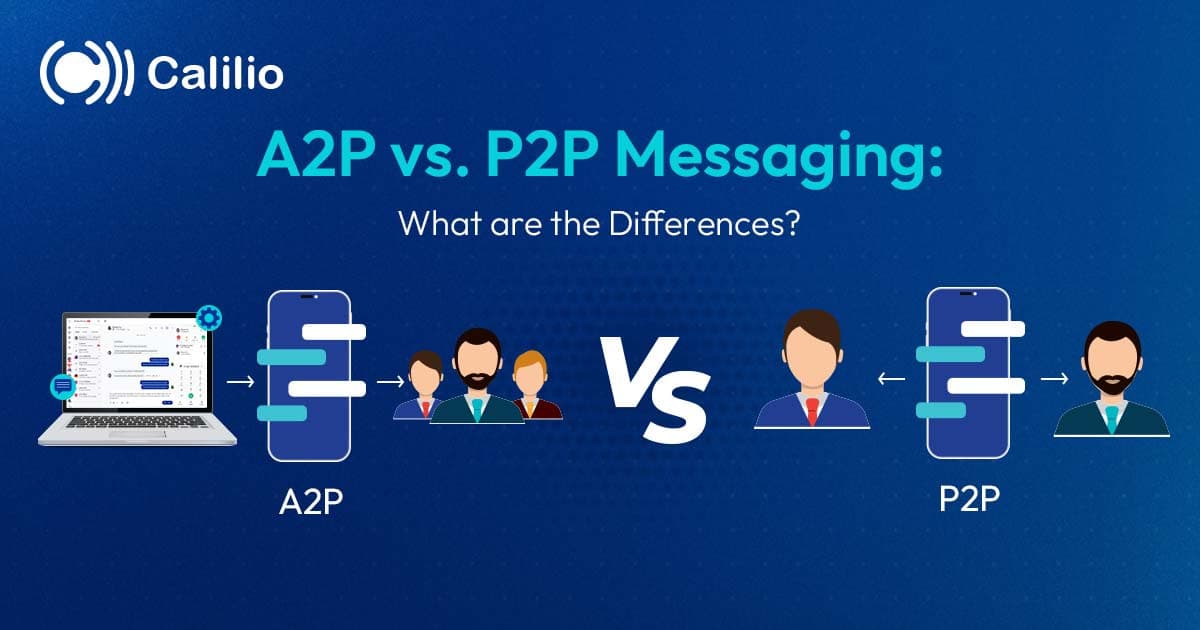

Texting isn’t just for personal chats anymore—it’s become one of the fastest and most direct ways for businesses to reach people. When it comes to choosing how your business sends those texts, you’ve got two main options: P2P and A2P messaging.
Both channels deliver messages to your customers, but they work in different ways. P2P messaging is suited for real-time, person-to-person conversations, while A2P is built for large-scale, automated communication.
Understanding the differences in detail will help you pick the best fit for your business, so your messages reach the right people, at the right time.
What is P2P Messaging?
P2P messaging is a peer-to-peer texting method where two people message each other directly in a two-way conversation. It is usually carried out through SMS/MMS or a chat-style inbox. The message is sent directly from a person’s device to another person’s device in real-time.This helps keep communication personal and conversational with back-and-forth replies, rather than system-triggered messages.
Businesses often use P2P messaging for direct communication with prospects, such as for sales follow-ups and customer support replies. It’s also often used for internal communication.
How Does P2P Messaging Work?
P2P messaging works by enabling direct communication between two users. A person types a message on their phone and sends it through their mobile carrier’s network to the recipient’s device. The receiver can reply directly in the same thread.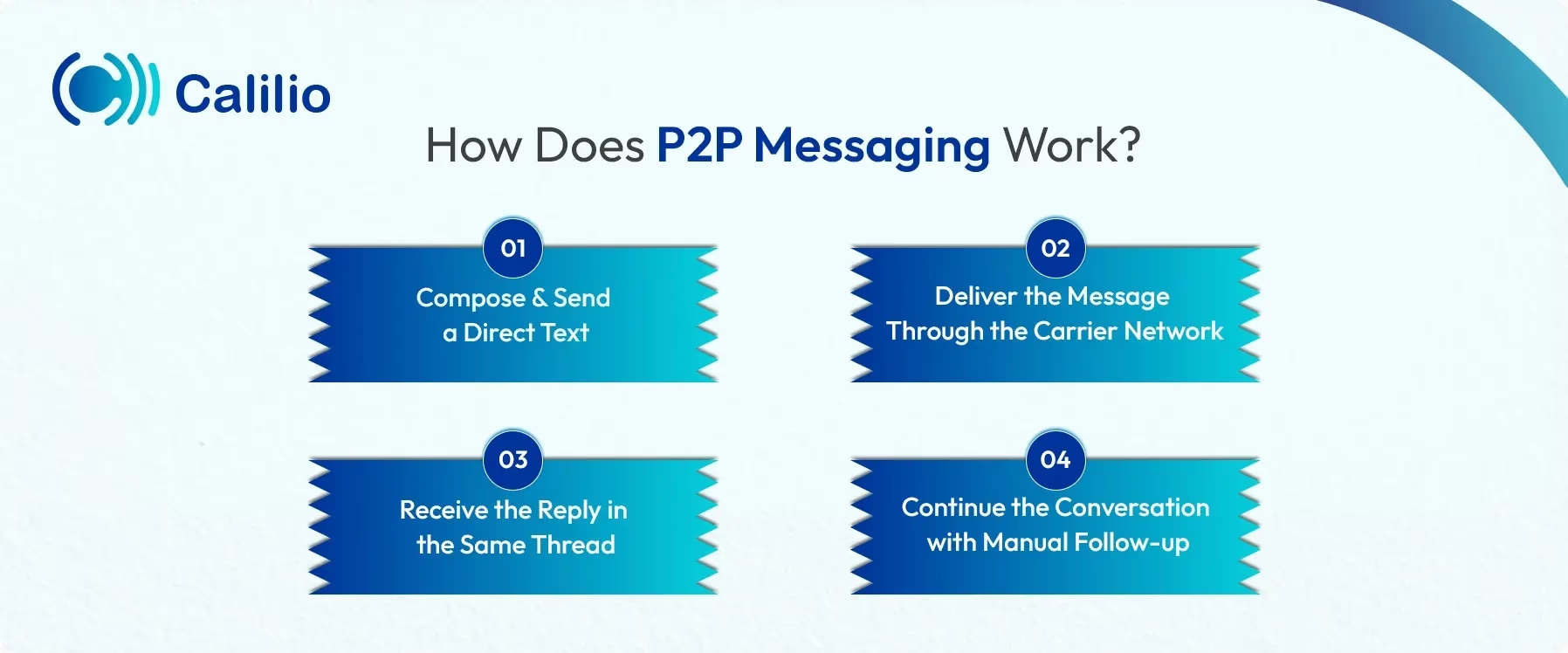
- Compose and Send a Direct Text: You’ll type a message in your SMS or messaging app and send it to one recipient.
- Deliver the Message Through the Carrier Network: The network routes the SMS or MMS to your recipient’s phone number.
- Receive the Reply in the Same Thread: The recipient replies, and the response returns to the same inbox.
- Continue the Conversation with Manual Follow-Up: You can again reply in the same thread, continuing the chat.
Common P2P Examples
- Sales Follow-Ups and Replies: A sales agent texts or replies to the customers using the SMS apps.
- Appointment or Schedule Confirmations: A business confirms timing, reschedules, or shares simple reminders through back-and-forth texts.
- Order or Service Coordination: A staff member confirms a detail like delivery time, location, or requirements with short replies.
- Instant Messaging for Business: Team members message each other for quick updates, task handoffs, and time-sensitive changes.
What is A2P Messaging?
A2P messaging is a business texting method where an application sends automated messages, usually triggered by events like logins, orders, reminders, or campaigns. It focuses on consistent, structured communication rather than a human chat. Businesses use A2P to send messages at scale, such as alerts, updates, and promotional texts.
How Does A2P Messaging Work?
In A2P messaging, a business uses a software platform or messaging service to send messages automatically to customers through carrier networks.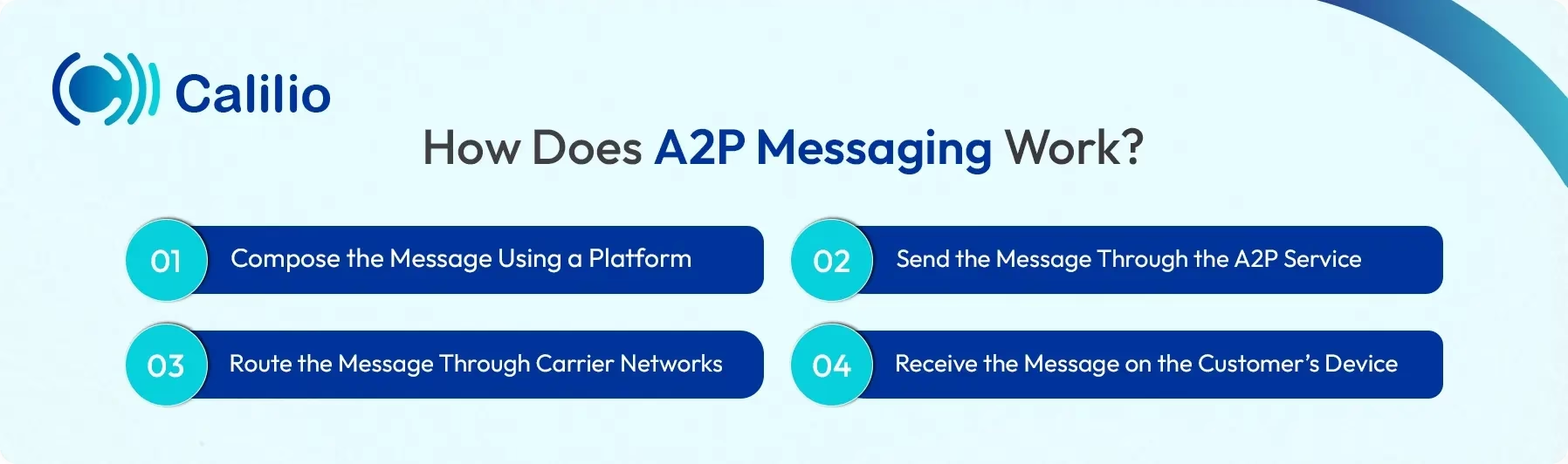
- Compose the Message Using a Platform: The business creates a message inside an A2P system, such as an SMS platform, CRM, or messaging dashboard.
- Send the Message Through the A2P Service: The platform sends the message automatically using approved sender IDs and routing rules.
- Route the Message Through Carrier Networks: Mobile carriers verify the sender and deliver the message to the customer’s phone.
- Receive the Message on the Customer’s Device: The customer gets the SMS or MMS in their regular messaging app.
Common A2P Examples
- OTP and Verification Codes: Businesses delivering login codes, password resets, and account verification texts.
- Update: A business sending order confirmations, shipping alerts, delivery notifications, and payment receipts that customers expect after an action.
- Service and Support Alerts: Businesses notify users about information such as system outages, ticket status updates, or other critical service notices.
- Promotional Campaigns: Companies sending bulk messages for SMS marketing or making promotional announcements.
Manage P2P and A2P Messaging for Your Business from a Single Platform
P2P vs. A2P: Key Differences
While P2P focuses on personal, one-to-one conversations, A2P is built for business messaging at scale. As a result, they differ in terms of purpose, sender type, deliverability rules, consent requirements, and scaling costs.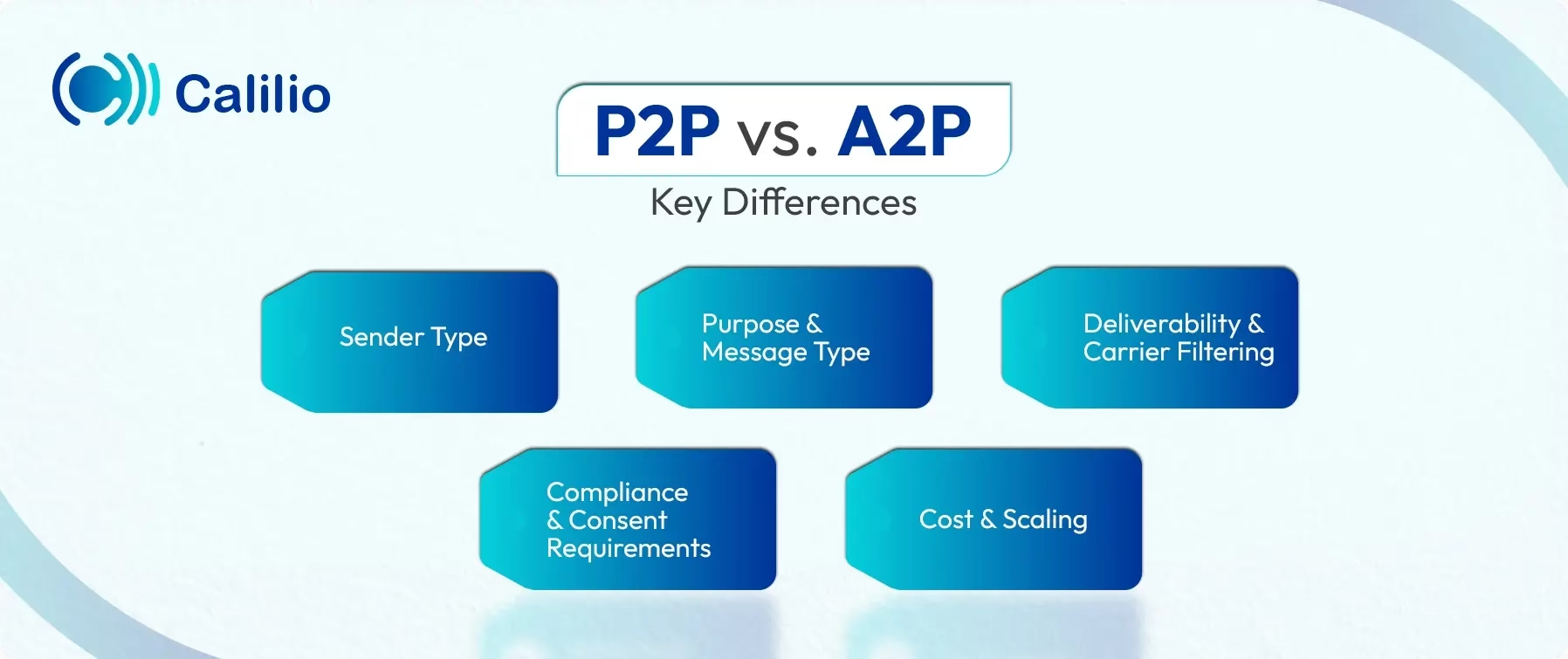
1. Sender Type
The main difference between P2P and A2P messaging lies in who sends the messages and how they are generated. P2P messages are sent by individuals using personal mobile devices and standard messaging apps.
In contrast, A2P messages are sent by businesses through software platforms, APIs, or automated systems.
2. Purpose and Message Type
P2P messaging fits two-way conversations where a person types messages. For a business, it is suitable for conversational texts like follow-ups, clarifications, and support chats.
In contrast, A2P messaging fits structured texts sent by a system, such as OTPs, alerts, reminders, and campaign messages. It works best when a business needs consistent formatting and sends repeatable messages.
3. Deliverability and Carrier Filtering
P2P messages usually face minimal filtering because they come from personal phone numbers and are part of normal one-to-one conversations. As long as users follow basic carrier rules, these messages are delivered with little delay.
A2P messages, however, go through stricter carrier checks. Carriers review the sender, message content, and sending patterns to prevent spam and fraud.
4. Compliance and Consent Requirements
P2P messaging follows basic carrier and legal guidelines, as it is mainly used for personal communication between individuals. In most cases, formal consent records and opt-in systems are not required for everyday conversations.
A2P messaging has stricter compliance rules because it involves business communication. Companies must collect clear customer consent, provide opt-out options, and follow regulations such as TCPA (Telephone Consumer Protection Act), CTIA (Cellular Telecommunications Industry Association) guidelines, and carrier policies.
5. Cost and Scaling
P2P messaging is usually inexpensive for small-scale, one-to-one communication. When only a few messages are sent, it remains simple and affordable. However, as message volume increases, P2P becomes harder to manage and more expensive due to higher manual effort and increased support needs.
A2P messaging is built for large-scale communication. While it may involve initial costs for setup, registration, and compliance, it becomes more cost-effective for high-volume messaging and broad customer outreach. For businesses with growing messaging needs, A2P offers better long-term value.
Here’s a quick comparison between A2P and P2P:
Factor | P2P | A2P |
| Best for | 1 to 1 conversations | Automated and bulk business texting |
| Message style | Personal, reply-based | Structured, template-based |
| Sender | Human-led inbox | App/system (CRM, website, workflows) |
| Common uses | Support chats, sales follow-ups | OTP, alerts, reminders, campaigns |
| Carrier filtering risk | Low-risk; messages are generally delivered when basic carrier rules are followed | Need to follow stricter rules that are in place to prevent spam or fraud |
| Consent needs | Usually not required as it's used for personal conversation | Required to follow the various telephony regulations for sending automated messages |
| Scaling fit | Works for a smaller conversation volume | Suitable for high-volume SMS needs |
A2P vs. P2P SMS: Which One to Choose for Your Business?
Choosing between P2P and A2P messaging depends on your specific needs. Choose the P2P approach if you're looking for a personal conversation with an individual. Pick A2P messaging if you require to send a single message to big numbers of people.
Choose P2P messaging if:
- You’re sending messages from one person to another, like in customer support chats or internal team communication.
- You want the conversation to feel personal and informal.
- Your daily message volume is low to moderate
- You need a back-and-forth conversation, not just one-way messaging
Choose A2P messaging if:
- You’re sending messages in bulk, like promotional offers, alerts, or reminders, to many recipients at once.
- You need reliable delivery for time-sensitive texts such as OTPs, appointment confirmations, or order updates.
- Your daily message volume is high.
- You want to track performance metrics like delivery status, click-through rates, or engagement rates.
Conclusion
Both P2P and A2P messaging serve the same function—delivering messages. But they’re built for different use cases. P2P is best for two-way conversations, while A2P is designed for system-triggered messages like OTPs, alerts, appointment reminders, or promotions. Both are useful for business communication, just in different ways.
No matter which one you use for your business, it's important to use the right platform to ensure your message reaches your audience on time, without any issues. Calilio's business phone system can enhance both A2P and P2P messaging approaches for your business. It allows you to send regular messages to your customers manually or through its automated system.
For A2P messaging, Calilio’s features like message scheduling help you to send the message on your set date and time without manual effort. Plus, you can also send bulk SMS to a broad audience at once, without having to send them one by one.
What happens if a business sends A2P traffic through P2P routes?
Carriers actively monitor traffic patterns, and if they detect high-volume or automated messaging on P2P numbers, they may block or delay the messages. In some cases, the number can be flagged or even blacklisted.
Summarize this blog with:
Frequently asked questions
Can a business use P2P messaging for marketing?
Yes, a business can use P2P messaging for marketing. It's highly useful when sending personalized messages like sending thank-you notes, follow-ups, reminders, or exclusive offers in a one-on-one format.
Is OTP considered P2P or A2P?

Still have questions?
Can’t find the answer you’re looking for? Please chat with our friendly team.
Stay in the loop
Get the latest call insights, trends, and updates delivered straight to your inbox.
By subscribing, you agree to receive updates from Calilio.
You can unsubscribe anytime.
Enter the World of AI Business Phone System with Calilio
Improve your business operation with Calilio's advanced virtual phone system. Join today for a better way to connect.