
What is Call Blasting? How Does It Benefit Your Business?


Businesses often need to share information with clients frequently. It could be reminders, updates, alerts, or announcements that must reach the right people at the right time. Doing this by manually dialing each number is slow, inconsistent, and easy to mess up. Agents need to repeat the same message again and again, and sensitive information may be delivered too late.
Call blasting solves this by automating outbound calls and delivering one recorded message to many contacts at once. It helps businesses reach more people faster and keep communication consistent without putting extra pressure on teams.
In this blog, we’ll break down what call blasting is, how it works, its different types, common use cases, key benefits, typical challenges, and their easy fixes.
Key Highlights:
Call blasting sends the same pre-recorded voice message to thousands of numbers at once.
The common types of call blasting include simple voice blasts, personalized message blasts, IVR-based blasts, and smart voice blasting.
It is used across different industries like healthcare, education, logistics, finance, real estate, and hospitality for sending reminders, confirmations, or service updates.
Call blasting challenges like low answer rates, spam reports, and callback spikes can be fixed with better timing, scripts, and routing.
What is Call Blasting?
Call blasting is an automated calling technology that sends the same pre-recorded voice message to a large number of phone numbers at the same time. Instead of dialing numbers one by one, the system reaches your contact list in minutes.
Businesses often use call blasting (also called a voice blast) to share updates like appointment reminders, service announcements, event invites, and urgent alerts. You can also pair it with outbound IVR to provide simple options like “Press 1” to route interested callers to the right team and turn your outreach into real conversations.
How does Call Blasting Work?
Call blasting works by dialing phone numbers from a predefined contact list (such as customers, leads, members, or subscribers) to send a single message simultaneously. The phone system dials the numbers, plays the message, captures IVR keypress actions (if enabled), and logs outcomes for follow-up.
- Step 1: Prepare your audience list
First, collect the phone numbers you want to reach and organize them into a clean list. - Step 2: Create the message
Record a short audio message or generate one using text-to-speech. - Step 3: Set the timing and campaign settings
Upload the list and message to the system, and then choose when the call blast should run. - Step 4: Launch automated dialing
Once you start the campaign, the system dials your list automatically. - Step 5: Deliver the message
The platform plays the message when someone answers the call. If no one answers, it logs the attempt and can drop a voicemail or retry later based on your rules. - Step 6: Add IVR actions (optional)
You can add simple keypad options like “Press 1 to speak to an agent” or “Press 2 to confirm.” These actions can help turn a one-way message into a two-way conversation. - Step 7: Review reports and follow up
The platform shows results like answered calls, voicemails, failures, and keypress actions. You can use that data to call back engaged contacts or improve the next call blasting run.
What are the Different Types of Call Blasting?
The common call blasting types include simple voice blasts, personalized message blasts, IVR (Interactive Voice Response) blasts, and smart voice blasting. Each type serves a different purpose, ranging from sending the same announcement to many contacts to handling responses and routing calls based on recipient input.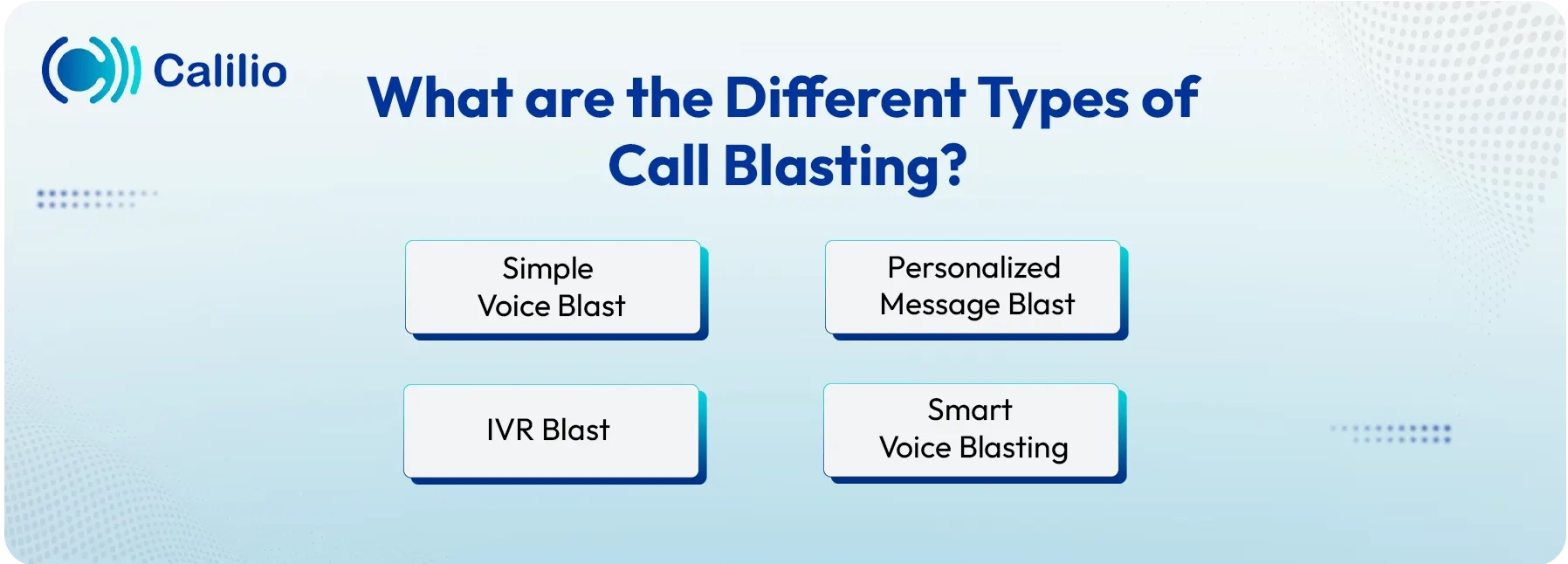
I. Simple Voice Blast
A simple voice blast runs a basic call blast that dials a list and plays one standard pre-recorded message. It can also drop the message to voicemail when nobody answers. This type works well for fast mass updates because it reaches more people in less time.
II. Personalized Message Blast
A personalized message blast plays a recorded message that includes details like a name, appointment time, or order reference into the script. It keeps the core message consistent while making each call feel more specific. This type improves engagement because people pay more attention when the message sounds relevant to them.
III. IVR Blast
An IVR blast plays a recorded message and prompts the recipient to press a key to respond. It routes calls or collects inputs through options like “Press 1 for sales” or “Press 2 for support.” This type reduces manual follow-ups because it guides people to the right next step during the same call.
IV. Smart Voice Blasting
Smart voice blasting combines automated voice message delivery with smarter dialing rules and agent connection. It detects live answers and connects engaged callers to available agents instantly.
Call Blasting Use Cases: Industry-by-Industry Examples
Industries like sales and marketing, customer support, healthcare, education, logistics, finance, and real estate mostly use call blasting for promotions, updates, reminders, confirmations, and schedule changes.
- Sales & Marketing: Sales and marketing teams can run call blasting to announce offers, invite leads to webinars, and follow up on campaigns faster than manual dialing.
Example: A retailer runs a call blast to announce a “48-hour sale” and asks leads to “Press 1” to register for a product demo webinar. - Customer Support & Service Updates: Support teams send call blasts during outages, maintenance windows, or policy changes to reduce “Where is my service?” calls. They route urgent callbacks using IVR options like “Press 1 for support.”
Example: An ISP sends a call blast about planned maintenance and routes urgent users with “Press 1 for support.” - Healthcare & Clinics: Clinics use call blasting for appointment reminders, scheduling changes, and clinic-hour updates to reduce no-shows. The messages are mostly kept short and clear so patients understand the next step.
Example: A dental clinic sends an appointment reminder and asks patients to “Press 1 to confirm” or “Press 2 to reschedule.” - Education (Schools & Training Centers): Schools use call blasts to share closures, exam schedules, event reminders, and parent notifications. They are useful for reaching families quickly when emails go unread.
Example: A school sends a call blast about a closure and shares the updated exam schedule for the week. - Logistics & Delivery: Delivery teams use call blasting to confirm deliveries, share delays, and coordinate last-minute drop-offs. They can use keypress options to confirm availability or request a callback.
Example: A courier service sends a message with a delivery time window and asks customers to “Press 1” to confirm availability. - Finance & Billing Teams: Billing teams can use it for payment reminders, due-date alerts, and account notices.
Example: A utility company sending a due-date reminder to its customers. - Real Estate: Agents use call blasting to promote open houses, announce new listings, and follow up with prospects. They mostly combine it with agent callbacks to engage hot leads quickly.
Example: An agent runs a call blast to invite prospects to an open house and asks them to “Press 1” to book a viewing slot.
How Can Call Blasting Benefit Your Business Outreach?
Call blasting boosts business outreach by reaching many contacts fast and keeping every message consistent. It reduces manual dialing, drives quick IVR actions, tracks results for smarter follow-ups, and supports urgent communications and updates.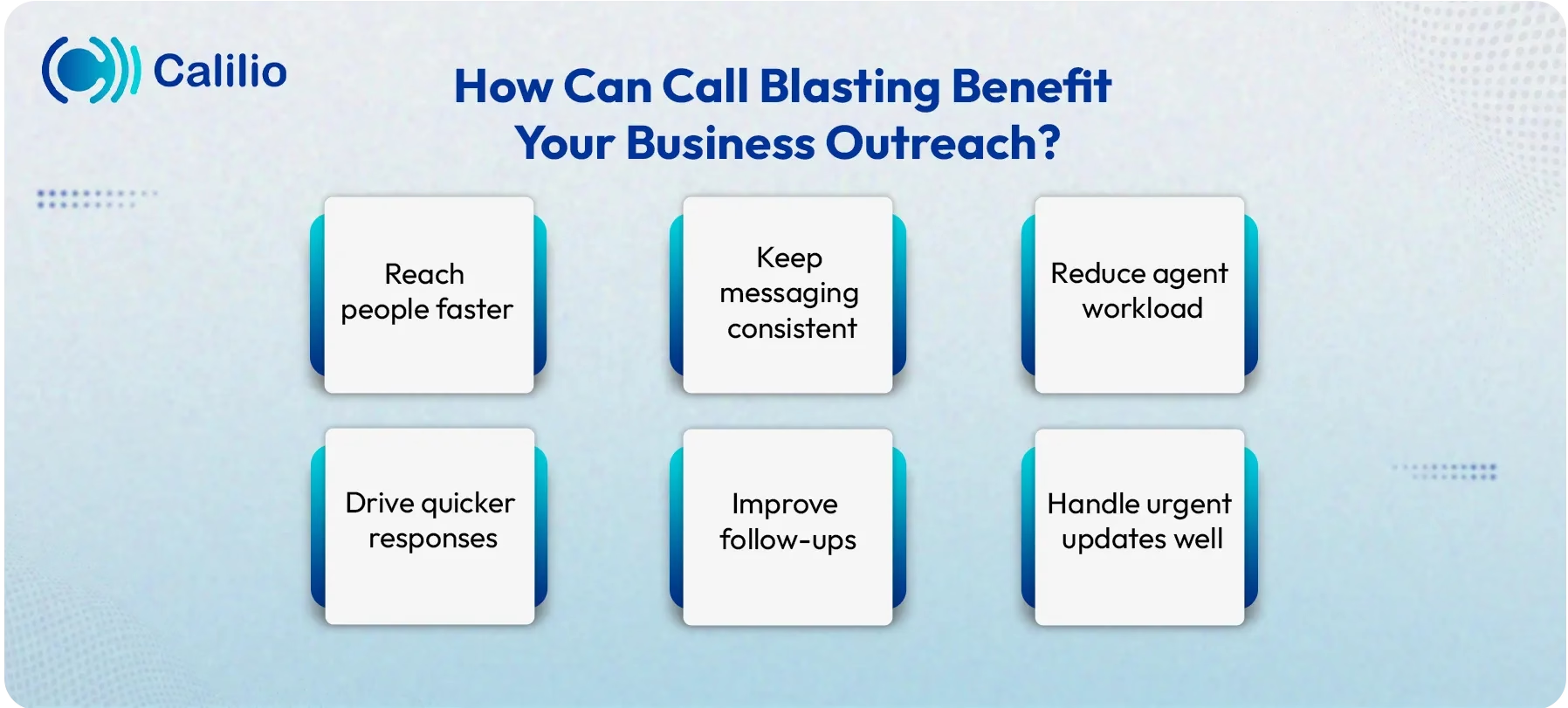
- Reach people faster: Call blasting reaches hundreds of contacts in minutes. It helps teams move faster on promos, reminders, and updates, especially when timing matters.
- Keep messaging consistent: A single recording delivers the same message every time. It keeps brand voice consistent across the contact list, even when multiple teams run campaigns.
- Reduce agent workload: The system automatically dials, plays messages, and logs outcomes with minimal agent effort. Agents spend time on real conversations instead of repetitive dialing, which reduces burnout and improves daily productivity.
- Drive quicker responses: IVR prompts like “Press 1” route interested callers to the right team immediately. This shortens response time and helps sales or support teams handle high-intent calls first.
- Improve follow-ups: Most systems also include a reporting tool that shows who answered and who missed the call, or which calls went to voicemail. Teams can prioritize callbacks based on results for timely follow-ups.
- Handle urgent updates well: Call blasting delivers urgent notices during outages, closures, or last-minute changes. It keeps customers informed quickly and reduces inbound call spikes during the service changes, so teams stay in control.
Common Call Blasting Challenges & Their Fixes
Call blasting often struggles with low answer rates, spam complaints, poor contact lists, unclear recorded messages, and sudden callback spikes that overwhelm teams.
Most of these problems can be fixed by improving message scripts, setting smart call timing and attempt limits, and using call routing with queues to manage responses more smoothly.
- Low answer rates: People usually ignore unknown numbers and skip calls during busy hours. Poor call timing and lack of caller trust lower connection rates and limit the reach of the campaign.
Fix: Place calls during more responsive hours, use a recognizable caller ID, and clearly state the purpose of the call within the first 5–10 seconds to keep recipients engaged. - Getting marked as spam: People may report calls when messages feel random, repetitive, or too frequent. Spam reports can damage reputation and also lower pickup rates on future campaigns.
Fix: Use permission-based contact lists, limit retry attempts, identify the business at the start of the call, and always provide a clear opt-out option. - Poor list quality: Outdated, duplicate, or incorrect phone numbers result in failed attempts and wasted dialing time. Inaccurate data also affects reports, which can lead teams to take the wrong follow-up decisions.
Fix: Review the contact lists regularly, remove duplicate entries, and verify phone numbers before launching a campaign. - Robotic or unclear messages: A poor script affects every call. When the message is long and confusing, listeners are more likely to hang up soon.
Fix: Use clear and simple language, keep the message short, deliver the main point first, and end with clear action for the recipient. - Too many callbacks at once: A successful call blast can trigger a sudden rush of return calls. Without proper routing and queues, teams may miss calls, leading to long wait times and frustrated customers.
Fix: Plan before launching the campaign. Use Automated Call Distribution (ACD) to distribute calls to multiple agents, while ensuring enough staff are available during peak callback periods.
Is Call Blasting Legal?
Call blasting legality depends on how it is used and where the calls are made. In many countries, unsolicited automated calls, often called robocalls, are restricted. And, for regions where it's allowed, you must meet their specific conditions. This often includes getting written or recorded consent from recipients, clearly identifying the business at the start of the call, calling only during permitted hours, and offering an easy opt-out option. Penalties can apply if businesses ignore these rules.
Conclusion
Call blasting allows your business to reach many people quickly by sending a recorded message to a predefined contact list. The system dials automatically, delivers the message, supports different formats such as simple voice blasts, personalized messages, and IVR-based calls, and tracks results for follow-up.
You can use them for promotions, reminders, confirmations, and urgent updates. Better results come from keeping the contact list clean, using clear and concise scripts, calling at the right times, and handling responses properly with call routing and queues.
However, it’s also important to consider legal compliance. Understand the laws in each region before launching campaigns and avoid using call blasting for robocalls related to fraud or scams. Other than that, when used responsibly and in line with regulations, call blasting can significantly improve your outreach goals.
Summarize this blog with:
Frequently Asked Questions
Everything you need to know about Calilio. Can't find your answer? .
Call blasting and robocalling both usually refer to automated systems that deliver pre-recorded messages to multiple people at the same time. However, robocalls are often associated with spam, fraud, or scam calls. Call blasting, on the other hand, is more like a business term used for legitimate purposes such as notifications, alerts, reminders, or service updates.
Stay in the loop
Get the latest call insights, trends, and updates delivered straight to your inbox.
By subscribing, you agree to receive updates from Calilio.
You can unsubscribe anytime.
Enter the World of AI Business Phone System with Calilio
Improve your business operation with Calilio's advanced virtual phone system. Join today for a better way to connect.