What is a Financial Services Call Center & Why is it Important?

Customers often call financial institutions to ask about payments, check account details, file claims, or sort out disputes. These conversations are sensitive as they involve personal data, financial decisions, and time-bound actions. Accuracy and precision matter a lot when handling such calls.
That’s why a structured and dependable call center setup is important in the financial world. It helps make sure every client reaches the right consultant, protects customer data, and records key conversations and transactions. It keeps service consistent - even during busy times.
In this blog, we’ll walk you through what financial services call centers are, why they matter, essential features to consider, and common use cases across various financial sectors. We’ll also share tips to set up one for your financial firm to support both customer experience and regulatory needs.
Key Highlights:
A financial services call center manages customer communication for banks, insurers, lenders, and fintech companies.
Financial call centers must prioritize security, compliance, and accuracy to protect data and ensure regulatory alignment.
To set up, choose a compliant call center platform, configure secure call flows, assign role-based access, and apply an identity verification process for effective handling of sensitive information during the conversation.
Regular agent training, structured communication guidelines, and ongoing call monitoring help maintain accuracy, compliance, and consistent service quality in financial service call centers.
What is a Financial Services Call Center?
A financial services call center is a dedicated call center that manages customer calls and messages for financial organizations such as banks, insurance providers, lenders, and fintech companies. They use advanced call center software for financial services to support customer inquiries related to accounts, payments, policies, loans, and service requests while following strict security and regulatory standards.
Unlike general call centers, these teams handle sensitive financial data and regulated interactions. Therefore, they must use controlled processes, trained agents, and secure systems to ensure accurate information exchange and proper record keeping.
What are the Benefits of Call Centers in the Financial Services?
In financial services, call centers play a central role in delivering secure, consistent, and timely customer support. They help organizations manage high call volumes, meet regulatory requirements, protect customer trust, and resolve issues faster by routing calls correctly and maintaining interaction records.
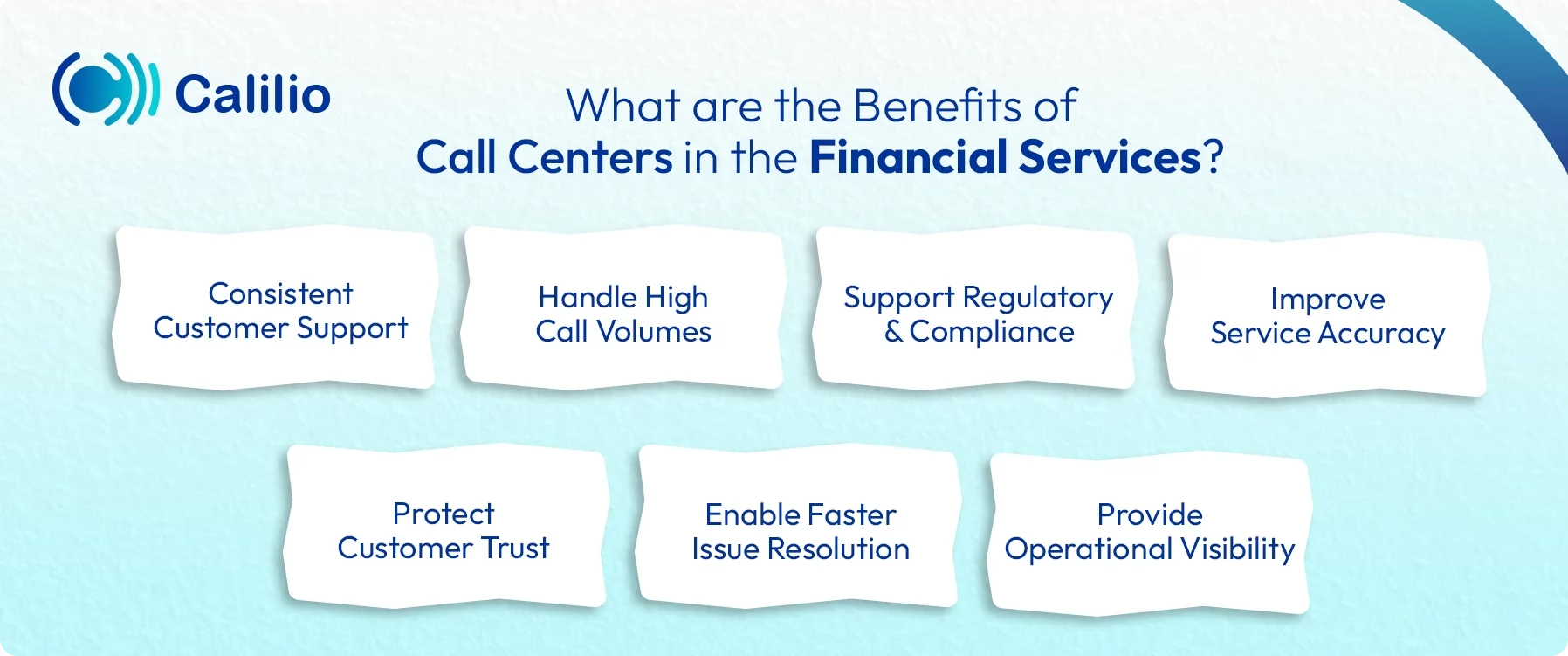
Consistent Customer Support
A centralized call center helps financial organizations deliver the same service standards across all customer interactions. Whether the inquiry relates to accounts, policies, or payments, customers receive uniform responses based on defined processes and guidelines.
Handle High Call Volumes
Financial institutions often face sudden spikes in call traffic during billing cycles, policy renewals, or regulatory updates. Call center systems distribute calls evenly to the team members and prevent overload, allowing your organization to maintain service continuity during peak demand.
Support Regulatory & Compliance
Call centers help financial teams meet compliance requirements by maintaining call records, interaction logs, and documented outcomes. These records support audits, dispute resolution, and internal reviews without relying on manual tracking.
Improve Service Accuracy
Standard call flows, verification steps, and scripted guidance help agents provide correct information every time. This reduces miscommunication and ensures customers receive accurate answers for financial matters with precision.
Protect Customer Trust
Customers often share private details like account numbers, loan info, or ID numbers during calls. A secure call center setup keeps this data safe using call encryption, role-based access (so only authorized staff can access call recordings or account details), and automatic redaction (to remove sensitive info from transcripts). It helps build trust and reduce the risk of data breaches.
Enable Faster Issue Resolution
Most call center software includes an intelligent call routing tool that directs customers to the most appropriate agent on the first attempt. For example, if someone is calling about loan servicing, the system routes the call straight to that department - skipping general queues like billing or account inquiries. This avoids back-and-forth transfers, cuts down wait times, and helps resolve issues faster without repeat follow-ups.
Provide operational visibility
A call center system usually includes a call analytics tool that provides a detailed overview of call performance. It gives managers insight into service demand, response efficiency, and recurring issues. These data make it easier to plan staffing, improve workflows, and maintain consistent service quality over time.
Get a Call Center Software for Your Banking, Lending, Insurance, or Fintech Business
Financial Services Call Center Solutions: Key Use Cases
The financial sectors, like Banks, insurers, fintech firms, and lenders, widely use call centers to handle customer inquiries, security checks, and payment-related communication. Each sector uses call centers in different ways, depending on its specific needs.
1. Banking
In banking, call centers help customers manage daily account needs while reducing branch visits and handling security-sensitive requests in real time. This includes:
- Answer balance and transaction-related questions
- Resolve debit and credit card issues
- Verify identity during fraud checks
- Restore access to online banking and PINs
- Guide customers on loans, repayments, and overdue amounts
2. Insurance
Insurance call centers help customers understand policies and stay informed throughout the claims process, especially during time-sensitive situations. Support typically includes:
- Explaining policy coverage and terms
- Assisting with new policies, renewals, and updates
- Registering insurance claims accurately
- Sharing claim progress and next steps
- Supporting customers until claims are closed
3. Fintech and Digital Payments
Fintech call centers help users complete transactions smoothly in fast-moving, app-based environments where delays can affect trust. Support includes:
- Guiding users through account setup and onboarding
- Completing KYC and verification steps
- Resolving failed transactions and refund issues
- Restoring access to wallets or payment apps
- Responding to security alerts and account locks
4. Investment and Wealth Management
Investment call centers help clients stay informed, connected to advisors, and compliant with required disclosures. This support covers:
- Responding to portfolio and balance inquiries
- Scheduling calls with financial advisors
- Assisting with basic investment transactions
- Updating client account details
- Recording confirmations and regulatory disclosures
5. Credit Cards and Lending
In credit and lending, call centers help manage billing communication and payment follow-ups while reducing disputes and defaults. Support includes:
- Explaining statements, charges, and due dates
- Sending reminders for upcoming or missed payments
- Handling disputes and chargebacks
- Communicating credit limit or account changes
- Following up on early payment delays
The Key Features to Look for in a Financial Call Center Solution
A financial services call center system must include the features that control access, secure customer data, and maintain service accuracy. Tools such as call recording, role-based permissions, IVR, call routing, monitoring, analytics, and CRM integration support compliant operations, reduce handling errors, and help agents get a clear visibility into every customer interaction.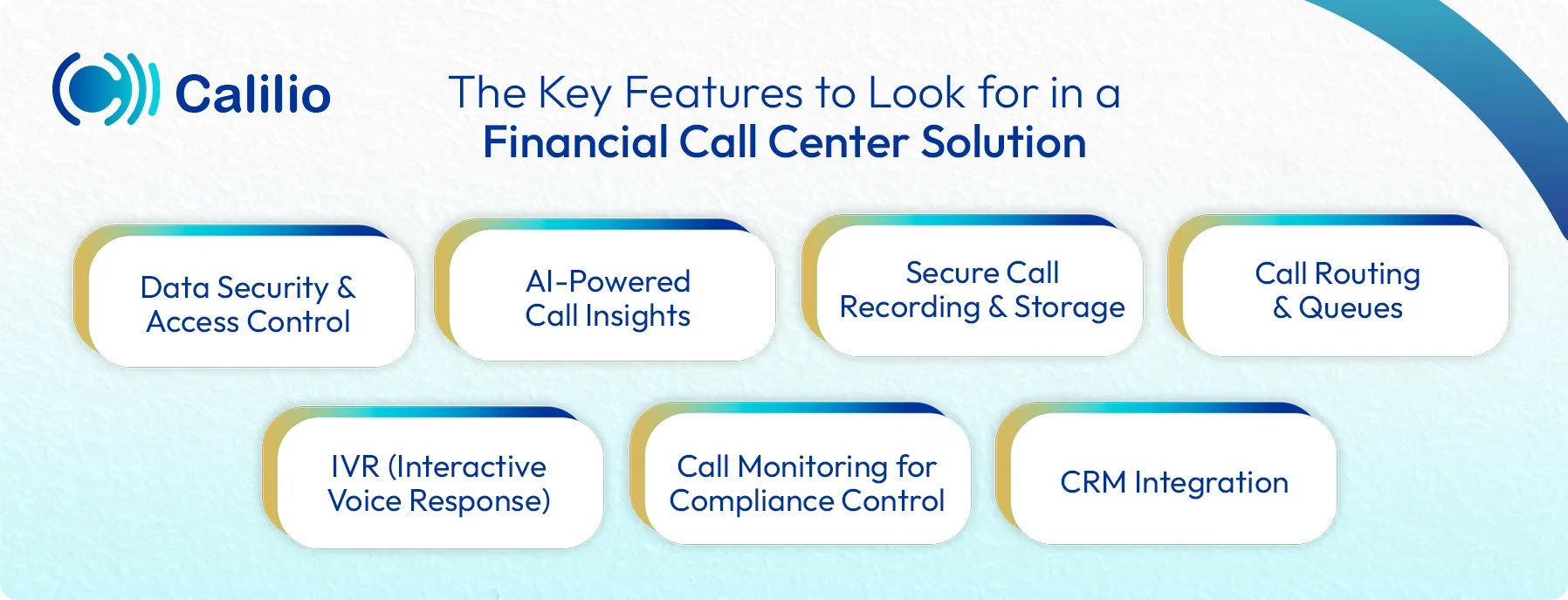
1. Data Security and Access Control
Financial call centers should restrict access based on roles and responsibilities. For instance, it’s better to provide an agent's access to only the information they need to handle calls, while managers have broader visibility for oversights. This reduces the risk of unauthorized data access and limits exposure of sensitive customer information.
2. AI-Powered Call Insights
The call center solution with AI-powered call insights offers call transcripts, summaries, and sentiment indicators to help teams review conversations faster. Teams can spot issues, confirm compliance, and track customer tone quickly, without listening to every call end-to-end.
3. Secure Call Recording and Storage
The system should allow the services to record the calls with consent. These recordings need to be stored securely to support audits, dispute handling, and regulatory reviews. Teams should be allowed to access records through controlled permissions.
4. Call Routing and Queues
Call routing directs clients to the right team based on intent or priority. Likewise, call queues place callers in line instead of dropping the call when agents are busy. This reduces wait times, improves resolution speed, and limits unnecessary call transfers to help customers reach the right support faster.
5. IVR (Interactive Voice Response)
IVR systems guide callers through predefined options and filter requests before agent involvement. The caller can directly speak to the agent who can handle the specific queries they are looking for.
6. Call Monitoring for Compliance Control
Call monitoring tools allow supervisors to review live and recorded calls to check whether agents follow approved scripts and policies. This is helpful for both to support quality control and regulatory adherence without relying on random manual checks.
7. CRM Integration
CRM integration links call data directly to customer records and profiles. Agents can see past interactions, notes, and account details during the call, which reduces errors and helps improve accuracy and follow-up actions.
How to Set Up a Call Center for Financial Services?
To set up a call center for financial services, first choose a reliable call center platform, design a call flow, and assign roles with controlled access, setting up verification and security processes. Finally, test the system before launch to ensure the call center operates smoothly and meets regulatory and service standards.
- Step 1: Select a secure call center platform: Choose a call-center solution that supports your specific type of service - banking, insurance, investment, fintech, etc. Ensure it includes the tools for call recording, access control, monitoring, reporting, and multi-channel communication while meeting compliance needs.
- Step 2: Design call flows: Map inbound and outbound call flows. Separate general inquiries from high-risk cases and define escalation paths for fraud, disputes, and sensitive issues.
- Step 4: Configure roles and access controls: Assign agents their roles. While doing so, define the authority to access customer and financial data based on their responsibility.
- Step 5: Set up security and verification processes: Define and apply identity verification steps for account access, transactions, and account changes consistently across all customer interactions.
- Step 6: Prepare staffing, monitoring, and launch: Plan agent coverage for normal and peak volumes. Also, define the monitoring process and time to maintain the consistent quality over time. Finally, test workflows to ensure they are error-free before moving to full-scale operations.
How to set up a call center for finance with Calilio?
To set up a call center software for financial services, create your account, get or port numbers, add agents, and configure call flows. Once configured, you can start managing client calls instantly.
- Step 1: Sign up on Calilio and access the admin dashboard to manage the call center.
- Step 2: Purchase local, mobile, or toll-free numbers, or port your existing phone number.
- Step 3: Add agents to the workspace and assign roles based on function, such as general support, billing, claims, or security-related handling.
- Step 4: Share numbers with the right teams and configure IVR menus to route calls for account queries, payments, insurance claims, or security issues.
- Step 5: Make and receive inbound and outbound calls from desktop or mobile devices using the same financial service numbers.
Best Practices for Effective Financial Call Center Performance
To ensure optimum performance, implement secure identity verification, structured call routing, and consistent communication standards across all interactions. Maintain complete documentation, monitor calls regularly, and prioritize high-risk or time-sensitive cases to reduce errors, manage risk, and deliver reliable service.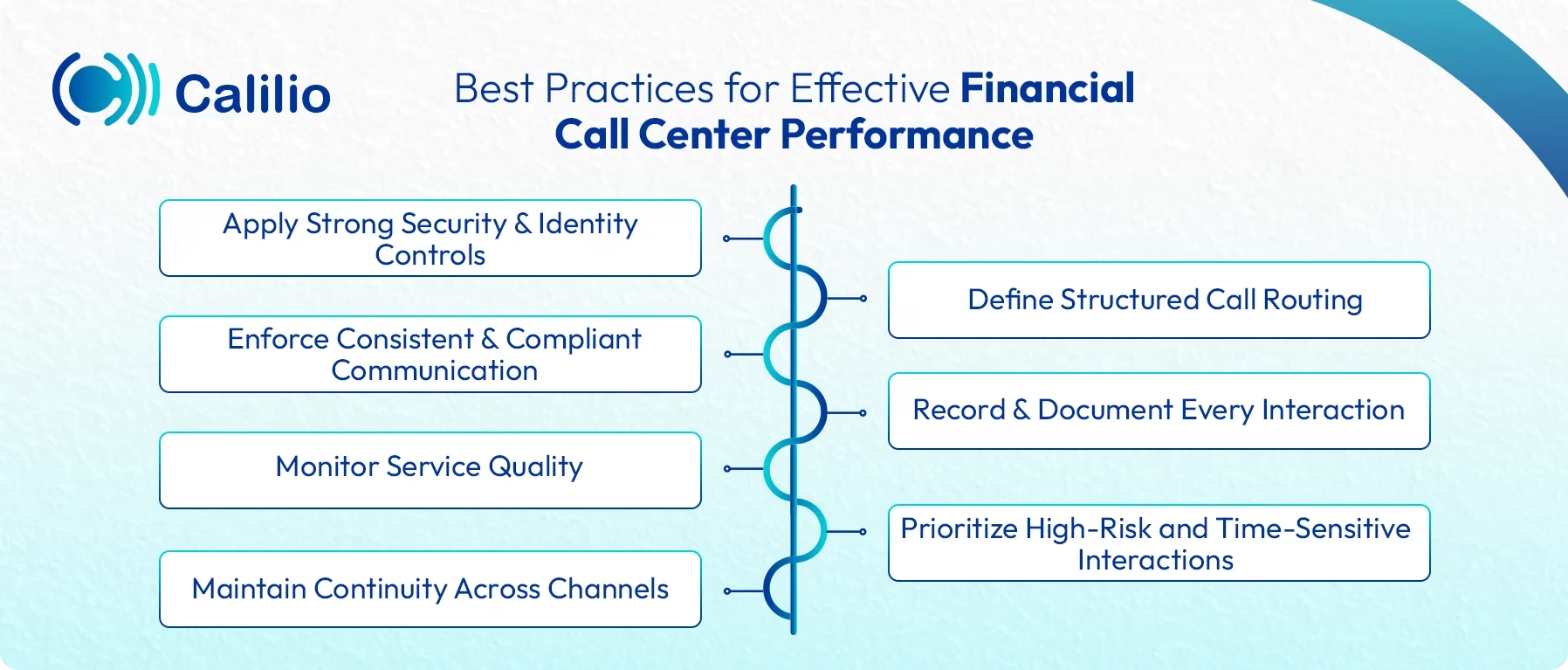
1. Apply Strong Security and Identity Controls
Perform identity verification before discussing or modifying any account information. Also, limit system access according to role and responsibility. And, protect customer data through controlled permissions, secure authentication, and proper data handling procedures.
2. Define Structured Call Routing
Separate call flows for general support, billing, and high-risk matters. Document escalation paths so fraud, disputes, and sensitive cases move directly to trained teams without unnecessary transfers.
3. Enforce Consistent and Compliant Communication
Use clear and understandable language or tone for disclosures, consent, and payment discussions. Maintain uniform communication standards across all agents to ensure clarity and regulatory alignment.
4. Record & Document Every Interaction
Keep the records for verification steps, actions taken, and next steps, while capturing the reason for the call. Store call recordings and notes securely to support audits and dispute management.
5. Monitor Service Quality
Review live and recorded calls on an ongoing basis. During the process, check for legality compliance, accuracy of information, and the quality of query resolution.
6. Prioritize High-Risk and Time-Sensitive Interactions
Give priority to the high-risk interactions such as fraud alerts, account lockouts, payment disputes, and security concerns. Ensure these types of queries are responded to or handled as quickly as possible.
7. Maintain Continuity Across Channels
Customers often reach out to financial institutions through phone, email, chat, or other channels. No matter which channel they use, the service should remain consistent, timely, and accurate. Every interaction should reflect the same level of professionalism and attention to detail.
Calilio: Call Center Solution for Financial Sectors
To operate smoothly and securely, financial institutions need a call center solution that prioritizes accuracy, data protection, and efficient communication. Calilio offers call center software for financial services, designed with the specific needs of banking, insurance, lending, and fintech in mind. It supports both inbound and outbound calls for tasks like account support, loan processing, payment reminders, and fraud alerts.
Calilio helps financial teams manage customer interactions in a structured way. It offers essential features such as IVR-based call routing, secure call recording, real-time monitoring, and CRM integration to ensure regulatory compliance and deliver faster, more accurate support.
Furthermore, Calilio combines automation with AI-powered tools. The Power Dialer speeds up outreach, while AI-generated call summaries and sentiment analysis reduce manual review and help managers track agent performance.
Summarize this blog with:
Frequently asked questions
Which financial sectors use call centers the most?
Banks, insurance providers, fintech companies, lending institutions, credit card companies, and wealth management firms mostly use call centers to handle frequent customer inquiries, regulated communication, and time-sensitive issues such as payments, claims, and account security.
Can financial services call centers support remote teams?
What type of calls do financial services call centers handle?

Still have questions?
Can’t find the answer you’re looking for? Please chat with our friendly team.
Stay in the loop
Get the latest call insights, trends, and updates delivered straight to your inbox.
By subscribing, you agree to receive updates from Calilio.
You can unsubscribe anytime.
Enter the World of AI Business Phone System with Calilio
Improve your business operation with Calilio's advanced virtual phone system. Join today for a better way to connect.