
Fixed vs. Non-Fixed VoIP Numbers: Which One Does Your Business Need?

Voice over Internet Protocol (VoIP) numbers are virtual identifiers that route calls over the internet instead of traditional phone lines. Since they operate through cloud infrastructure, they are not tied to a specific device, allowing businesses to manage communications from anywhere with an internet connection.
However, when selecting a VoIP number for your business, you will encounter two types: fixed and non-fixed VoIP. In simple terms, a fixed VoIP number acts as a digital anchor, as it is linked to a verified physical address, enhancing local credibility and trust. In contrast, a non-fixed VoIP number is not location-bound, offering greater flexibility and access to global area codes, an advantage for remote teams and international expansion.
So, choosing the right type of VoIP number is crucial as it can create operational challenges in the long run. Therefore, this guide will help you understand the key differences between them, alongside the benefits and limitations of each, to help you select the VoIP number that best supports your business growth.
Key Highlights:
Fixed VoIP numbers are internet-based numbers linked to a verified physical address, offering higher credibility and reliable CNAM and E911 support.
Non-Fixed VoIP numbers are location-independent virtual numbers that let businesses use numbers from different regions without a physical presence.
Fixed VoIP numbers provide higher trust and compliance, making them widely accepted for 2FA, emergency services, and regulated industries.
Non-Fixed VoIP numbers offer flexibility and scalability, enabling remote teams and startups to deploy numbers quickly and operate across multiple devices.
What is a Fixed VoIP Number?
A fixed VoIP number is a cloud-based telephone number that is registered to a verified physical street address. Although it uses VoIP to transmit calls over the internet, the number itself is geographically anchored to a real-world location. This allows businesses to benefit from cloud flexibility while maintaining the legitimacy of a traditional phone line.
Unlike copper-based landlines, fixed VoIP numbers are typically recorded in a Local Number Portability (LNP) database, a directory to track the numbers ported from one service provider to another. Since they are tied to a specific address, telecom carriers treat them similarly to numbers connected to the Public Switched Telephone Network (PSTN), strengthening their credibility and regulatory recognition.
Key Features of Fixed VoIP Numbers
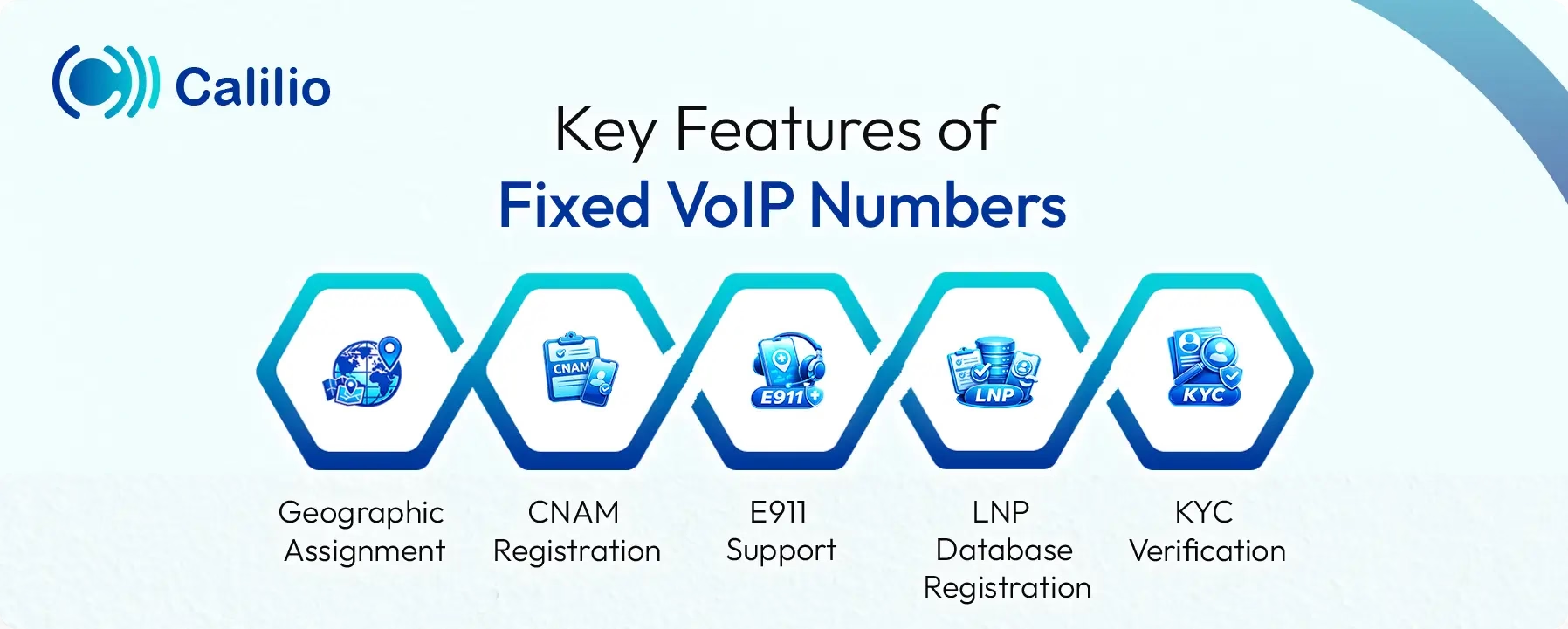
- Geographic Assignment: Each number is tied to a specific area code that corresponds to the registered business location.
- CNAM Registration: Caller Name (CNAM) displays your business name accurately on the recipient's caller IDs.
- E911 Support: Enhanced 911 (E911) services automatically transmit your verified address to emergency responders.
- LNP Database Registration: The number is recorded within Local Number Portability systems, reinforcing telecom legitimacy.
- KYC Verification: Providers require identity and address documentation, reducing fraud risk.
Pros & Cons of Fixed VoIP Number
Pros | Cons |
| Widely accepted by banks, government agencies, and platforms for two-factor authentication (2FA). | Requires proof of address and identity, which can slow down onboarding. |
| Strong carrier reputation, reducing the likelihood of calls or SMS being flagged as spam. | Moving to another state or country may require regulatory steps to retain the number. |
| Builds local trust and professional credibility. | Often subject to telecom taxes, compliance fees, and E911 charges. |
| Higher regulatory standing due to a verified physical address. | Less geographic flexibility compared to non-fixed VoIP numbers. |
What is a Non-Fixed VoIP Number?
A non-fixed VoIP number is a virtual telephone number that is not tied to a specific physical location or street address. Often referred to as location-independent or Over-the-Top (OTT) numbers, these are issued by cloud-based service providers without requiring the user to reside in the same geographic area as the number itself.
Since non-fixed VoIP numbers are created and managed entirely through cloud infrastructure, they bypass the traditional geographic constraints of the PSTN.
For example, a business operating from New York can use a London (020) area code without maintaining a physical presence in the United Kingdom. This virtual flexibility makes non-fixed numbers particularly attractive to global enterprises, remote teams, startups, and digital-first businesses that prioritize mobility over a fixed local footprint.
Key Features of Non-Fixed VoIP Numbers
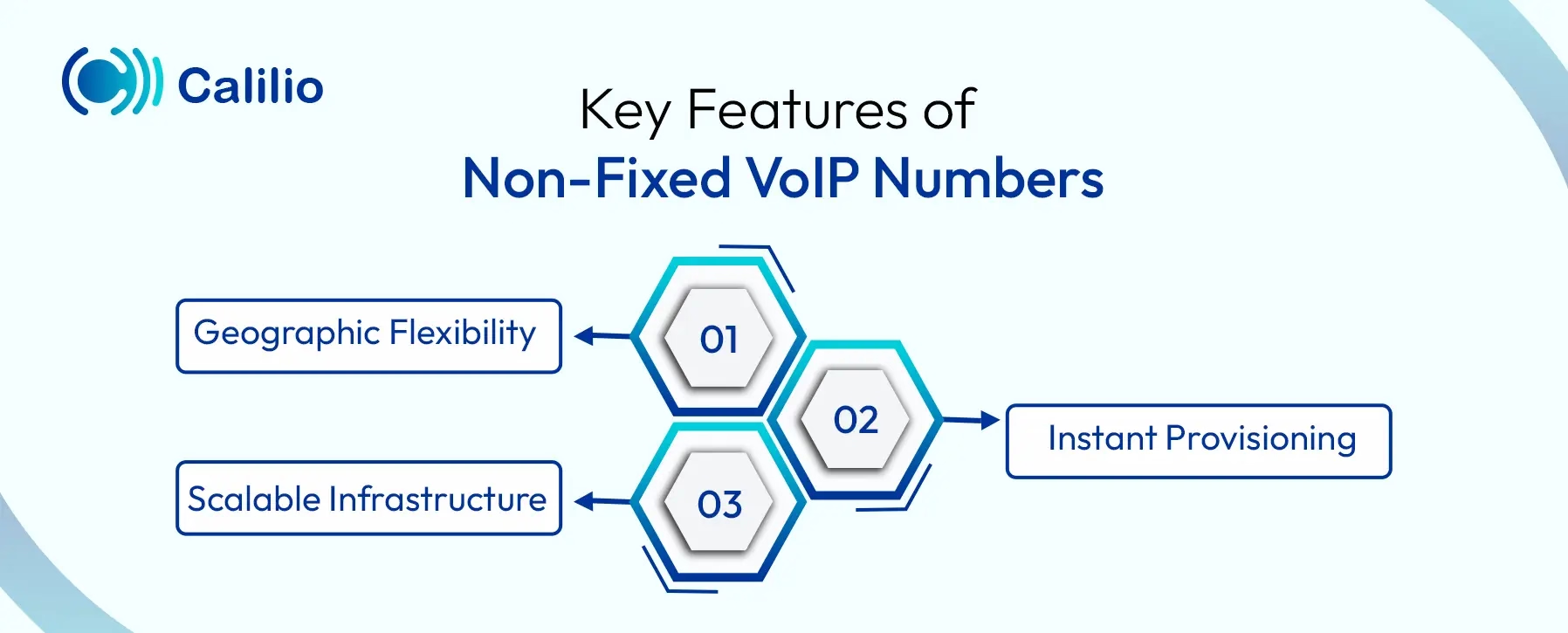
- Geographic Flexibility: Businesses can acquire numbers from almost any country or city, regardless of where their team is physically located.
- Instant Provisioning: Activation typically takes minutes because physical address verification and extensive Know Your Customer (KYC) documentation are not required.
- Scalable Infrastructure: Adding multiple new lines can be done quickly, making them ideal for growing call centers or short-term campaigns.
Pros & Cons of Non-Fixed VoIP Number
Pros | Cons |
| Allows full mobility, enabling businesses to operate from any location while maintaining the same number. | Frequently restricted for 2FA by banks and high-security applications. |
| Lower operational costs due to fewer regulatory fees and local tax obligations. | More likely to be flagged as scam-likely. |
| Enables businesses to establish a virtual local presence in multiple markets. | Limited or unreliable E911 functionality because no verified physical address is registered. |
| Rapid scalability for expanding teams or seasonal communication needs. | Generally classified as lower-trust compared to fixed VoIP numbers. |
What are the Key Differences Between Fixed & Non-Fixed VoIP Numbers?
The main difference between fixed and non-fixed VoIP numbers is traceability. In particular, fixed VoIP is anchored to a verified physical location, ensuring high reliability for security protocols, whereas Non-Fixed VoIP is "nomadic" and address-independent, offering rapid deployment and global mobility.
Here is the detailed side-by-side comparison:
| Comparison Factor | Fixed VoIP Numbers | Non-Fixed VoIP Numbers |
| Geographic Anchor | Tethered to a verified physical street address. | Location-independent. No physical address required. |
| Verification Level | High. Requires KYC documentation and proof of address. | Low. Often activated with minimal verification, sometimes just an email address. |
| Trust Score | High. Viewed by carriers as reputable and professional. | Variable. Frequently examined by carrier anti-spam algorithms. |
| 2FA Acceptance | Superior compatibility with banks and high-security applications. | Limited acceptance. Often blocked by two-factor authentication services. |
| Emergency Services (E911) | Native support. Automatically transmits registered address to emergency dispatchers. | Nomadic support. Requires manual location updates for accurate emergency routing. |
| Caller ID (CNAM) | Professional display. The business name can be properly registered and shown. | Often appears as “Wireless Caller” or “Unknown” if not fully verified. |
| Carrier Filtering | Lower risk of being labeled “Scam Likely.” | Higher risk of triggering spam or fraud detection filters. |
| Setup & Speed | Verification process may take hours to several days. | Typically provisioned within minutes. |
| Best Suited For | Established firms, healthcare providers, law offices, and financial institutions. | Remote teams, startups, digital businesses, and global call centers. |
Things to Consider When Choosing Between Fixed & Non-Fixed VoIP Numbers
When deciding between fixed and non-fixed VoIP numbers, evaluate how important caller credibility, regulatory compliance, and emergency accuracy are versus the need for workforce mobility, rapid deployment, and global scalability.
1. Trustworthiness and Local Legitimacy
One of the most immediate factors is how your business appears on a customer’s caller ID. Fixed VoIP numbers are linked to a verified physical address, which gives them a higher trust classification within carrier databases. This makes them particularly valuable for local businesses, such as law firms, healthcare providers, and contractors, that depend on credibility and strong community presence.
Because fixed numbers are recognized as geographically anchored lines, they are far less likely to be flagged as “Scam Likely,” resulting in improved call-answer rates and stronger brand perception.
2. Mobility and Workforce Flexibility
While both fixed and non-fixed VoIP support seamless use across smartphones, laptops, and tablets, they differ in their physical "anchoring." A fixed VoIP number offers mobile app connectivity but remains legally tied to a verified physical address, acting as a remote extension of a specific office for regulatory purposes.
In contrast, non-fixed VoIP provides true geographic independence. Because these numbers do not require localized address verification for setup, they move with your workforce without boundaries. This makes non-fixed infrastructure ideal for remote-first organizations and global teams, allowing them to establish a local presence in new markets instantly without the need for physical office leases or regional hardware.
3. Emergency Services (E911) and Compliance
Emergency compliance is a critical legal consideration, often referred to as the Duty of Care. Fixed VoIP numbers provide native integration with Enhanced 911 (E911), automatically transmitting a verified physical address to emergency responders when a call is placed.
For businesses operating from a permanent office or retail location, this level of emergency accuracy is often required under regulations. While non-fixed VoIP offers mobility, it typically relies on “nomadic” E911 services, which require manual location updates to ensure emergency accuracy. Without strict internal protocols, this can introduce risk.
4. Cost-Effectiveness for Global Scaling
From a financial standpoint, non-fixed VoIP numbers are generally more cost-efficient for businesses with international communication needs. As OTT services, they avoid many of the local telecom taxes, regulatory fees, and hardware dependencies associated with fixed lines.
This model enables startups and expanding companies to establish a global presence with minimal capital investment. Businesses pay primarily for usage and virtual capacity rather than physical infrastructure.
5. Speed of Setup and Provisioning
Deployment speed can be a decisive factor, especially for rapidly growing teams. Fixed VoIP numbers require physical address verification and often involve a KYC process, which can take several days to complete.
In contrast, non-fixed VoIP numbers are designed for rapid activation. They can often be provisioned within minutes using basic account credentials, making them well-suited for temporary campaigns, seasonal scaling, or fast-moving customer support operations.
Conclusion
The choice between a fixed and a non-fixed VoIP number ultimately comes down to balancing accountability with flexibility. If your business operates from a physical office, relies on strong local credibility, or frequently uses high-security platforms, a fixed VoIP number provides the stability you need. Its verified address linkage supports seamless 2FA verification, stronger carrier reputation, and native E911 compliance, making it ideal for industries such as law, healthcare, and finance.
In contrast, non-fixed VoIP numbers are designed for modern, borderless businesses. They enable rapid setup, global scalability, and true mobility without the constraints of physical address verification. For remote-first teams, startups, and international call centers looking to expand quickly and cost-effectively, non-fixed numbers offer unmatched operational agility.
Summarize this blog with:
Frequently asked questions
Can a non-fixed VoIP number be traced?
A non-fixed VoIP number can be traced, but it’s more challenging than tracing a fixed VoIP or traditional phone number. It depends on the service provider’s policies and the technical setup. The lack of a fixed location further complicates the process.
Can you text a non-fixed VoIP number?
Why would someone use a fixed VoIP?
What is the difference between VoIP and non-VoIP numbers?
Who uses a non-fixed VoIP number?
Can you call back a fixed VoIP number?
Can you call back a non-fixed VoIP number?
What happens if you text a VoIP number?

Still have questions?
Can’t find the answer you’re looking for? Please chat with our friendly team.
Stay in the loop
Get the latest call insights, trends, and updates delivered straight to your inbox.
By subscribing, you agree to receive updates from Calilio.
You can unsubscribe anytime.
Enter the World of AI Business Phone System with Calilio
Improve your business operation with Calilio's advanced virtual phone system. Join today for a better way to connect.