- Partners
- Contact Us
- Log in
How to Answer the Phone Professionally: Mastering Telephone Etiquette


In today’s competitive market, every phone call represents your brand. Whether it’s a new lead, a returning customer, or a partner inquiry, the way your team answers the phone sets the tone for the relationship. Yet many businesses overlook proper telephone etiquette and consistent call-handling standards, assuming answering a call requires no formal approach.
So, when employees lack a professional framework, the impact goes beyond an awkward greeting. In particular, poor professional phone answering can reduce customer trust, weaken brand credibility, lower conversion rates, and create inconsistent experiences. Over time, these small gaps turn into bigger problems like missed sales, higher churn, negative word-of-mouth, and reduced customer lifetime value.
But the good news is that professional call handling is simple when supported by structure and consistency. By learning how to answer a phone call professionally, you or your team can strengthen first impressions, improve customer satisfaction, and support long-term business growth. Therefore, in this guide, you’ll discover proven steps, practical scripts, and scenario-based techniques to elevate your communication standards.
Key Highlights:
Answering business calls professionally creates a strong first impression and sets the tone for the entire conversation.
A structured greeting that includes your company name and introduction builds trust, credibility, and brand consistency.
Clear communication, active listening, and professional call handling improve customer satisfaction, retention, and sales opportunities.
Handling scenarios like complaints, transfers, holds, and follow-ups with structure ensures a smooth and respectful caller experience.
Using a modern Voice over Internet Protocol (VoIP) phone system with features like IVR, call recording, analytics, and AI summaries helps teams maintain consistent and professional call standards.
Why Answering a Phone Call Professionally Matters
Answering a phone call professionally shapes the caller’s first impression, builds brand reliability through consistent etiquette, and makes customers feel respected and heard. It also protects potential sales opportunities, since every well-handled call can strengthen loyalty and turn inquiries into business growth.
- Positive Impression: How you answer a call sets the tone for the entire conversation. A polite phone response ensures that callers feel valued and respected when they interact with you.
- Building Trust and Credibility for Your Brand: When every team member follows standard telephone etiquette, customers experience the same level of professionalism across all interactions. Over time, this consistency strengthens your brand image and positions your business as dependable.
- Improving Customer Retention and Satisfaction: Customers remember how they were treated. So, when calls are handled respectfully and efficiently, callers feel heard and valued. As a result, your clients remain loyal and even recommend your services to others.
- Influence on Sales Opportunities: Every phone call is a potential lead, and when handled professionally, it can lead to sales opportunities. In contrast, a poorly handled call can end a potential sale before it even starts.
How to Answer a Phone Call Professionally
To answer a call professionally, first, you should respond within 3 rings while preparing yourself to speak clearly. Then, start with a polite, time-appropriate greeting followed by your and the company’s name. Likewise, offer assistance confidently, listen without interrupting, respond calmly, and end by confirming next steps with a courteous goodbye.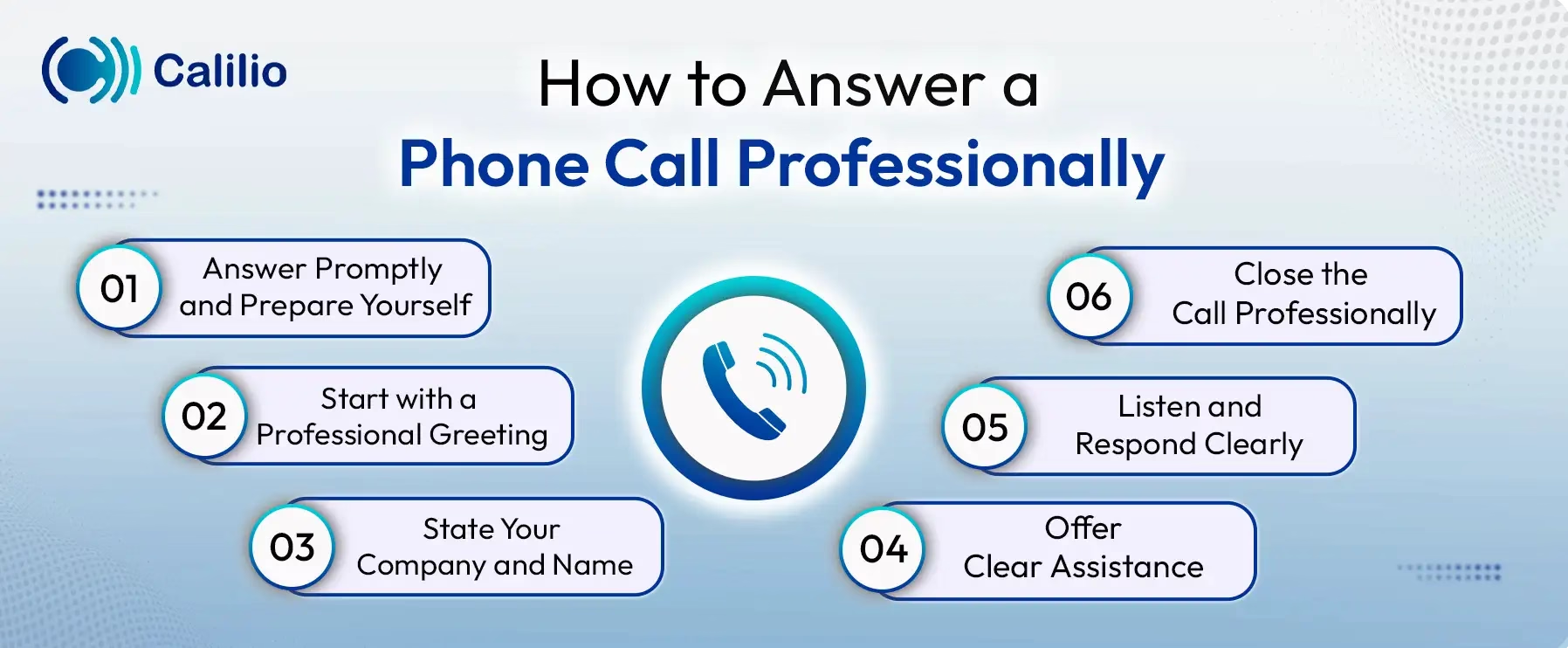 Here are the clear steps to answer a phone call professionally:
1. Answer Promptly and Prepare Yourself
The “three-ring rule” remains a widely accepted professional standard. Answering on the first ring may catch the caller off guard, while responding after the third ring can create the impression of inattentiveness. Use those brief seconds to take a steady breath, sit upright to enhance vocal projection, and eliminate any background distractions before speaking.
2. Start with a Professional Greeting
Your opening words establish the tone for the entire conversation. Begin with a courteous, time-appropriate greeting such as “Good morning,” “Good afternoon,” or “Hello.” Avoid overly casual expressions like “Hey” or “What’s up,” as they may reduce the perceived professionalism of the interaction.
3. State Your Company and Name
After a proper greeting, state your company’s name along with yours to inform the callers have reached the right person or department.
4. Offer Clear Assistance
After greeting and introducing yourself, guide the conversation forward with a proactive offer of help. This demonstrates readiness, professionalism, and attentiveness. Plus, your tone should remain clear, confident, and welcoming so the caller feels comfortable explaining their concern.
Example: “Good morning! Thank you for calling [Company Name]. This is [Your Name]. How can I assist you?”
5. Listen and Respond Clearly
Active listening is essential in professional phone communication. First, allow the caller to speak without interruption and focus fully on their message. Then, use brief verbal acknowledgments to show engagement, and respond in a calm, steady tone. If you need time to review information, inform the caller to avoid unnecessary silence.
Example: “I understand your concern. Please allow me a moment while I review your account details.”
6. Close the Call Professionally
End the conversation with structure and clarity rather than allowing it to fade out naturally. Try to summarize the discussed next steps or actions to ensure mutual understanding. Then, conclude with appreciation and a courteous closing statement to leave a positive final impression.
Example: “Is there anything else I can help you with today? Thank you for calling [Company Name]. Have a great day.”
Examples of Professional Phone Call Greeting (Ready-to-Use Scripts)
Here are some examples of greetings for professional calls, which help you create a strong first impression, maintain consistency in communication, and set a respectful tone from the very beginning of the conversation.
1. Standard Professional Greetings
Use these for general inquiries where you need to identify the company and the person speaking immediately.
- Formal: “Good morning. Thank you for calling [Company Name]. This is [Your Name]. How may I direct your call?”
- Department Specific: “Hello! You’ve reached the [Sales/Support] department at [Company Name]. My name is [Your Name]. How can I help you today?”
- Direct & Friendly: “Thank you for contacting [Company Name]. This is [Your Name] speaking. What can I assist you with today?”
2. Specialized Department Scripts
These are tailored for when the caller has already been routed to a specific team.
- For Customer Support: “Thank you for calling [Company Name] support. My name is [Your Name]. How may I help you today?”
- For Sales/Inquiries: “You’ve reached the Sales Team at [Company Name]. This is [Your Name]. I’d be happy to assist you with your inquiry or provide a quote.”
3. Voicemail Greetings (Reason-based)
It’s always better to tell the caller why you can’t answer. It builds more trust than a generic "we are busy."
- The "After Hours" Script: “You’ve reached [Company Name]. Our office is currently closed for the day. Please leave your name, number, and a brief message, and we will return your call during our regular business hours.”
- The "High Volume" Script (Currently Busy): “Thank you for calling [Company Name]. We are currently assisting other customers and are unable to take your call right now. Kindly leave your contact details and the reason for your call, and we will get back to you as soon as possible.”
- The "Out of Office/Holiday" Script: “Hello! You’ve reached [Company Name]. We are currently away for [Holiday/Staff Training] and will return on [Date]. Please leave a message, and we’ll prioritize your call upon our return.”
4. Interactive Voice Response (IVR)/Auto-attendant
Use this script if you are using an automated system before a human picks up.
- The Menu Script: “Thank you for calling [Company Name]. For Sales, press 1. For Technical Support, press 2. For Billing, press 3. To speak with an operator, please stay on the line.”
How to Handle Different Business Call Scenarios Professionally
Here are some common scenarios that you might face while handling a business call, along with the professional method to tackle them.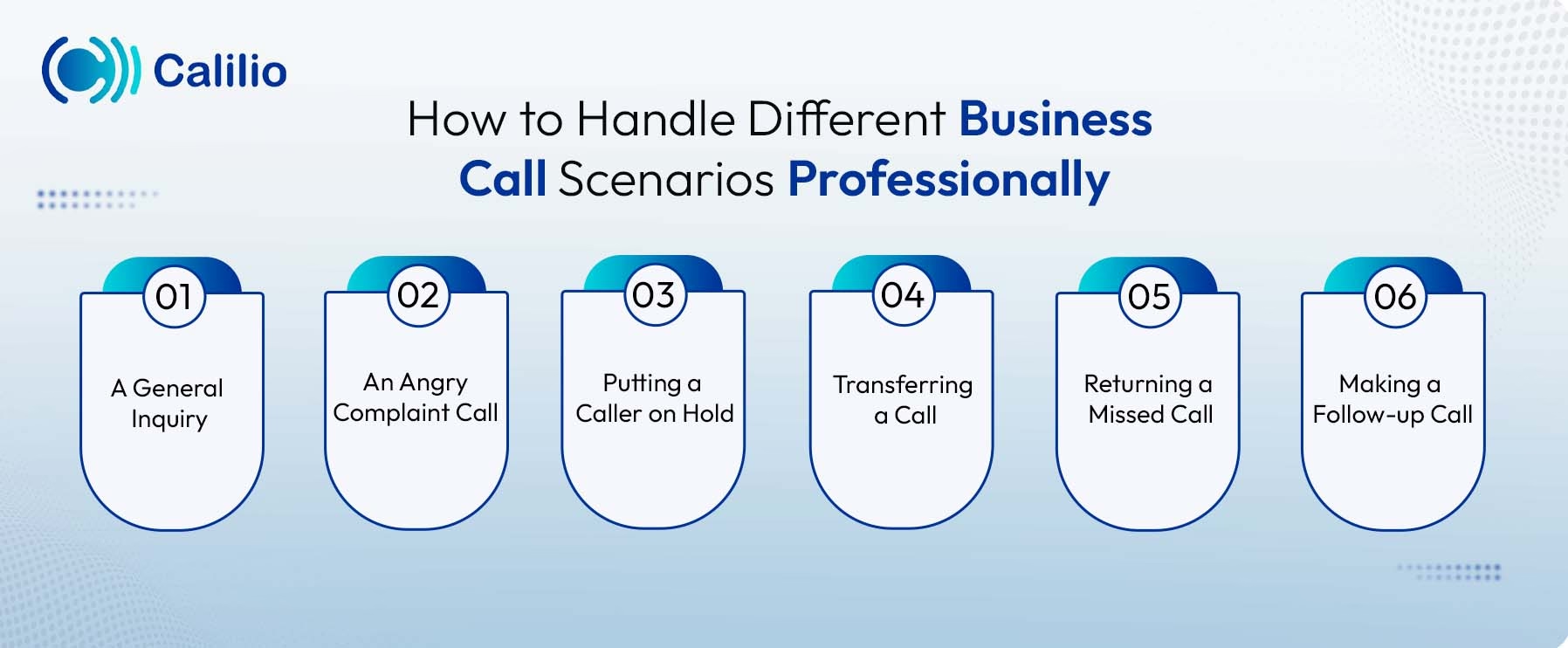
1. A General Inquiry
When a caller is seeking general information, your response should be clear, concise, and welcoming. Avoid overwhelming them with excessive details at once. Provide a direct answer to their question and then offer an appropriate next step, such as sending additional information or scheduling a demonstration.
Example:
Suppose a potential customer calls to ask about your service plans.
The Caller: "How much does this cost?"
You: “Your subscription plans start at $15 per user/month, which covers all the core features. To make sure you’re looking at the right tier for your team, I can email you a detailed feature breakdown and a custom quote right now. Would that be helpful?”
2. An Angry Complaint Call
The primary objective during a complaint call is de-escalation. Remain composed and avoid becoming defensive. Allow the caller to express their concerns fully, acknowledge their frustration, apologize when appropriate, and focus on identifying a solution. A structured response helps restore trust and maintain professionalism.
Example:
“I understand why that would be frustrating, and I sincerely apologize for the inconvenience. Let’s review your account together and resolve this right away.”
3. Putting a Caller on Hold
Placing a caller on hold should always be handled with courtesy and transparency. Request permission before doing so, clearly explain the reason, provide a realistic time estimate, or even use on-hold music. This prevents frustration and ensures the caller feels respected rather than ignored.
Example:
“May I place you on a brief hold for about two minutes while I check with our billing department? Thank you. I’ll be right back with you.”
4. Transferring a Call
Avoid transferring calls without context, as this forces the caller to repeat information and disrupts the experience. Instead, use a warm transfer whenever possible by informing the caller who they are being connected to and providing relevant details to your colleague in advance.
Example:
“I’m going to connect you with Mark from our technical team. I’ve already explained the situation to him, so he’s ready to assist you. Please allow me a moment to connect the call.”
5. Returning a Missed Call
When returning a missed call, immediately provide context to avoid confusion. Clearly state your name, company, and the reason for the callback. Referencing the time or subject of the original message demonstrates attentiveness and professionalism.
Example:
“Hello Alex, this is Edward from Calilio. I’m returning your call from earlier today regarding the [Project] update. Is this a convenient time to speak?”
6. Making a Follow-up Call
A professional follow-up call should be purposeful and concise. Clearly state the reason for calling in your opening sentence and reference the previous interaction. Maintain a balance between persistence and respect for the recipient’s time.
Example:
“Hello [Name], I’m following up on our discussion from last Tuesday regarding the proposal I sent. I wanted to see if you had any questions or needed further clarification.”
Common Mistakes to Avoid When Answering Business Calls & Tips
Common mistakes to avoid when answering business calls are sounding robotic by relying too heavily on scripts, speaking too fast or too slow, using casual language, and skipping a proper introduction. These errors can reduce clarity and credibility, so you should speak naturally, maintain a steady pace, and use polished language.
1. Sounding Robotic
Scripts provide structure and consistency, but relying on them word-for-word without natural tone variation can make your delivery sound mechanical. Such responses can reduce engagement and make the interaction feel impersonal.
To maintain professionalism while sounding genuine, treat scripts as guidance rather than rigid text. Adjust your tone naturally, emphasize key words appropriately, and allow your personality to come through in a controlled and professional manner.
2. Speaking Too Fast or Slow
Nervousness often causes individuals to speak too quickly, or it can also happen out of habit. This can result in unclear communication and confusion. Conversely, speaking too slowly may give the impression of being uninterested, frustrating the caller.
So, aim for a steady, conversational pace that ensures clarity and confidence. If needed, subtly match the caller’s speaking tempo, a technique known as mirroring, to create a sense of alignment and comfort without compromising professionalism.
3. Using Informal Language
Casual expressions such as “Yeah,” “Hang on,” or “Gimme a second” may be acceptable in personal conversations, but they can minimize credibility in a professional setting. Plus, informal language can unintentionally weaken your authority and reduce the perceived seriousness of the interaction.
Maintain polished and respectful language throughout the call. Replace casual phrases or slang with professional alternatives such as “Certainly,” “One moment, please,” or “I’d be happy to assist”. As a result, it reinforces brand professionalism and customer confidence.
4. Skipping Introduction
Answering a call with a simple “Hello?” or stating only the company name creates unnecessary friction. The caller may need to clarify who they are speaking with, which disrupts the flow and reduces efficiency at the start of the conversation.
Always begin with a structured introduction that includes a greeting, the company name, and your name. This establishes clarity, accountability, and professionalism within the first few seconds of the call.
5. Background Noise Issues
Excessive background noise can significantly damage a professional image. For remote teams especially, distractions such as traffic, conversations, or household noise may signal disorganization and raise concerns about privacy.
Ensure that calls are handled in a quiet environment with appropriate equipment. Noise-canceling headsets and modern communication systems with built-in noise suppression features help maintain call clarity and reinforce operational professionalism.
6. Rushing to End the Call
If you appear eager to conclude the conversation, the caller may feel undervalued. Plus, abrupt endings can leave unresolved questions and create a negative final impression.
Therefore, before closing the call, confirm that all concerns have been addressed. A simple, structured closing question ensures completeness and demonstrates that you respect the caller’s time and needs.
7. Taking Too Long to Pick Up the Call
Allowing the phone to ring excessively may create frustration and signal inefficiency. In fact, callers may question your responsiveness or assume their inquiry is not a priority.
If immediate pickup is not possible, implement systems that prevent calls from going unanswered. For such situations, features such as auto-attendants, intelligent routing, or backup call handling ensure continuity and protect the customer experience.
How a VoIP Phone System Helps You Answer Calls Professionally
A VoIP phone system helps you answer calls professionally by providing features such as call transfer, IVR menus, and call recording. These features ensure calls are routed to the right person, enable smooth warm transfers, and support ongoing quality improvement through recorded conversations.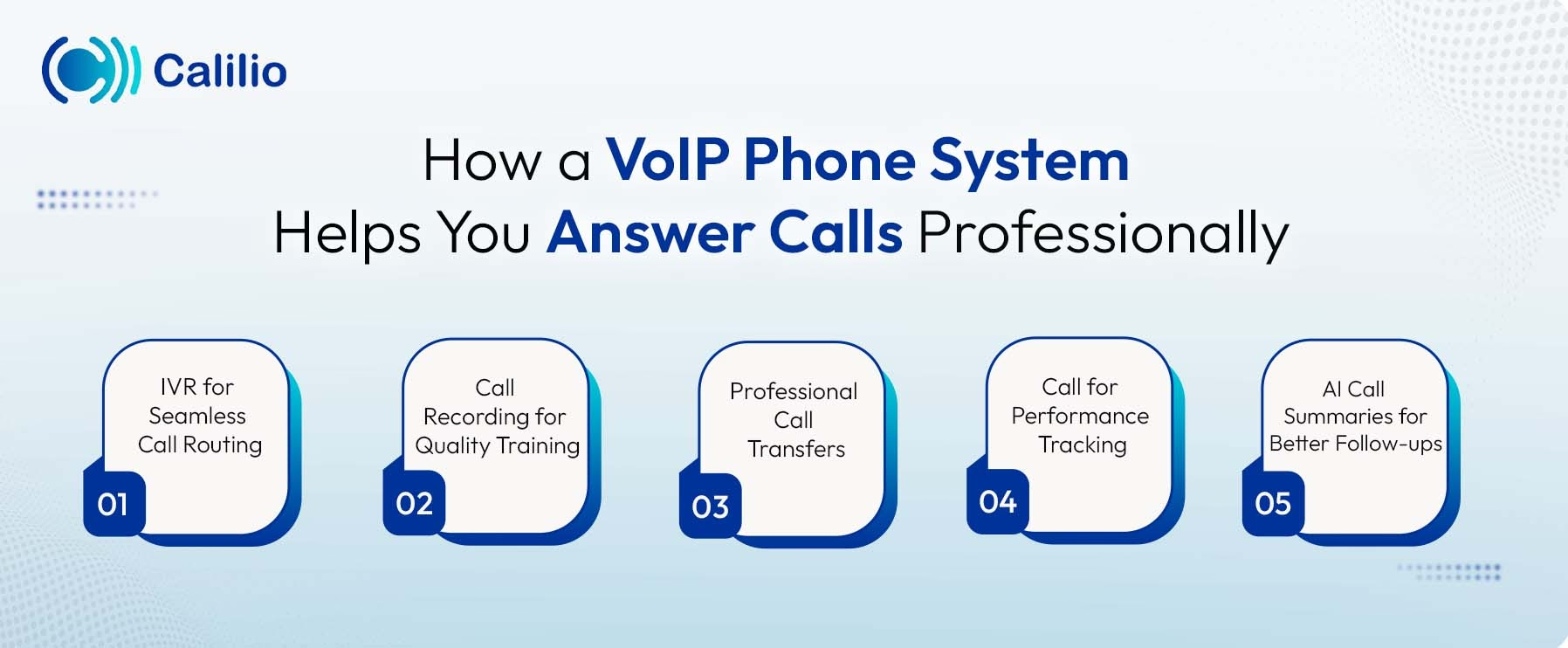
- IVR for Seamless Call Routing: An Interactive Voice Response (IVR) system greets callers with a structured menu. As a result, calls are directed to the correct department without human intervention. This reduces confusion, and the interaction feels organized and professional from the start.
- Call Recording for Quality Training: Call recording allows managers to review real conversations. Therefore, teams can identify improvement areas and refine communication standards. Over time, this strengthens tone consistency and service quality, which helps maintain professional call handling across departments.
- Professional Call Transfers: Modern VoIP systems support warm call transfers, allowing you to inform the caller before initiating the transfer and brief your colleague in advance. This ensures the receiving team member is prepared. As a result, the caller avoids repeating information, and the transition remains smooth and professional.
- Call Analytics for Performance Tracking: This feature provides real-time data on Key Performance Indicators (KPIs) like Average Handling Time (AHT), response times, and missed calls. This helps managers to identify gaps quickly, make data-driven decisions, ensuring consistent service standards are maintained.
- AI Call Summaries for Better Follow-ups: AI call summaries automatically capture key discussion points of the call, reducing documentation errors. Therefore, follow-up calls in the future become more accurate and structured.
Get a Business Phone System for Smoother, More Efficient Communication!
Conclusion
Answering a phone call professionally is not just basic courtesy but a strategic business practice. Every interaction shapes customer perception, builds trust, and influences long-term relationships. When calls are handled with structure, clarity, and consistency, businesses strengthen credibility and improve customer retention.
Professionalism, however, depends not only on individual skills but also on the systems supporting your team. Calilio, a modern VoIP platform, offers advanced features like call routing and performance analytics. Further, it also provides AI features like sentiment analysis and call transcription. As a result, it ensures every conversation is professional.



Summarize this blog with:
Frequently Asked Questions
How can I improve my phone answering skills?
Active listening and regular practice can improve your phone answering skills. Plus, reviewing your recorded calls helps you identify filler words like umm, ahh, etc and pacing issues. Also, use structured scripts for common scenarios so you remain confident and prepared during complex conversations.
Are there any differences between answering personal and professional calls?
What are the 5 P's of phone etiquette?
What is the first thing you should say when answering a formal phone call?

Still have questions?
Can’t find the answer you’re looking for? Please chat with our friendly team.
Stay in the loop
Get the latest call insights, trends, and updates delivered straight to your inbox.
By subscribing, you agree to receive updates from Calilio.
You can unsubscribe anytime.
Enter the World of AI Business Phone System with Calilio
Improve your business operation with Calilio's advanced virtual phone system. Join today for a better way to connect.