
What is a Phone Extension and How Does It Work?

When a business is small, one phone line is usually enough. But as the team grows and new departments are added, that single line quickly becomes a bottleneck. Calls get delayed, customers are transferred again and again, and communication becomes messy and stressful for everyone involved.
You could add separate phone numbers for each team, but that only creates more confusion and higher costs.
A smarter solution? Phone extensions. With just a few extra digits, callers can reach the right person or department instantly, without dealing with multiple phone lines. It makes communication faster, smoother, and far more organized.
In this guide, we’ll break down what a phone extension is, how it works, the different types you can use, and how it can benefit your business as it continues to grow.
Key Highlights:
A phone extension is a short number linked to a main business line, allowing teams and customers to connect easily without multiple phone numbers.
Extensions streamline internal communication, reduce call handling time, and improve customer service efficiency.
Modern phone systems like VoIP and cloud PBX make managing extensions flexible and cost-effective across devices and locations.
Using phone extensions helps businesses cut telecommunication costs, scale smoothly, and enhance both team collaboration and customer satisfaction.
What is a Phone Extension?
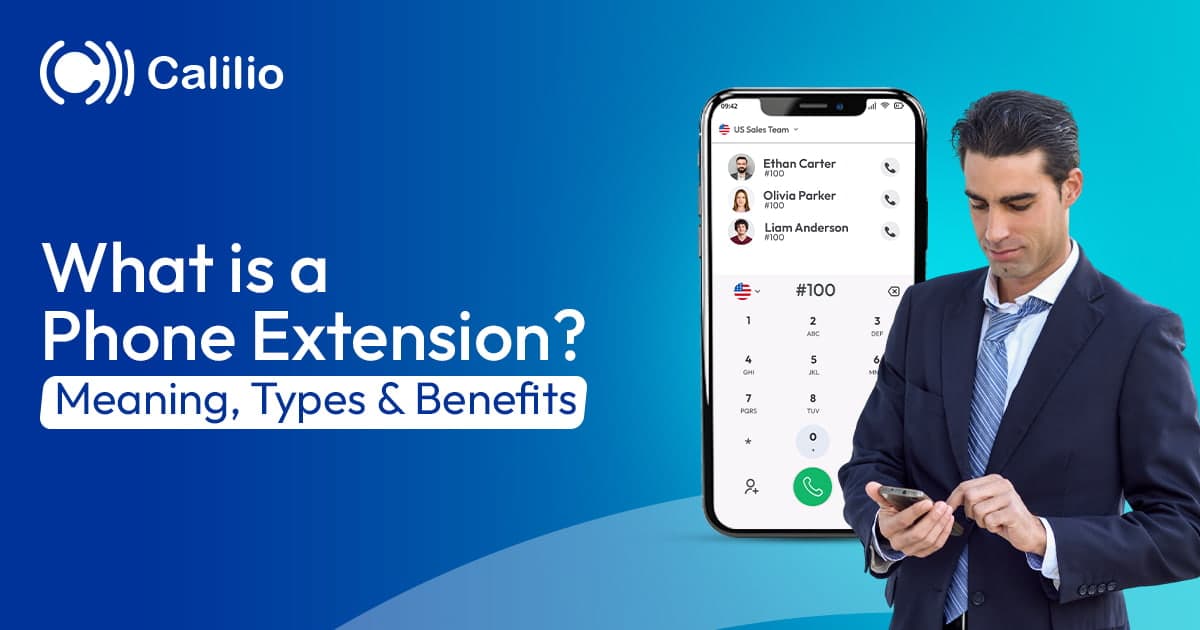
A phone extension is a short number added to a main phone line. In other words, it works as a branch of the main phone system. Therefore, a company can assign each team or department its own unique extension number.
Instead of dialing a full number, callers directly enter the extension with the phone number to reach the right department. In particular, staff can reach one another right away by dialing only a few digits. Likewise, customers can call the main number, then enter the right extension to connect directly with the right person or department.
For example, if a company’s main phone number is (555) 789-1000, and the sales department’s extension is 105, a customer can dial (555) 789-1000 105 to connect directly with the sales team without going through the main receptionist.
In traditional landline systems, extensions were part of a private branch exchange (PBX) that routed calls through physical wires and switchboards. Today, modern systems use Voice over Internet Protocol (VoIP) or cloud-based technology, allowing extensions to work across computers, smartphones, and remote offices without needing separate phone lines.
How Does a Phone Extension Work?
A phone extension operates through a central system, such as PBX, VoIP, or cloud-based platforms, which manages all company calls. When someone dials the main number along with an extension, the system automatically directs the call to the right employee or department based on the specific extension number.
- Central System Setup: A company uses one main phone line connected to a system like PBX, VoIP, or a cloud-based phone platform. In PBX systems, this routing process is done through wired connections, whereas VoIP and cloud systems handle this digitally through the internet.
- Incoming Call Handling: When a customer dials the company’s main number along with an extension, the call first reaches the central system.
- Call Routing: The system reads the 3–5 digit extension and identifies which employee, department, or team the call belongs to. It then transfers the call directly to that destination without using multiple phone numbers.
Types of Phone Extensions
Below are the different types of phone extensions you can use:
1. Physical Extensions
A physical extension is the classic setup where a desk phone connects through wires to a specific device. It’s dependable and simple, but it doesn’t offer much flexibility if you or your team work remotely.
2. VoIP/Cloud-based Extensions
Modern phone systems now use VoIP or cloud-based extensions, which make communication faster, smarter, and location-free. Some cloud setups can also use an AI voice generator for automated greetings or IVR prompts, helping keep caller instructions clear and consistent.
- Employee Extensions: These are short internal codes given to each team member, letting you reach them directly through the company’s main number. It’s a quick and personal way to connect without going through a receptionist.
- Department Extensions: Instead of calling one person, these extensions route your call to an entire department, like Sales or Support. In fact, it can ring everyone at once or one by one until someone answers, making sure no call goes unattended.
- Voicemail Extensions: When someone is unavailable, this option lets callers leave a message directly in their voicemail box. So, you can even receive it as an audio file in your email, keeping communication seamless and professional.
- Automated Directory Extensions: With this option, you don’t need to remember extension numbers. You can simply type a person’s name using your keypad, like pressing the numbers for “J-O-H-N” to reach John. It’s perfect for large organizations.
- Ring Group Extensions: This extension connects one number to a group of extensions. When someone dials it, all team members’ phones ring together or in a set order, depending on your system’s rules. So, Ring Group extension helps your team share call responsibility and respond faster.
Home Phone Extension vs. Business Phone Extension
Phone extensions are used in both homes and businesses, but they work differently. At home, a single phone line is connected to multiple telephones in your home, so you can answer calls from any room. However, when one of the devices is busy, the whole phone line is shown busy.
In a business phone extension, a short internal number is linked to a company’s main line as an extension. It lets multiple employees use one phone number simultaneously as separate devices are connected through extensions.
Here are the key differences between a home and a business phone extension.
Aspect | Home Phone Extension | Business Phone Extension |
| Purpose | Used for convenience within a household. | Designed for efficient internal and external communication in offices. |
| Number of Devices | Usually limited to 2–3 telephones. | Can support dozens or hundreds of extensions. |
| System Type | Basic analog or cordless system. | PBX, VoIP, or cloud-based phone systems. |
| Features | Call sharing and intercom within the home. | Includes call routing, voicemail, conferencing, IVR, and call analytics. |
| Setup Cost | Low and easy to install. | Higher initial cost, but scalable for business growth. |
| Maintenance | Minimal maintenance. | Managed by IT or service providers. |
| Integration | Standalone setup. | Often integrates with CRM, email, and collaboration tools. |
How to Dial a Phone Extension?
To dial a phone number extension, start by entering the main business number. Once the call connects or you're prompted, enter the phone extension code to reach the specific person or department.
Dialing the Extension Number from a Landline
- Dial the main business phone number.
- When the system gets connected, enter the extension directly if prompted.
- In case the extension does not connect, listen to the prompt instruction and enter the mentioned extension.
Dialing the Extension Number from an Android
- Dial the main business number.
- Tap the three vertical dots next to the number.
- Select “Add 2-sec pause” to insert a comma (,).
- Enter the extension number.
- Press the call button.
Dialing the Extension Number from an iPhone
- Enter the main number.
- Press and hold the asterisk (*) until it changes to a comma (,).
- Add the extension number.
- Press the call button.
Advantages of Using a Phone Extension
The advantages of using a phone extension include lower communication costs, easy scalability, and faster connectivity across teams. Likewise, it enhances customer experience, simplifies internal collaboration, and supports remote work by keeping everyone connected through a unified system.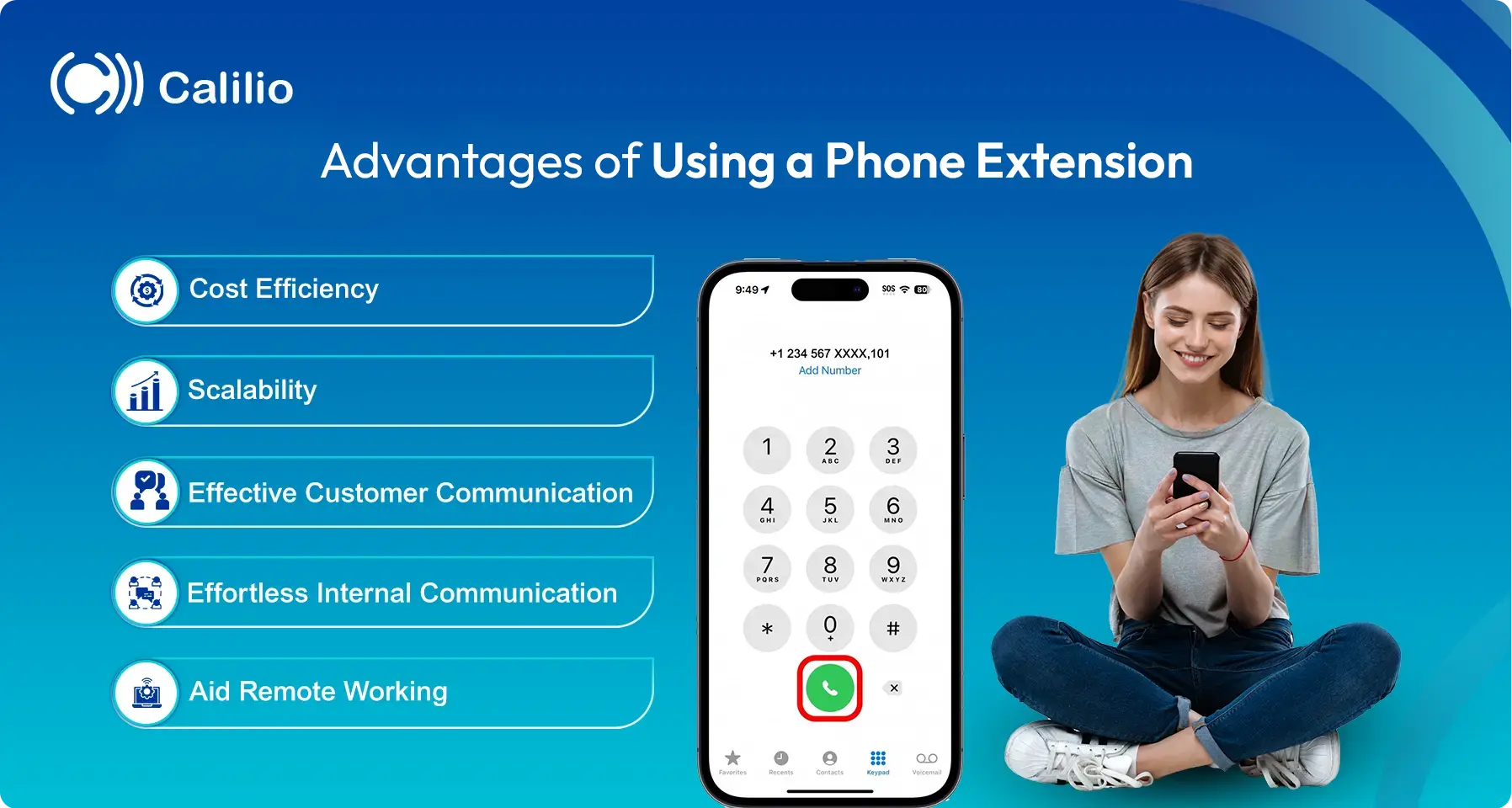
1. Cost Efficiency
One of the primary benefits of phone extensions is cost efficiency. Since businesses can use phone extensions to reduce the need for multiple phone lines, it lowers overall telecommunication expenses. Plus, the setup is particularly cost-effective for growing businesses that need to add new lines frequently.
2. Scalability
As a business grows, you can add new extension phone numbers without significant infrastructure changes. It also allows companies to expand their communication network seamlessly. Moreover, you can accommodate new employees or departments whenever your business needs it.
3. Effective Customer Communication
Phone extensions enhance customer communication by improving their experience when contacting your business. They can reach the appropriate department or individual swiftly without the intervention of live receptionists. It reduces their wait times and improves customer satisfaction.
4. Effortless Internal Communication
Extensions make connecting with colleagues within the same organization effortless. For instance, you don’t need to go through a separate phone line to reach the desired team member. Instead, you can simply dial the extension and share the information.
5. Aid Remote Working
Phone extension numbers are beneficial for remote working scenarios. Employees working from different locations can quickly connect to the main office line. It ensures seamless communication regardless of their physical location.
Conclusion
Phone extensions let teams, departments, and customers connect seamlessly through a single main number, reducing delays, cutting costs, and keeping calls organized. Whether it’s for internal collaboration, customer support, or remote work, extensions ensure everyone stays connected without the complexity of multiple phone lines.
Modern phone systems, especially VoIP and cloud-based platforms, make managing extensions flexible and cost-effective across devices and locations. By implementing phone extensions, businesses can streamline communication, enhance customer satisfaction, and scale smoothly as they grow.
Summarize this blog with:
Frequently asked questions
What is a phone extension number?
A phone extension number is a short number assigned within an organization’s phone system, allowing callers to reach specific departments or individuals without needing a separate phone number.
What is your phone extension?
What is a call extension?
How many digits is a phone extension?
What is the extension line of a telephone?
What is a phone extension example?
What is a phone extension on a job application?
How do I know my phone extension?

Still have questions?
Can’t find the answer you’re looking for? Please chat with our friendly team.
Stay in the loop
Get the latest call insights, trends, and updates delivered straight to your inbox.
By subscribing, you agree to receive updates from Calilio.
You can unsubscribe anytime.
Enter the World of AI Business Phone System with Calilio
Improve your business operation with Calilio's advanced virtual phone system. Join today for a better way to connect.