- Partners
- Contact Us
- Log in
What is Telecom as a Service (TaaS)?

Reliable telecommunication is a core part of running any business. However, a traditional phone system involves on-site hardware, long-term carrier agreements, and ongoing maintenance. As companies grow, expanding to new locations or supporting remote teams with these systems can become costly and complex.
Telecom as a Service (TaaS) offers a flexible solution to this. It shifts telecom infrastructure to the cloud, enabling businesses to manage phone numbers, calls, and communication tools over the internet. This approach simplifies setup and makes it easier to scale communication systems without relying on physical equipment.
In this blog, we’ll explore TaaS in detail, including how it works, its key benefits, who it is best suited for, and practical tips for choosing the right provider.
Key Highlights:
Telecom as a Service (TaaS) replaces traditional PBX hardware and fixed phone lines with cloud-hosted telecom infrastructure.
TaaS increases communication efficiency by centralizing user management, routing rules, and number provisioning in one platform, while reducing infrastructure costs and enabling fast scaling without service interruption.
TaaS is ideal for organizations that require flexible, scalable communication systems without maintaining telecom hardware across multiple offices or remote teams.
Before choosing a TaaS provider, it's important to review the scalability options, geographic number availability, security protections, integration capabilities with existing tools, and pricing.
What is Telecom as a Service (TaaS)?
Telecom as a Service (TaaS) is a cloud-based telecom model where businesses get telecom services like voice, messages, video, and connectivity on a subscription basis. This means they don’t have to build and maintain their own telecom infrastructure. The service provider maintains the infrastructure, network connections, and system updates, while the business controls users and settings through a web platform or API.
Core Characteristics of Telecom as a Service:
- Cloud-hosted communication infrastructure
- Centralized management through an online dashboard
- Subscription-based pricing structure
- Internet-powered voice and messaging
- Flexible scaling as business needs change
How Does TaaS Work? (Step-by-Step)
TaaS works by moving traditional telecom infrastructure to the cloud. A provider manages the telephony network, while businesses configure users, routing rules, and features through software. Calls and messages run over internet-based networks rather than physical phone lines.
Here’s how the process typically works: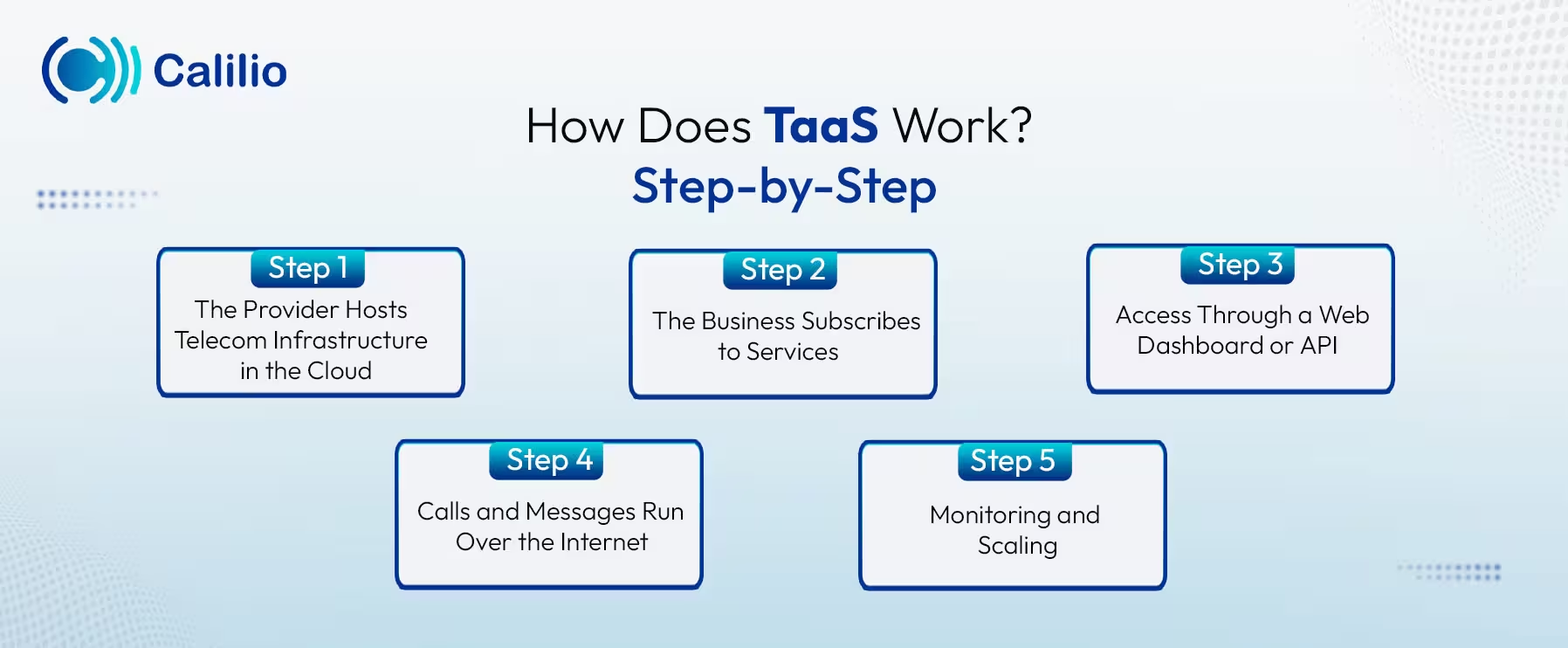
Step 1: The Provider Hosts Telecom Infrastructure in the Cloud
The TaaS provider hosts and maintains core telecom systems within secure data centers, including call routing, voice processing, messaging, and number provisioning.
Step 2: The Business Subscribes to Services
Businesses select the communication services they require, such as business phone numbers, calling capabilities, messaging, or advanced routing features. Once selected, services are activated within the provider’s platform.
Step 3: Access Through a Web Dashboard or API
Administrators manage their telecom setup through a web dashboard or API. They can assign numbers, set call flows, define business hours, and integrate communication tools with CRM or other software systems.
Step 4: Calls and Messages Run Over the Internet
When a call or message is initiated, it is processed through the provider’s cloud-based telecom network. Voice data is transmitted digitally and routed to the intended recipient. The same process applies to messaging and other communication services.
Step 5: Monitoring and Scaling
Businesses monitor activity, adjust configurations, and expand users or services from a single interface. Since the infrastructure is centrally managed, scaling communication systems does not require infrastructure changes on the business side.
How Does TaaS Benefit Business Communication?
Telecom as a Service reduces hardware costs for business communication, simplifies system management and allows fast scaling of users and phone numbers. It supports remote teams and also lowers IT workload by shifting infrastructure responsibility to the provider.
1. Cost Efficiency and Flexibility
TaaS replaces big upfront telecom investments with predictable monthly or usage-based costs. You pay for the services you use instead of buying and maintaining PBX hardware and other equipment.
2. Scalability and Agility
As communication needs change, services can be scaled up or down quickly. New users, phone numbers, or features are added inside the platform, so growth does not require new infrastructure.
3. Support for Remote and Hybrid Work
Because TaaS is delivered online, employees can connect to the same telecom platform from the office, home, or while traveling. This helps maintain clear communication even when teams are spread out.
4. Reduced IT Maintenance
The TaaS provider looks after infrastructure, updates, and performance. Internal IT teams do not need to manage telecom hardware or carrier switches.
5. Business Continuity
Cloud-based telecom platforms are usually designed with backups and failover options. If one location has an issue, communication can often continue through the provider’s other network, helping reduce downtime.
Replace Hardware-Heavy Telecom Setups with a Modern, Cost-Effective Cloud-Based Phone System!
Who is Telecom as a Service (TaaS) Best for?
TaaS is best for startups, growing businesses, remote-first companies, multi-location organizations, call centers, and sales teams that need scalable communication systems without managing telecom hardware or complex carrier contracts.
1. Startups and Growing Teams
Rapidly scaling businesses require communication systems that can expand alongside team growth. TaaS supports dynamic user provisioning, number allocation, and feature configuration without infrastructure upgrades.
2. Remote-first Companies
Telecom-as-a-Service is ideal for remote-first companies that rely on cloud-based tools to keep teams connected. Since the system works over the internet, employees can make and receive calls, access dashboards, and manage communication from anywhere. It ensures consistent communication without needing physical office infrastructure.
3. Multi-location Businesses
Retail chains, franchise networks, and regional offices often require centralized management of numbers, routing policies, and communication settings across multiple sites. TaaS consolidates these functions into a single administrative layer.
4. Call Centers and Support Teams
High-volume communication environments require a phone system with configurable routing, queue management, monitoring, and reporting capabilities. TaaS platforms provide these controls at the service level.
5. Sales-driven Teams
TaaS works well for sales-driven teams that handle high call volumes and need reliable communication tools. It supports features like call routing, number management, and performance tracking, which help teams stay organized and respond faster to leads.
How to Choose the Right Telecom as a Service Provider?
When selecting a TaaS provider, look for scalability, number availability across regions, transparent pricing, strong security standards and integration capabilities. Also, evaluate customer support reliability to ensure the platform prioritizes your long-term needs.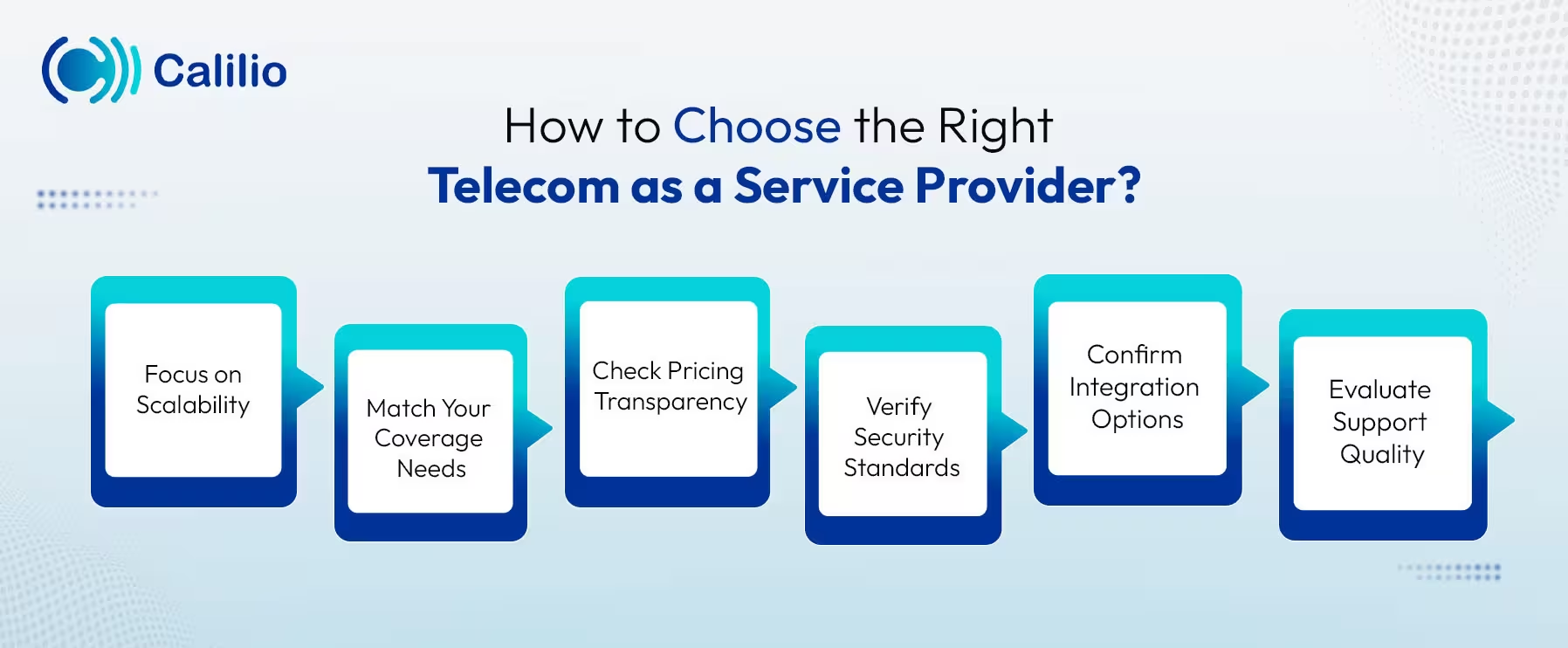
- Focus on Scalability: Choose a provider that lets you quickly add or remove users, numbers, and features as your needs change.
- Match Your Coverage Needs: Pick a platform that offers local, mobile, and toll-free numbers in all the countries and regions you operate in or plan to enter.
- Check Pricing Transparency: Look for clear plans with well-defined call rates, number costs, and add-on fees, without hidden charges.
- Verify Security Standards: Select a provider that offers encryption, role-based access control, and clear data storage and compliance policies for privacy control.
- Confirm Integration Options: Ensure the platform supports APIs and integrations with your CRM, helpdesk, and other core business tools for a smoother experience.
- Evaluate Support Quality: Choose a provider with responsive support, helpful documentation, and reliable onboarding assistance.
What Does the Future Look Like for TaaS?
TaaS continues to evolve as communication technology advances. Faster networks, smarter automation, and deeper software integration are shaping the next phase of cloud-based telecom. In particular, advancements in technologies such as 5G expansion, AI and automation, and API-first integrations are playing a central role in defining how TaaS platforms will operate in the coming years.
1. 5G Expansion
As 5G networks continue to expand, TaaS providers will deliver faster speeds and lower latency. This will improve the call quality, reduce connection delays, and support smoother video communication. For businesses operating in rural areas, 5G will help provide more stable and reliable connectivity.
2. AI and Automation
In the future, AI will become a central part of TaaS. Instead of relying on a manual procedure, the system will automatically route calls, detect fraud, monitor performance, and analyze customer conversations. Automation will reduce repetitive tasks and allow teams to focus on higher-value interactions while improving overall communication efficiency.
3. API-first Integrations
Many TaaS platforms are already following an API-first approach. In the future, integration capabilities will grow further. Businesses will connect telecom systems easily with CRM, helpdesk, and automation tools through developer-friendly APIs.
Conclusion
Telecom as a Service (TaaS) reshapes how businesses handle communication. Instead of managing PBX hardware and long-term carrier contracts, companies now rely on cloud-based telecom platforms for business communication.
By moving telecom infrastructure to the cloud, TaaS reduces upfront costs, simplifies call management, and removes the need for physical equipment. As a result, it has become a practical solution for startups, growing teams, remote offices, and multi-location businesses that need flexible and scalable communication systems.
However, reaping the full benefit of TaaS depends on choosing the right cloud phone system. A reliable provider should support seamless call handling, number management, scalability, and strong security standards while adapting to long-term business needs.
Providers like Calilio operate within the TaaS model, enabling businesses to handle calls and SMS over the internet without infrastructure complexity. With call management features like advanced call routing, Interactive Voice Response, call forwarding, analytics, and AI-powered tools for transcription and performance insights, teams gain better visibility and control over communication.



Summarize this blog with:
Frequently asked questions
Is TaaS secure?
Yes, most Telecom as a Service (TaaS) platforms are designed with security built into the service layer. Most providers use data encryption for voice and messaging, role-based access controls, and secure cloud infrastructure. Many also comply with industry standards and regional data regulations.
How much does TaaS cost?
Can small businesses use TaaS?

Still have questions?
Can’t find the answer you’re looking for? Please chat with our friendly team.
Stay in the loop
Get the latest call insights, trends, and updates delivered straight to your inbox.
By subscribing, you agree to receive updates from Calilio.
You can unsubscribe anytime.
Enter the World of AI Business Phone System with Calilio
Improve your business operation with Calilio's advanced virtual phone system. Join today for a better way to connect.