
Call Center Software for Insurance: How It Improves Agent Productivity

Insurance agencies handle a nonstop flow of customer calls every day regarding policies, coverage changes, claims, and renewals. When these interactions are managed through basic phone systems or manual processes, it results in missed calls, long wait times, and frustrated customers.
To keep up, many insurance agencies are turning to dedicated call center software. These solutions bring all customer communication into one place, helping agents handle calls faster, stay organized, and deliver a smoother experience for policyholders.
Some agencies hesitate to adopt call center software due to concerns about cost, training, or system complexity. However, modern cloud-based platforms are designed to be easy to set up, scalable, and simple for agents to use.
In this guide, we’ll explore what insurance call center software is, its benefits, key features, and use cases that make it valuable for insurance agencies of all sizes.
What is an Insurance Call Center Software?
An insurance call center software is a centralized system that manages all communication between an insurance agency and its clients, including phone calls, messages, and follow-ups with policyholders, prospects, and partners. It supports everyday insurance tasks such as policy inquiries, claims, renewals, and general support.
By centralizing communication, insurance call centers help agencies respond faster, reduce errors, and provide a consistent, professional experience for clients. Additionally, they come with advanced features such as automated call routing, Interactive Voice Response (IVR), call recording, analytics, and Customer Relationship Management (CRM) integration to handle high call volumes and provide timely, personalized service.
Boost Your Agent Productivity and Enhance Customer Service with a Feature-Rich Call Center Software for Insurance Agencies
Benefits of Using a Call Center Software for Insurance Agencies
A call center software helps insurance agencies to manage calls and improve agent productivity. It also supports better data management and flexible scaling as your call volumes or teams grow.
Increased Agent Productivity
By automating routine tasks such as call logging, follow-ups, and scheduling, a call center solution helps insurance agents to spend less time on administrative work and more time assisting customers. This improves efficiency, reduces workload stress, and boosts overall team performance.
Efficient Call Handling
An insurance call center software uses smart call routing and IVR (Interactive Voice Response) to direct callers to the right department or agent. This reduces wait times, improves First Call Resolution (FCR), and ensures customers receive timely assistance for policies, claims, or inquiries.
Better Data Management
Call center systems store all customer interactions, policy records, and claim updates in one secure place. This helps agents access accurate information quickly, reduce errors, and provide consistent service across sales, support, and claim calls.
Scalability & Flexibility
A dedicated call center software can easily handle growing call volumes, additional agents, and expanded services, as your insurance agency grows. You can add new agents without making changes to the hardware or disrupting your daily operation.
What are Insurance Call Center Software Must-Have Features?
An insurance call center software must include features like call routing, CRM integration, omnichannel support, and automated follow-ups to deliver reliable service and boost overall call center efficiency.
1. Omnichannel Support
An omnichannel support allows insurance call centers to manage all customer interactions across multiple channels, such as phone calls, emails, live chat, and SMS from a single platform. It helps insurance agencies respond faster, provide consistent service, and enhance the overall client experience across all communication channels.
2. Automated Call Routing
Call routing directs incoming calls automatically to the most suitable agent or department based on predefined rules such as inquiry type, agent skill level, or client priority. It helps reduce wait times, ensures calls are handled by the right person, and improves overall operational efficiency.
3. Interactive Voice Response (IVR)
IVR allows callers to navigate a structured menu of options before reaching an agent, such as selecting claims, policy renewals, or billing inquiries. The clients reach their desired support quickly without getting through multiple call transfers.
4. Callback Options
Callback technology allows clients to request a return call instead of waiting on hold. This is especially useful during peak hours when call volume is high. By offering callbacks, insurance call centers can maintain client satisfaction, reduce missed opportunities, and ensure timely responses to inquiries.
5. Call Recording
The call recording feature helps capture all client-agent interactions. It is essential for staying compliant with industry regulations, verifying details for claims or policy updates, and training agents for better performance. It plays an important role in maintaining high-quality service standards and resolving any disputes as they happen.
6. Call Queuing
Call queuing organizes incoming calls into a structured line, ensuring each caller is attended to in order. This reduces dropped calls and keeps workflows smooth, helping insurance agencies provide reliable service.
7. CRM Integration
When an insurance call center software integrates with a CRM system, agents have instant access to customer policy details, claim history, and past interactions. It allows agents to provide personalized support, answer questions faster, and handle claims or policy changes more accurately.
8. Automated Follow-ups & Reminders
An insurance call center software can automatically schedule follow-up calls, emails, or reminders for clients regarding policy renewals, pending claims, or important deadlines. It ensures that clients never miss critical updates and helps agents manage their workload while maintaining consistent communication.
Common Use Cases of Call Center Software for Insurance Companies
Insurance agencies can utilize call center solutions to handle policy inquiries, process claims, manage renewals, and offer emergency support for clients. The solution helps agents to deliver faster service and improve overall customer satisfaction.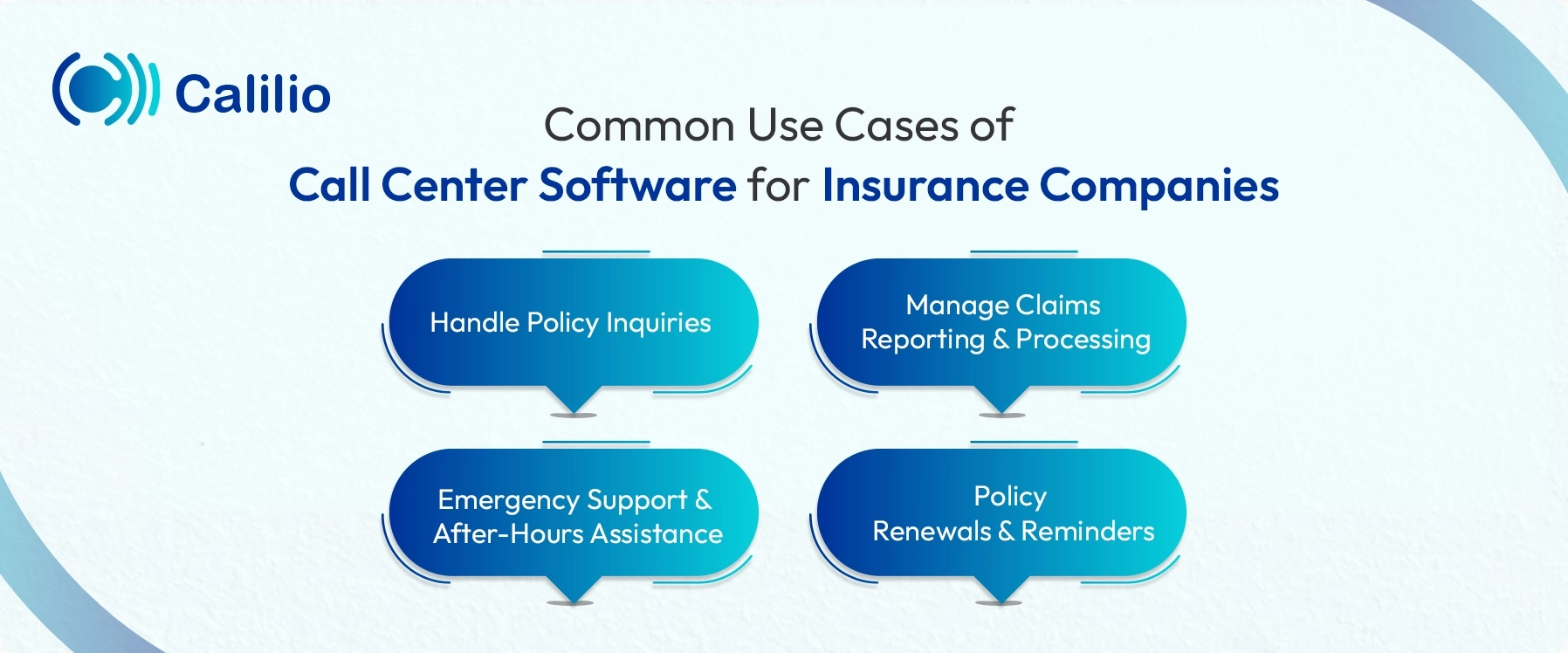
1. Handle Policy Inquiries
Insurance call centers get a high number of calls from policyholders about coverage details, premium amounts, terms, and conditions. Agents can use the software to quickly access customer records and provide accurate answers, helping clients understand their policies and reducing confusion or errors.
2. Manage Claims Reporting & Processing
Call centers play a critical role in the claims process by allowing policyholders to report incidents over the phone at any time. Agents can collect detailed information through multiple channels using a single platform. A call center software can also create claim tickets and guide customers through the next steps.
3. Policy Renewals & Reminders
Insurance agencies can use call center solutions to automatically send reminders for policy renewals and guide customers through the renewal process. Proactively contacting clients before their policies expire, these solutions help retain clients while ensuring timely payment and documentation.
4. Emergency Support & After-Hours Assistance
Insurance call center software helps provide 24/7 support to assist customers during emergencies such as accidents, natural disasters, or urgent claims situations. Round-the-clock availability ensures clients receive immediate guidance, reinforcing trust and strengthening the agency’s reputation.
How to Choose the Right Call Center Software for Insurance Agencies?
To choose the right call center software for insurance agencies, start by assessing your agency’s needs, considering the types of calls handled across the sales and support teams. Then, evaluate the available features, scalability, integration capabilities, data security, compliance standards, and the level of support provided by the vendor.
- Assess Your Agency’s Needs: Identify your agency’s needs by analyzing factors such as daily call volume, number of agents, and the communication channels (calls, emails, chat) in use. Also, consider the specific tasks that the team handles, like claims processing, policy inquiries, or renewals.
- Industry-specific Features: Look for call center solutions with features designed for insurance agencies, such as CRM integration, call recording, and automated reminders.
- Scalability and Flexibility: Choose a software that can grow with your business. It should easily allow you to add or reduce agents, support multiple communication channels, and expand features as your needs change.
- Integration Capabilities: Make sure the software can connect with your existing tools, like CRM systems, email platforms, and other business applications, to keep data synchronized and maintain seamless workflows.
- Cloud-based Accessibility: Choose a cloud-based platform that your team can access from anywhere, on any device, ensuring flexibility, seamless collaboration, and uninterrupted operations.
- Review Support and Pricing: Consider vendor support, onboarding assistance, and pricing plans to ensure the software fits your budget and comes with reliable service.
Conclusion
Insurance call center software helps agencies streamline communication, improve agent productivity, and deliver a consistent, high-quality customer experience. It enhances daily activities like handling inquiries, processing claims, managing renewals, and reaching out to leads, while improving response time. However, not all solutions offer the same level of functionality, reliability, or ease of use.
If you’re looking for a reliable, feature-rich, and affordable insurance call center software, choose Calilio. With features like IVR and call queues to manage incoming calls, call analytics to get detailed insights into customer interactions, and a power dialer to reach prospects and follow up faster, Calilio offers an all-in-one solution for businesses of all sizes.
Summarize this blog with:
Frequently asked questions
Can small insurance agencies afford a call center solution?
Yes, small insurance agencies can also afford call center solutions. Most service providers, including Calilio, offer a low-priced but feature-rich cloud-based call center solution, including all the essential call management features.
Is training required to operate a call center for insurance?
Can call centers help with insurance lead generation?
Are call centers for insurance agencies only for large companies?
How does a call center help with compliance in the insurance industry?

Still have questions?
Can’t find the answer you’re looking for? Please chat with our friendly team.
Stay in the loop
Get the latest call insights, trends, and updates delivered straight to your inbox.
By subscribing, you agree to receive updates from Calilio.
You can unsubscribe anytime.
Enter the World of AI Business Phone System with Calilio
Improve your business operation with Calilio's advanced virtual phone system. Join today for a better way to connect.