- Partners
- Contact Us
- Log in
UCaaS vs. VoIP: Which is Better for Your Business?

UCaaS and VoIP are often the popular choices when upgrading to cloud-based phone systems from traditional ones. Both technologies run on internet-based systems, which is why many people assume they offer the same thing. But, in reality, they serve different purposes.
VoIP primarily focuses on voice communication over the internet, while UCaaS brings multiple communication channels into one platform. However, that’s not the only difference; they also vary in features, scalability, and how they support day-to-day business communication.
Without understanding the differences in detail, businesses may choose a system that does not match their needs.
So, in this guide, we’ll compare UCaaS and VoIP to help you select the right option for your business.
Key Highlights:
VoIP focuses on voice communication, whereas UCaaS supports multiple communication channels and team collaboration within a single platform.
Both VoIP and UCaaS run on internet-based systems, support remote work, reduce hardware needs, and allow access across multiple devices.
VoIP is the best option for businesses that mainly need calling, while UCaaS is better for growing teams that need multiple communication tools in one place.
What is VoIP?
Voice over Internet Protocol (VoIP) is a technology that allows people and businesses to make and receive phone calls using the internet instead of traditional phone lines. It converts a person’s voice into digital data packets and sends them over the internet in real time during a call.
Unlike traditional phone setups that depend on physical telephone lines, VoIP runs on internet-based systems and software. You can make calls from different devices, including desk phones, laptops, smartphones, or dedicated apps, as long as you have a stable internet connection.
Key Features of VoIP
VoIP phone systems offer several features that help businesses manage calls more efficiently and improve customer communication.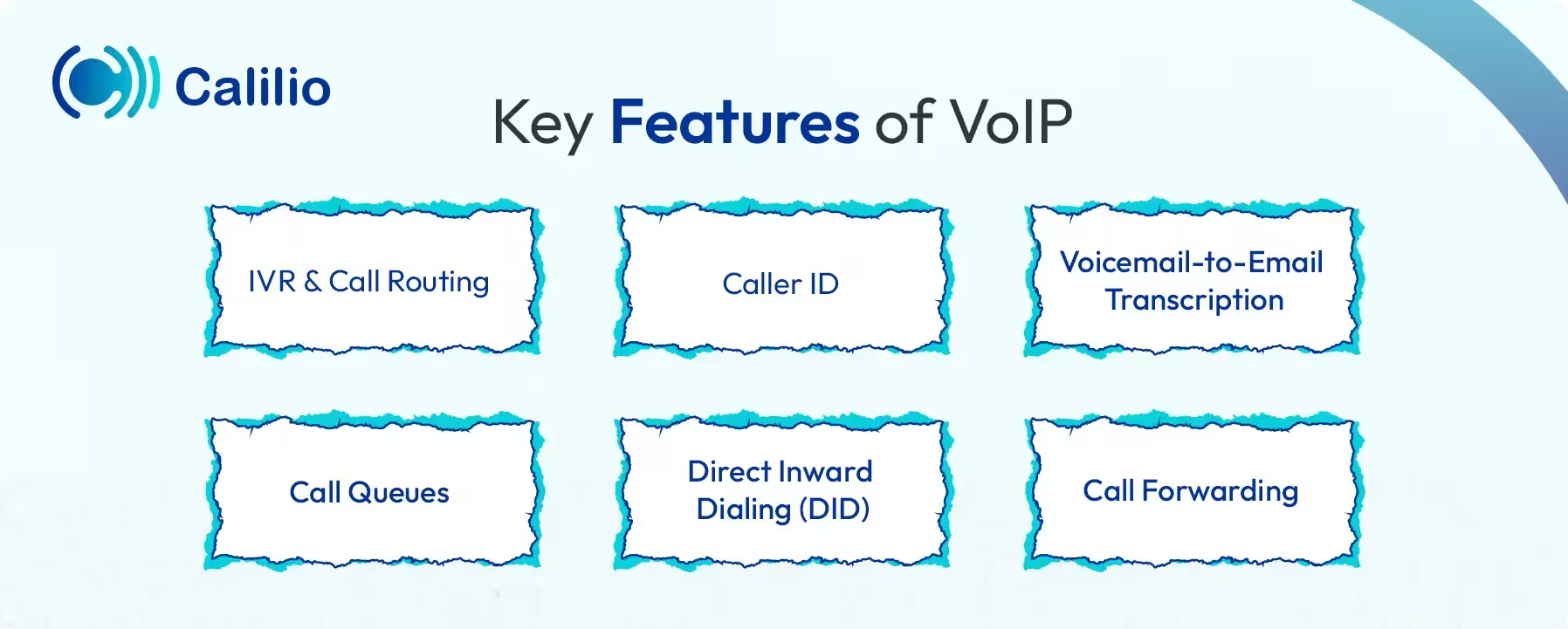
- IVR and Call Routing: Interactive Voice Response (IVR) systems guide callers through menu options and direct them to the appropriate department or agent.
- Caller ID: Caller ID lets you see who is calling before you answer.
- Voicemail-to-Email Transcription: Voicemail messages are converted into text and sent directly to email inboxes to allow quick reviews.
- Call Queues: Call queues organize incoming calls and place them in line until an agent becomes available.
- Direct Inward Dialing (DID): Direct Inward Dialing allows callers to reach specific employees directly without going through a receptionist or main menu.
- Call Forwarding: Call forwarding redirects incoming calls to another number if you cannot answer.
Manage Your Calls and Messages with a Unified Communication Solution from Calilio!
What is UCaaS?
Unified Communications as a Service (UCaaS) is a cloud-based communication platform that combines multiple business communication tools into one system. It brings voice calls, messaging, video meetings, and collaboration tools together on a single cloud platform.
Instead of using separate apps for calling, chatting, and meetings, UCaaS allows teams to access everything in one place. Hence, UCaaS helps employees connect, share information, and work together more efficiently from any location.
Key Features of UCaaS
UCaaS includes internet-based calling, team messaging, and status indicators to support smooth communication. Also, with centralized management, administrators can control users and settings from one place.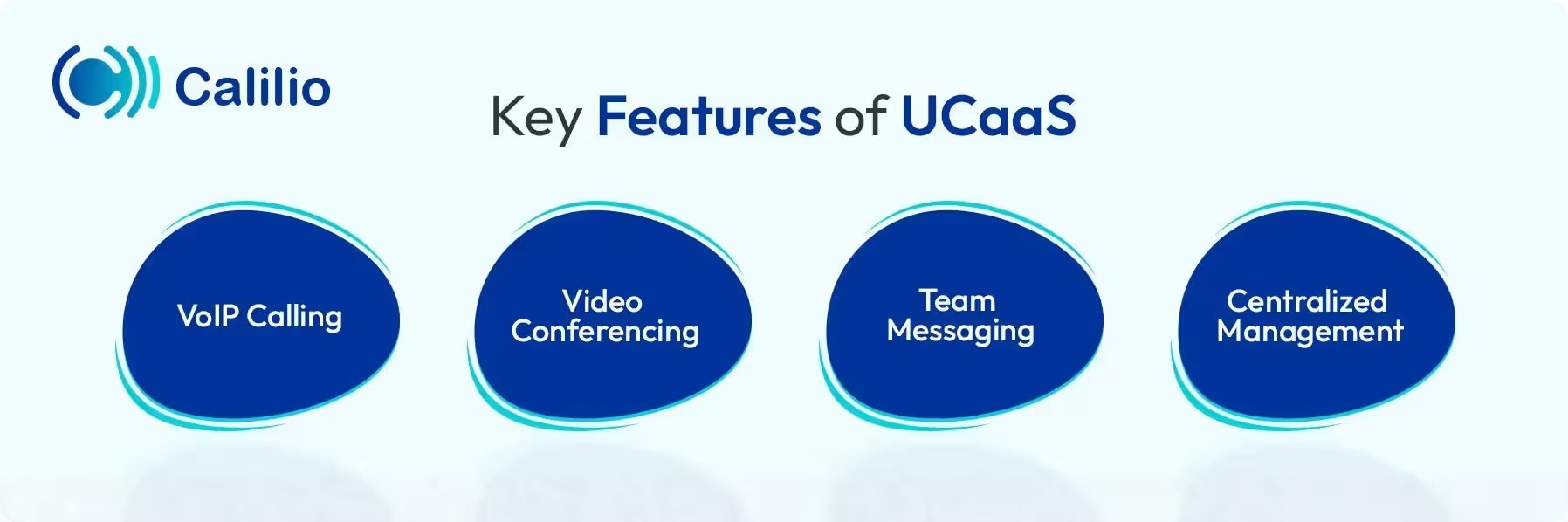
- VoIP Calling: UCaaS platforms include internet-based voice calling along with call management tools such as call routing, call forwarding, call queues, voicemail, and auto-attendants.
- Video Conferencing: UCaaS supports a hybrid work environment and helps business personnel connect and communicate face-to-face. Users can host one-on-one or group video meetings with options like screen sharing and meeting recording.
- Team Messaging: UCaaS provides instant messaging and group chat tools that allow teams to communicate quickly within the platform.
- Centralized Management: Administrators can manage users, settings, and communication services from a single dashboard.
What are the Key Differences Between UCaaS and VoIP?
The key difference between UCaaS and VoIP is that VoIP focuses on internet-based calling, while UCaaS includes calling plus messaging, video meetings, and collaboration tools in one platform. Also, they vary in cost, scalability, and ease of setup and deployment, too.
1. Features Comparison
The main difference between VoIP and UCaaS is the range of communication tools they provide. VoIP allows you to make voice calls over the internet. Since the calls are made online, you can call from mobiles, laptops, desktops, or even tablets.
UCaaS, in contrast, includes voice calling along with other communication tools. These platforms support video meetings, team messaging, file sharing, and collaboration features within one system. With UCaaS, people can communicate through different channels without switching between multiple apps.
2. Cost Comparison
VoIP systems are usually more affordable because they focus mainly on voice communication. Businesses typically pay for the calling service and internet connection, making VoIP a cost-effective option for companies that rely mostly on phone calls.
UCaaS solutions, on the other hand, may cost more because they include more communication tools. However, since voice, messaging, video, and collaboration features are available on one platform, businesses can reduce the need for multiple separate applications. Over time, this can make UCaaS a more cost-effective option for teams that need more than just calling.
3. Scalability and Flexibility
Both VoIP and UCaaS systems offer scalability, but they expand in different ways. VoIP systems allow businesses to add more users or phone numbers as the teams grow.
UCaaS platforms also provide flexibility to add users, enable new collaboration tools, integrate additional software, or expand communication capabilities as your operations grow.
4. Ease of Setup and Deployment
VoIP can be deployed more easily than UCaaS as a standalone phone system. Businesses can start using a VoIP with minimal configuration.
UCaaS platforms may require slightly more setup because they include multiple communication tools such as messaging, video meetings, and integrations.
5. Integrations
VoIP systems usually offer basic integration capabilities, usually connecting with customer service tools like CRM platforms or helpdesk software. These integrations mainly support call-related activities, such as logging calls or tracking customer interactions.
UCaaS platforms provide deeper and more flexible integrations across multiple business applications. In addition to CRM systems, they can connect messaging apps, project management tools, and collaboration software.
6. Communication Tools
VoIP provides voice communication tools such as calling, call routing, voicemail, and call forwarding. These tools help businesses manage phone-based communication effectively.
UCaaS platforms focus on video meetings, team messaging, file sharing, and other tools for teamwork. With all these features in one platform, employees can easily connect and work together from anywhere.
Here’s a quick look at the differences between VoIP and UCaaS:
Aspect | VoIP | UCaaS |
| Purpose | VoIP is designed to enable calls over the internet. | UCaaS combines voice, messaging, video meetings, and collaboration tools in one platform. |
| Communication Tools | Primarily supports voice calls with features like call routing, voicemail, and call forwarding. | Supports voice calls, video conferencing, team messaging, file sharing, and collaboration tools. |
| Cost | Usually more affordable than UCaaS. | May cost more since it includes multiple communication tools and collaboration features. |
| Scalability | Allows businesses to add users, phone numbers, and call features as needed. | Scales across multiple communication channels and supports expanding teams and tools. |
| Ease of Setup | Typically easier to implement. | May require more configuration due to additional communication tools and integrations. |
| Deployment | Often deployed as a standalone internet-based phone system. | Usually deployed as a complete cloud communication platform that includes VoIP. |
| Integrations | Integrations are usually limited to call management tools. | Designed to integrate with CRM systems, productivity tools, and other business applications. |
| Dependency | VoIP works as a standalone system for internet-based calls and does not depend on UCaaS. | UCaaS platforms often use VoIP technology to support voice calling along with other tools like messaging and video meetings. |
What are the Similarities Between UCaaS and VoIP?
Both VoIP and UCaaS run on internet technology instead of traditional phone lines. They allow businesses to connect through cloud-based systems and use devices like phones, computers, or mobile apps. Furthermore, both support remote work and reduce the need for complex on-site hardware.
Aspect | VoIP | UCaaS |
| Cloud-based Communication | VoIP uses the internet instead of traditional phone lines. | UCaaS also runs on the cloud and delivers tools through the internet. |
| Remote Work Support | Employees can make and receive calls from different locations using internet-connected devices. | Teams can work from different locations using calls, chat, and video meetings. |
| Access Across Devices | Users can make calls from desk phones, mobile phones, or computers. | Users can access calls, chat, and meetings from mobile apps, desktops, or web browsers. |
| Internet Dependency | Call quality depends heavily on the internet connection. A weak or unstable network can affect call clarity. | UCaaS also relies on the internet to support voice and other communication channels. |
| Reduced Hardware Needs | Businesses can operate without complex on-site phone infrastructure. | UCaaS reduces the need for physical systems by using cloud services. |
VoIP vs. UCaaS: Which One Should Your Business Choose?
Both VoIP and UCaaS help businesses communicate using the internet, but they serve different needs. VoIP is a good option for businesses that only need a reliable calling system.
But if you want an all-in-one communication solution that supports teamwork and remote work, UCaaS is usually the better choice.
When is VoIP the Right Choice for Your Business?
VoIP is a suitable option for businesses in the following situations:
- Your business mainly relies on phone calls to communicate with customers or partners, and mostly uses the PBX or hosted PBX system.
- Your sales or customer support teams need to handle a high volume of calls daily.
- Your business doesn’t need additional collaboration tools.
- Your business is looking for a cost-effective phone solution with only basic calling features.
When is UCaaS the Right Choice for Your Business?
UCaaS is the right option for your business in the following situations:
- Your business deals with and interact customers through different communication channels.
- Your business has remote or hybrid teams that need reliable collaboration tools.
- You want to manage communication and team collaboration from a single platform instead of multiple apps.
- Your company relies on integrations with tools like CRM systems or productivity platforms.
Conclusion
VoIP and UCaaS are both internet-based solutions that help businesses cut costs, stay flexible, and keep teams connected—especially in remote work setups.
VoIP is a good option for those looking for a simple phone solution for voice calls over the internet. However, for growing businesses, UCaaS is the better alternative.
A cloud business phone system, like Calilio, offers a unified communication solution that combines VoIP calling, messaging, and voicemail into one platform. Moreover, it comes with advanced telephony features like call routing, call transfer, and Automatic Call Distribution (ACD) to support daily operations.



Summarize this blog with:
Frequently Asked Questions
Is UCaas better than VoIP for business?
Yes, UCaaS is generally a better option for modern businesses as it includes calling, messaging, video meetings, and collaboration tools in one platform, while VoIP includes calls over the internet only.
A VoIP system works well if you only need cost-effective voice calling, but UCaaS is more suitable for teams that rely on multiple communication channels.
Do businesses still need separate VoIP if they use UCaaS?
Is UCaaS more expensive than VoIP?
Can small businesses use UCaaS?

Still have questions?
Can’t find the answer you’re looking for? Please chat with our friendly team.
Stay in the loop
Get the latest call insights, trends, and updates delivered straight to your inbox.
By subscribing, you agree to receive updates from Calilio.
You can unsubscribe anytime.
Enter the World of AI Business Phone System with Calilio
Improve your business operation with Calilio's advanced virtual phone system. Join today for a better way to connect.