
What is Automatic Call Distribution (ACD)?
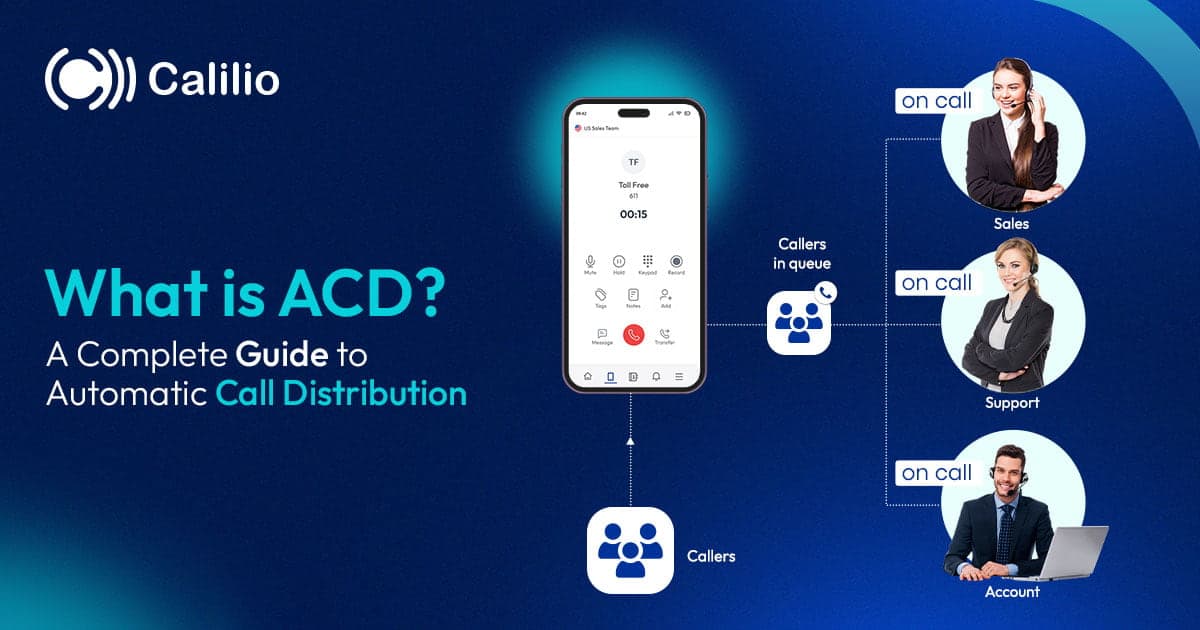

Handling customer calls is a key part of daily business operations. However, without a proper system, calls cannot be routed to the right person on time. As a result, this can affect both your customer experience and team efficiency. To solve this challenge, many organizations rely on Automatic Call Distribution (ACD).
ACD is a call management technology that automatically routes calls to the most appropriate agents, helping reduce wait times and improve the customer experience.
In this blog, you’ll learn what an ACD system is, how it works, its key features, benefits for businesses, and how to choose the right solution for your communication needs.
Highlights
Automatic Call Distribution is a telephony system that intelligently routes incoming calls to the most appropriate agent or department.
The ACD system routes calls using various factors such as caller ID, dialed number, time of the call, and IVR (Interactive Voice Response).
ACD and IVR work together but serve different purposes in the call flow. IVR gathers information from callers through automated menus, while ACD uses that information to redirect the call to the appropriate agent or queue.
Businesses can choose from multiple ACD routing methods, such as skills-based routing, round-robin routing, linear routing, time-based routing, simultaneous routing, longest idle-agent routing, and priority-based routing.
Businesses benefit from ACD because it helps improve team productivity, balance workloads, and provide faster support to customers.
What is Automatic Call Distribution (ACD)?
Automatic Call Distribution is a telephony feature that routes incoming calls to the most qualified, available agent or department based on predefined rules, such as skills, call priority, or time of day. It helps businesses manage large volumes of inbound calls by ensuring callers are directed to the right person without unnecessary transfers or delays.
How Does ACD Work?
ACD works by routing incoming calls to the most suitable agent based on set rules like skills, availability, or priority.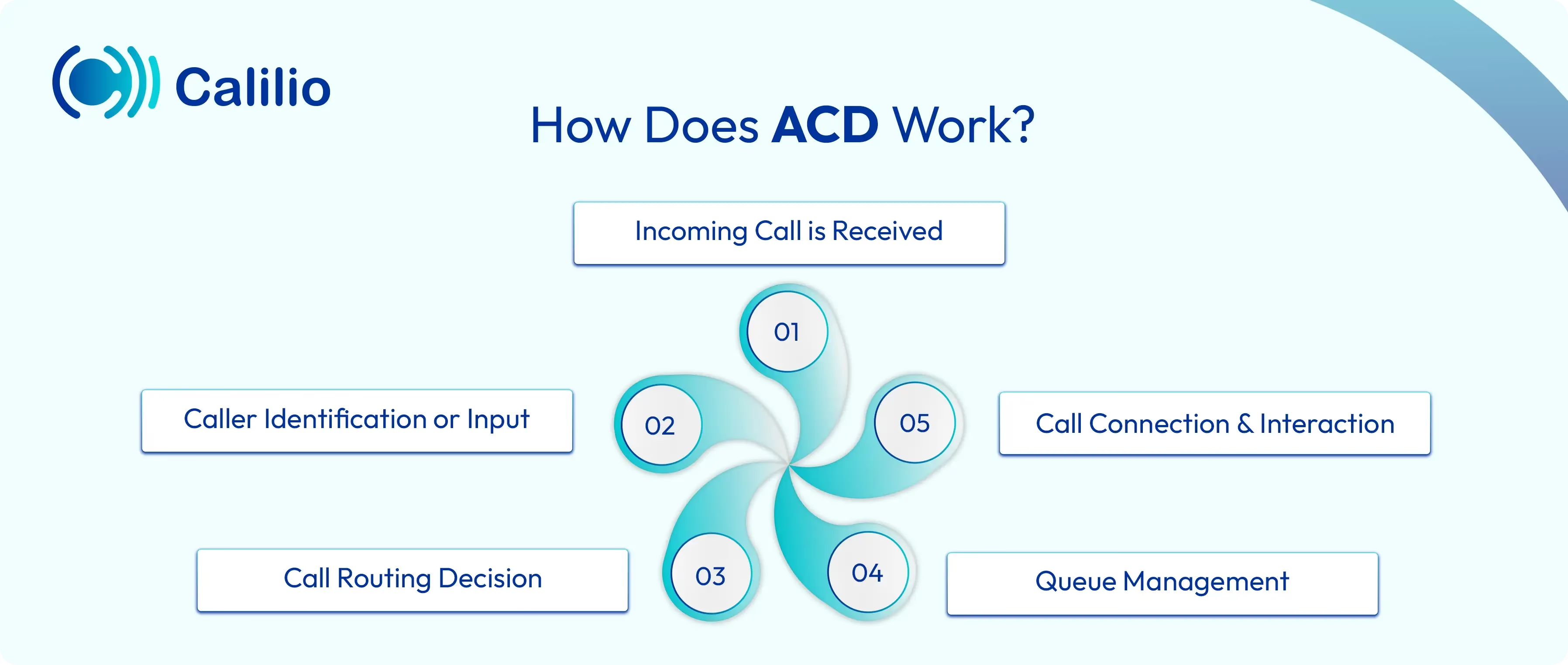
1. Incoming Call is Received
When a customer calls a company's phone number, the call is first received by the business phone system or contact center platform.
At this stage, the system gathers basic caller information such as:
- ANI (Automatic Number Identification), which is the caller’s phone number
- DNIS (Dialed Number Identification Service), the specific number the caller dialed (e.g., sales or support line)
- Time and location data for routing decisions
2. Caller Identification or Input
If an IVR system is available, the caller is prompted to select options (e.g., sales, billing, support), helping identify their needs. If no IVR is used, the system relies on available data, like the dialed number, to understand the call purpose.
3. Call Routing Decision
The ACD processes the collected information and applies routing logic such as skill-based routing, priority rules, or round-robin distribution to determine the best available agent or team.
4. Queue Management
If no suitable agent is available, the call is placed in a queue. The system monitors agent availability and holds the call until a matching agent becomes free. During this time, callers may hear hold music or status updates.
5. Call Connection and Interaction
When a suitable agent becomes available, the ACD automatically connects the call. In advanced systems, Computer Telephony Integration (CTI) may trigger a screen pop, showing the caller’s information from a CRM system before the agent answers.
ACD vs. IVR: What’s the Difference?
The difference between an ACD and an IVR system is that IVR interacts with callers to collect information, while ACD routes incoming calls to the most appropriate agent or queue based on predefined rules. In simple terms, IVR gathers caller input, and ACD uses that information to distribute the call.
Aspects | ACD (Automatic Call Distribution) | IVR (Interactive Voice Response) |
| Primary Function | Distributes incoming calls to the most suitable agent using a predefined rule | Interacts with callers and collects their requests through menu options |
| Decision Basis | Agent availability, skills, priority rules, or queue logic | Caller input (e.g., pressing numbers or speaking commands) |
| Role in Call Flow | Routes the call after the caller’s need is identified | First point of contact that asks callers to choose options |
| Interaction with Caller | No direct interaction | Direct interaction through voice or keypad |
What are the Types of ACD?
The main types of ACD include skills-based routing, round-robin routing, linear routing, time-based routing, simultaneous routing, longest idle-agent routing, and priority-based routing. Each type is designed to distribute incoming calls based on specific rules or conditions.
1. Skills-Based Routing
Skills-based routing directs incoming calls to agents who have the specific expertise required to resolve the caller’s issue. For example, technical support queries are routed to IT specialists, while billing questions go to finance representatives.
2. Round-Robin Routing
Round-robin routing, also known as circular routing, distributes calls evenly among available agents in a rotating sequence. Each new call is assigned to the next agent in line, helping ensure that workloads are balanced across the team.
3. Linear Routing (Fixed Order)
In linear routing, calls are assigned to agents in a predetermined order. If the first agent is unavailable, the system moves to the next agent on the list until someone answers the call. This method is often used in smaller teams with clearly defined call-handling roles.
4. Time-Based Routing
Time-based routing distributes calls according to predefined schedules such as business hours, time zones, or holidays. For example, calls may be routed to daytime support teams during working hours and redirected to after-hours support or voicemail outside business hours.
5. Simultaneous Routing (Ring-All)
Simultaneous routing alerts multiple agents at the same time when a call arrives. The call is connected to the first agent who answers. This routing method is useful for small teams that want to reduce wait times and answer calls quickly.
6. Longest Idle-Agent Routing
Idle-agent routing assigns calls to the agent who has been available for the longest time. This ensures a more balanced workload and prevents certain agents from becoming overloaded while others remain idle.
7. Priority-Based Routing
Priority-based routing ensures that high-value or urgent calls are handled first. For example, VIP customers or critical service requests can be directly routed to specialized agents or moved to the front of the queue.
What are the Benefits of Automatic Call Distribution?
ACD helps businesses manage high call volumes by routing callers to the most appropriate agents or departments quickly. This improves customer experience, increases agent productivity, and enables organizations to handle calls more effectively while supporting business growth.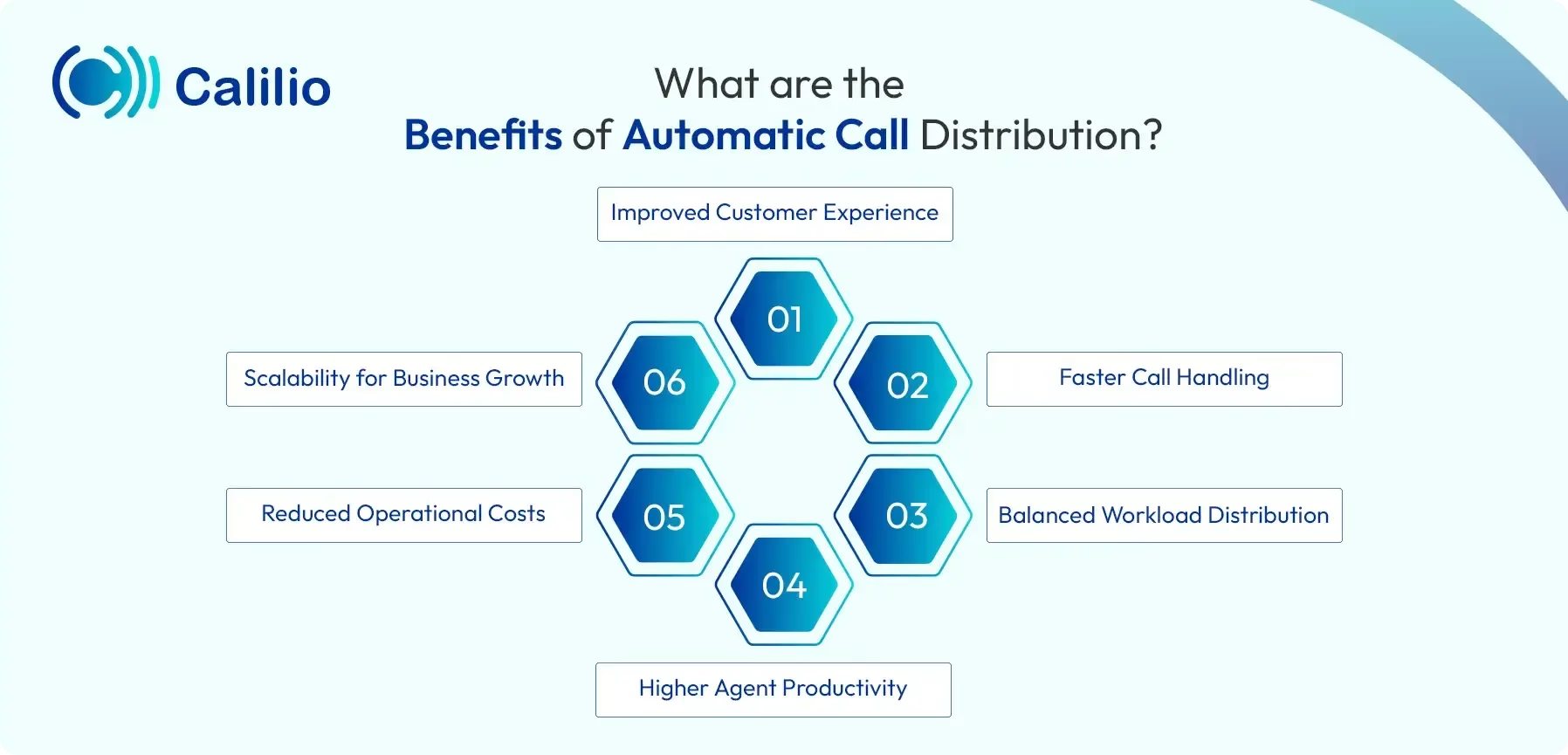
- Improved Customer Experience: ACD connects callers with the most suitable agent from the start, reducing unnecessary call transfers and long hold times. This helps customers get the assistance they need more quickly.
- Faster Call Handling: By automatically directing calls to available agents or the correct department, ACD minimizes delays and speeds up the call-handling process.
- Balanced Workload Distribution: ACD systems distribute incoming calls among agents based on availability, skills, or predefined rules, ensuring work is shared fairly and preventing certain agents from being overloaded.
- Higher Agent Productivity: With an automated call distributor, agents spend less time transferring or managing calls manually and more time focusing on resolving customer issues.
- Reduced Operational Costs: Efficient call distribution and quicker issue resolution help businesses use their resources more wisely, lowering labor costs and improving overall performance.
- Scalability for Business Growth: ACD systems can easily manage high call volumes, making them suitable for growing businesses or organizations that experience seasonal spikes in customer inquiries.
What are the Must-Have Features of an ACD System?
An ACD system includes features such as flexible call routing, IVR support, automatic callbacks, and integration with CRM and CTI platforms to manage incoming calls. It also provides tools like call monitoring, recording, and real-time analytics to help businesses improve service quality and optimize call center performance.
1. Flexible Call Routing
An effective ACD system should support intelligent call routing methods to ensure that incoming calls reach the most appropriate agent or department. Calls can be directed based on factors such as the caller’s request, agent availability, skill sets, or predefined priority rules.
2. Call Monitoring and Recording
Call monitoring and recording allow supervisors to review customer interactions and evaluate service quality. These tools are useful for training new agents, improving communication skills, and maintaining service standards.
3. CRM and CTI Integration
Integration with CRM systems and CTI platforms enables agents to access customer information directly during calls. This includes details such as previous interactions, account history, or support tickets. Having this information readily available helps agents provide faster and more personalized assistance.
4. Interactive Voice Response (IVR) Support
Many ACD systems work together with IVR technology to guide callers through menu options before connecting them to an agent. IVR allows customers to select the type of support they need or access basic information through automated prompts, which can reduce the number of calls that require direct agent assistance.
5. Automatic Callback
An automatic callback feature allows customers to request a return call instead of waiting on hold when queues are long. Once an agent becomes available, the system automatically places a call back to the customer. This helps reduce caller frustration and improves the overall customer experience.
6. Real-Time Reporting and Analytics
Real-time reporting and analytics provide insights into call center performance and operational trends. Managers can monitor Key Performance Metrics (KPIs) such as call volume, Average Wait Time (AWT), and First Call Resolution (FCR) rates. These insights help organizations make informed decisions and continuously improve their customer service operations.
Route Every Call to the Right Destination Instantly with an IVR-powered Business Phone System!
Conclusion
Automatic Call Distribution (ACD) plays an important role in helping businesses manage large volumes of incoming calls with ease. By automatically directing callers to the most appropriate agent or department, ACD systems reduce wait times and minimize call transfer.
Summarize this blog with:
Frequently asked questions
What industries commonly use Automatic Call Distribution systems?
Industries such as call centers, healthcare, banking, e-commerce, telecommunications, and customer support services widely use the ACD system.
What is the difference between ACD and a call queue?
Do ACD systems support after-hours call handling?

Still have questions?
Can’t find the answer you’re looking for? Please chat with our friendly team.
Stay in the loop
Get the latest call insights, trends, and updates delivered straight to your inbox.
By subscribing, you agree to receive updates from Calilio.
You can unsubscribe anytime.
Enter the World of AI Business Phone System with Calilio
Improve your business operation with Calilio's advanced virtual phone system. Join today for a better way to connect.