
What is Call Center Monitoring? A Complete Guide

Call centers handle thousands of interactions, but most organizations review only a small fraction. According to Qualtrics, just 1–3% of calls are monitored, and CallMiner reports that only 1% of interactions are manually reviewed. With such limited oversight, spotting service issues, coaching agents, and ensuring compliance becomes challenging.
Call center monitoring addresses this by analyzing live and recorded calls, providing insights into agent performance, recurring customer concerns, and overall operational efficiency.
In this blog, we’ll explore what call center monitoring is, how it works, and the key benefits it provides to businesses. We’ll also cover the essential tools for effective monitoring and share best practices for improving call center operations.
Key Highlights:
Call center monitoring is the process of tracking, analyzing, and evaluating customer interactions to ensure high-quality service, compliance with regulations, and top-tier agent performance.
It helps identify customer pain points, improve agent training, and measure key call enter performance metrics.
Call center monitoring tools include call recording, live call monitoring, call whisper, call barge-in, quality assurance scorecards, and analytics dashboards, all used to review interactions.
Modern call center monitoring uses AI and analytics to review more interactions, ensuring better accuracy and consistent service quality.
What is Call Center Monitoring & How Does It Work?
Call center monitoring is the systematic process of evaluating agent–customer interactions to ensure quality, compliance, and performance improvement. It involves listening to live calls, reviewing recorded conversations, and analyzing data from multiple touchpoints to understand how agents handle inquiries, resolve issues, and deliver customer satisfaction.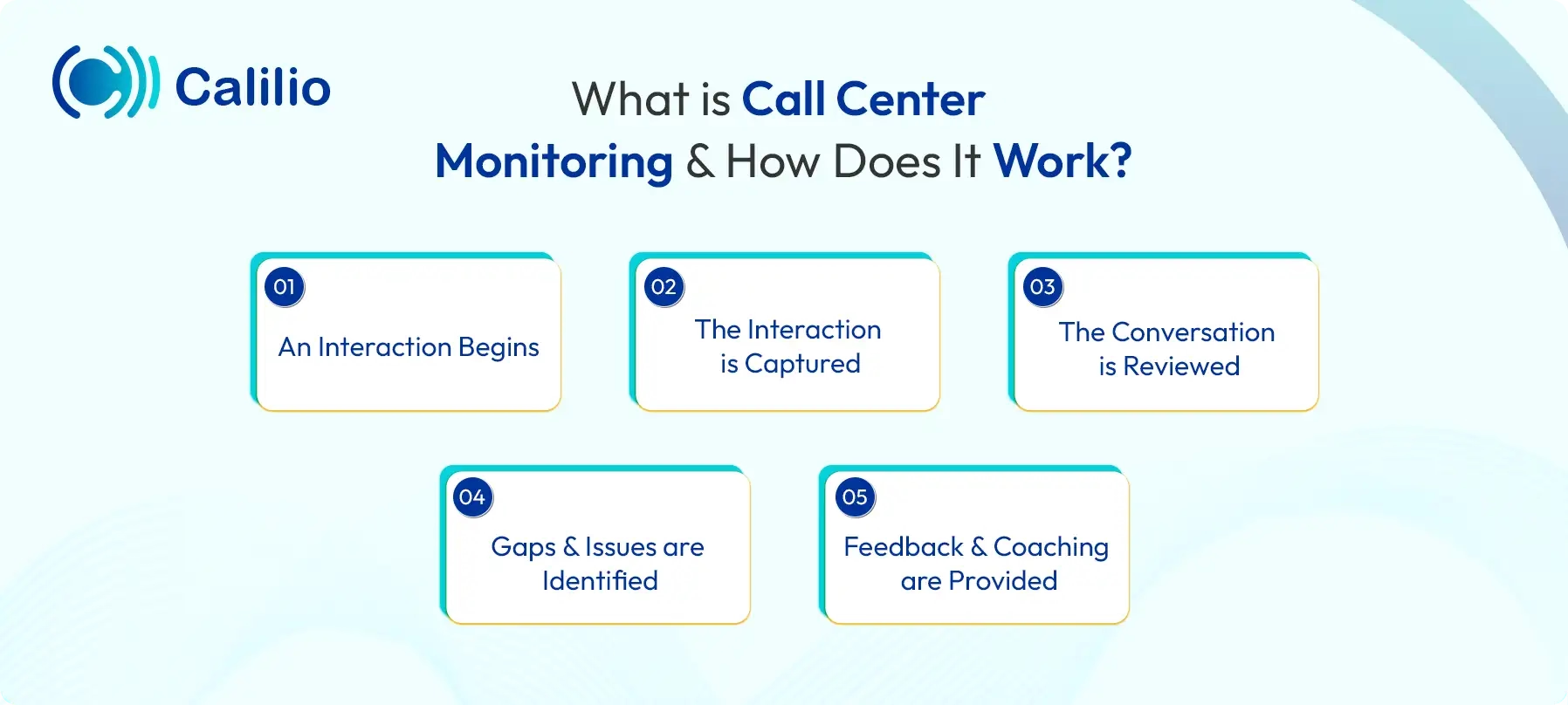 Here is how call center monitoring works:
- An Interaction Begins: The process starts when an agent connects with a customer through outbound or inbound calls.
- The Interaction is Captured: Once the call begins, it can be monitored in real time or recorded, stored, and logged for later review.
- The Conversation is Reviewed: Supervisors, managers, or QA teams review the interaction to understand how the agent handled the customer’s request or issue.
- Gaps and Issues are Identified: Any weak communication, missed details, slow responses, or poor problem-solving is noted for improvement.
- Feedback and Coaching are Provided: Based on the review, the agent receives feedback and guidance to improve future interactions.
What are the Benefits of Call Center Monitoring?
Call center monitoring helps businesses identify service gaps, improve call handling, and optimize call center workflow. It also strengthens compliance and provides data to make better operational and strategic decisions.
- Improves Customer Experience: By reviewing calls, businesses can identify customer pain points, reduce friction, and understand where service quality is falling short. This helps teams deliver faster, smoother, and more satisfying support.
- Supports Targeted Coaching and Training: Monitoring shows where agents perform well and where they need support. Managers can then use real call examples to provide more focused coaching and practical training.
- Increases Productivity and First Call Resolution: Call reviews help teams spot workflow issues, knowledge gaps, and handling problems that slow down resolution. This helps agents solve more issues on the first call.
- Strengthens Compliance and Reduces Risk: Monitoring helps ensure agents follow scripts, internal policies, and industry regulations during customer conversations. This reduces the risk of missed disclosures, poor handling, or compliance violations.
- Helps Reduce Agent Burnout and Turnover: Monitoring highlights repeated challenges and high-pressure situations. With better insights, managers can apply effective call center workforce management to balance workloads and support agents.
- Supports Better Business Decisions: Customer calls often reveal recurring complaints, product issues, and changing customer expectations. Monitoring provides leadership with actionable insights that guide decisions across service, sales, marketing, and operations. It also enables call center forecasting, helping managers plan staffing and resources more accurately.
What are the Essential Tools Used for Call Center Monitoring?
Essential call center monitoring tools include call recording, live call monitoring, QA scorecards, and analytics dashboards to capture, review, and evaluate customer interactions.
1. Call Recording
Call recording is one of the most important tools in call center monitoring because it captures inbound and outbound calls for later review. Supervisors and quality assurance teams can listen to recorded calls to assess how agents handle the interaction, whether they follow the right process, and how well they resolve the customer’s issue.
Recorded calls make monitoring more flexible because managers don’t need to review every interaction in real time. They can revisit important conversations whenever needed. This helps in coaching agents more effectively and identifying recurring service issues. It also makes it easier to detect compliance gaps and uncover customer concerns that might otherwise go unnoticed.
2. Live Call Monitoring
Live call monitoring allows supervisors to listen to ongoing calls as they happen without interrupting the interaction. This helps managers understand how agents perform in real situations. It also gives a direct view of their communication style and professionalism. Additionally, it shows how effectively they handle problems during live customer conversations.
It is especially useful for supporting new agents, handling high-risk calls, and checking how well agents respond in difficult situations. Because the review happens in real time, businesses can identify issues immediately rather than discovering them only after the call ends.
3. Call Whisper and Barge-in Features
Call whisper and barge-in features are used when supervisors need to support agents during live calls. With call whisper, the supervisor can speak privately to the agent without the customer hearing, which helps the agent get guidance without breaking the flow of the conversation.
Call barge-in goes one step further by allowing the supervisor to join the call directly and speak with both the agent and the customer. These features are helpful for live coaching, handling call escalations, and supporting agents when a call becomes too complex or sensitive to manage alone.
4. Quality Assurance Scorecard
Quality assurance scorecard gives call centers a structured way to evaluate calls against set standards. It includes key QA checklists such as greeting, tone of voice, listening skills, script adherence, product knowledge, call center compliance, issue resolution, and call closing.
Scorecards help managers review calls more fairly and consistently across the team. Instead of relying on personal opinions, they use clear evaluation criteria to measure performance. This makes it easier to compare results across agents. It also helps identify where agents need additional training or support.
5. AI-powered Speech Detection Tool
An AI-powered speech detection tool focuses on converting voice interactions into accurate text through automatic transcription. It captures both calls and voicemails and turns them into readable call transcription and voicemail transcripts. This makes it easier for managers to review conversations without listening to every recording.
It also supports keyword search and quick navigation within transcripts, allowing a team to find specific parts of a conversation easily. Turning voice data into structured text, it helps a business review interactions faster, maintain proper records, and use transcripts for training and call center quality management.
6. Sentiment Analysis
A sentiment analysis helps understand the emotional tone of customer conversations by analyzing voice interactions. It identifies whether a customer is satisfied, frustrated, confused, or neutral based on tone, language, and speech patterns during a call. This gives managers deeper insight into how customers feel, beyond just what they say.
By tracking sentiment across calls, businesses can identify negative trends, detect escalation risks, and evaluate how well agents handle difficult situations. These insights help managers improve coaching and adjust communication strategies by responding to customer emotions.
7. Call Analytics and Reporting Dashboards
The call analytics and reporting dashboard turns call activity into measurable performance data. It shows important metrics such as call volume, Average Handle Time (AHT), hold time, transfer rate, abandonment rate, and agent activity.
Call center analytics help managers understand trends rather than looking at calls one by one. By reviewing reports regularly, businesses can identify weak areas, measure team performance over time, and make better decisions about training, staffing, and service improvement.
8. Screen Monitoring Tool
The screen monitoring tool allows supervisors to see what agents are doing on their computers while handling a call. This helps managers check whether agents are using the correct systems, following the right workflow, and entering customer information properly during the interaction.
This tool is important because call quality does not depend only on what the agent says. It also depends on how accurately and smoothly the agent handles tasks in the background, such as updating records, checking account details, or following process steps while speaking with the customer.
Key Metrics & KPIs to Track in Call Center Monitoring
Track key call center performance indicators such as AHT, FCR, and service level to measure efficiency and customer experience. Also, monitor abandonment, transfer, and escalation rates to identify performance gaps and improve overall call handling.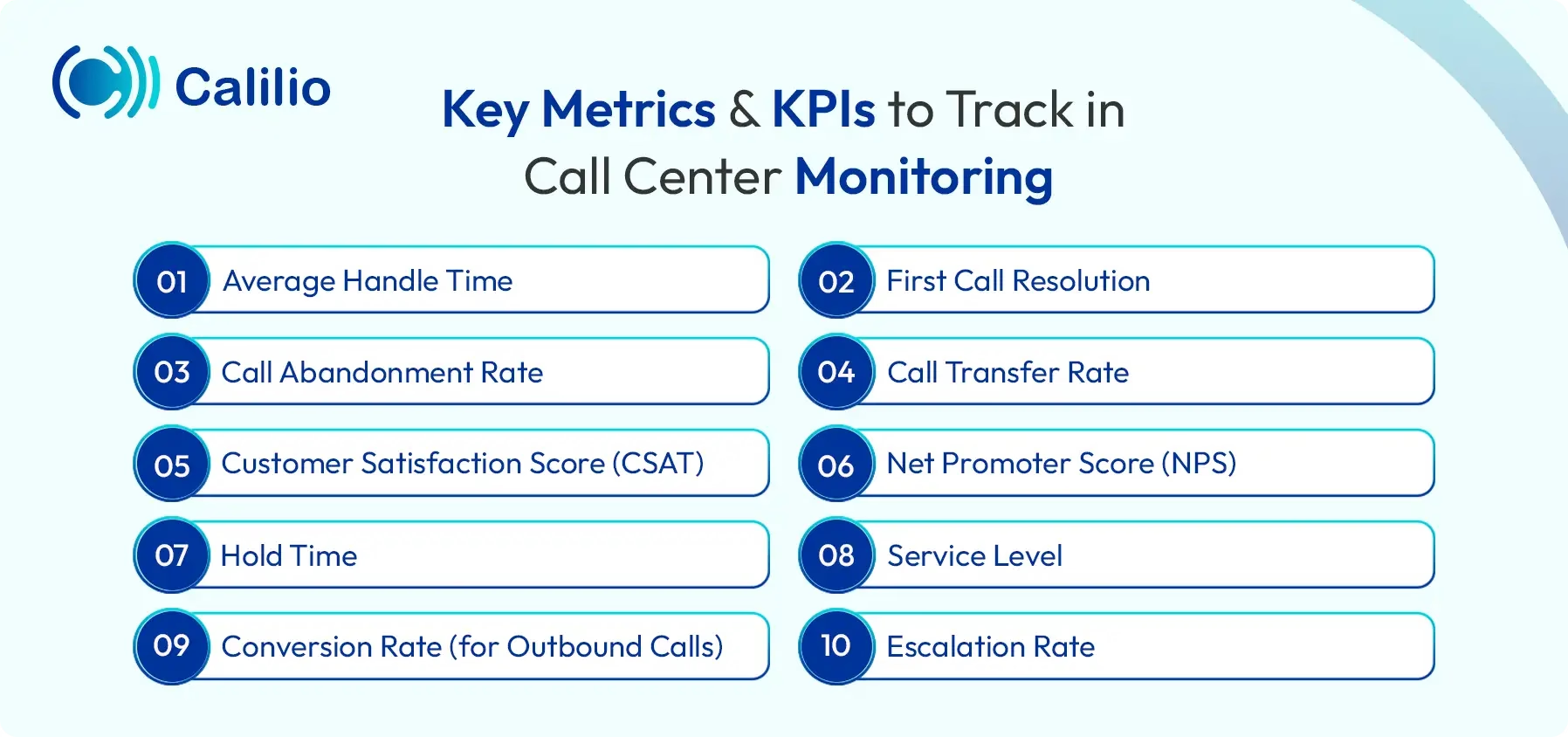
- Average Handle Time: AHT measures the total average time an agent spends on a call, including talk time, hold time, and after-call work. It helps evaluate efficiency, and should be balanced with quality to avoid rushed interactions.
- First Call Resolution: FCR tracks whether a customer’s issue is resolved during the first call without follow-ups. A higher FCR indicates better problem-solving and reduces repeat calls and operational costs.
- Call Abandonment Rate: This metric shows the percentage of callers who hang up before reaching an agent. High abandonment rates indicate long wait times or poor queue management.
- Call Transfer Rate: It tracks how often calls are transferred to another agent or department. A high transfer rate indicates a lack of training or unclear call routing.
- Customer Satisfaction Score (CSAT): CSAT measures how satisfied customers are with the service they received, usually through post-call surveys. It provides direct feedback on the customer experience.
- Net Promoter Score (NPS): NPS measures customer loyalty by asking how likely they are to recommend the company. It helps understand long-term customer perception beyond a single interaction.
- Hold Time: Hold time tracks how long customers are placed on hold during a call. Excessive hold time can lead to frustration and negatively impact customer experience.
- Service Level: Service level tracks the percentage of calls answered within a target time frame (e.g., 80/20 rule in a call center). It is a key indicator of responsiveness.
- Conversion Rate (for Outbound Calls): Conversion rate measures how many outbound calls lead to a desired outcome, such as a sale or appointment. It is especially important for sales-focused call centers.
- Escalation Rate: Escalation rate tracks how often calls are escalated to supervisors or higher-level support. Frequent escalations signal gaps in agent training or authority.
Best Practices for Effective Call Center Monitoring
For effective call center monitoring, use clear evaluation standards, leverage AI for scalable monitoring, and focus on key metrics like FCR and CSAT. Support this with continuous feedback and consistent practices to improve agent performance and call quality.
1. Define Clear Evaluation Criteria
Establish clear and consistent quality standards for monitoring customer interactions. These criteria should cover both compliance requirements and customer experience factors. When expectations are well-defined, agents can better understand and meet performance goals.
2. Use Call Center Monitoring Software
Leverage call center monitoring software to streamline the evaluation of agent performance and customer interactions. Such software allows managers to track key metrics, listen to live or recorded calls, provide real-time feedback, and generate detailed reports.
3. Modernize with AI and Automation
Leverage AI tools to monitor a large volume of calls. Call center automation helps in identifying patterns, sentiment, and compliance issues quickly. This improves accuracy while reducing manual effort.
4. Prioritize Customer-centric Metrics
Instead of focusing only on speed metrics like AHT, balance them with quality metrics such as FCR and CSAT. A slightly longer call that fully resolves the issue often leads to better outcomes than a quick but incomplete interaction.
5. Build a Collaborative QA Culture
Involve agents in defining quality standards and scorecards so they understand expectations better. Providing quick, actionable feedback after calls helps improve performance faster than delayed reviews.
6. Focus on Continuous Feedback and Coaching
Monitoring should be used as a coaching tool, not just for evaluation. Regular, small feedback sessions help agents improve consistently and build confidence over time. This approach leads to more sustainable performance improvements.
7. Maintain Consistent Standards Across Channels
Even if the primary focus is on calls, ensure similar quality standards are applied wherever customer interactions occur. This helps deliver a more consistent and reliable customer experience.
Enhance Your Call Center Performance with Smarter Monitoring and Insights from Calilio.
Conclusion
Call center monitoring plays a key role in improving service quality, agent performance, and customer experience. By combining the right tools, metrics, and monitoring practices, businesses can gain better visibility into customer interactions and make more informed decisions.
Summarize this blog with:
Frequently asked questions
Who is responsible for call center monitoring?
Call center monitoring is primarily the responsibility of supervisors, call center managers and QA specialists.
Is call center monitoring legal?
What are the common mistakes in call center monitoring?
How to monitor call center performance?
How many calls should be monitored in a call center?
Why is quality monitoring important for your call center?

Still have questions?
Can’t find the answer you’re looking for? Please chat with our friendly team.
Stay in the loop
Get the latest call insights, trends, and updates delivered straight to your inbox.
By subscribing, you agree to receive updates from Calilio.
You can unsubscribe anytime.
Enter the World of AI Business Phone System with Calilio
Improve your business operation with Calilio's advanced virtual phone system. Join today for a better way to connect.