
BlogWhat is Phone Answering Service?

"Phone answering service" is one of those business terms everyone recognises and almost nobody can define precisely. It has meant roughly the same thing for decades — someone or something answering your calls on your behalf — but what sits behind that phrase today spans three genuinely different products at very different price points.

This is what the term actually covers, the types you will encounter when shopping for one, and how to work out which kind you actually need.

The Short Answer

A phone answering service is any arrangement where calls to your business are answered by someone or something other than you or an employee at a desk — a live remote operator, automated software, or a feature built into your phone system.

  • The term predates automation — it originally meant a live remote operator.
  • Today it can mean a live service, AI software, or a phone system feature.
  • Most businesses use one to cover after-hours, overflow, or a front desk they can't staff.
  • Cost and call quality vary enormously between the three types.

Where the term comes from

Phone answering services predate computers entirely. Before answering machines existed, doctors, plumbers and small businesses paid a switchboard operator to take messages after hours — literally a person physically answering a phone line on behalf of a business that could not staff it around the clock. The phrase stuck, and the industry it describes simply absorbed new technology as it appeared, rather than being replaced by it.

That history is why the term today covers a live person, a piece of software, and a phone system feature all at once — each is a different generation of the same basic promise: your calls get answered even when you personally cannot.

The three types you'll actually encounter

When you search for a phone answering service today, these are the three categories of product you will find, whether or not the vendor uses that exact label.

🎧 Live answering service

A real, trained person working for a staffed service answers your calls in your business name, takes messages, books appointments, and transfers calls — the original meaning of the term, still widely used for calls needing judgment.

Cost $235-720/month at typical small-business volume, usually billed per minute.
🤖 AI or automated answering service

Software that understands natural speech, answers routine questions from a knowledge base you provide, and escalates anything it cannot handle to a person — the newest category, growing fast because it is far cheaper at volume.

Cost $25-150/month, often flat-rate or per-call rather than per-minute.
📞 A phone system feature (IVR)

Not a separate service at all — a menu built into your existing business phone system that routes calls by keypad press. No understanding of speech, just fixed options, but included in most phone plans at no extra cost.

Cost Usually included in your existing phone plan, no separate fee.

What it is not

Three things people confuse with a phone answering service, and where the actual line sits.

Voicemail
Voicemail records a message with nobody responding until someone checks it later. An answering service, by contrast, actually engages the caller in the moment — that real-time interaction is the whole point.
A call center
A call center typically employs many agents at volume, often across shifts, and may serve several client businesses under one roof. A phone answering service is usually a smaller-scale arrangement, often specifically for overflow or after-hours coverage.
Customer support software
Help desk and ticketing platforms manage written support requests — email, chat, tickets. A phone answering service specifically handles live phone calls, though some platforms now bundle both.

Do you actually need one?

Three signs it would help, and two that suggest you can wait.

Probably worth it
You miss calls regularly during business hours
If your team is often unavailable when the phone rings, a service catches what you are currently losing.
You have no coverage after hours or on weekends
The single most common reason businesses buy one — calls that would otherwise go to voicemail get a real response instead.
You are too small to justify a full-time receptionist
A phone answering service gives you front-desk coverage without the cost of a salaried employee.
Maybe wait
Your call volume is very low
Below a few dozen calls a month, the monthly cost of most services may exceed what missed calls are actually costing you.
Every call needs deep account-specific knowledge
If callers expect someone who already knows their history in detail, a general answering service — human or AI — will struggle without heavy customisation.

Choosing between the types

If this is you
Your calls are mostly repetitive and well-defined.
Start with
An AI answering service
Cheapest option, available 24/7 by default, and handles routine questions reliably once properly configured.
If this is you
Your calls often involve complaints or nuance.
Start with
A live answering service
A trained person reads tone and context better than current AI, worth the higher per-minute cost.
If this is you
You just need callers routed to the right department.
Start with
An IVR menu
No separate cost, already available in most phone systems — you may not need a dedicated service at all.
If this is you
You want the best of both.
Start with
A hybrid or bundled solution
AI handles routine calls and escalates the rest to a person, or an answering feature bundled into your existing phone plan.

What it costs

Type

Typical Range

Note

Live answering service$235-720/monthPer-minute billing, scales with call volume and coverage hours.
AI answering service$25-150/monthFlat rate or per-call, often no overage risk.
Bundled phone system featureOften includedIVR and basic routing usually come with your existing phone plan at no extra cost.

The bottom line

"Phone answering service" is a decades-old phrase that has simply kept absorbing new technology without changing its name. When you see it today, ask which of the three types is actually being described — a live person, automated software, or a built-in phone system feature — because the answer changes the cost and the call experience completely.

Most businesses do not need to pick one permanently. Start with what your calls actually require, and let the routine share of them go to whichever option costs less, keeping a person available for the calls that genuinely need one.

Never Miss Another Call

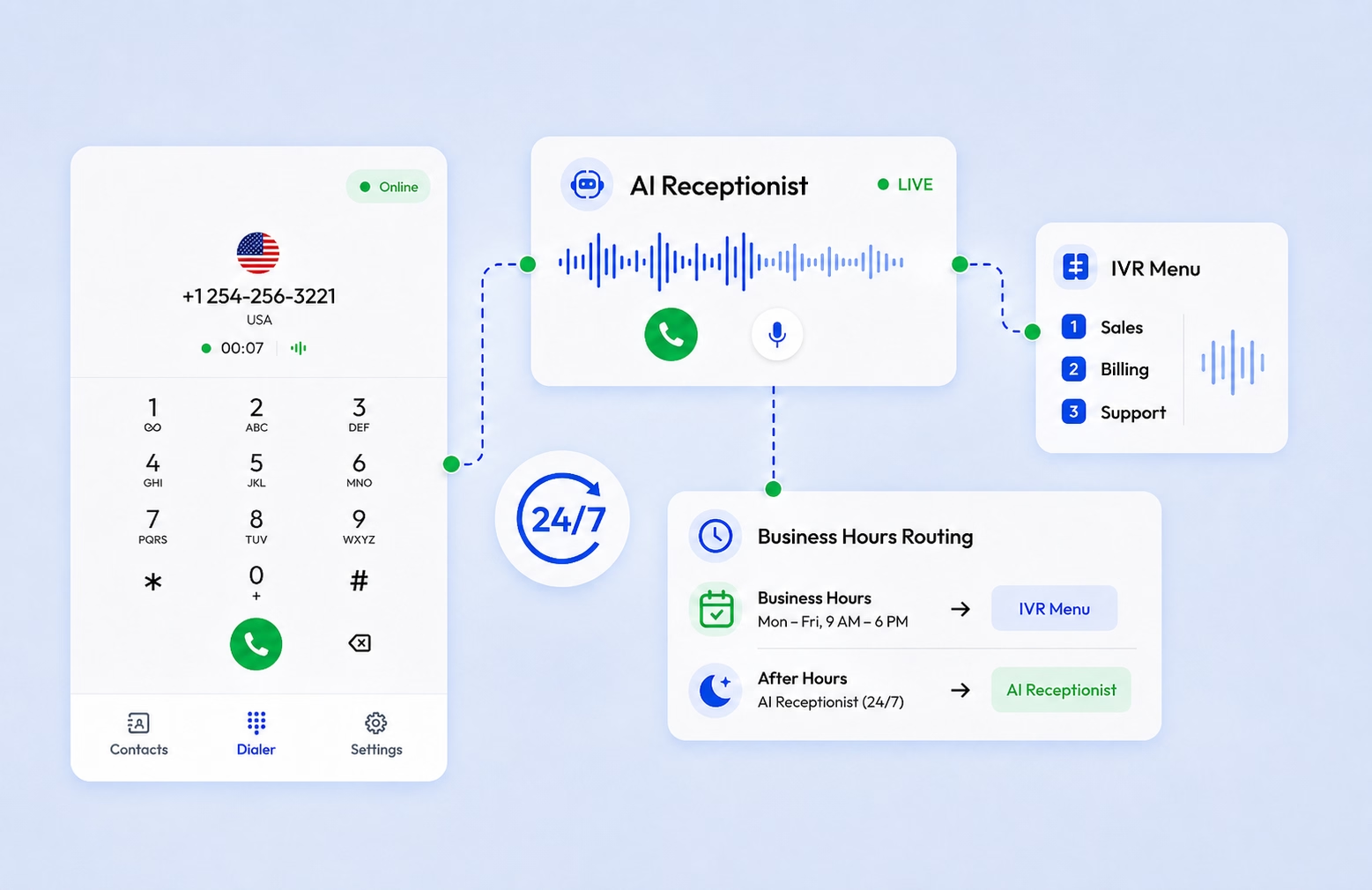
IVR menus, business hours routing, and an AI receptionist that answers 24/7 — all built into your Calilio workspace. Plans start at $15/user/month ($12 billed annually), with free AI receptionist minutes included every month.

Front Desk AI — Live
"Are you open on Sundays?"
"Yes, 11am–3pm. Want me to book you a slot?"

Frequently Asked Questions

What does phone answering service mean?
A phone answering service is any arrangement where calls to your business are answered by someone or something other than you or an in-house employee at a desk — a live operator working for a staffed service, software using automated speech recognition, or a bundled feature inside a business phone system.
What are the different types of phone answering services?
Three broad types: live answering services with real trained operators, AI or automated answering services using natural language understanding, and IVR menus that route calls by keypad input without understanding speech at all.
Is a phone answering service the same as a call center?
Not quite. A call center typically employs many agents handling calls for one or several businesses at volume, often with shift-based staffing. A phone answering service is usually smaller in scope, frequently used for overflow, after-hours, or a business too small to staff its own front desk.
How much does a phone answering service cost?
Live answering services generally range from $235 to $720 per month at small-business call volumes, billed per minute. AI-based services typically cost $25 to $150 per month. Costs scale with call volume and coverage hours in both cases, and IVR routing is often included free with your existing phone system.
Is voicemail a type of phone answering service?
Not in the way the term is normally used. Voicemail records a message for someone to check later, with no real-time interaction. An answering service actively engages the caller — answering questions, taking action, or transferring the call — while the call is still happening.
Do small businesses need a phone answering service?
Often, yes — particularly if calls are regularly missed during business hours or there is no coverage after hours and on weekends. Businesses with very low call volume or highly account-specific queries may find the cost outweighs the benefit; call volume is the main variable to check first.
Can I combine a live and an AI answering service?
Yes, and this is increasingly common. An AI layer takes routine calls first and escalates anything ambiguous, emotional or outside its knowledge to a live receptionist, combining the lower cost of automation with a human safety net for harder calls.
Does a phone answering service replace my business phone number?
No. It typically works alongside your existing number — calls are forwarded to the service, or the service is built directly into your phone system, so your customers keep dialling the same number they always have.
get your first uk number for free

Summarize this blog with:

Avatar Group

Still have questions?

Can’t find the answer you’re looking for? Please chat with our friendly team.

Stay in the loop

Get the latest call insights, trends, and updates delivered straight to your inbox.

By subscribing, you agree to receive updates from Calilio.
You can unsubscribe anytime.

Enter the World of AI Business Phone System with Calilio

Improve your business operation with Calilio's advanced virtual phone system. Join today for a better way to connect.

4.6
125+ Reviews16+ Badges